

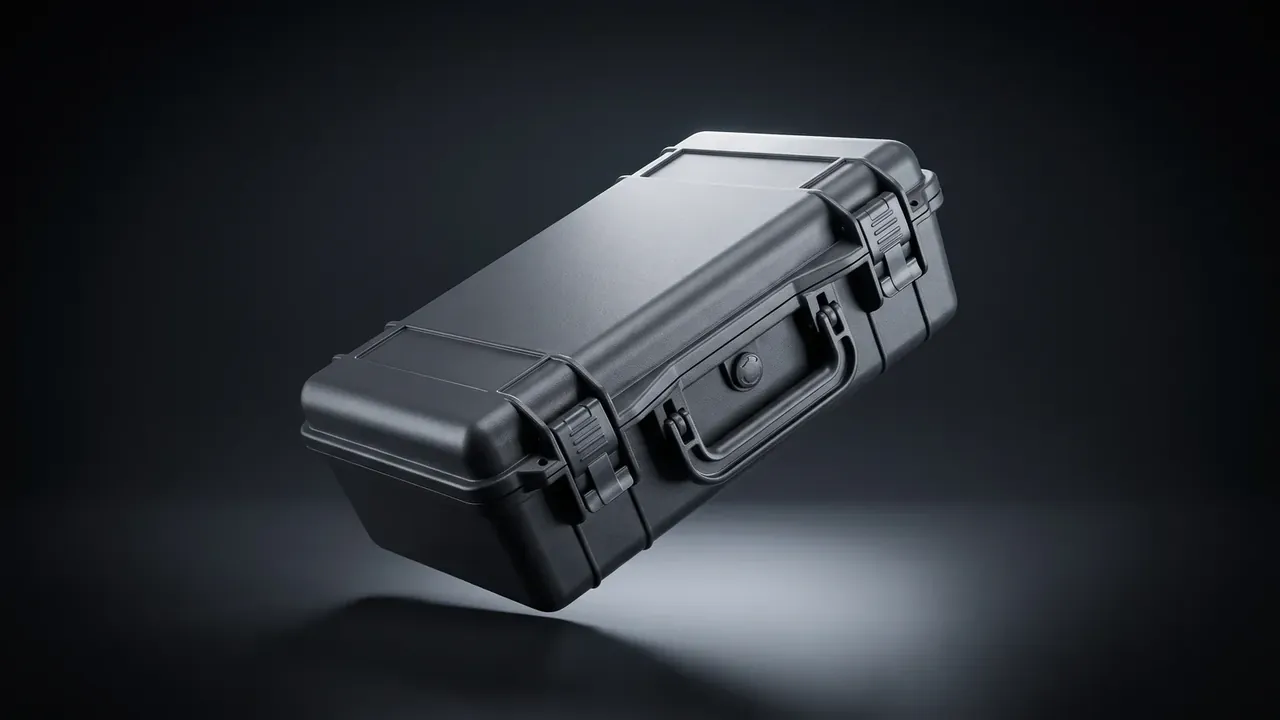
Quick answer: A foam insert installation is maintained on method numbers, not intuition. Damp heat, salt fog and vibration set the intervals; compression set, bond-line gap and latch preload give the three readings that decide patch or replace.
Table of contents
- What MIL-STD-810 and IEC 60529 Actually Ask of a Foam Insert Installation
- Measuring Compression Set After Damp Heat and Salt Fog
- Cleaning and Drying Without Soaking the Case
- Latch Checks and the Seal Line
- Repair or Replace: Retirement Lines
- FAQ
1. What MIL-STD-810 and IEC 60529 Actually Ask of a Foam Insert Installation
Acceptance and in-service inspection differ. At completion the case is checked for cut profile and trapped bubbles; two years on, for rebound, creep and preload.
MIL-STD-810 supplies exposure methods without pass limits, so each clause needs a site threshold. IEC 60529 defines how an enclosure is verified, and foam fit inside the case decides whether immersion passes.
| Item | Reference clause | How to measure | Pass limit | Interval |
|---|---|---|---|---|
| Compression set | ASTM D3574 method D, re-tested after damp heat | 25% deflection at 70°C for 22 hours | ≤8% | 12 months |
| Bond-line gap | IEC 60529 pre-check before immersion | 0.5 mm feeler gauge around the joint | no through gap | 6 months |
| Latch preload | MIL-STD-810 method 516, after vibration | 150 N pull gauge, one latch at a time | no release, no set | 6 months |
| Surface chalking | Visual plus tape pull | one pull at the same spot | no powder transfer | 3 months |
| Hardness after salt fog | MIL-STD-810 method 509, 48 hours | Shore 00 durometer, three readings | rise ≤5 points | 24 months |
Row four is the one people skip: chalking changes no dimension, yet marks a spent skin.
2. Measuring Compression Set After Damp Heat and Salt Fog
The quietest decay in a foam insert installation is the part that stays flat after unloading. Nothing on the case looks different; the interference fit simply migrates into a gap.
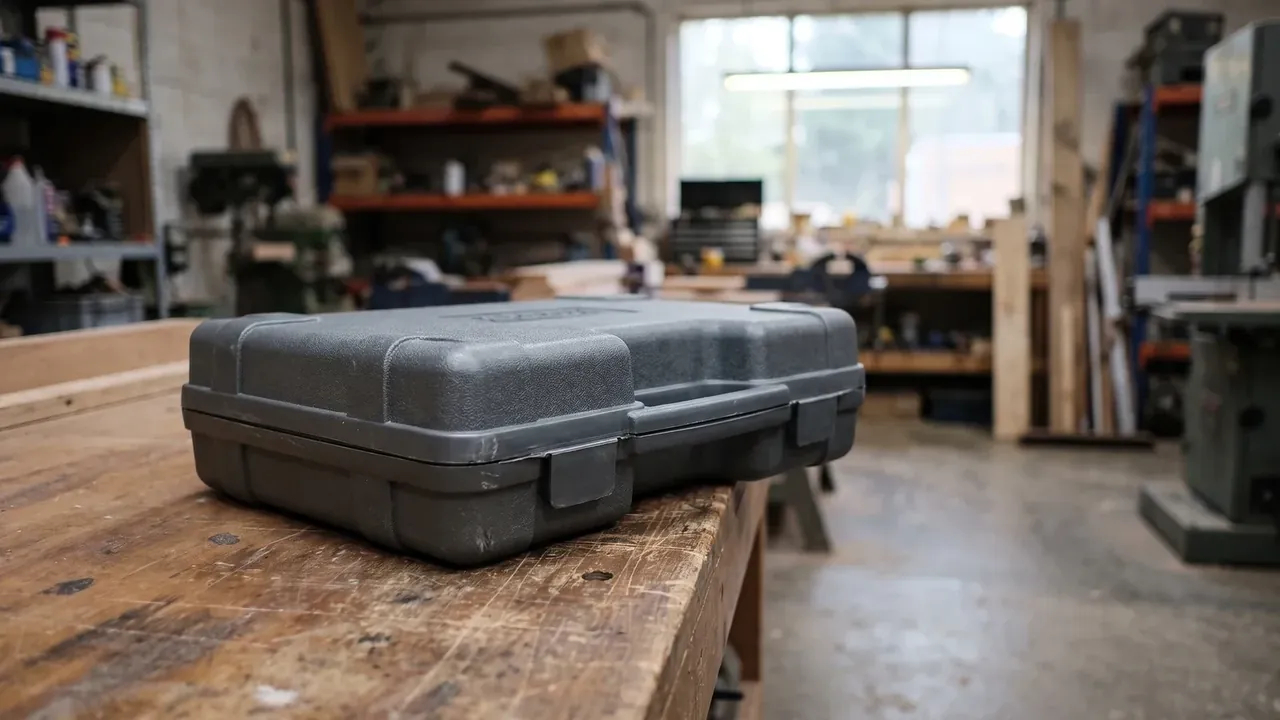
Clamp a 50 mm coupon at 25% deflection, hold 22 hours at 70°C, release, wait 30 minutes and measure. Cross-linked PE settles at or below 8%, laminated EVA at 12%; beyond that the layer holds no preload.
Damp heat is underestimated more often than plain heat. IEC 60068-2-78 runs 48 hours at 40°C and 93% relative humidity, and a sample should return within 0.5 mm; when it does not, the adhesive has taken water and the panel has slid. Salt fog per method 509 is worse: hinge pins bloom white, and absorbed salt crystallises as it dries, splitting cell walls. A Shore 00 reading five points above the as-built value means the cushioning stroke is gone. The loss does not reverse with rest, and no re-cut brings it back. That is why salt-fog exposure sits on the 24 month line rather than on the annual card.
Sample location matters too: corners and centre differ by three points, so keep the spot fixed.
3. Cleaning and Drying Without Soaking the Case
Daily cleaning decides service life before any inspection does: no chlorinated solvent, no alkaline cleaner, no hot air on a cut edge.
- Wipe agent: neutral cleaner near pH 7, on cloth, never on foam
- Direction: single strokes along the long edge
- Dry window: 2 hours at 50°C, or 24 hours of still air at 23°C
- Water check: paper towel pressed 10 seconds, no seep
- Forbidden: alcohol above 75% whitens EVA, xylene swells the cells
- Record: date and initials on the card
The dry window matters more than the wipe. Open-cell foam does not release absorbed water, and a closed case re-condenses it at every temperature swing, loosening adhesive within a fortnight.
4. Latch Checks and the Seal Line
A latch does not hold the seal line alone; the foam holds the lid against it. Deflection runs 30% to 40% of foam thickness, and below 25% the case leaks.
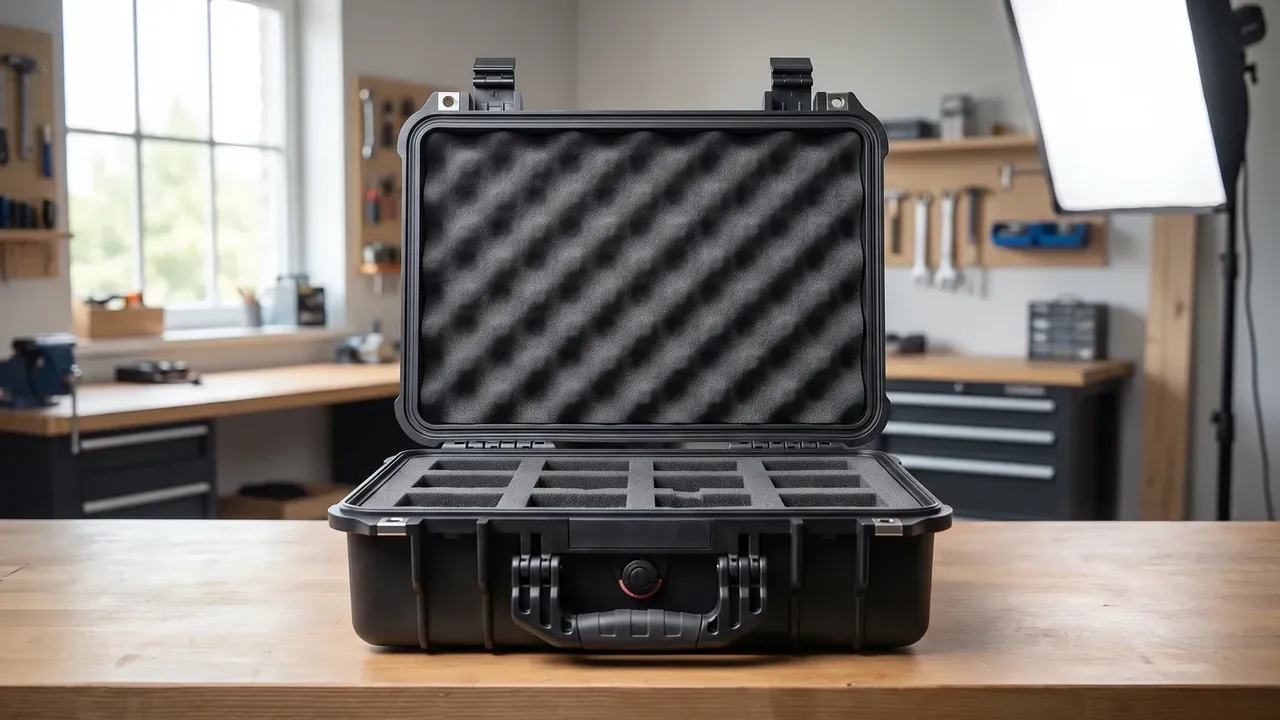
Start at the corners. An L cut gives about 15% less effective deflection than a straight run, so corners fail first; a 0.3 mm clearance around a routed aluminium extrusion opens along both edges once rebound drops.
IP67 means 1 m of water for 30 minutes. Strip the latches afterwards and residual spring tension should still read 120 N. Hinge screws return to 1.2 N·m; past 1.5 N·m the foam under the case wall crushes.
5. Repair or Replace: Retirement Lines
Age is a poor criterion: one batch lasts twice as long in a dry store as on a coast.
| Condition | Patch | Replace | Basis |
|---|---|---|---|
| Corner chip ≤10 mm | yes | — | same density offcut, 30 seconds of pressure |
| Cut profile collapsed ≥2 mm | — | required | deflection already under 25% |
| Adhesive creep >3 mm | — | required | bond has failed, re-gluing tears foam |
| Chalking twice in a row | — | required | skin elasticity is spent |
Extension is unglamorous: spares flat inside the case, humidity below 60%, one compression-set coupon a year. Do all three and the case runs from three years to five.
Conclusion
Upkeep of a foam insert installation comes down to three numbers: compression set, bond-line gap and latch preload. Intervals follow the environment, limits follow the clause, and replacement starts at the corners. Taped inside each case, that card costs less than one overhaul. How long a foam insert installation lasts depends on how often someone opens the case.
This article discusses only the container (case body) side of specifications and design intent, and does not cover any handling, loading or use of the contents.
Related Reading
- Three motions of foam insert installation
- Field problems after foam insert installation
- How density and structure are chosen in custom foam inserts
- Inspection and care routine for stored war reserve cases
Related Products
- 8 Series — Gun Cases; Military Equipment Cases; Camera Equipment Cases; Drone Cases; Watch Cases; Knife Cases; First Aid Cases; Electronics Equipment Cases
- WL8-2812 PP Gun Case — model WL8-2812
- All protective cases and toolboxes: 7 series, 158 models