

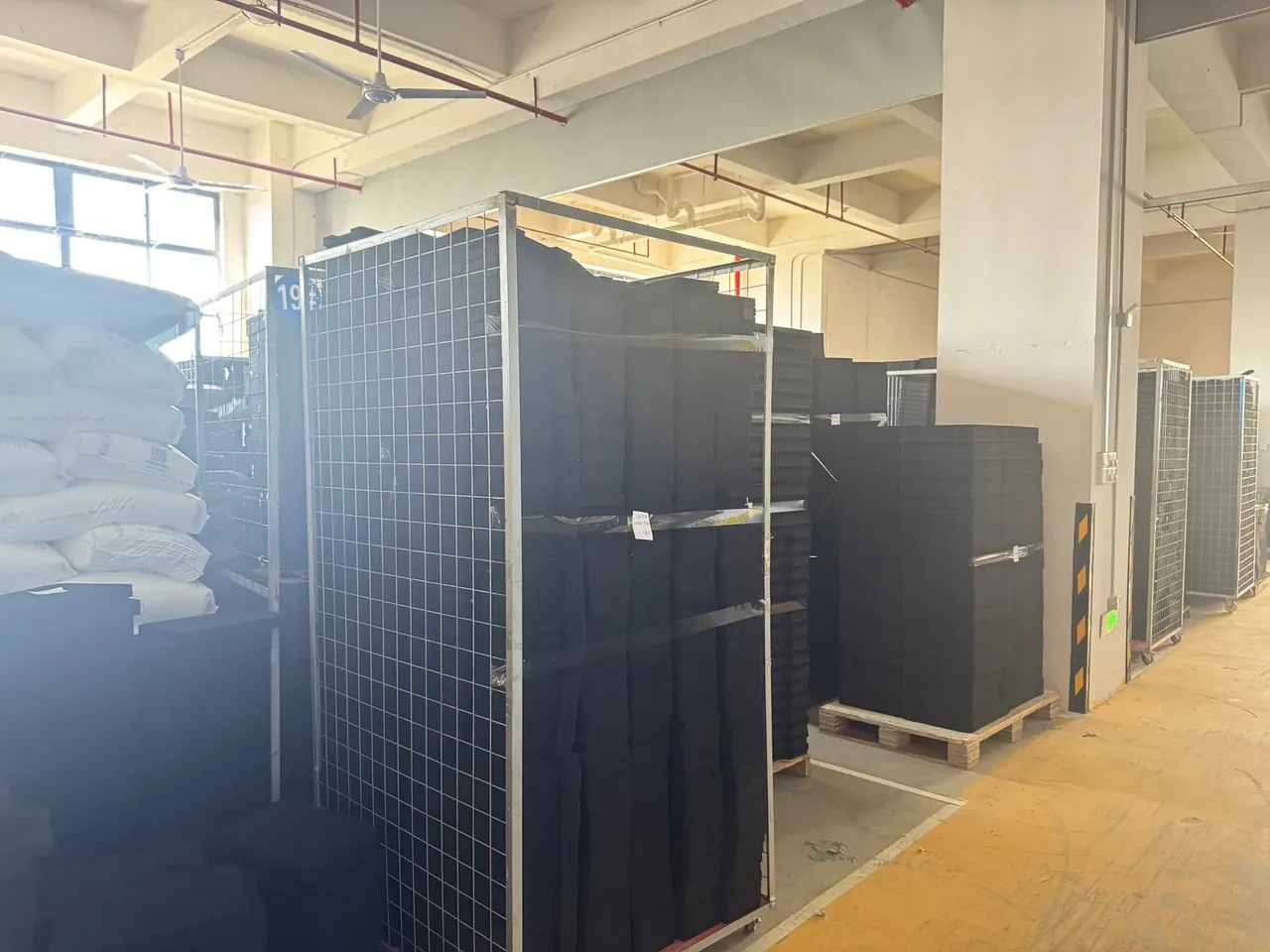
Quick answer: Foam Sheet Storage follows four answers: stand sheets under a 1.2 m cap, lay a 12 mm plywood deck, hold 15 to 25°C, and recheck at six months.
Table of contents
- Four questions at the Foam Sheet Storage door
- Standing or flat: load direction and dents
- What goes underneath: deck, corrugated, grid
- How high: layers, pressure, headroom
- How long: FIFO and recheck points
- FAQ
1. Four questions at the Foam Sheet Storage door
Sheets arrive for Foam Sheet Storage, and the keeper asks four things: standing or flat, what goes underneath, how high, how long. Answer all four and the bay, the deck, the layer count and the expiry fall into place at once.
| Question | What it settles | Typical value | What goes wrong |
|---|---|---|---|
| Standing or flat | load direction | standing, 10° lean | corners crushed 0.5 mm |
| What underneath | contact face | 12 mm plywood | grid marks on the base |
| How high | pressure at the base | 1.2 m, pads every 300 mm | bottom sheets 0.4 mm thin |
| How long | shelf life | recheck at 6 months | set past 10% |
The four are not parallel. Posture comes first, then the contact face, then height, and only then the clock. Get posture wrong and a 20 mm deck will not save you: three months of flat stacking takes 0.3 to 0.5 mm off the bottom sheets of a 10 mm EPE bundle, and a die cut to nominal thickness then produces shallow cavities.
2. Standing or flat: load direction and dents
In Foam Sheet Storage, standing sends self-weight along the face of the sheet, so the thickness direction carries almost nothing. Lean the stack no more than 10°, add a 50 mm stop at the foot and a light bar at the top. The cost sits at the edges: corners knock together and fray within three picks, so the rack inside needs a 2 mm soft pad.
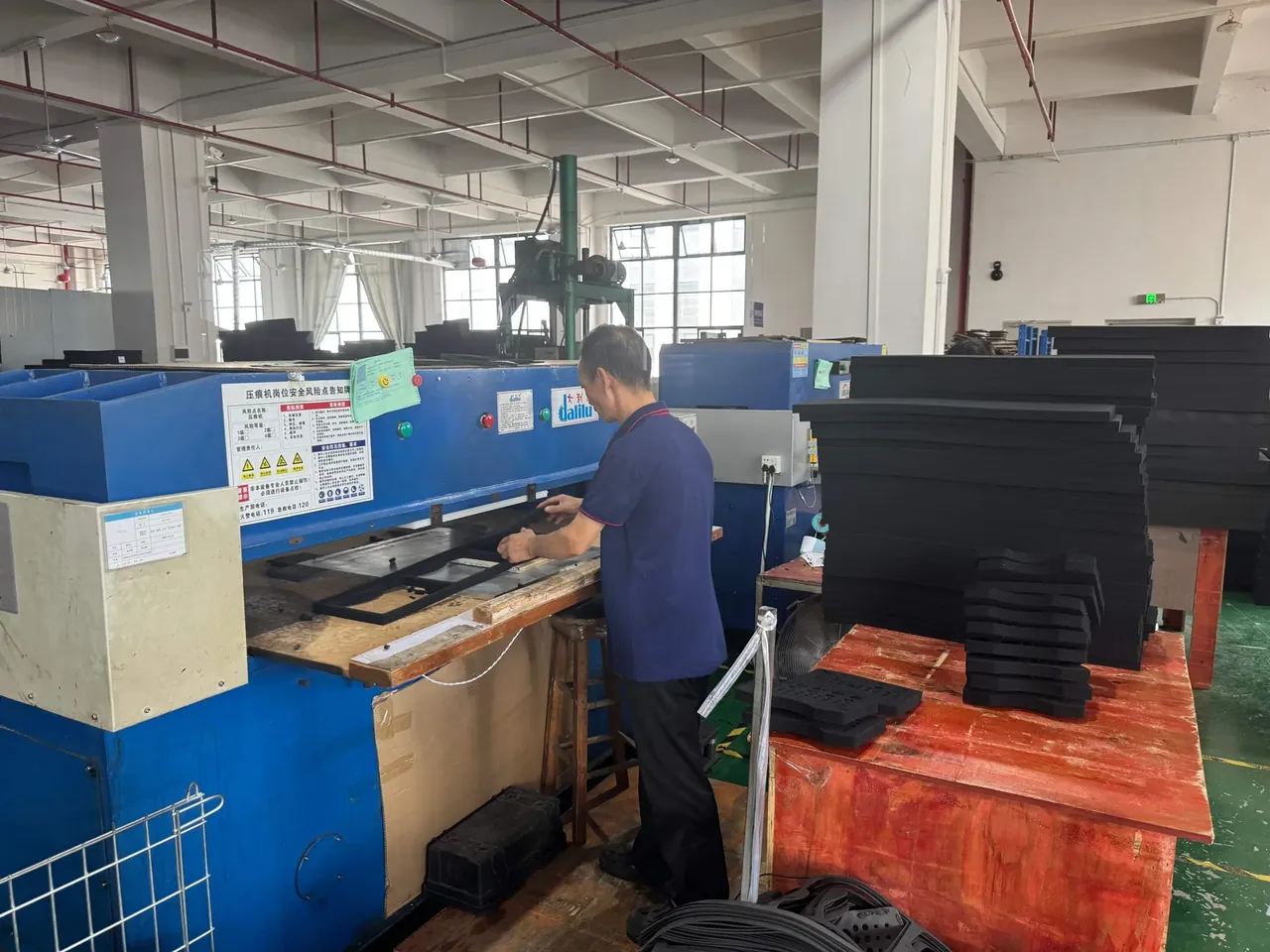
Flat stacking saves floor space but adds dents. A 10 mm EPE sheet held at 0.3 kPa for 30 days shows a 0.2 to 0.4 mm dip, and the cell walls under it have buckled, so recovery reaches only half. The bite is harder on 5 mm sheet, where the same pressure means more strain.
Split by thickness: 5 mm and 10 mm stand on labelled racks; 15 mm and above, or inserts already die cut, lie flat in stacks of 10 or fewer with a 3 mm board between layers. The pick list names the rack number.
3. What goes underneath: deck, corrugated, grid
The second Foam Sheet Storage question is what goes underneath. A wooden pallet has deck gaps of 30 to 50 mm, and sheets over a gap take a stripe that turns into a cosmetic defect the moment it lands near a cavity edge.
| Deck | Thickness | Where it fits | Watch out |
|---|---|---|---|
| Plywood | 12 to 15 mm | long-term storage | moisture under 12% |
| Five-ply board | 5 to 7 mm | one-way moves | loses half its strength wet |
| Plastic grid | 8 mm | clean rooms | ribs print into soft sheet |
Make the deck 20 mm wider than the sheet on every side, keep bundles 100 mm off the wall and 150 mm off the floor, and keep fork tines off the foam. A board above 12% moisture passes water into the bottom sheets in a humid season. A plastic grid washes clean, but its ribs leave shallow lines, so pair an 8 mm grid with 10 mm sheet or thicker.
4. How high: layers, pressure, headroom
The third Foam Sheet Storage question is height, measured from the floor to the top sheet: 1.2 m including the pallet leaves about 1.0 m of foam. Slip a 3 mm board in every 300 mm, or the bottom layer carries the centre column alone.
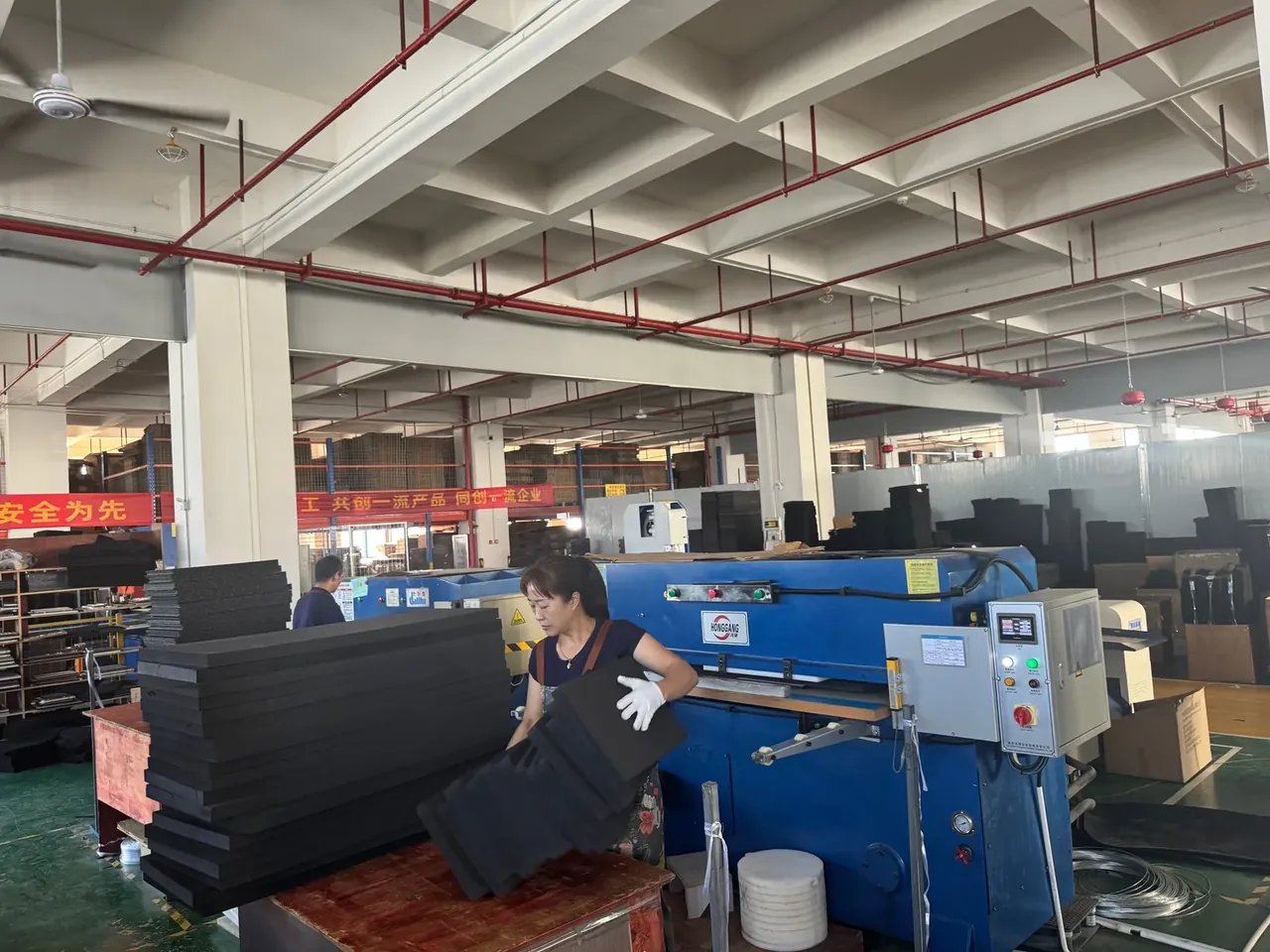
Do the sum: 25 kg/m³ EPE stacked to 1.0 m puts 25 kg/m² on the base, roughly 0.25 kPa. That reads small, yet a deck gap multiplies it three to five times locally, right on the softest face. Height and deck are set together.
Leave 100 mm of headroom and 80 mm between stacks. Foam from a cold store needs 24 h at 15 to 25°C before the wrap comes off; cut it while condensation sits in the cells and the edge frays. A case cavity is held to 0.2 mm of depth while sheet thickness varies by ±0.5 mm.
5. How long: FIFO and recheck points
The fourth Foam Sheet Storage question is shelf life: a visual pass at 3 months, a compression set recheck at 6 months, a forced diversion at 24 months. Yellowing, tackiness or collapsed corners quarantine a bundle ahead of the test.
| Point | Action | Limit |
|---|---|---|
| Every 3 months | visual and thickness spot check | 0.3 mm dip |
| Every 6 months | compression set | 10% |
| Every 24 months | divert to non-visible parts | expiry |
Compression set follows GB/T 6669-2008, with ISO 1856 and ASTM D395 in the same shape: 25% deflection, 23°C for 22 h, 30 min of recovery, then measure. Above 10% the bundle is rejected. EPE lands under 10%, EVA runs 10% to 40% by density and crosslinking, and the same sample at 70°C reads higher.
A Foam Sheet Storage log records 15 to 25°C and 50% to 60% RH daily. Seven days above 40°C, or three above 70% RH, pulls the lot forward for recheck. Auditors ask for that log on a protective case line.
Conclusion
Four settings keep Foam Sheet Storage honest: a 10° lean on the rack, a 12 mm deck 20 mm wider than the sheet, a 1.2 m cap with pads every 300 mm, and a six-month compression set check. The deck is the one that gets skipped, because plywood and bare boards look alike until dents surface three months later and a run of case bodies goes back to the press. JUNZHIJIA hangs an intake date and recheck result on every rack end, holds cavity depth to 0.2 mm, and issues drawing tolerances through Kexin New Materials (Guangdong) Co., Ltd.
Related Reading
- Foam replacement: ageing signs and change intervals
- Foam thickness: choosing 5, 10 or 15 mm
- Foam lining design guide: cavities and fit
- Raw material traceability: batch, grade and retain samples
Related Products
- 8 Series — Gun Cases; Military Equipment Cases; Camera Equipment Cases; Drone Cases; Watch Cases; Knife Cases; First Aid Cases; Electronics Equipment Cases
- WL8-2812 PP Gun Case — model WL8-2812
- All protective cases and toolboxes: 7 series, 158 models