

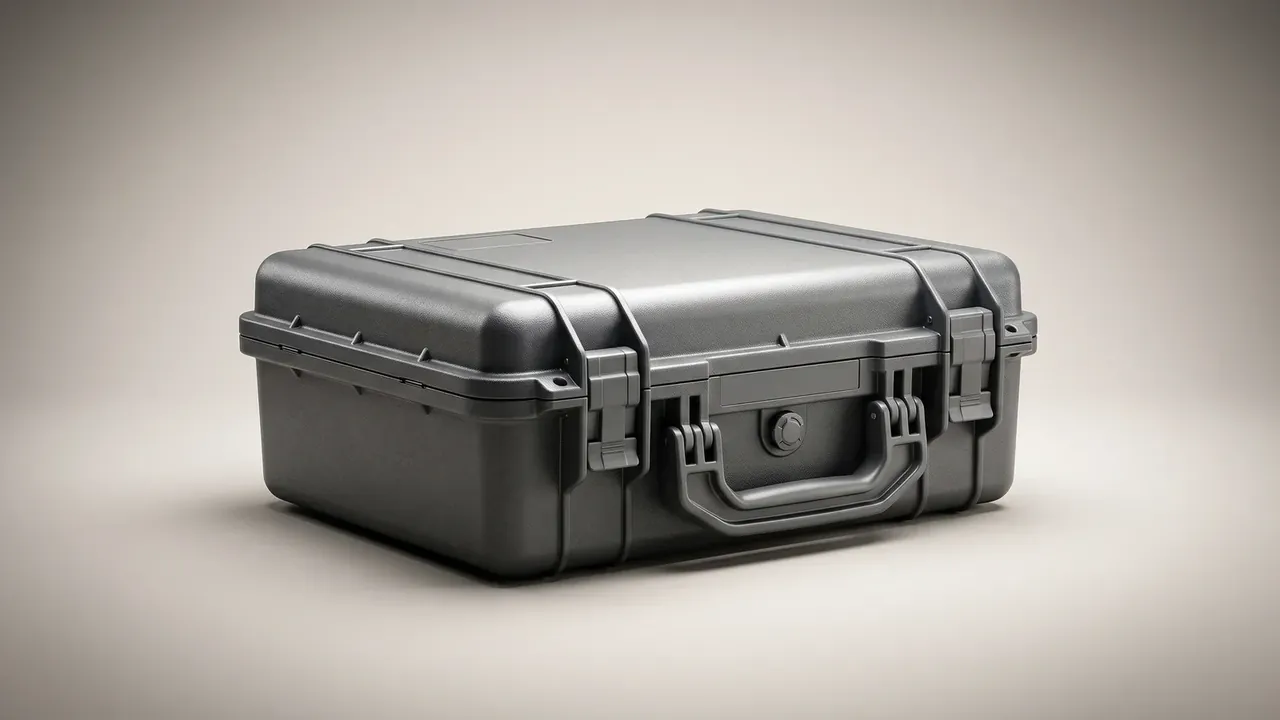
Quick answer: Judge the extent first: compression above 15% that will not recover, a powdery surface or a sidewall collapsed by 2 mm means the Foam has failed, and one hollow takes a patch, widespread collapse a full sheet.
Table of contents
- Three Signals That Foam Has Aged
- Full-Sheet Replacement: Die-Cut and Waterjet Tolerances
- Patch Repair: Same Density, Thin Glue Line
- Switching to Dividers: Laying Out a 25 mm Grid
- Labour and Waste Across the Three Routes
- FAQ
1. Three Signals That Foam Has Aged
Discolouration is not the signal; lost thickness is. Pull the insert, lay it flat for 30 minutes, take five readings with a 0.02 mm caliper across the loaded area and compare each with the original. Compression above 15% that stays flat after 24 hours trips the first signal. The second is the surface: three palm passes leaving a white smear and crumbs mean the skin has gone powdery, which turns into abrasive grit against the shell. The third is the cut face, where a sidewall collapsed by 2 mm no longer holds the outline and the unit shifts 3 mm. Two out of three is enough.
Material, not the calendar, sets the speed. PE Foam runs 30–45 kg/m³ with closed cells, slow to rebound but hard to crush; EVA runs 60–90 kg/m³ and cuts cleanly; PU memory Foam rebounds in 3–5 s and absorbs moisture. Held six months at 40 °C and 80% humidity, PE gains 4 points of compression, PU 11.
| Signal | Tool or action | Failure line |
|---|---|---|
| Thickness recovery | 0.02 mm caliper, 5 points | Over 15%, flat after 24 h |
| Surface powdering | Palm rub, 3 passes | White smear, crumbs |
| Outline support | Feeler gauge | Collapse over 2 mm |
| Cavity clearance | Feeler gauge | Unit shifts over 3 mm |
Sampling is where people go wrong: the unit presses a shallow dish into the loaded zone, so the floor reads lowest and the rim normal, and centre-only checks understate ageing by 3 to 5 points.
2. Full-Sheet Replacement: Die-Cut and Waterjet Tolerances
A full sheet fits whole-layer failure, where the signals hold across the plane, not in one hollow. Plan ±1 mm on the outline and 0.5 mm of sidewall lean; run a die above 200 pieces and waterjet below 20, whose kerf carries 0.3 mm of taper to be trimmed.
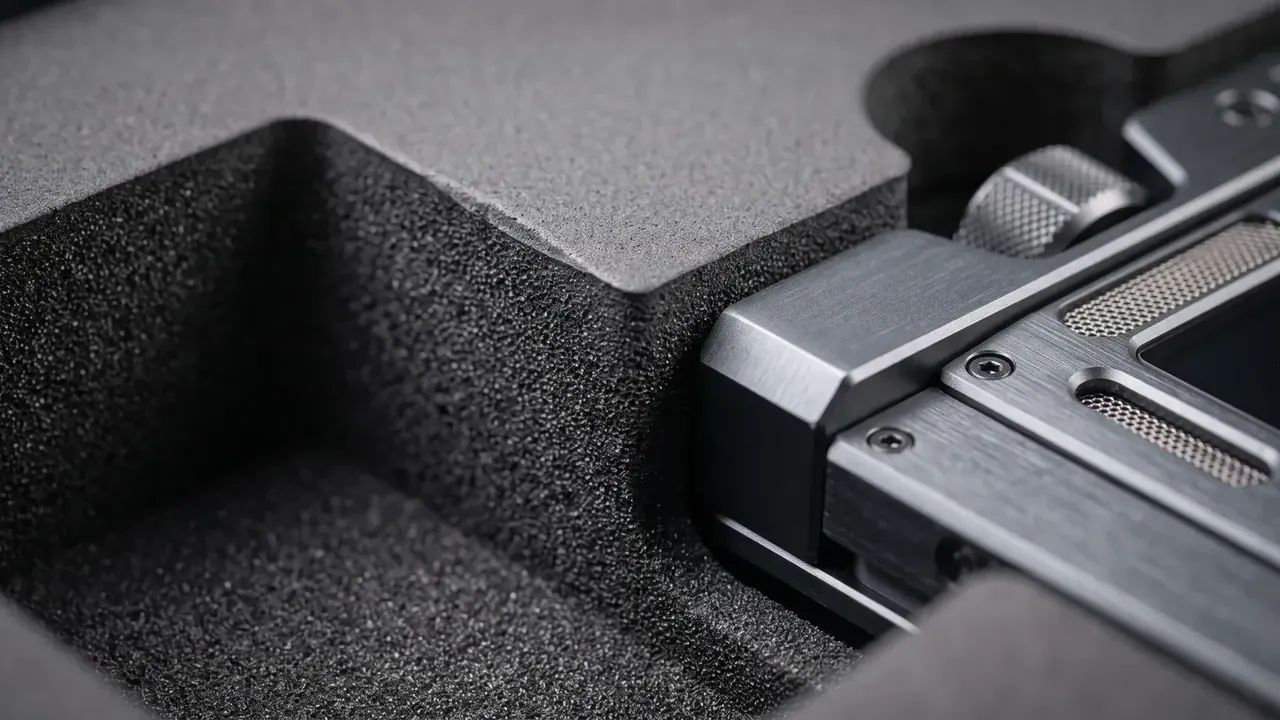
Most inserts are three layers: a 20 mm convoluted lid pad, a 30 mm cut middle and a 10 mm base pad, with total thickness 5 mm under the internal depth. Cut the cavity 1–2 mm larger than the unit so it goes in without scraping, but never 5 mm, or the unit slides and hits the wall before the insert absorbs anything.
Kerf quality sets service life. A die leaves a vertical, dense edge; a waterjet leaves a burr that rubs off as crumbs, so a 120 grit rub-down adds 2 minutes per part. Three checks close the job: lid-to-body gap under 1 mm, centre deflection under 1 mm with latches closed, and a 1.2 m drop where peak acceleration falls from 90 g to 45 g.
3. Patch Repair: Same Density, Thin Glue Line
Patching suits one hollow under 30% of the sheet area, away from the corners, which carry load in two directions and open two glue lines under impact.
Match material exactly, PE to PE, EVA to EVA, PU to PU; mixing builds a hardness step that separates after a dozen compressions. Keep the patch within 0.5 mm of the parent thickness.
The glue line measures 0.1–0.2 mm: apply, flash off 5–8 minutes until tacky, press with a 10 mm overlap, hold 30 minutes, leave 24 hours before refitting. Above 0.2 mm the adhesive soaks into open cells and the bond weakens; below 0.1 mm coverage fails at the edge.
Bevel the border at 45° over a 5 mm face: a square edge forms a step that concentrates stress and rolls up within three loadings, while the bevel turns it into a taper so patch and parent sink together. Expect 60%–70% of the parent's remaining life at a six-month re-check.
4. Switching to Dividers: Laying Out a 25 mm Grid
Where equipment is handled often, dividers beat patching. EPP ribs on a 25 mm grid, 15 mm thick and 5 mm under the internal depth, with a 2 mm assembly gap, rebuild without recutting; EPP at 40–60 kg/m³ loses under 0.5 mm of wall after 5,000 insertions.
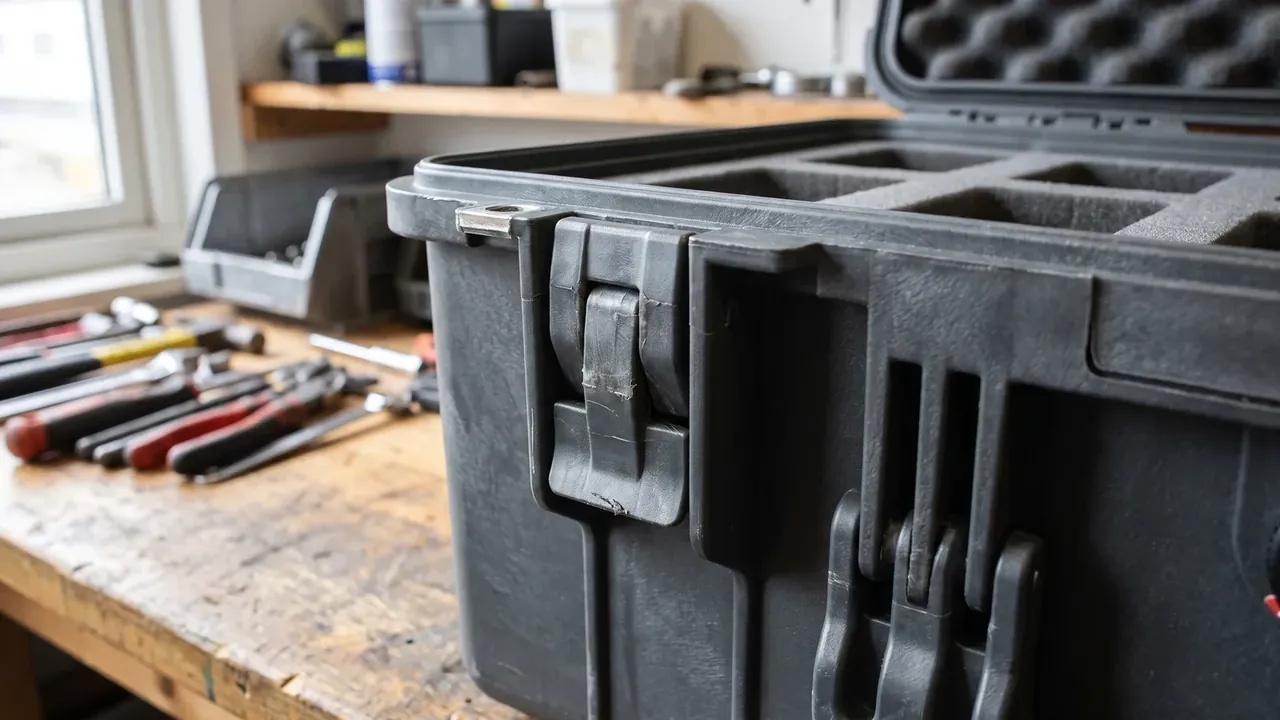
The trade-off is open volume. The smallest cell is 25×25 mm, so small items rattle and need a lid pad, and narrow items rely on the 15 mm rib wall; a rib under 10 mm thick will bow.
Most builds combine the two: a 10 mm base pad for vertical shock, EPP ribs for location and a 20 mm lid pad to hold everything down, with a 1.2 m drop peaking near 50 g. Dividers stay adjustable, since changing equipment means pulling one rib, though ribs locate by friction and a slot loosens by 0.3 mm in time.
5. Labour and Waste Across the Three Routes
Each route answers a different extent of failure: a full sheet for one hollow burns material, one patch on a failed layer collapses within three months.
| Route | Time per unit | Waste | Critical tolerance | Fits when |
|---|---|---|---|---|
| Full sheet | 40–60 min | 8%–12% | ±1 mm outline | Whole layer failed, collapse over 30% |
| Patch | 15–25 min | 3%–5% | 0.1–0.2 mm glue line | One hollow under 30% |
| Dividers | 60–90 min | 5%–8% | 25 mm grid | Frequent handling |
Times exclude drying, and a third of the full-sheet figure goes to trial fitting: cut, fit, adjust 0.5 mm, repeat until the lid closes without pinching. Waste separates by method, at 8%–12% for die-cut offcuts, 3%–5% for patches and 5%–8% for dividers.
The decision compresses to one line: one hollow under 30%, patch it; over 30% or three hollows, replace the sheet; three layout changes a year, switch to dividers.
Conclusion
Whether to patch, replace or re-cut comes down to extent, not appearance. Three numbers draw the replacement line, 15% compression, a 2 mm collapsed sidewall and 3 mm of movement in the cavity, while 30% of the area separates patching from a full sheet and a 25 mm grid sets the dividers. On an inspection sheet, those thresholds turn three routes into 40–60, 15–25 and 60–90 minutes.
This article discusses only the container (case body) side of specifications and design intent, and does not cover any handling, loading or use of the contents.
Related Reading
- Foam types and interior structures for protective cases
- PE, EVA and PU Foam compared
- Five factors behind custom Foam pricing
- Dividers or Foam: choosing an interior
Related Products
- 8 Series — Gun Cases; Military Equipment Cases; Camera Equipment Cases; Drone Cases; Watch Cases; Knife Cases; First Aid Cases; Electronics Equipment Cases
- WL8-2812 PP Gun Case — model WL8-2812
- All protective cases and toolboxes: 7 series, 158 models