

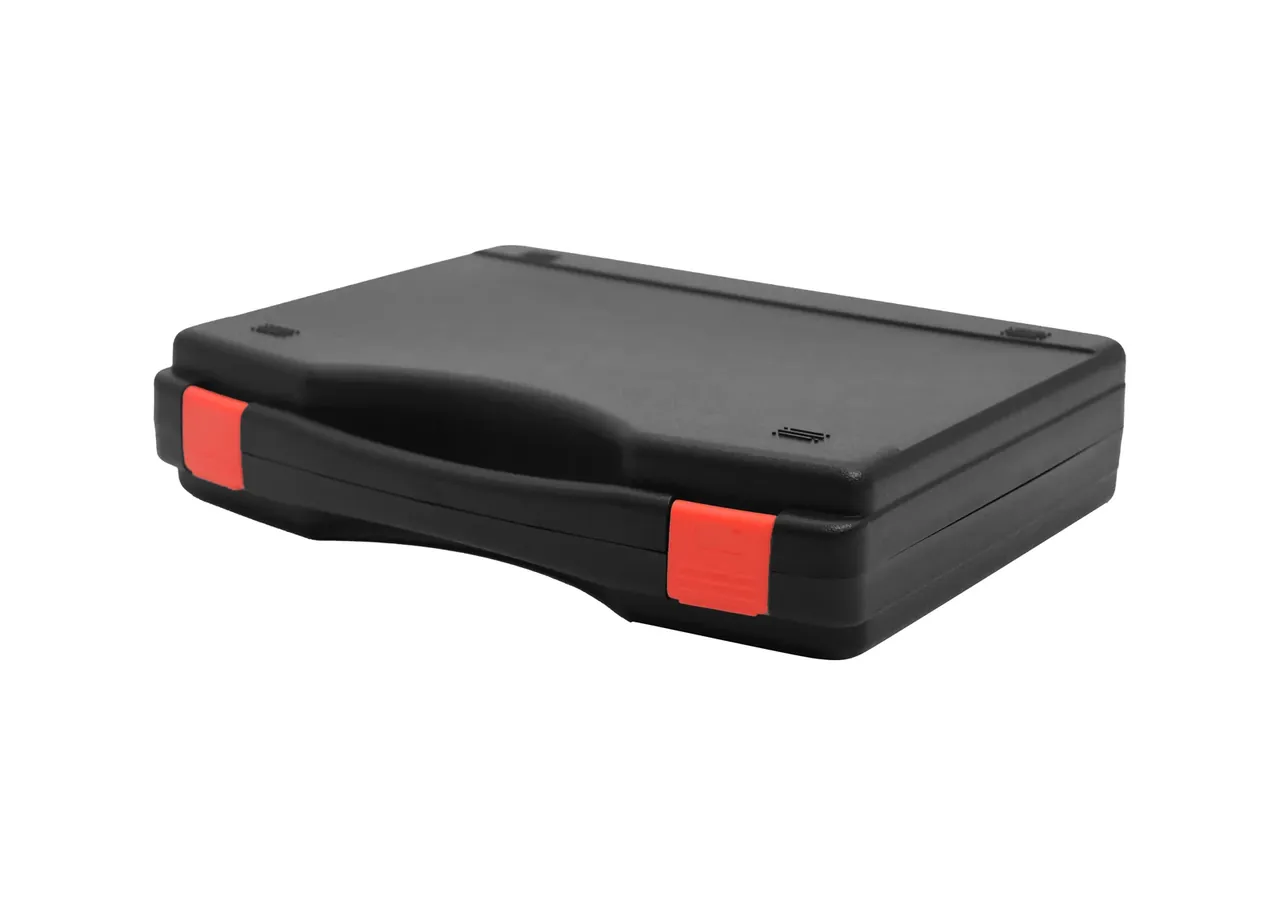
Quick answer: A folding vs fixed case comparison needs three ledgers. Loaded, both take the same space; empty, a folded case runs 105 mm high and puts 56 units on a pallet against 40 for a nesting fixed case, a factor of 1.4 rather than 3; after 80 seconds of folding at 45 CNY an hour, the net gain is 0.25 CNY a unit.
Table of contents
- Three Volumes, Not One
- Loaded Leg: Nothing Is Saved
- Empty Leg: 2.86 Against 1.4
- Storage Ledger: 38 CNY a Pallet Position
- The Cost of Folding: 80 Seconds, 8,000 Cycles, IP54
- FAQ
1. Three Volumes, Not One
Put both in one table and most buyers miss a row. A case carries three volumes: outline while loaded, stack volume on the empty return, and the pallet footprint it ties up in the warehouse. Folding touches only the last two.
A 600×400×300 mm folding case drops to 105 mm once the walls fold down, 2.86 to 1. A fixed case of the same size does not fold, but with a 3° taper it nests 130 mm per unit.
| Item | Folding case | Nesting fixed case | Flat-base fixed case |
|---|---|---|---|
| Open outline | 600×400×300 mm | 600×400×280 mm | 600×400×280 mm |
| Empty stack form | Folded, 105 mm | Nested, +130 mm | Stacked, 280 mm |
| Tare | 2.6 kg | 2.8 kg | 3.4 kg |
| Static load | 300 kg | 500 kg | 800 kg |
| Sealing | Interlock seam, IP54 | Optional gasket, IP65 | Moulded groove, IP67 |
The tare row reads as a detail. A folding case at 2.6 kg is not light because material was saved; the wall structure went into four hinges and eight latch teeth. The 0.6 to 0.8 kg a fixed case carries is exactly the part that resists compression.
Light does not mean load bearing.
2. Loaded Leg: Nothing Is Saved
With cargo inside, both fight for the same deck: a 600×400×300 mm folding case at rated load keeps its outline, and so does the fixed case. A 9.6 m box body takes 16 pallet positions at 1.2×1.0 m, so a full run is 320 units either way, at the same freight.
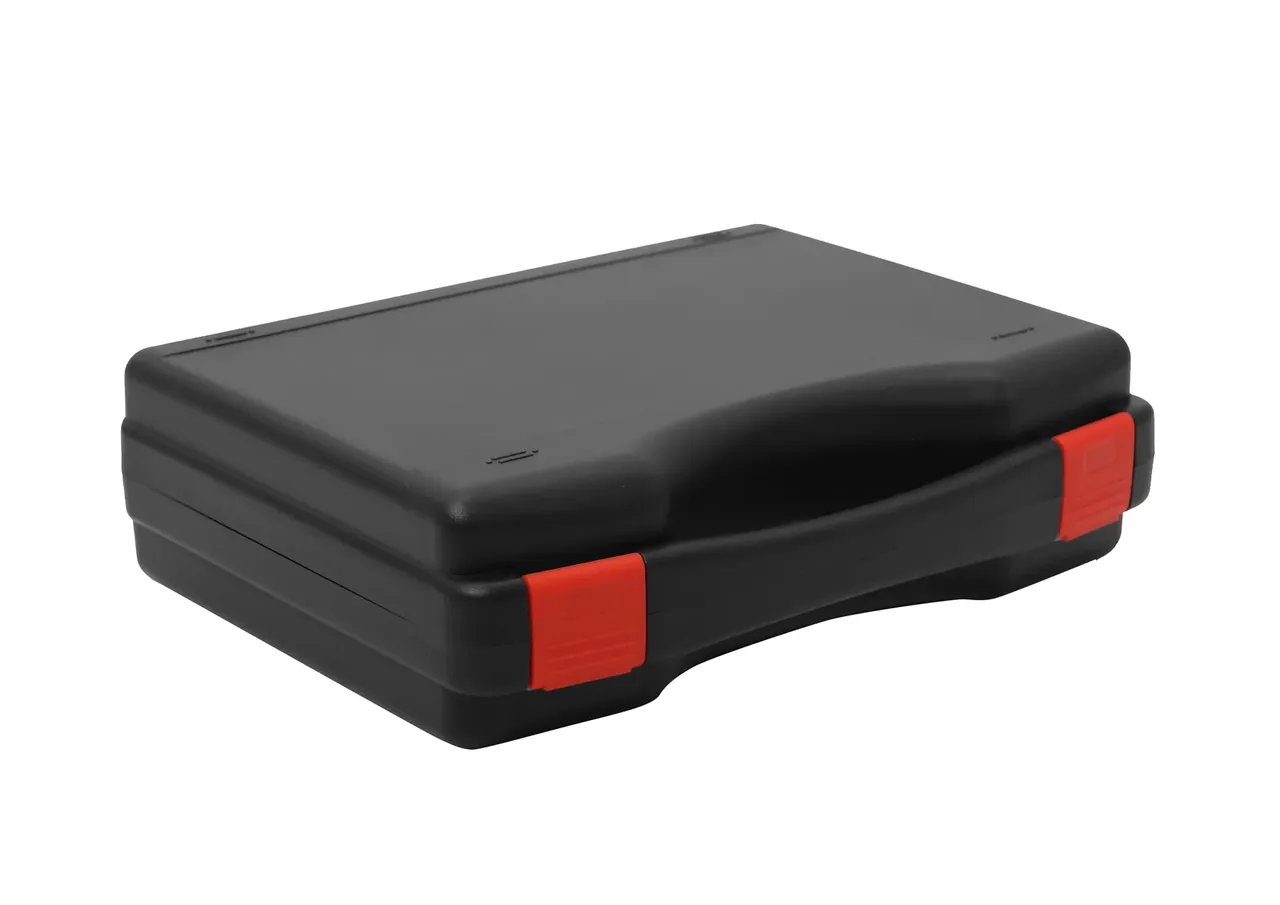
No ledger exists here: a folding case earns nothing outbound, only on the return and in storage.
Volumetric charging agrees: sixteen positions at 1.2×1.0×1.645 m come to 31.6 m³, and at 250 kg per m³ either case charges 7.9 t.
3. Empty Leg: 2.86 Against 1.4
Folding literature often claims 3× or 4×, comparing folded with open height. On a pallet the ratio loses ground twice: a position is 1.2×1.0 m, so four fit per layer, and usable height is 1.65 m minus a 145 mm pallet.
| Form | Per layer | Layers | Per pallet | Per 16-pallet truck |
|---|---|---|---|---|
| Folding, open | 4 | 5 | 20 | 320 |
| Folding, folded | 4 | 14 | 56 | 896 |
| Fixed, nested | 4 | 10 | 40 | 640 |
| Fixed, stacked | 4 | 5 | 20 | 320 |
Folded 56 against nested 40 is 1.4, not 2.86. Layer count does it: 105 mm reaches 1.47 m in 14 layers, while a nested case adds 130 mm and hits 1.58 m at ten.
Where 105 mm comes from matters: each wall folds to 22 mm, four walls give 88 mm, the base channel adds 17 mm. Pressing lower means thinning the wall, and a 2.6 mm sidewall taken to 1.8 mm drops static load from 300 kg to 180 kg.
At 2,800 CNY a truck: folded 3.13 CNY a unit, nested 4.38, stacked 8.75. Folding beats nesting by 1.25 CNY and flat stacking by 5.62 CNY.
That 1.25 CNY still owes labour.
4. Storage Ledger: 38 CNY a Pallet Position
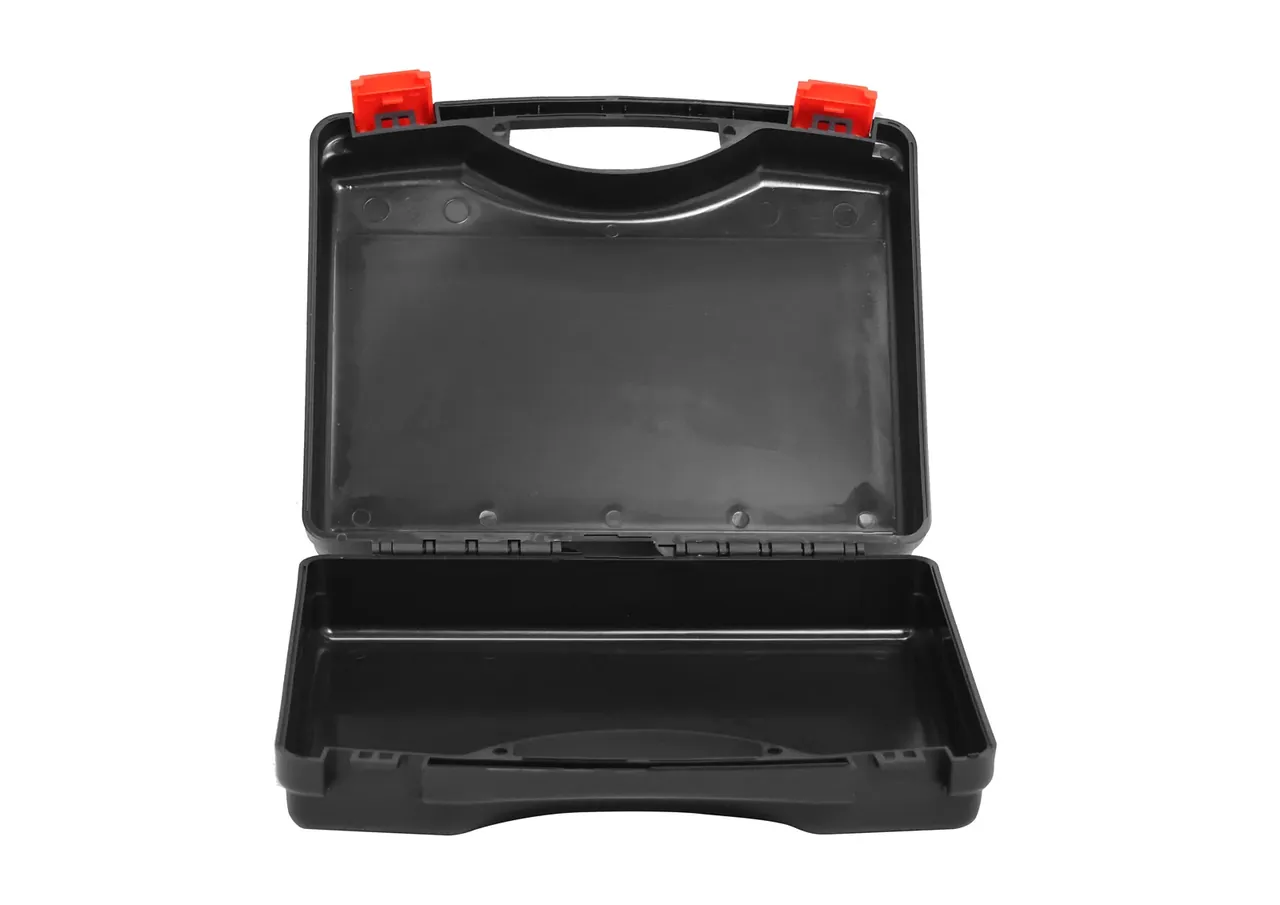
Rent per position repeats the gap every month. At 38 CNY, 1,792 empty cases — two full trucks — take 32 positions folded, 45 nested and 90 stacked flat.
| Form | Positions | Monthly rent | Rent per unit |
|---|---|---|---|
| Folding, folded | 32 | 1,216 CNY | 0.68 CNY |
| Fixed, nested | 45 | 1,710 CNY | 0.95 CNY |
| Fixed, stacked | 90 | 3,420 CNY | 1.91 CNY |
This is its solid ground: 494 CNY a month against nesting, 2,204 against flat stacking. The slower the turnover, the more it weighs.
Positions are not the whole cost. A folded case leaves a 105 mm edge, so a 14-layer stack needs boards; a set of four runs 180 CNY, 3.21 CNY over 56 units, 0.13 CNY a month across two years.
Half the rent saving goes to the boards.
Handling adds more: a folded case must be opened before picking, so the dock needs an opening area, and at 90 units an hour 1,792 cases take 19.9 hours that the rent never shows.
5. The Cost of Folding: 80 Seconds, 8,000 Cycles, IP54
Space is half of it; motion is the other. Folding four walls takes 42 seconds, opening and latching 38, so a case costs 80 seconds a round trip. For 896 units at 45 CNY an hour that is 19.9 hours and 896 CNY, or 1.00 CNY a unit.
- Freight saves 1.25 CNY, labour spends 1.00, leaving 0.25 CNY a unit. At 60 CNY an hour the account reaches zero.
- Hinges are rated 8,000 cycles, 3.6 years at six folds a day; past that the latch gap grows to 1.5 mm and stacks lean.
- The interlock seam is 0.6 mm wide, so sealing stops at IP54; a fixed case with a moulded groove reaches IP67.
- At −10 °C, 50 folds open a 12 mm crack at the PP hinge pin; a fixed case has no moving part.
- A folded case cannot carry 300 kg alone, so a tall stack leans on boards to spread the load.
The first two decide whether it pays, the last three whether it works. Turnover sets the scale: at four turns a year the folding time barely registers, at forty the 0.25 CNY gain turns negative.
Conclusion
Three ledgers settle folding vs fixed case: loaded, they are identical; empty, 56 against 40 is only 1.4×; in storage, a position is worth 494 CNY a month. Charge 80 seconds at 1.00 CNY and the net gain over a nesting fixed case is 0.25 CNY a unit, while the gap to a flat-base case stays at 5.62 CNY.
This article discusses only the container (case body) side of specifications and design intent, and does not cover any handling, loading or use of the contents.
Related Reading
- Can a folding case replace a fixed case in storage
- Empty case returns: folding and nesting compared
- Stackable Plastic Storage Case Trial: Five Layers, One Til…
- Measuring case interior dimensions: three numbers
Related Products
- 8 Series — Gun Cases; Military Equipment Cases; Camera Equipment Cases; Drone Cases; Watch Cases; Knife Cases; First Aid Cases; Electronics Equipment Cases
- WL8-2812 PP Gun Case — model WL8-2812
- All protective cases and toolboxes: 7 series, 158 models