

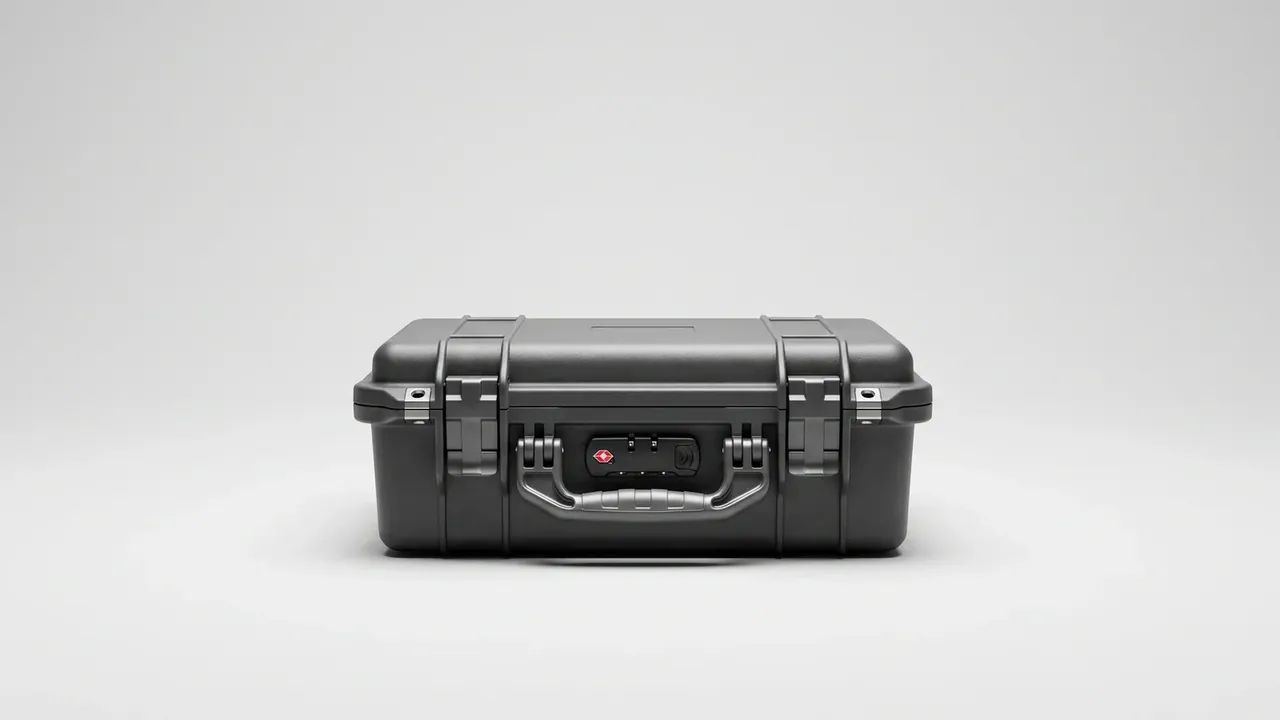
Quick answer: Fuze pack assembly upkeep runs on condition, not on the date stamp. Closure parts, gaskets, liners and cushioning each carry their own replacement line. Inspect every 90 days in a dry store and every 45 in a humid one, measuring compression set, residual foam thickness and pin wear instead of counting years.
Table of contents
- Inspection should not follow a calendar
- Cleaning: water, detergent, drying time
- Replacement lines for latches and gaskets
- Residual thickness of liner and cushioning
- Three ways to extend life, two it cannot
- FAQ
1. Inspection should not follow a calendar
Replacing a whole batch by age is the cheapest habit to run and the most expensive to pay for. The same fuze pack assembly that stays supple for five years in a stable store can take a permanent groove in two humid ones. A date stamp records when a case was made, not whether it still closes.
Intervals follow the room, not the purchase order: ninety days dry, forty-five above 65 percent humidity, plus an open-and-close test for cold rooms.
| Item | Dry store | Humid store | What to look at |
|---|---|---|---|
| Latches | 90 days | 45 days | pull feel, loose bolts |
| Gasket | 90 days | 45 days | groove depth, rebound |
| Liner, cushioning | 180 days | 90 days | sagging, powdering |
| Metal parts | 180 days | 45 days | white rust, pin clearance |
Shorter is not better. Every cycle wears the gasket a little, so a solid ninety-day round beats a monthly glance.
2. Cleaning: water, detergent, drying time
Cleaning removes salt and grit, not shine. Dry dust comes off with a soft brush, salt bloom with a damp cloth, and only grease justifies detergent; solvent strips the wax film that keeps dust from settling.
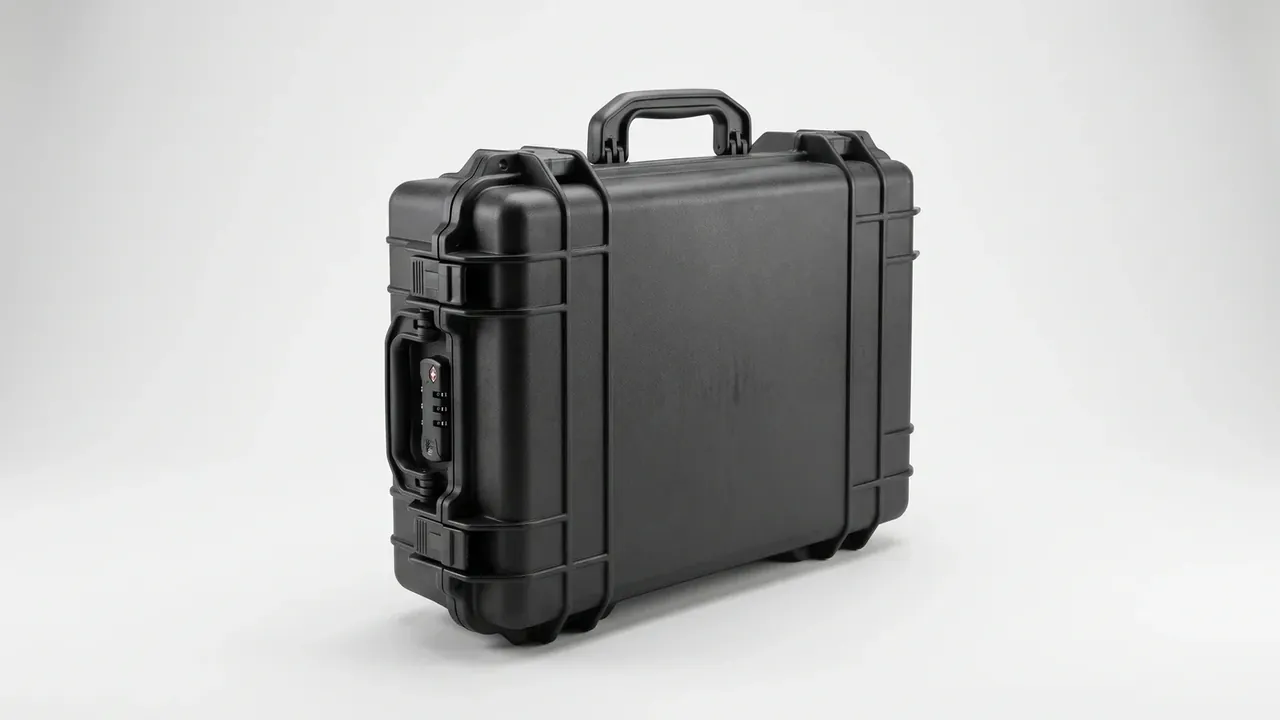
Keep water under 40 °C and detergent between pH 6 and 8. Brush along the gasket groove, never across it. Dry the rim at once. Never aim a pressure washer at the seal or the latch pin. Water forced into a groove stretches drying from one day to three; in a cold store it freezes and lifts the gasket.
Drying takes longer than washing. Leave the case open for 24 hours in moving air, and shelve it only below 60 percent humidity.
3. Replacement lines for latches and gaskets
Judge a gasket by compression set, not by cracks. Pull a section, let it rest for 30 minutes, then measure: if it recovers less than seventy percent of its thickness, the ring goes.
| Part | Replacement line | Gauge | Action |
|---|---|---|---|
| Gasket | set over 30 percent or cracked | caliper | whole ring |
| Latch | weak pull, slip at 2.5 N·m | torque wrench | single latch |
| Hinge pin | radial wear over 0.3 mm | micrometer | pin only |
| Liner | cell wall sag past 1.5 mm | steel rule | block or full liner |
Fit gaskets as a ring. A splice compresses differently and leaks first, and debris deeper than 0.5 mm in the groove has to come out.
4. Residual thickness of liner and cushioning
Liner failure is gradual. EPE takes up moisture, rebounds slowly, and cell walls sag until a unit that once sat tight rattles; by then the sag is usually past 1.5 mm.
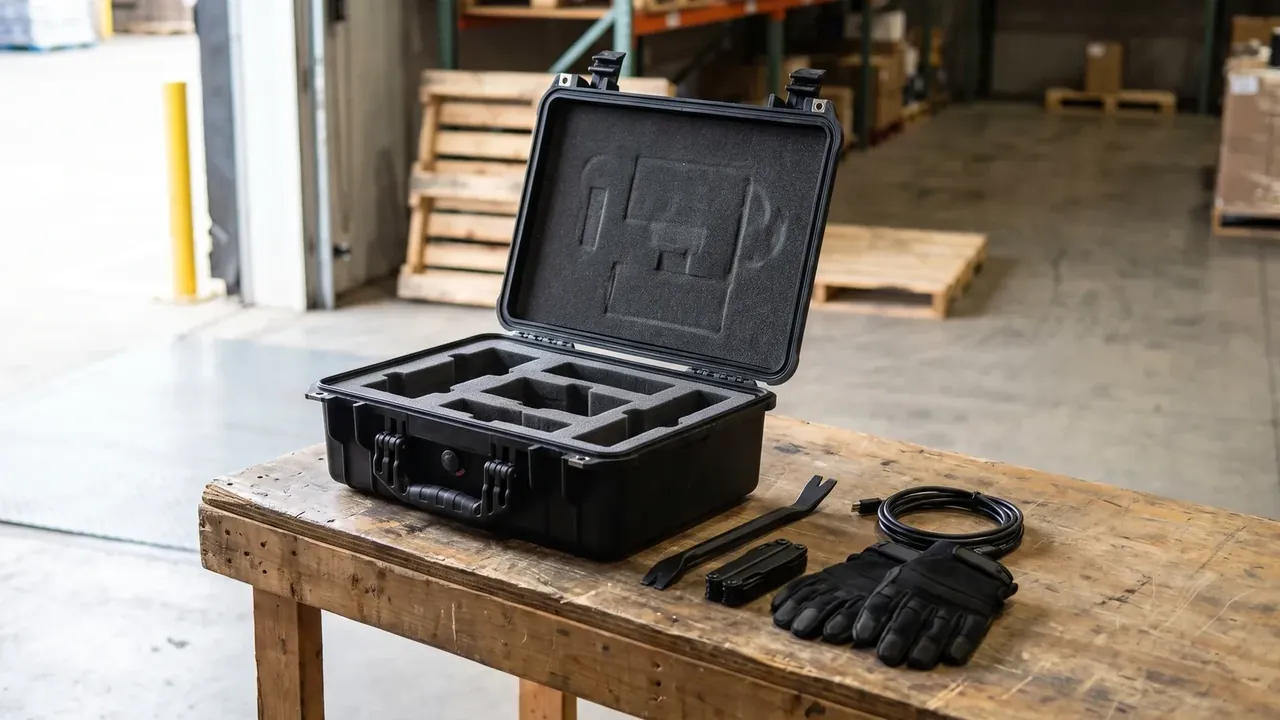
Cushioning is judged by residual thickness. Measure the thickest point of a corner block, write it inside the lid, and compare next round. Continuous crush lines or powdering mean the foam no longer absorbs anything.
Both are service parts. Replace them without touching the case, as long as the rim closes and the corners show no pale marks.
5. Three ways to extend life, two it cannot
Three habits add years to a fuze pack assembly.
- Let a case reach room temperature before closing, so no condensation forms.
- Wipe a thin film of silicone grease on the gasket yearly; mineral oil swells rubber.
- Retorque latch bolts to 2.5 N·m, since hand-tight usually ends up too tight.
Two cannot be extended: a gasket crushed flat, and a liner with a through crack. Cold stores need one more step, four hours at -30 °C then an open-and-close test, since a stiff gasket raises latch force.
Conclusion
Maintenance of a fuze pack assembly is a set of decision lines, not a replacement schedule. Inspect by room, control water and drying, read gasket set and liner sag with a gauge, and swap service parts rather than whole cases. Post those lines inside the store door and a fuze pack assembly outlasts any calendar.
This article discusses only the container (case body) side of specifications and design intent, and does not cover any handling, loading or use of the contents.
Related Reading
- How a fuze pack assembly is built in four layers
- Cushioning and locating design for the same pack
- Inspection and preservation for reserve cases
- Derusting and sealing upkeep for metal ammunition boxes
Related Products
- 8 Series — Gun Cases; Military Equipment Cases; Camera Equipment Cases; Drone Cases; Watch Cases; Knife Cases; First Aid Cases; Electronics Equipment Cases
- WL8-2812 PP Gun Case — model WL8-2812
- All protective cases and toolboxes: 7 series, 158 models