

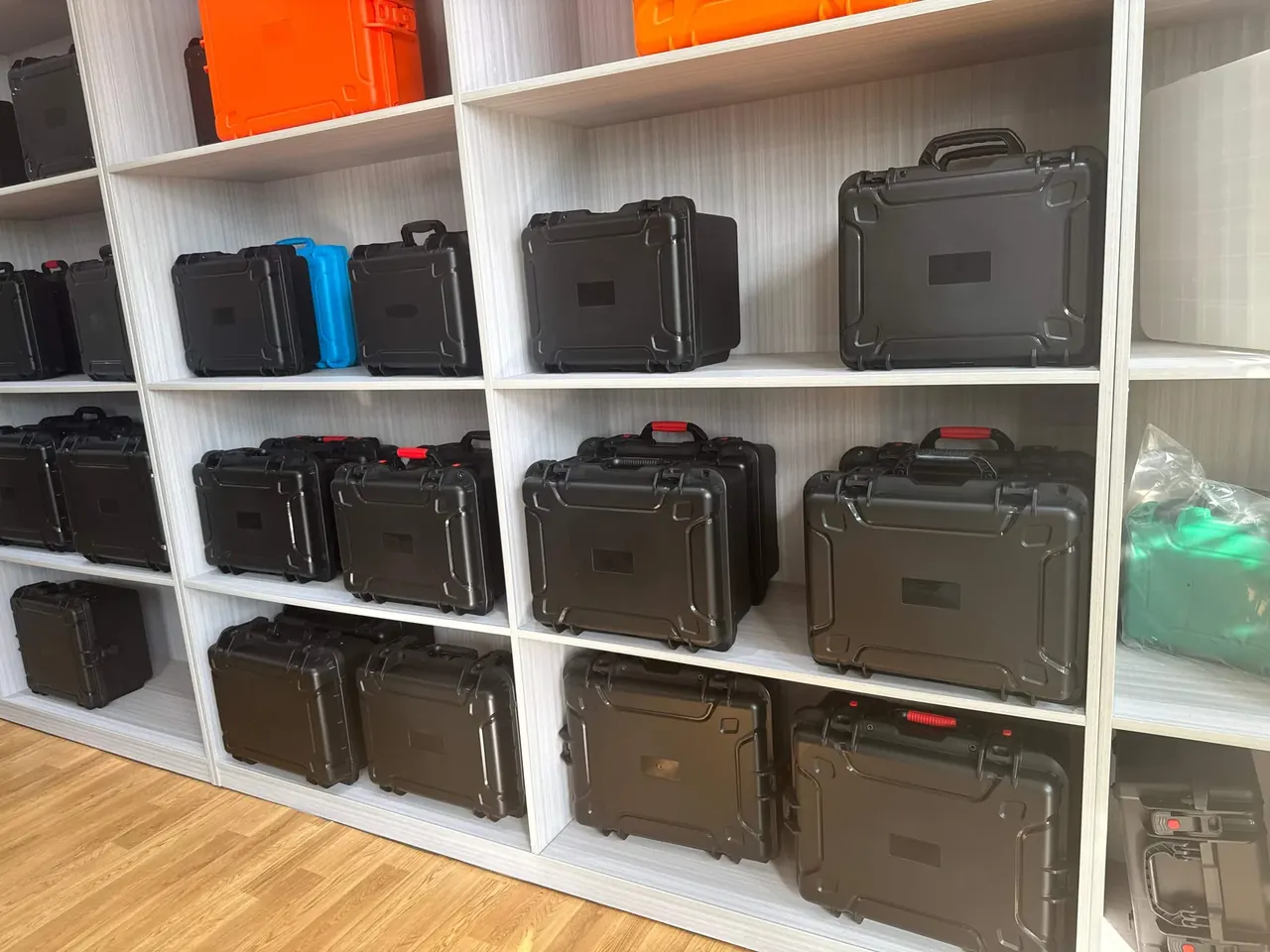
Quick answer: A glass filled case at 30% glass reaches 6.6 GPa flexural modulus against 4.1 GPa at 20%, while notched impact drops from 6.2 to 4.1 kJ/m².
Table of contents
- The paradox: stiffer at 30%, cracking first in a drop
- Flexural modulus: 4.1 GPa against 6.6 GPa
- Notched impact: 6.2 down to 4.1 kJ/m²
- Shrinkage and warpage over 620 mm
- Fibre read-through a grain cannot hide
- Tool wear and the 120,000-shot screw
- FAQ
1. The paradox: stiffer at 30%, cracking first in a drop
On one 480 × 360 × 210 mm shell, a 2 kg ball from 900 mm at −10 ℃ opens a 32 mm corner crack at 30% glass; the 20% version dents 6 mm and holds. The stiffer part fails first.
Fibre orientation explains it. Melt lays fibres in planes along the flow path, so modulus is high along flow and equals neat resin across it. A corner impact loads the transverse direction, where fibres neither carry load nor stop a crack: they start one at the interface.
More glass sharpens the anisotropy. At 20% the flow-to-cross modulus ratio is 1.6; at 30% it reaches 2.1 and the impact ratio widens from 1.4 to 2.0.
2. Flexural modulus: 4.1 GPa against 6.6 GPa
Three-point bending to GB/T 9341 gives 4.1 GPa at 20% glass, 6.6 GPa at 30% and 1.3 GPa unfilled. A 4 mm lid under 60 kg for 24 h deflects 4.8 mm, 1.6 mm and 1.0 mm.
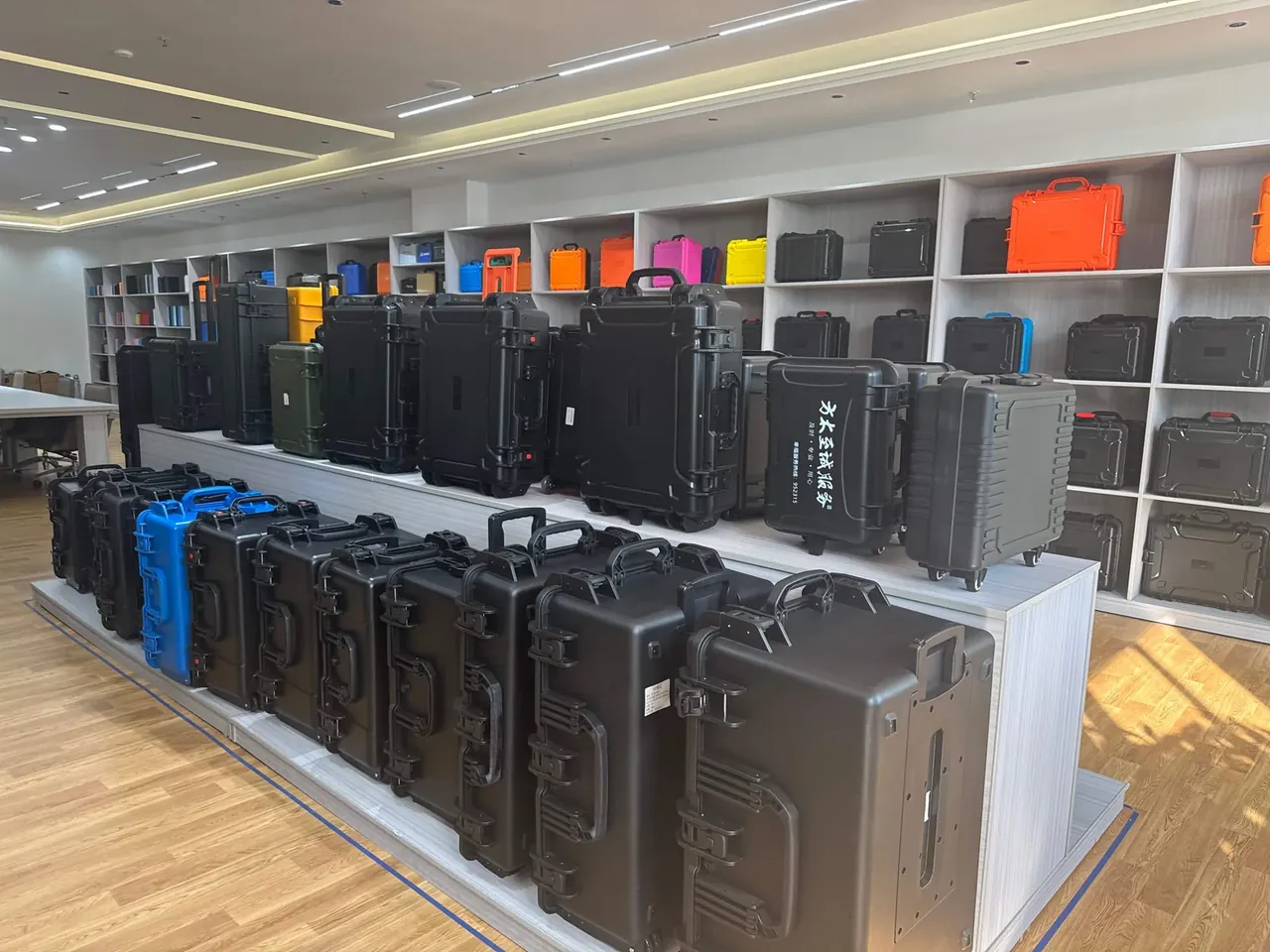
Stacking is where modulus pays. Four high at 28 kg a case puts 84 kg on the bottom lid: 2.2 mm of sag at 20% against 1.4 mm at 30%. At six high the 20% lid reaches 3.6 mm, enough to unload the gasket, while 30% holds 2.1 mm.
Long loads need a discount on short-term data. Under 25 kg for 1,000 h the 20% shell creeps 1.1 mm and the 30% shell 0.7 mm; at 5,000 h they reach 1.6 mm and 1.0 mm. Warehouse stacks sit half a year, so grade on 5,000 h creep, not 24 h sag.
3. Notched impact: 6.2 down to 4.1 kJ/m²
Charpy notched at 23 ℃ gives 6.2 kJ/m² at 20%, 4.1 kJ/m² at 30% and 8.0 kJ/m² unfilled, because every fibre end concentrates stress.
| Property | Unfilled PP | 20% glass | 30% glass |
|---|---|---|---|
| Density, g/cm³ | 0.91 | 1.05 | 1.13 |
| Flexural modulus, GPa | 1.3 | 4.1 | 6.6 |
| Tensile strength, MPa | 32 | 55 | 70 |
| Notched impact at 23 ℃, kJ/m² | 8.0 | 6.2 | 4.1 |
| Notched impact at −20 ℃, kJ/m² | 3.1 | 3.4 | 2.6 |
| Elongation at break, % | 120 | 6 | 3.5 |
Read the −20 ℃ row first. The 20% grade loses 45% of its impact value in the cold, the 30% grade 37%, yet the absolute number still favours 20%; the gap narrows from 2.1 to 0.8 kJ/m², so the 30% weakness is the starting point, not cold sensitivity.
Weld lines amplify it. Fibres cannot cross the interface, leaving 45% retention at 20% glass and 30% at 30%. Corner weld lines face the drop load, and the 30% crack runs 25 mm along the line before turning.
Test conditions matter more than the compound: the 4.1 kJ/m² comes from an A-type notch of 0.25 mm radius, while un-notched the same batch reads 28 kJ/m².
4. Shrinkage and warpage over 620 mm
Glass suppresses shrinkage to 0.45% at 20% and 0.30% at 30%, against 1.5% unfilled. Low shrinkage is good, directional difference is not: flow-to-cross runs 0.25% and 0.40%, which puts 0.7 mm of warp difference across a 620 mm base.
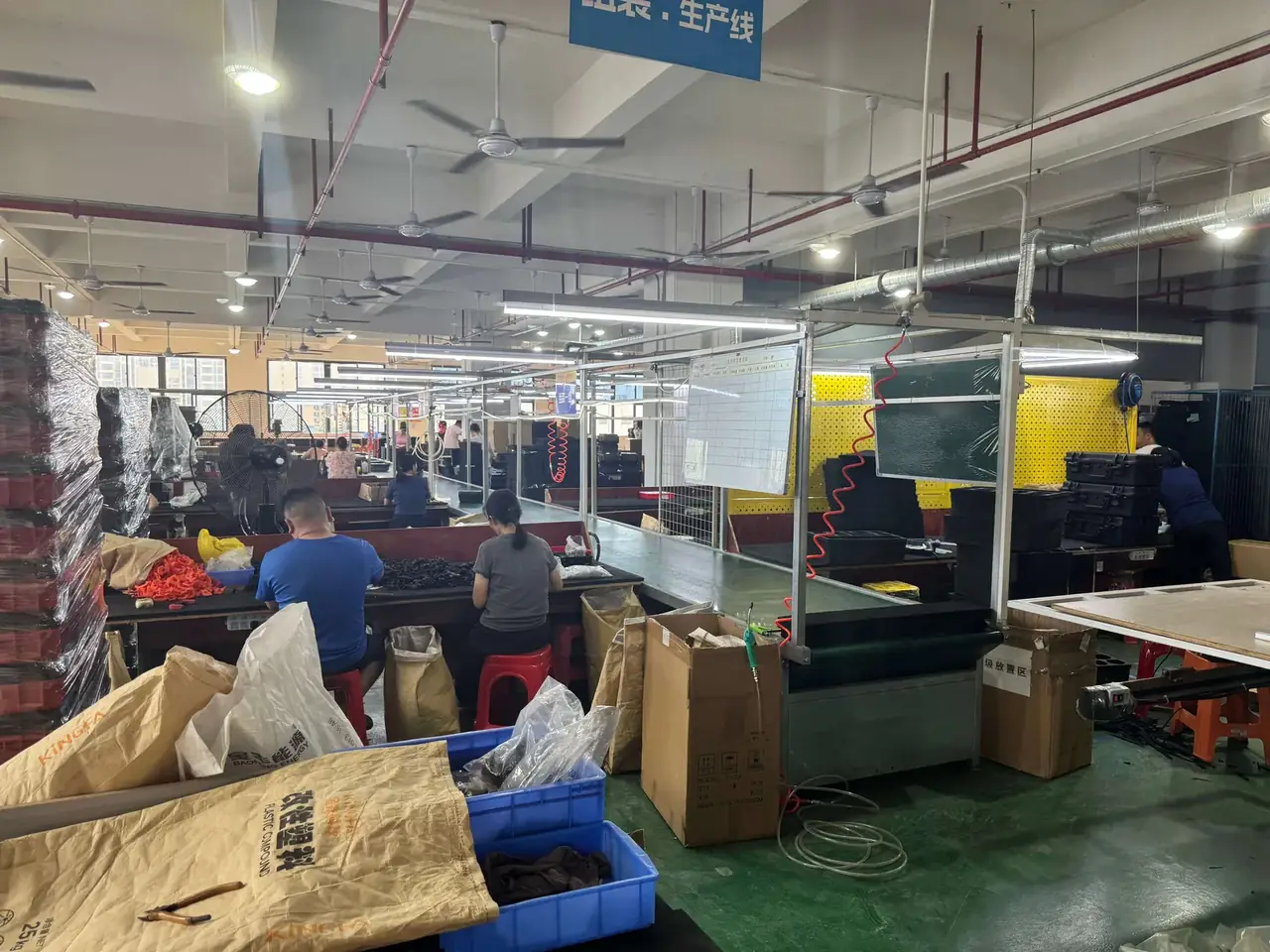
A base warped past 2 mm rocks on a bench, one corner lifting 1.2 mm, so the gasket never seats and a 30 min immersion leaks there first. The 30% shell warps more by nature and needs mould temperature to pull it back: 60 to 80 ℃ cuts 620 mm warp from 2.1 to 1.5 mm.
Cavity scaling is per grade: at 0.45% against 0.30% the two differ 0.9 mm in cavity size, so lid clearance needs re-cutting when the grade changes.
5. Fibre read-through a grain cannot hide
Read-through is the most visible difference. Fibres freeze at the wall before resin wets them, leaving 0.02 mm of white fuzz at 30% glass and pushing Ra from 0.8 to 1.6 μm; a MT11020 grain is only 0.05 mm deep and cannot cover it.
The 20% grade sits at 0.012 mm, and a MT11020 grain plus 0.03 mm of texture hides about 70%. Hiding the 30% version needs MT11030 at 0.09 mm, which softens any moulded lettering.
Three levers exist: mould temperature 90 ℃ cuts fibre height 30%, injection speed 30 mm/s reduces wall alignment, and a gate 0.5 mm larger lowers shear. All three still leave 0.015 mm at 30% glass.
Inspection needs no instrument: white fuzz under 45-degree side light at 300 mm fails the part, and a fingernail finds the rough spots. The two checks take 20 s and fit a full production audit.
6. Tool wear and the 120,000-shot screw
Abrasion at 30% glass runs 1.8 times the 20% rate. In hardened 1.2344 steel, screw and check-ring life is 180,000 shots at 20% and 120,000 at 30%, and gate bushing wear is 0.08 mm per 100,000 shots against 0.15 mm.
| Item | 20% glass | 30% glass |
|---|---|---|
| Compound price, USD/kg | 2.05 | 2.40 |
| Case weight, kg | 2.35 | 2.53 |
| Tool steel | 1.2344 | S136, nitrided |
| Screw life, 1,000 shots | 180 | 120 |
| Piece cost, USD | 5.90 | 6.75 |
Wear tracks barrel temperature. Running the front zone at 225 ℃ rather than 245 ℃ cuts check-ring erosion from 0.08 to 0.06 mm per 100,000 shots, but higher viscosity worsens read-through, so the two settings trade off.
Cost must include tooling: the compound is 16% dearer, each case gains 0.18 kg, and nitrided S136 adds 9%, putting the gap at 0.85 USD per piece over 50,000 units.
Sampling closes the loop: every 50,000 shots, pull three cases for immersion and a four-high stack, and sag past 2.5 mm at 20% or 1.8 mm at 30% means the screw is worn.
Conclusion
Sort by load type and the glass filled case decision loses its ambiguity: shells under stacks and static pressure want 30% glass, where 6.6 GPa and 2.1 mm of warp justify the extra 0.85 USD; shells that take drops want 20%, because 6.2 kJ/m² protects the part. Mixed duty lands at 20% plus ribs at 2.5 times wall thickness. Then check three numbers: notched impact at −20 ℃ above 2.5 kJ/m², warp over 620 mm under 1.5 mm, read-through below 0.015 mm.
This article discusses container-side specifications and design implications only, and does not cover any handling, loading or use of the contents.
Related Reading
- How ribs restore lid stiffness
- Wall thickness against strength
- Matching drop height to case weight
- Batch traceability for modified compounds
Related Products
- 8 Series — Gun Cases; Military Equipment Cases; Camera Equipment Cases; Drone Cases; Watch Cases; Knife Cases; First Aid Cases; Electronics Equipment Cases
- WL8-2812 PP Gun Case — model WL8-2812
- All protective cases and toolboxes: 7 series, 158 models