

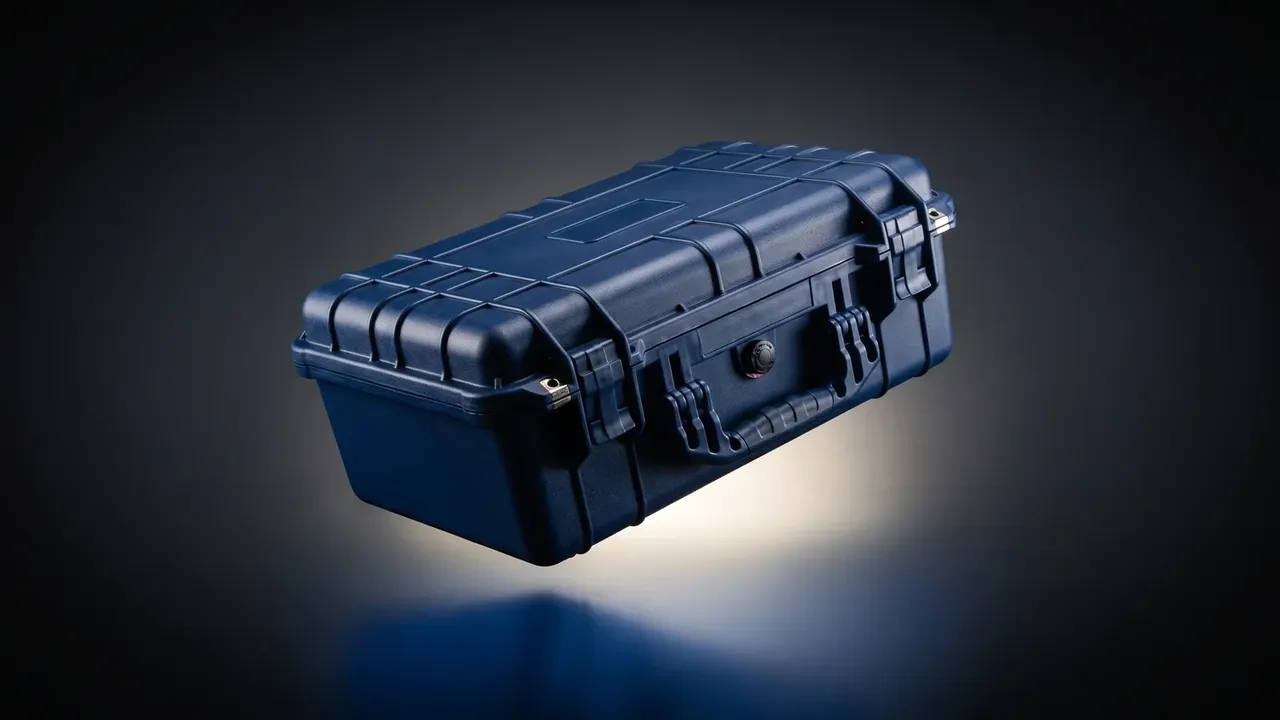
Quick answer: A gun case quote can differ twofold, and the material route explains most of it. Cold-rolled steel is cheap but hates washdown, aluminium saves weight at 1.6 times the price, 304 passes salt fog, and plastic or plywood suits only light, short service.
Table of contents
- Gun Case Material Routes: Settle the Material First
- Line One: Cold-Rolled Steel, Gauge and Weight
- Line Two: Aluminium Alloy Against Stainless
- Line Three: The Plastic Temperature Window
- Line Four: Plywood and Composite Residual Value
- Three Numbers: When Not to Choose a Gun Case
- FAQ
1. Gun Case Material Routes: Settle the Material First
Two quotes, eighty thousand against thirty, differ almost entirely in material route. Settle that before latches and shelves.
| Route | Gauge | Weight | Best for |
|---|---|---|---|
| Cold-rolled steel | 1.2–1.5 mm | 85 kg | fixed indoor, tight budget |
| Aluminium alloy | 2.5 mm | 38 kg | hoisting, frequent moves |
| Stainless 304 | 1.2 mm | 78 kg | washdown, cleanroom |
| Engineering plastic | 4 mm | 26 kg | light duty, temporary |
The order is fixed: washdown and salt fog, then movement, then shelf load. Swapped, the material comes out too expensive or too thin.
A wrong route is not patched by thicker sheet.
2. Line One: Cold-Rolled Steel, Gauge and Weight
Steel is the default. 1.2 mm with folded ribs at 150 mm centres holds stiffness; the door needs 1.5 mm because it is a cantilever.
Weight belongs in the quote. An 85 kg unit takes two on the flat and four on stairs; past 120 kg it needs a pallet truck, a detail sites discover at the stairwell.
Powder coating runs 60 to 80 μm over phosphated steel; skip that and weld seams blister within two years.
Steel has one weakness: washdown.
3. Line Two: Aluminium Alloy Against Stainless
Aluminium answers weight, not corrosion. A 2.5 mm shell weighs 38 kg where steel takes 92, at 1.6 times the price, and thin aluminium cannot be welded, so load paths need insert blocks.
Four lines of division settle it:
- Hoisting to a roof: aluminium, the crane bill covering the difference.
- Moving every task: aluminium, with better wheel mounts and lifting points.
- Pressure washing: 304, which passes 720 hours of neutral salt fog at 1.2 mm.
- Light and washed: aluminium with a liner, plus 30 percent on price.
304 costs 2.4 times steel, buying the gap between 720 and 240 hours; indoor sites usually pay it for cleanroom washdown, not salt.
4. Line Three: The Plastic Temperature Window
Plastic works in light duty once the temperature window is in the contract. PP runs -20 °C to +60 °C; outside that a 1 m drop can crack it unseen by room-temperature tests.
| Item | Value | Check | Usual mistake |
|---|---|---|---|
| Wall | 4 mm | calipers, three points | rim only |
| Window | -20 to +60 °C | drop after cycling | room-temperature drop |
| Shelf load | 25 kg | 24 h distributed | point load |
| Threads | M6 brass insert | 800 N pull-out | tapping the plastic |
Plastic fails by creep, not fracture. A shelf under 25 kg distributed sags 3 to 4 mm in a day, an allowance that belongs in the design.
Five years against ten for steel explains both price and replacement.
5. Line Four: Plywood and Composite Residual Value
Plywood survives in one setting: dry indoor, short turnaround, lowest budget. Moisture content must stay under 12 percent, or the panels warp in three months.
Glass-fibre composite sits between weight and corrosion at three times the price of steel, worth it only where a gun case must be light, salt-proof and metal-free.
Plywood's residual value is that it comes apart: flat panels ship in a third of the volume.
6. Three Numbers: When Not to Choose a Gun Case
Three numbers settle it: price multiple, weight, service life.
Three exceptions matter. Under three weapons carried by hand, a box beats a gun case because fixed cost never amortises. Past 60 minutes of fire resistance, plain steel fails and a lined cabinet is the only route. On a three-month site, plywood depreciates better.
Where the site is fixed, shelf load passes 80 kg and service runs beyond eight years, steel or 304 is never wrong.
Conclusion
After four routes the decision is a multiplication: price multiple, weight constraint, service life. The cheapest result is usually right; only where the arithmetic stays flat do washdown and salt fog decide the gun case.
This article discusses only the container (case body) side of specifications and design intent, and does not cover any handling, loading or use of the contents.
Related Reading
- Cartridge box material routes compared
- Industry requirements graded across cases
- Hard-shell suitcase materials compared
- Metal ammunition box materials compared
- Military packing box materials compared
Related Products
- 8 Series — Gun Cases; Military Equipment Cases; Camera Equipment Cases; Drone Cases; Watch Cases; Knife Cases; First Aid Cases; Electronics Equipment Cases
- WL8-2812 PP Gun Case — model WL8-2812
- All protective cases and toolboxes: 7 series, 158 models