

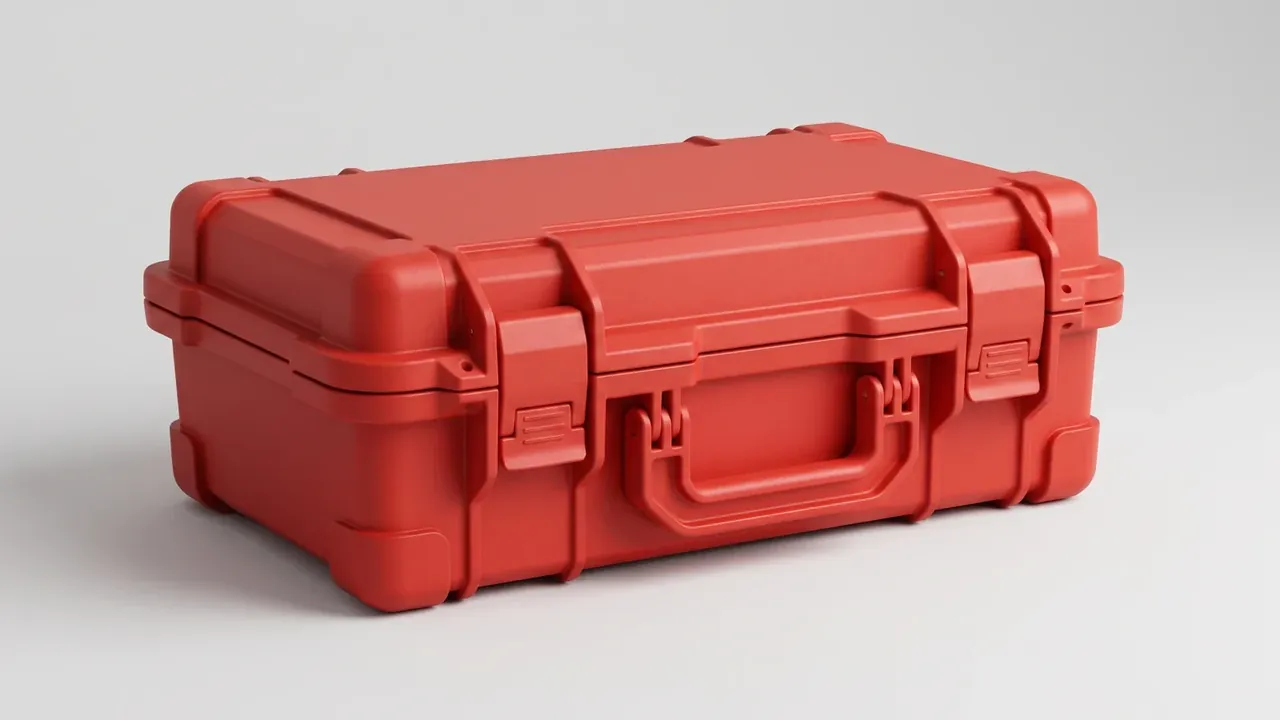
Quick answer: A Hardware Tool Box is not the default answer. Four lines filter it: closure after a drop, openings per shift, insert break-even, and the eight year cost.
Table of contents
- The Four Rivals
- Line One: Does the Lid Close After a Drop
- Line Two: Openings per Shift
- Line Three: Where Insert Cost Flattens
- Line Four: The Eight Year Sum
- Four Exit Signals
- FAQ
1. The Four Rivals
Set the rivals out first. A Hardware Tool Box competes with a steel case, a tool bag, a plastic crate and an insert case, each trading differently.
The steel case wins on hardness: 1.0 mm cold rolled sheet resists cutting and fire, takes a lock, and five stacked units carry 120 kg. The price is 5.8 kg and a dent that stays.
The tool bag wins on speed, the crate on openness.
| Rival | Weight | Open and close | Strong at |
|---|---|---|---|
| Steel case | 5.8 kg | 6 s | Repair, welding |
| Tool bag | 0.9 kg | 1.6 s | Field service |
| Plastic crate | 1.4 kg | 0.8 s | Assembly lines |
| Insert case | 3.2 kg | 4 s | Gauges, instruments |
2. Line One: Does the Lid Close After a Drop
Start with the drop, because a case usually fails by refusing to close.
A steel case dents at the corner, the lid shifts up to 3 mm, the catch misses and the case stays open for life. A Hardware Tool Box in PP springs back: after six faces at 1.5 m the catches still engage.
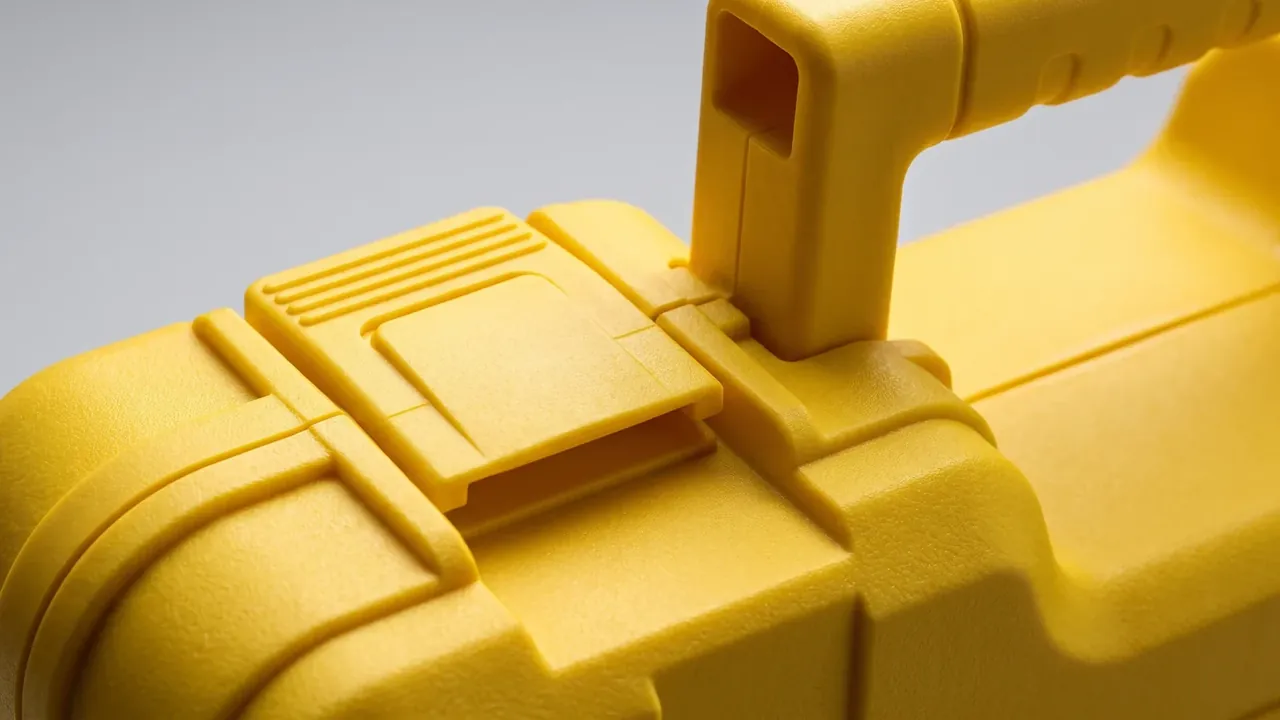
The test: drop the loaded case from its highest carrying height, then check that the lid closes.
Against sparks steel still wins: grinding swarf craters PP, while sheet metal keeps a black mark.
3. Line Two: Openings per Shift
Opening count decides the form, not the price.
A tool bag opens in 1.6 seconds; a Hardware Tool Box needs two catches and a lifted lid, about 4 seconds. That 2.4 second gap is 72 seconds at 30 openings a shift, near half an hour a month.
The crossover sits near 15 openings a shift: above it a bag or roll wins, below 8 the case buys protection.
4. Line Three: Where Insert Cost Flattens
The insert is the second invoice.
EVA foam costs 600 for the die and 38 per part; a vacuum tray costs 2,600 for the tool and 3.5 per part. The lines cross near 60 units.
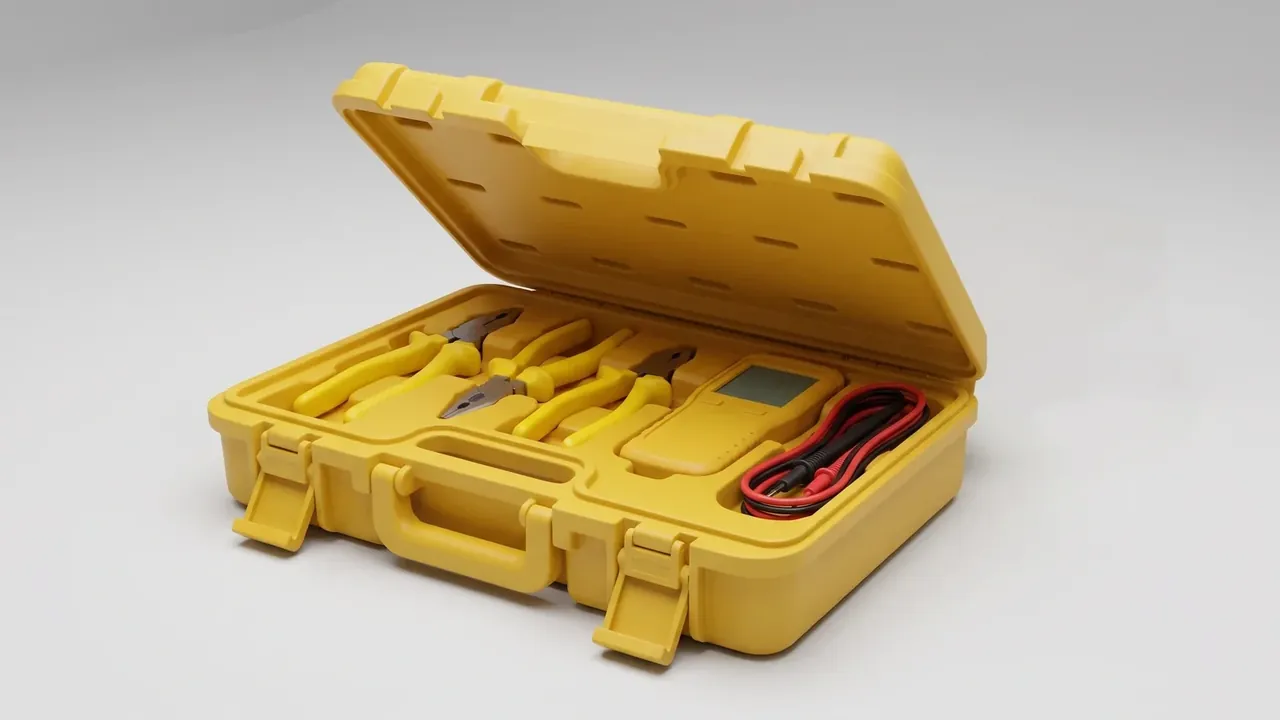
A moulded grid costs 12,000 for the mould and 1.8 per part, catching up past 400 units and holding its pockets for five years.
| Insert | Tool or die | Per part | Break-even | Best for |
|---|---|---|---|---|
| EVA foam | 600 die | 38 | Under 60 | Many variants |
| Vacuum tray | 2,600 tool | 3.5 | Over 60 | Frozen design |
| Moulded grid | 12,000 mould | 1.8 | Over 400 | Long runs |
5. Line Four: The Eight Year Sum
Unit price is not cost. Spread the eight years out.
- Price: crate 32, Hardware Tool Box 168, steel case 240
- Life: 3, 8 and 6 years
- Annual cost: 10.7, 21 and 40
- Loss rate: crate 6 percent, case 1.2 percent a year
- Hidden cost: dust, 20 minutes of cleaning a month
On annual cost the crate at 10.7 looks half price. Add losses and it changes: 100 crates lose 6 a year, a 192 bill, and the figure climbs back.
The 1.2 percent is not natural. Numbering and locking buy it.
6. Four Exit Signals
Four signals each point away: over 30 openings a shift, a tool over 3 kg or 600 mm, a full count within the hour, or an insert run past 400 units. Any one, and the form changes before the brand does. The signals stack. Where access is frequent and protection still matters, the answer is a bag plus one Hardware Tool Box. The bag travels, the case stays at the station. Where none appears, the case is usually right: moderate access, dust to keep out, small lots, tool shapes still moving.
Conclusion
Four lines rarely return a yes or no: they return a quantity, a location and an insert. The drop sets the form, the opening count the closure, the insert the batch, and the annual sum the year the money lands. When an exit signal appears, do not force a Hardware Tool Box into the job; when none does, it is still the least demanding case on the shelf.
This article discusses only the container (case body) side of specifications and design intent, and does not cover any handling, loading or use of the contents.
Related Reading
- Outer cover materials compared
- Portable plastic cases compared
- Tool bag materials compared
- How a Hardware Tool Box is used
- Capacity and load in selection
Related Products
- 8 Series — Gun Cases; Military Equipment Cases; Camera Equipment Cases; Drone Cases; Watch Cases; Knife Cases; First Aid Cases; Electronics Equipment Cases
- WL8-2812 PP Gun Case — model WL8-2812
- All protective cases and toolboxes: 7 series, 158 models