

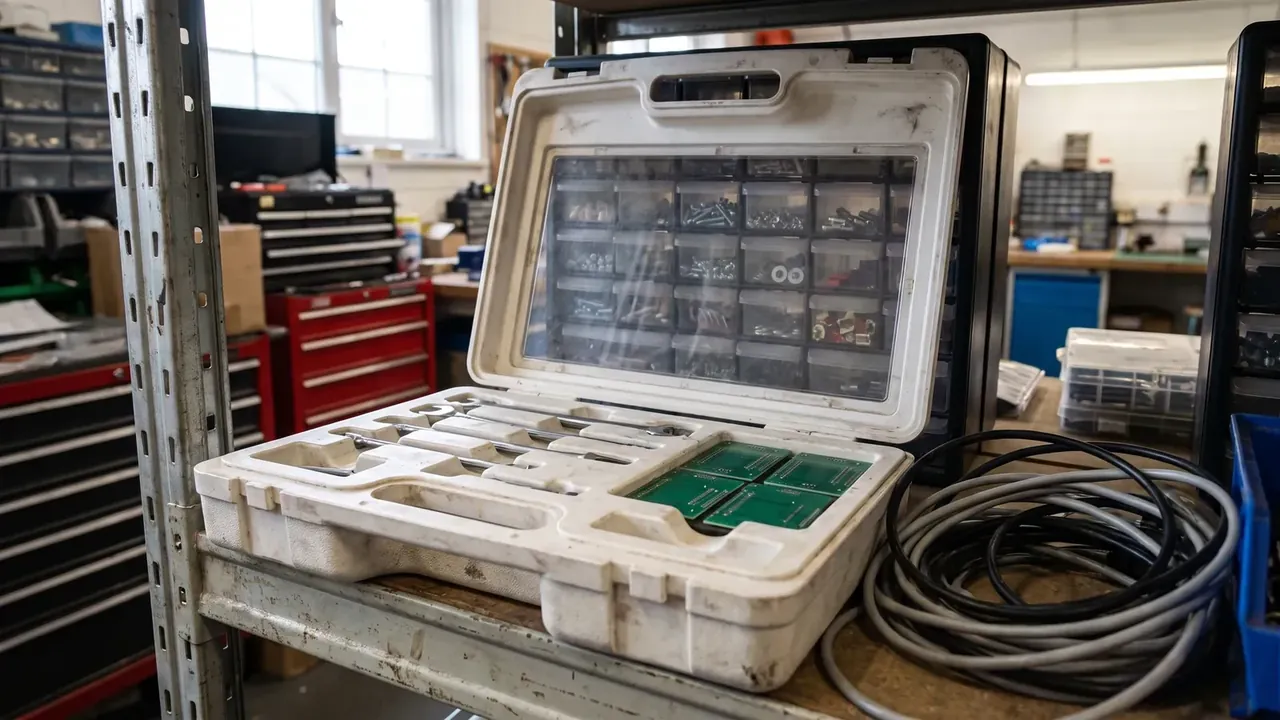
Quick answer: Run five checks in order. Gross weight sets the handling method, the equipment envelope sets interior size, drop height and stack layers set the structure, transport climate sets the sealing, and lifting points set the interfaces. Each check ends in a number you can put into a quotation.
Table of contents
- Five Criteria for a Heavy-Duty Protective Case
- Matching Weight to Handling Method
- Checking Internal Dimensions and Load Fit
- Impact Resistance and Stacking
- Sealing, Temperature and Lifting Interfaces
- FAQ
1. Five Criteria for a Heavy-Duty Protective Case
Choosing a case is a sequence of exclusions, not a ranking. If the handling method is still open, nobody can say whether the base needs fork pockets or a steel backing plate behind the castors.
| Check | Number to obtain |
|---|---|
| Weight and handling | Gross weight, carry distance, threshold height |
| Interior and load | Usable interior, insert thickness, load factor |
| Impact and stacking | Drop height and attitude, layers, duration |
| Sealing and climate | Ingress rating, temperature swing, dew point |
| Lifting and transport | Point position, fork pocket height, strap slots |
The checks constrain each other. One more stack layer thickens the corners and can push a Heavy-Duty Protective Case onto a forklift; a higher ingress rating stiffens the gasket, so crews stop latching the lid on short moves.
2. Matching Weight to Handling Method
Gross weight, not empty weight: shell, insert, fittings, equipment, plus straps and desiccant. A Heavy-Duty Protective Case with a 1200 by 800 by 600 mm interior weighs 38 kg empty; with a 15 kg EVA insert and 45 kg of kit it reaches 98 kg.
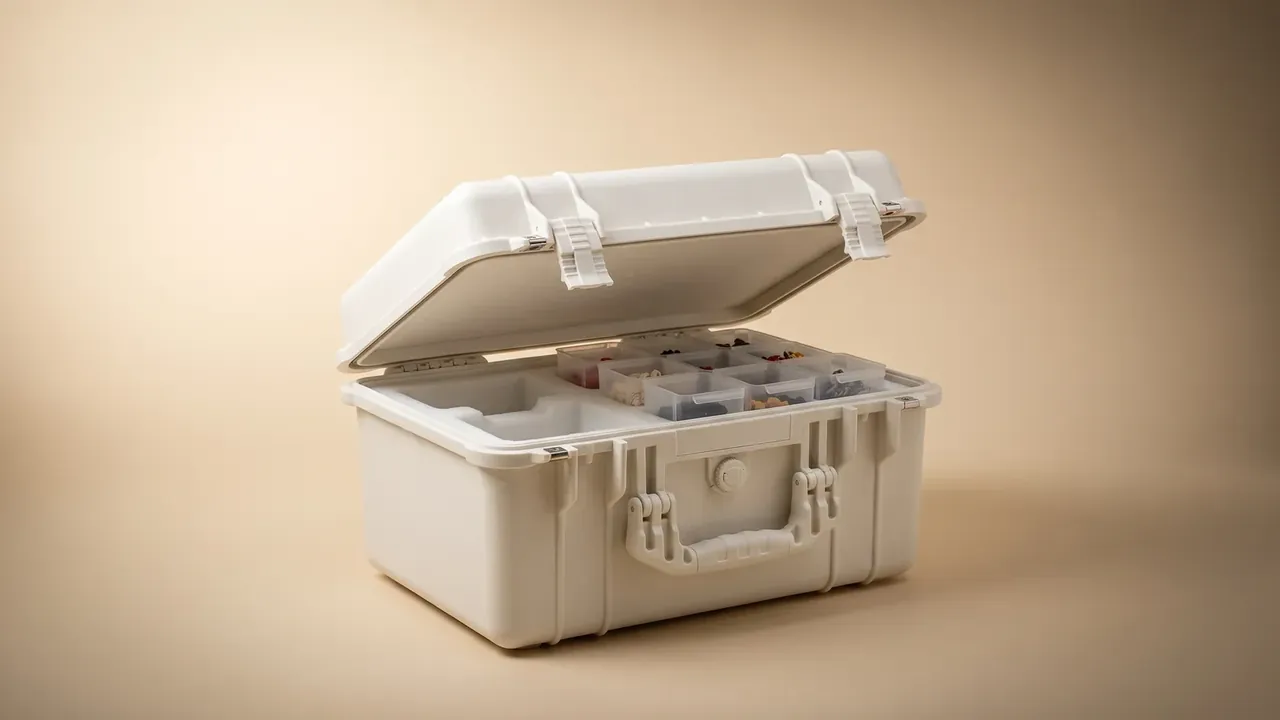
One person carries 20 to 25 kg all day, two people about 50 kg, and beyond that the case needs fork pockets or lifting points. Long cases twist when lifted by two people, and the handle bosses loosen first.
| Gross weight | Handling method |
|---|---|
| Up to 25 kg | One-person carry handle |
| 25 to 60 kg | Two-person lift, four castors |
| 60 to 120 kg | Fork pockets, short castor moves |
| Above 120 kg | Four lifting points on a pallet |
Handles are rated at 1.5 times gross weight, because one side takes the load first off a tailgate. A 100 mm castor clears a 5 mm threshold and no more, so the wheel housing needs a metal plate under it.
3. Checking Internal Dimensions and Load Fit
Work back from the outside: wall thickness, rib height, insert depth, lid recess. A 1200 mm outside length often leaves 1120 mm inside, and a 30 mm insert then cuts usable length to 1060 mm.
Hold the load factor between 60 and 75 percent. Below that the kit shifts and the insert takes the whole drop; above it, crews cut foam away to reach an item and the protection is gone. Measure the envelope in three axes, handles and connectors included, and keep the centre of gravity under 40 percent of interior height.
4. Impact Resistance and Stacking
Drop five faces, three edges and one corner; the corner is the hardest because the energy lands on a few square centimetres. Test at 1.2 m at room temperature and 0.9 m at minus 30 °C, where a dent in a Heavy-Duty Protective Case becomes a crack.

Three cases at 98 kg put about 196 kg on the bottom one, and a 1.5 factor covers offset loads. Plastic creeps, so the layer limit belongs on a quarterly check rather than a drawing note. On a 1200 by 1000 mm pallet, both corners must sit on the stringers; over 50 mm of overhang and the feet punch through the base.
5. Sealing, Temperature and Lifting Interfaces
IP67 is one metre of water for thirty minutes, while field exposure is rain, spray and washdown. The seal on a Heavy-Duty Protective Case fails at the parting line and the pressure valve, where a film of grit holds it open.
A swing from 30 °C to minus 10 °C walks the dew point to the wall; above a 40 °C swing, allow 200 g of desiccant per cubic metre. Lifting interfaces are fixed at the drawing stage: four points on corner blocks, slings within 45 degrees, 120 mm fork pockets, M8 eye bolts at 15 N·m.
Conclusion
Weight before handling, load before interior size, duty before structure, climate before sealing, lifting last. Put gross weight, usable interior, drop height and stack duration into the enquiry, and the replies become comparable. Run in sequence, the five checks keep a Heavy-Duty Protective Case inside its design envelope.
This article discusses only the container (case body) side of specifications and design intent, and does not cover any handling, loading or use of the contents.
Related Reading
- How load ratings and wall thickness are specified
- Heavy-Duty Protective Case configurations in the field
- Choosing case interior size from a measurement basis
- How rotomoulded cases are formed
Related Products
- 8 Series — Gun Cases; Military Equipment Cases; Camera Equipment Cases; Drone Cases; Watch Cases; Knife Cases; First Aid Cases; Electronics Equipment Cases
- WL8-2812 PP Gun Case — model WL8-2812
- All protective cases and toolboxes: 7 series, 158 models