

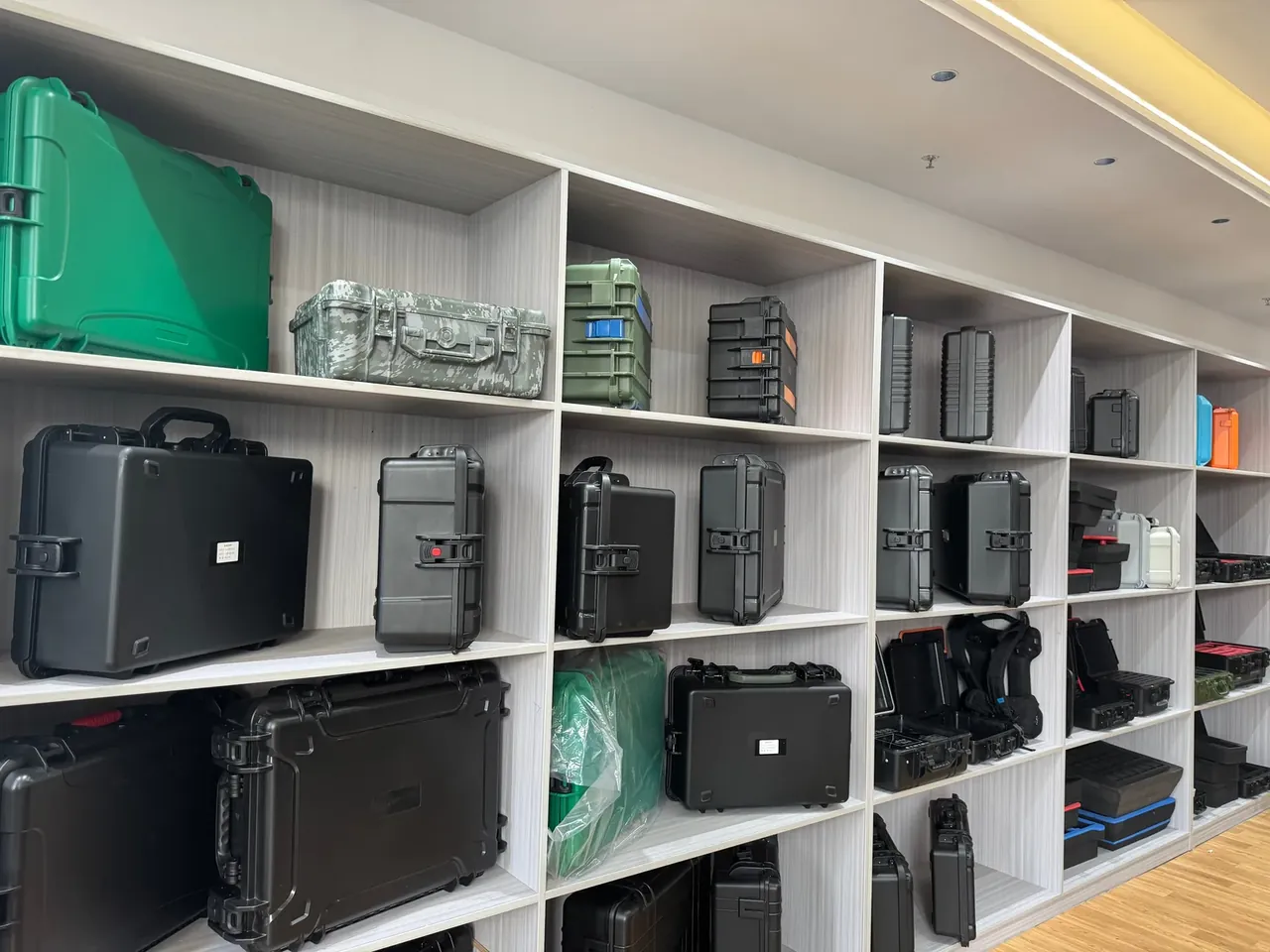
Quick answer: For High density PP plastic military protective latch box, a 5.8 mm latch seat and 9 mm overlap hold opening force under 52 N after 96 h of salt spray.
Table of contents
- Latch Seat Wall Thickness of the High density PP plastic military protective latch box
- Lid Overlap at the Opening
- Opening Force After Ninety-Six Hours of Salt Spray
- Hinge Torque Measured After Rinsing
- Fixing Seat Wall Thickness for an Injection Batch
- FAQ
1. Latch Seat Wall Thickness of the High density PP plastic military protective latch box
Salt spray settles on the latch pivot; shave a little off the seat wall or the overlap and the opening force at ninety-six hours reads the difference back. A High density PP plastic military protective latch box measures 570×395×205 mm outside, 505×340×150 mm inside, with a 4.2 mm wall; the latch seat is a local thickening of the rim, its 5.8 mm set by a separate insert.
Three inserts from one mould give 5.2, 5.8 and 6.4 mm seats, with overlap held at 9 mm. The thin seat saves material but leaves little wall around the pivot hole; the thick grips screws well yet shows sink marks.
| Wall grade | Seat wall | Force before | Force after 96 h |
|---|---|---|---|
| Thin | 5.2 mm | 41 N | 56 N |
| Base | 5.8 mm | 42 N | 49 N |
| Thick | 6.4 mm | 43 N | 46 N |
The rows start within 2 N and end 10 N apart; a High density PP plastic military protective latch box keeps the one never pushed past 52 N.
2. Lid Overlap at the Opening
The 9 mm lid overlap is the width over which lid and rim bear around the mouth, and it is not seat wall thickness: one governs sealing and alignment, the other the grip on the pivot. In a High density PP plastic military protective latch box the overlap sits outside the 505×340×150 mm cavity, where two gasket rings at 19% compression seat first and four latches at 395 N each lock the clamp.
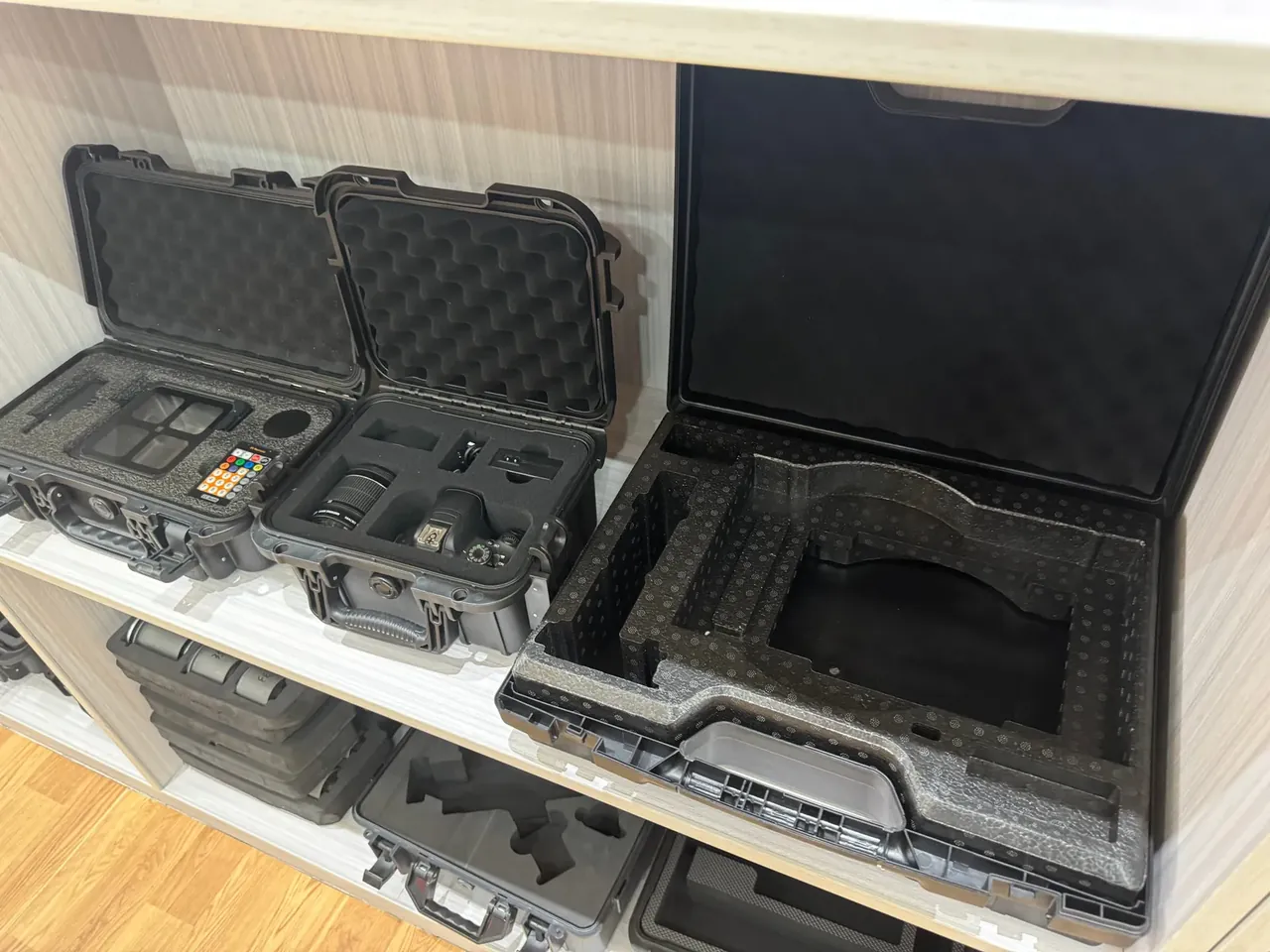
Too little overlap lets salt fog in, whitening the pivot so the force collects a share of seal failure; too much inflates the baseline. A High density PP plastic military protective latch box pairs 9 mm with the 5.8 mm seat, and changing either sends the other back for a fresh reading. From -15 °C to 55 °C, shell and metal expanding differently can ease the overlap open, so the baseline is retaken.
3. Opening Force After Ninety-Six Hours of Salt Spray
A closed shell sits 96 h in a neutral salt cabinet at 5% NaCl, unopened and unrinsed, before the latch force is read. A High density PP plastic military protective latch box records the peak pull to free the latch: salt film and a dry pivot drag on a thin seat, so force climbs there first. Each latch is read three times and the highest of the four becomes that grade's figure.
| Spray interval | Medium | Thin | Base / Thick |
|---|---|---|---|
| 0 h | Out of cabinet | 41 N | 42 / 43 N |
| 48 h | 5% NaCl | 48 N | 45 / 44 N |
| 96 h | 5% NaCl | 56 N | 49 / 46 N |
The thin seat hits 56 N at 96 h, past 52 N, while base and thick stay inside; at 48 h they have not parted. A High density PP plastic military protective latch box keeps 96 h as the shortest window separating them.
4. Hinge Torque Measured After Rinsing
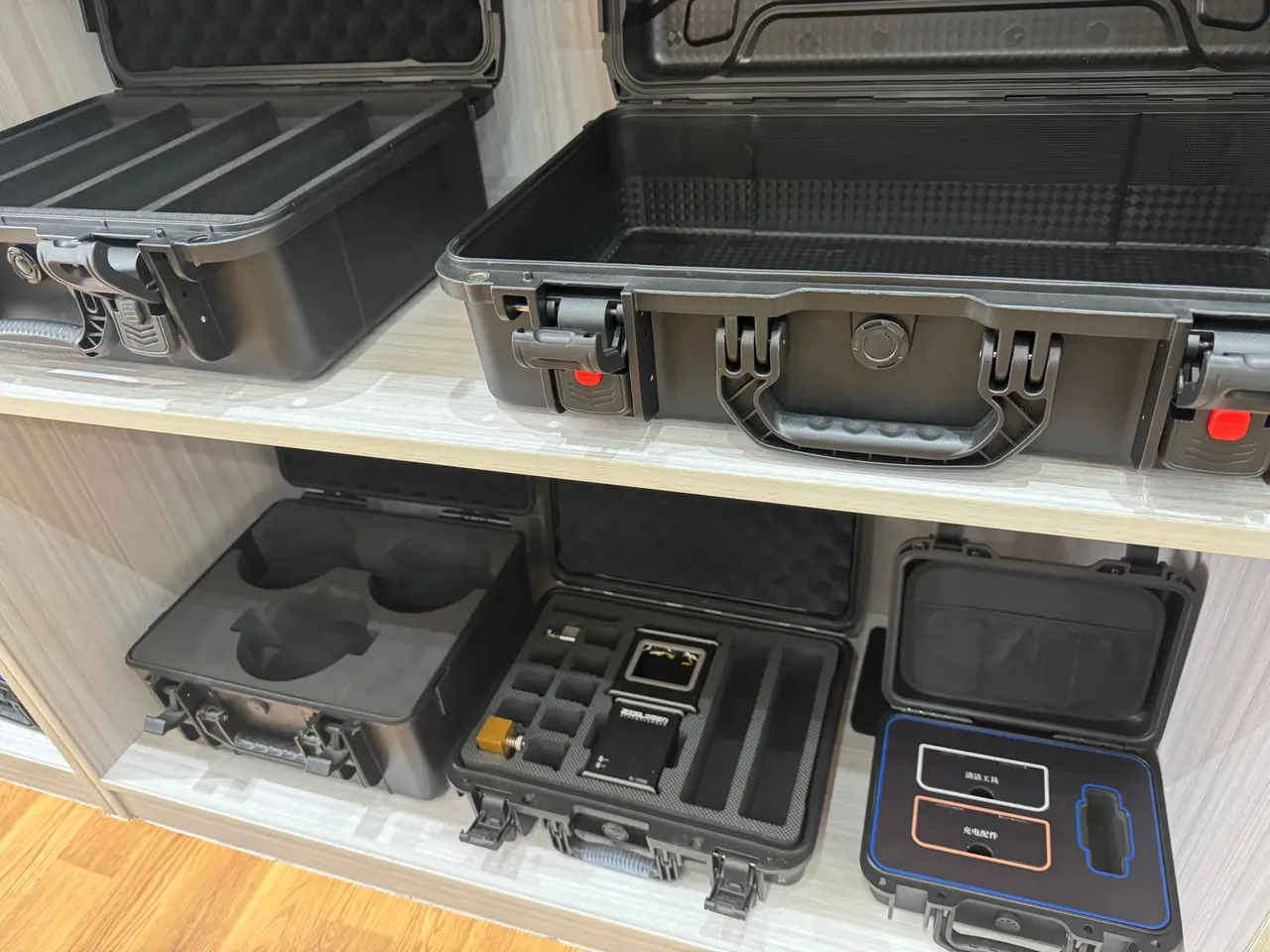
Out of the cabinet the salt film is rinsed off and dried, then hinge torque is read again. A torque gain of no more than 12% is the hard line: pass the force but fail to recover torque and the salt has altered the pivot fit for good. A High density PP plastic military protective latch box pairs each rinsed torque with its pre-spray baseline, one pair per grade.
| Opening reading | Wall grade | Torque gain | Disposition |
|---|---|---|---|
| 46 N | Thick | 7% | Keep |
| 49 N | Base | 10% | Keep |
| 56 N | Thin | 15% | Sample only |
The thin row gains 15% and leaves the injection batch; base at 10% and thick at 7% pass, leaving only which costs less material.
5. Fixing Seat Wall Thickness for an Injection Batch
Seat wall thickness is locked at the thinnest grade whose opening force at the ninety-sixth hour still sits below 52 N; anything thinner is a sample record only. That leaves the 5.8 mm base grade: it clears the limit and uses less than 6.4 mm, so the drawing and assembly sheet issue against it. A High density PP plastic military protective latch box turns here into a batch card, with the 5.4 kg empty shell and 13 kg loaded condition written in.
JUNZHIJIA marks IP66 only as a design target, with numbers and grades left blank; two gasket rings at 19% compression, 395 N latches and -15 °C to 55 °C storage are rechecked item by item. The 96 h spray, 52 N force and 12% torque gain keep separate records. Kexin New Materials (Guangdong) Co., Ltd. schedules from this card.
Conclusion
What a High density PP plastic military protective latch box comes down to is whether a 5.8 mm seat and 9 mm overlap stand 96 h of neutral salt spray, holding force below 52 N and rinsed torque gain within 12%. A thinner seat drags at the pivot and a shallower overlap lets the seal go; the base grade surviving is what the figures add up to. JUNZHIJIA fixes the wall from the rinsed reading of a High density PP plastic military protective latch box, keeping shell, seal and hardware on separate rigs.
Related Reading
- ABS vs PP Case Bodies: Cold Brittleness and Cost
- Recycling Mark Cases: Material Marking and Sorting Guidance
- What Do the Hinge, Latch and Gasket on a Toolbox Actually Do?
- Case Assembly Line: Hardware, Gasket and Liner Sequence
Related Products
- 8 Series — Gun Cases; Military Equipment Cases; Camera Equipment Cases; Drone Cases; Watch Cases; Knife Cases; First Aid Cases; Electronics Equipment Cases
- WL8-2812 PP Gun Case — model WL8-2812
- All protective cases and toolboxes: 7 series, 158 models