

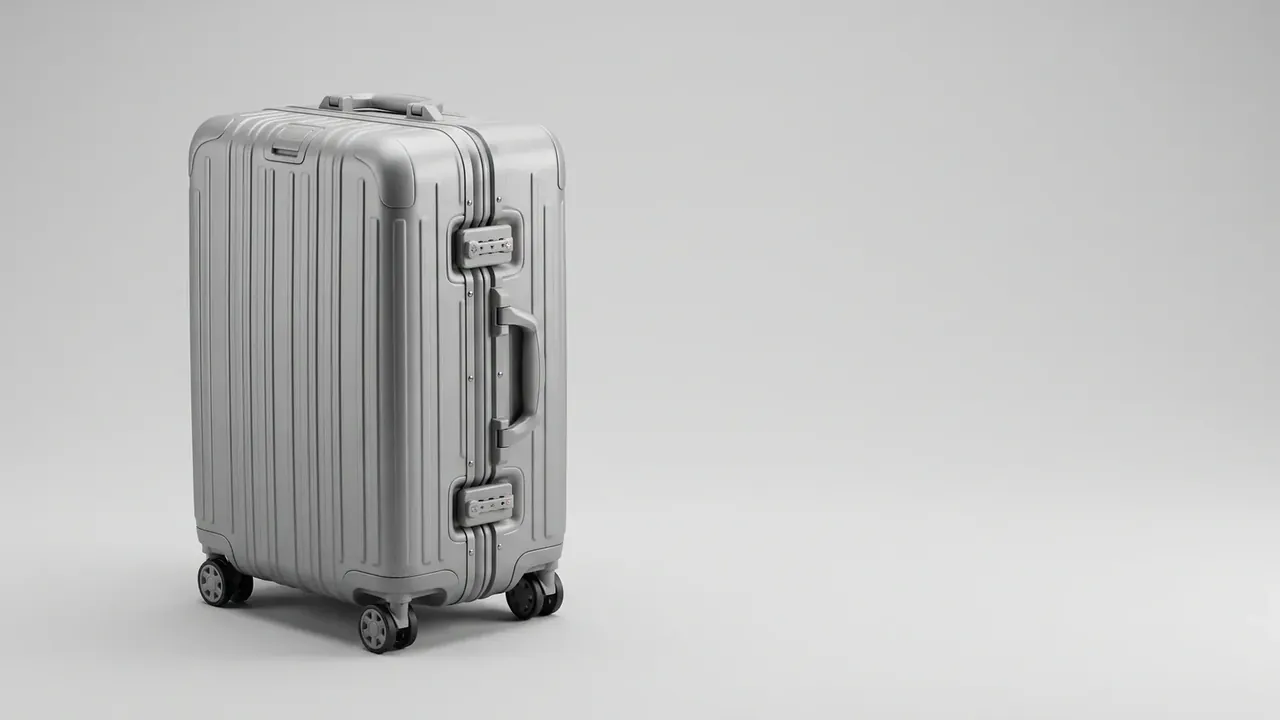
Quick answer: How to Measure Usable Interior Dimensions starts with one fixed datum: a 1 mm tape, three readings per axis, R10-R15 corners, foam taken off compressed.
Table of contents
- Datum Face: Rim or Base
- What Corners and Ribs Take Away
- Lid Foam and Raised Features
- Three Readings, Then the Smallest
- Six Numbers on the Record Sheet
- FAQ
1. Datum Face: Rim or Base
A nominal interior figure is a gross number. How to measure usable interior dimensions begins with a question most quotations never answer: where was the tape held?
Suppliers read at the rim, the widest point and the easiest place to rest a blade. Equipment settles at the base, narrower by the draft that releases the moulding. A deep case differs noticeably between mouth and floor, and both readings look defensible.
Fix the datum before anything else. Only two choices are sensible: the rim plane or the inner floor. The rim aligns easily and a tape hooked over the lip reads in seconds, at the cost of an overstated figure. The floor sits where equipment actually rests, at the cost of holding a blade steady in a deep cavity. Practice splits the difference: length and width at a fixed height below the rim, depth from floor to lid roof, both stated.
| Figure | Where it is read | What it governs |
|---|---|---|
| Nominal interior | widest point inside the rim | catalogue data and quotes, tends high |
| Measured clearance | fixed height below the rim | whether a unit sits flat and lifts out |
| Usable clearance | after corners, ribs and foam | whether the lid closes with room spare |
Pick the rim and accept a high figure; pick the floor and accept one that disagrees with the catalogue. Either works if one sheet carries one datum. Get it wrong and every later figure is redone.
2. What Corners and Ribs Take Away
Corners are the first allowance. Cavity radii sit between R10 and R15, so each corner loses a square block, and square equipment either leaves it empty or arrives chamfered. Run both extremes and one corner differs by 5 mm; when four corners bind, length and width each lose twice the radius.
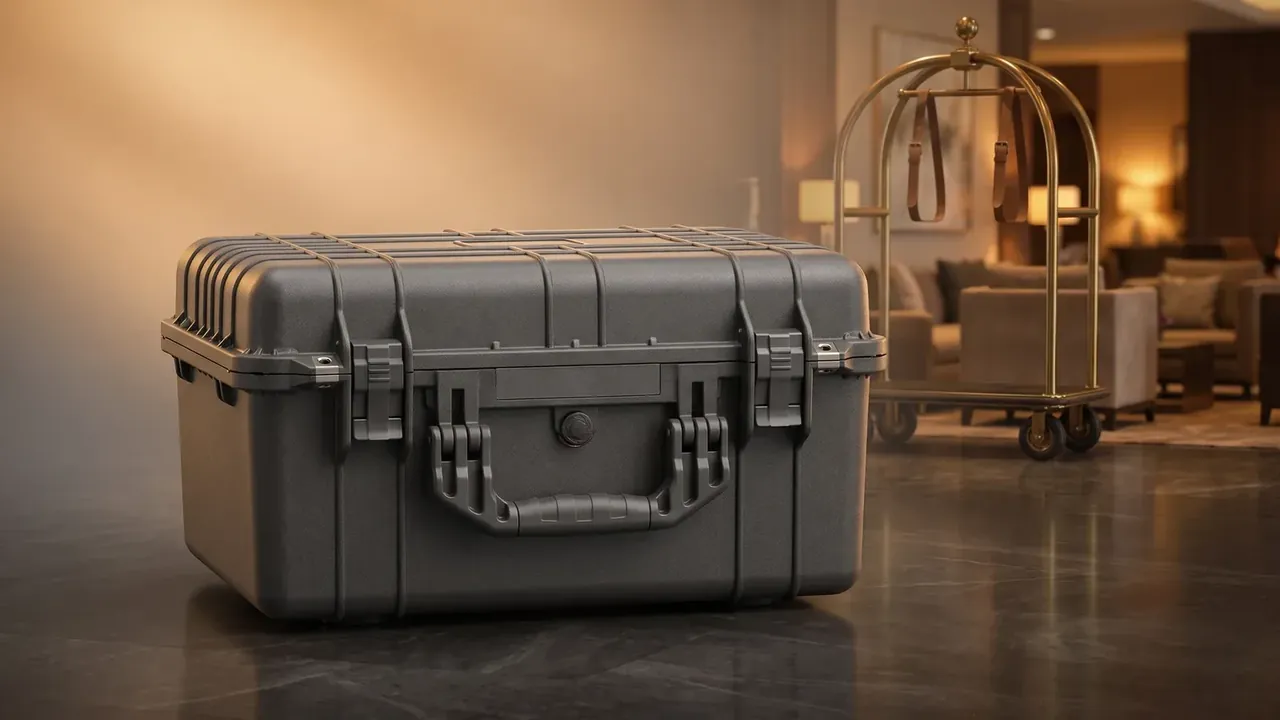
Ribs are the second allowance, eating the wall band rather than the corner. Walls run 2.0 to 3.5 mm and a rib stands proud of that, so a symmetric pair takes two strips from the clear width. Keep the blade on the rib face, not the wall, or every side reports a few millimetres too many.
A quieter version of the trap: ribs that stop partway up, leaving a smooth band near the rim. Such a case measures wide at the mouth and narrows a few centimetres down, and a constant-section unit jams. How to measure usable interior dimensions at the widest point is exactly the error here; the envelope is set by the tightest point.
Order matters: a corner allowance is local, a rib allowance runs full length.
3. Lid Foam and Raised Features
Lid occupants fall into two groups: soft and hard. Soft means foam, commonly 20, 30 or 40 mm, with 5, 10 and 15 mm stock for thin shims. Hard means the pads left for latch travel, plus location posts and slots.
Foam counts at compressed thickness, never at free thickness. A 30 mm sheet settling to 20 mm under the lid is normal, so deducting the full 30 mm understates clearance by 10 mm and makes a workable case look too small. In how to measure usable interior dimensions, foam enters the sum once, and it enters compressed.
Raised features are read at their lowest point. Lids carry a recess for latch travel, so height goes to the lowest face, not the highest edge. A floor pad lifts a unit by its own height.
Never merge the two groups into one deduction. How to measure usable interior dimensions keeps the steps separate, hard features first for a structural clearance, compressed foam second for the usable figure, so a liner revision has one item to move.
4. Three Readings, Then the Smallest
Three readings per axis is the discipline that makes the rest meaningful. Length left, centre and right; width front, middle and back; depth at four corners and the centre. The three never agree, because wall thickness varies and draft is never even.
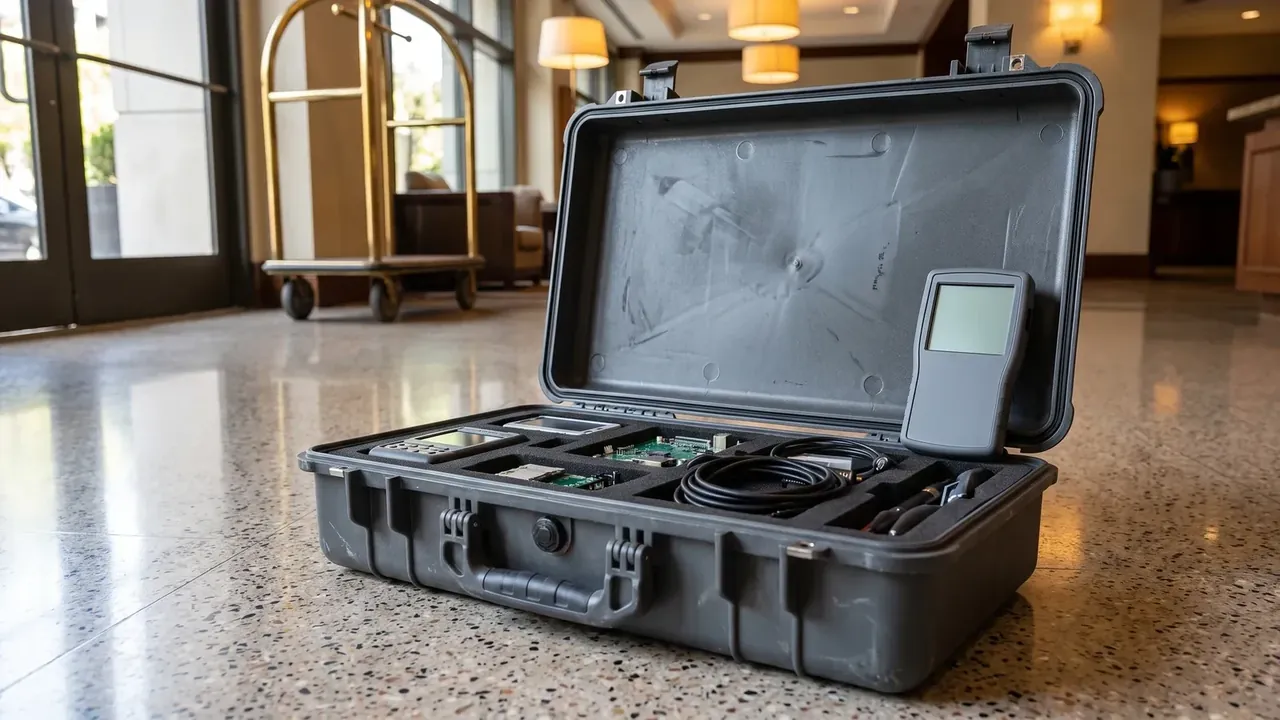
Within a 2 mm spread, keep the smallest. Beyond 2 mm the points were not aligned or the shell is distorted, and the set is discarded. The smallest value is not pessimism; it is the closest thing to the span equipment can occupy. Averaging flattens a wide side against a narrow one, and the narrow one still jams.
State the tolerance as ±1.5 mm. That is not instrument accuracy but process error: a 1 mm graduation, half a division of eye alignment, a point that drifts. How to measure usable interior dimensions without a tolerance produces a round number that gets treated as exact and argued over at inspection.
Then check the purpose. Bonded foam takes the compression allowance off the minimum again; a hand grip takes finger room off the width minimum. What the routine yields is a gross clearance, and the usable figure needs one more step.
5. Six Numbers on the Record Sheet
How to measure usable interior dimensions ends with six entries on one page.
| Field | Taken from | Decides |
|---|---|---|
| Clear length | smallest of three along the length | whether the unit lies flat |
| Clear width | smallest of three across the width | whether a hand fits beside it |
| Clear depth | inner floor to lowest lid face | whether the unit stands upright |
| Lid obstruction | lowest lid face to rim | first deduction from height |
| Foam thickness | measured after compression | second deduction from clearance |
| Clear opening | inside the gasket shoulder | whether the unit passes the mouth |
The first three decide fit, the last three decide whether the kit comes out comfortably. Record only the first three and quotes work while inspection argues; record only the last three and no case can be chosen.
Two header lines belong above the table: the datum face, and the instrument with its graduation. How to measure usable interior dimensions at the rim and at the floor differs by a full band across all six numbers, so the header must make the next measurement comparable.
Related Reading
- Interior, outline and usable space as three figures
- Volume, cavity and corner ratios that eat capacity
- Openings, cutouts and the sealing face
- Splitting interior height against foam thickness
JUNZHIJIA
Related Products
- 8 Series — Gun Cases; Military Equipment Cases; Camera Equipment Cases; Drone Cases; Watch Cases; Knife Cases; First Aid Cases; Electronics Equipment Cases
- WL8-2812 PP Gun Case — model WL8-2812
- All protective cases and toolboxes: 7 series, 158 models