

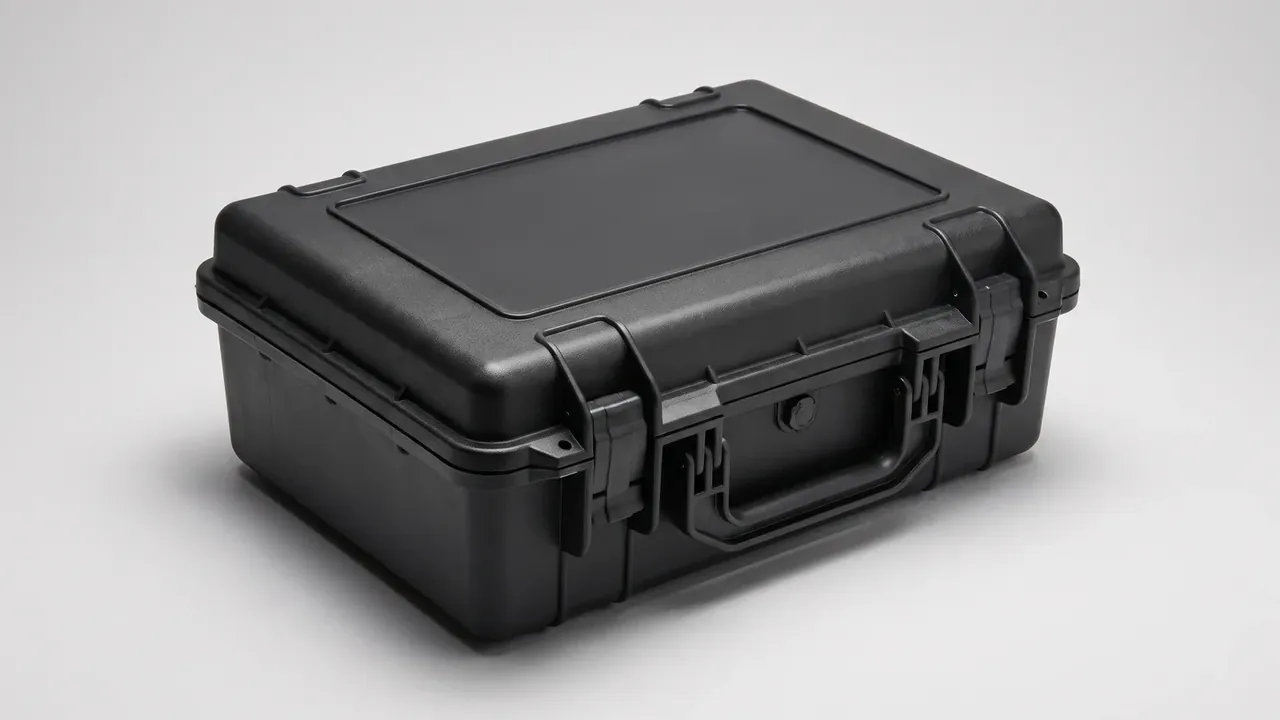
Quick answer: An impact resistant plastic case survives a drop because of three things: the notched impact of the resin, the way the corners absorb energy, and how closely the ribs are spaced. A caliper, a freezer and one 1.8 m corner drop will rank any sample.
Table of contents
- Three things decide impact resistance
- Corners first, flat faces second
- Rib spacing: count the ribs
- Two hours with three sample sets
- Low-temperature margin: minus 20 C is the line
- Turning the criteria into a scorecard
- FAQ
1. Three things decide impact resistance
An impact resistant plastic case is rarely weak because the wall is thin. Give one drawing to two moulders and results differ twofold.
Ask for a grade, not a family: PP alone says nothing, since copolymer and homopolymer differ fourfold in notched impact. Read Charpy to ISO 179, A-notch, 80 x 10 x 4 mm, at 23 C and minus 20 C.
| Resin | Notched impact at 23 C | At minus 20 C | Usual wall | Break appearance |
|---|---|---|---|---|
| PP copolymer | 48–52 kJ/m² | 8–10 kJ/m² | 2.8–3.5 mm | Whitened, stringy |
| ABS | 22–26 kJ/m² | 10–12 kJ/m² | 2.5–3.2 mm | Flat, brittle |
| HDPE | 34–40 kJ/m² | 14–17 kJ/m² | 3.5–4.5 mm | Translucent, ductile |
Measured ranges from three lots. PP copolymer wins warm and loses most in the cold; HDPE is the reverse, so read the cold column first in winter.
2. Corners first, flat faces second
When a case falls the corner lands first on a small patch, which is why flat-face drops pass so easily.
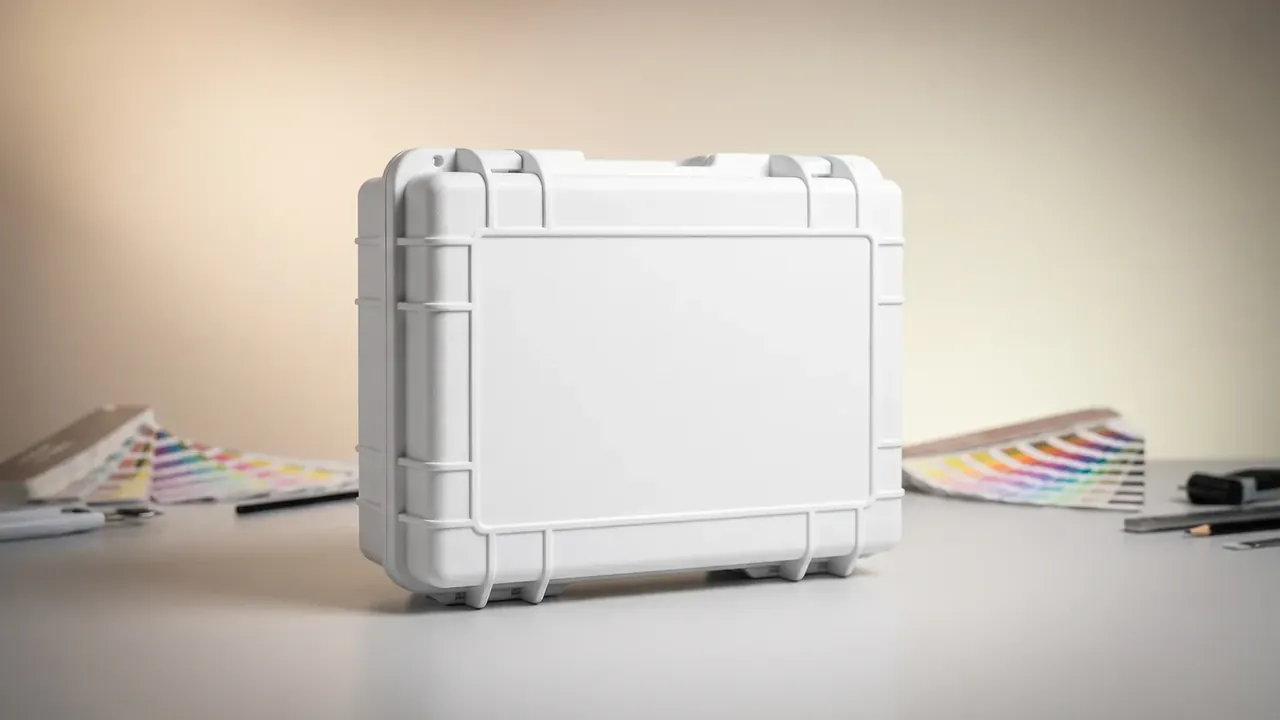
Three features matter: corner radius, double-wall depth and the internal boss. R8 spreads stress better than R3; 12 mm of double wall lets the corner collapse; a 3 mm boss tied into the side ribs works where a 1 mm lip does not.
Put the caliper inside the corner: a sensible build runs 1.2–1.5 mm heavier, so 3.0 mm meets 4.5 mm. Zero difference means no build-up; past 2 mm you get a sink mark.
3. Rib spacing: count the ribs
Ribs matter by continuity, not quantity: wide spacing lets the lid centre deflect and drags the seal line out of place. Four checks need no instrument:
- Spacing: centre distance between ribs, 45 mm or less is dense, past 60 mm is a warning
- Thickness: below 2.0 mm cracks first in the cold, 2.2–2.5 mm is the working band
- Crossings: a 0.5 mm fillet at each intersection, or the joint sinks into the weak point
- Deflection: over 1 mm at the lid centre means ribs stop short of the side wall
Crossings are the skipped check: two ribs crossing double the local wall, cooling runs slow, shrinkage leaves a hollow under a shallow dent, and cracks start there.
4. Two hours with three sample sets
Last November a customer sent one drawing to three moulders, five cases each. Two hours: weigh, measure the corner, drop one corner from 1.8 m.
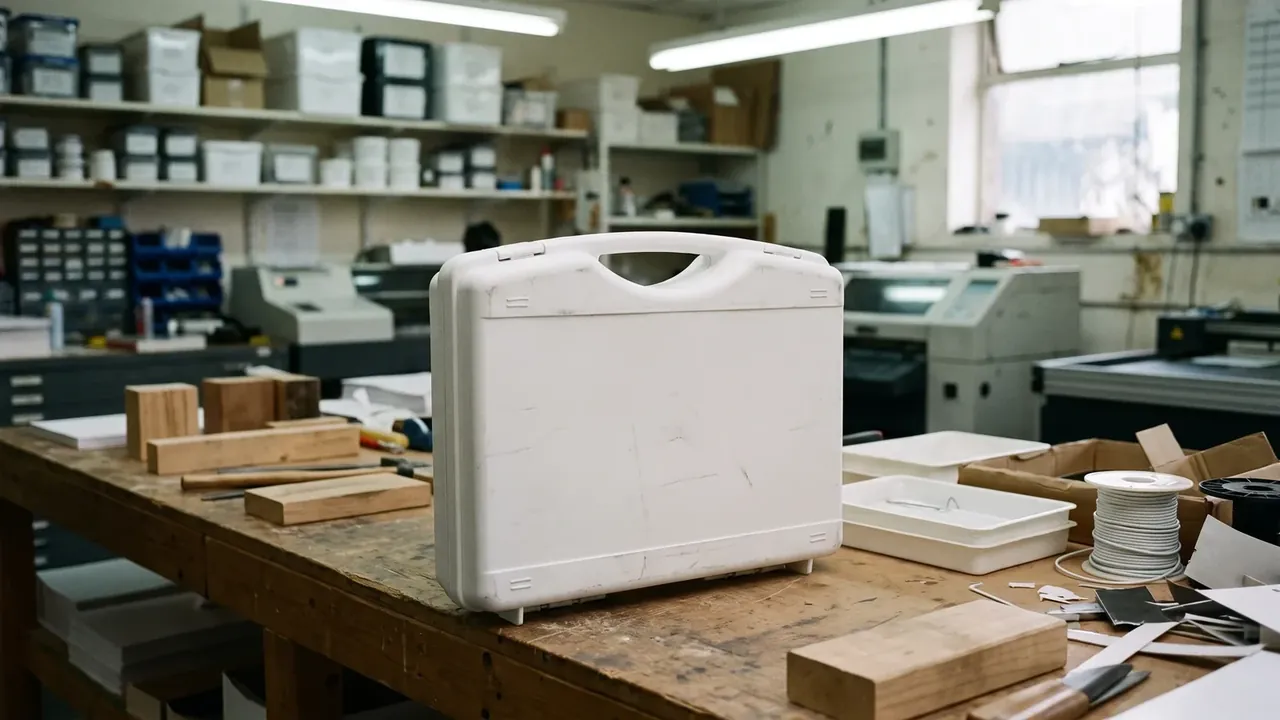
At identical outer dimensions the heavier case has added material at corners and ribs.
| Item | Supplier A | Supplier B | Supplier C |
|---|---|---|---|
| Weight per case | 4.2 kg | 4.6 kg | 5.1 kg |
| Corner wall | 4.5 mm | 3.8 mm | 5.4 mm |
| 1.8 m corner drop | Whitened, no crack | 18 mm crack | No damage |
| Latch state | Stayed closed | One side popped | Stayed closed |
| Verdict | Pass | Fail | Pass, over weight |
B was cheapest and the corner says why: 0.8 mm over the side wall, so the crack ran 18 mm along a weld line. C had the structure right and paid 0.9 kg per case, which becomes freight six to a carton. A was least bad.
5. Low-temperature margin: minus 20 C is the line
Passing at room temperature proves little. Freeze the sample at minus 20 C for 24 hours and drop it again within 30 seconds; many warm passes will not survive that. The reason is crystallinity: PP copolymer falls from 50 kJ/m² to roughly 9 kJ/m² in the cold, less than a fifth of its warm value, while ABS drops by nearly half. Hairline corner cracks and a sharper tap tone both say the margin is gone. Regrind is the quieter variable, because past 30 percent warm impact may not move while cold impact halves. Read the break surface: virgin material tears white and stringy, a regrind-rich blend breaks dark with specks. What is left after resin and geometry each give up a little is the low-temperature margin of an impact resistant plastic case.
6. Turning the criteria into a scorecard
Five checks collapse into a 100-point sheet weighted 30, 25, 20, 15 and 10: cold impact 30, corner structure 25, rib density 20, weight control 15, latch retention 10. Above 80 goes to a pilot run, 70 to 80 comes back for correction, below 70 changes supplier.
The weighting follows failure order: corner cracking and cold embrittlement carry 55 points because either one ends the case.
Conclusion
An impact resistant plastic case is judged on three numbers: notched impact at minus 20 C, the 1.2–1.5 mm by which the corner exceeds the side wall, and rib spacing inside 45 mm.
Two hours in a sample room replaces two years of argument. Judge the impact resistant plastic case by corners first, walls last.
This article discusses only the container (case body) side of specifications and design intent, and does not cover any handling, loading or use of the contents.
Related Reading
- Choosing a gun case from equipment dimensions
- What to check on a factory showroom visit
- Drone case sizing: blades, body and clearance
- Knife case choice: edge-to-slot distance
- Military box selection: stacking and lifting
Related Products
- 8 Series — Gun Cases; Military Equipment Cases; Camera Equipment Cases; Drone Cases; Watch Cases; Knife Cases; First Aid Cases; Electronics Equipment Cases
- WL8-2812 PP Gun Case — model WL8-2812
- All protective cases and toolboxes: 7 series, 158 models