

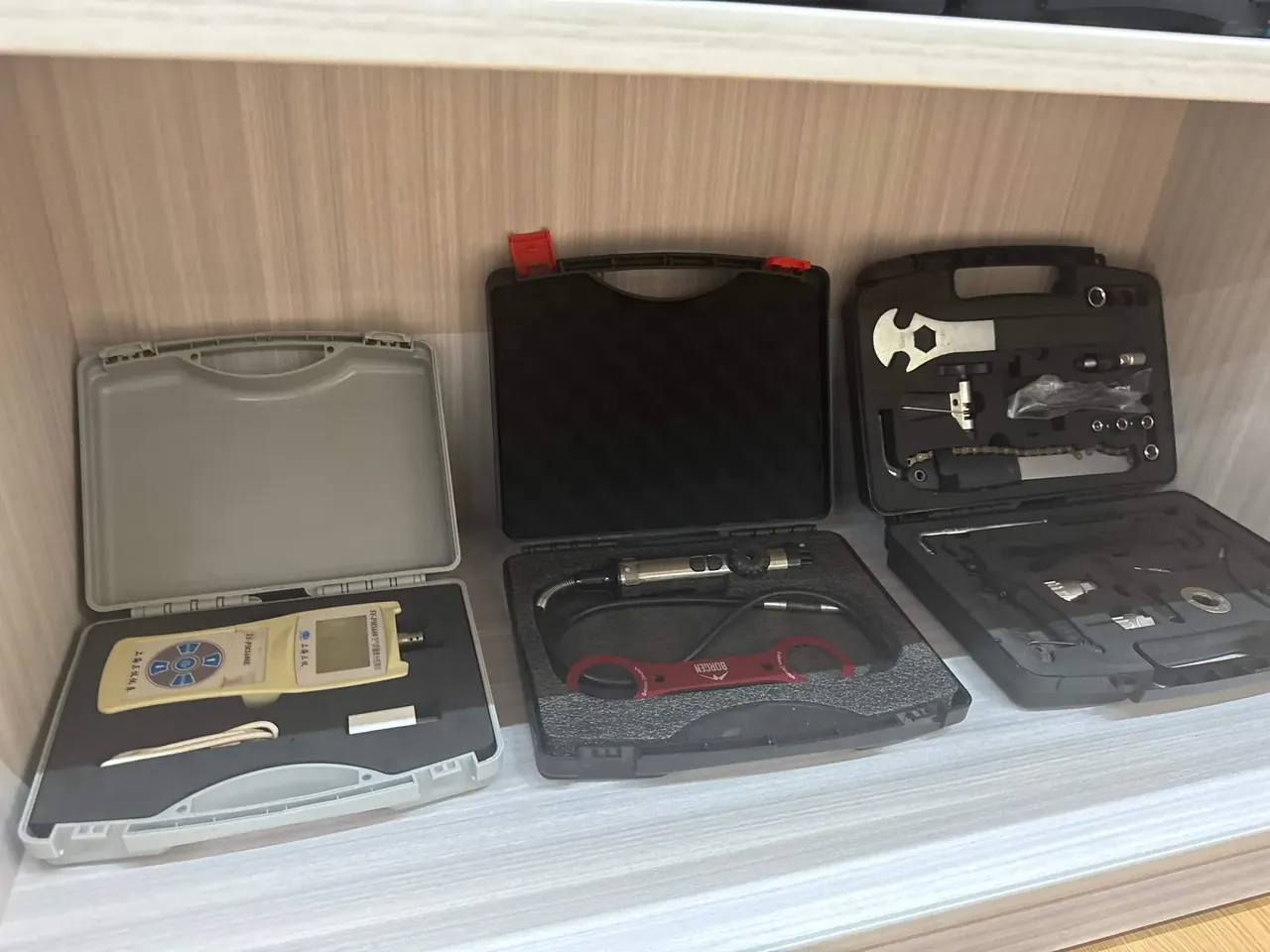
Quick answer: Start a knife case selection with three measurements: the full length of the longest blade, how many knives sit inside at once, and the order they are reached for. Length fixes internal height and whether a blade lies diagonally, count fixes positions and weight, and access order fixes lid direction and hand room. Settle the three before choosing a model.
Table of contents
- Ranking the Three Knife Case Numbers
- Blade Length: Height, Depth, Diagonal Allowance
- Count: Positions, Ribs and Total Weight
- Access Order: Lid Angle and Hand Room
- Cross-Checking and First Articles
- FAQ
1. Ranking the Three Knife Case Numbers
The order matters. Measure blades first, because length is a hard limit. Then fix the count, since it sets positions and body width. Order comes last: it changes placement, not dimensions. Choosing a knife case first and fitting knives into it sends most projects into a second body.
2. Blade Length: Height, Depth, Diagonal Allowance
Measure full length, tip to handle end. Standing upright, internal height equals blade length plus 25 to 35 mm for lid foam and compression. A 360 mm blade needs 390 mm inside, which puts the outside height past 420 mm, close to the limit of a carry handle.
When height is unavailable, tilt the blade: height becomes roughly length times the sine of the angle plus width times the cosine. A 300 mm blade, 40 mm wide, at 20 degrees, needs about 141 mm, so 150 mm inside works. Length is the price: the same blade occupies 282 mm horizontally.
| Blade length (mm) | Upright height | Height at 20 degrees | Suggested internal length |
|---|---|---|---|
| 180 | 205–215 | 95–105 | 220 |
| 240 | 265–275 | 120–130 | 280 |
| 300 | 325–335 | 140–150 | 345 |
| 360 | 385–395 | 165–175 | 405 |
3. Count: Positions, Ribs and Total Weight
Knife case count converts to width through pitch: slot width plus rib, with the rib at 6 to 8 mm. At a 25 mm slot and 6 mm rib, pitch is 31 mm, so twelve positions need 372 mm. Eighteen need 558 mm, which puts the body past 600 mm outside, where one-handed carrying stops working.
Weight is the second limit. At 0.3 to 0.8 kg per knife, 24 positions load about 12 kg, plus 6 kg of shell and insert, landing on 18 kg, the practical ceiling for one person. Past that, cut positions or split into two cases. Leave margin to 1.2 times the current count, but beyond twenty percent spare, empty positions need filler blocks.
| Positions | Pitch (mm) | Internal width | Loaded weight | Where it fits |
|---|---|---|---|---|
| 6 | 31 | 186 | 5–7 kg | Carried daily by one person |
| 12 | 31 | 372 | 9–11 kg | Shared by a shift team |
| 18 | 31 | 558 | 13–15 kg | Fixed bench, rarely moved |
| 24 | 31 | 744 | 17–19 kg | Stores and vehicle transfer |
4. Access Order: Lid Angle and Hand Room
Knife case access order does not change dimensions, only layout. The lid swings back, and at 100 to 110 degrees the rim stops pressing on the wrist. Positions next to the hinge sit half-hidden under the lid, which suits spares; the opening side is reachable at once, which suits the knives used most.
Hand room is the second number: fingers need 35 mm, and two rows back to back need a 40 mm pick channel, or the tip drags across the next slot. Lid depth should exceed exposed handle height by 10 mm.
Layers are the third. A tray must be lifted out whole to reach the bottom row, which destroys the order, so widen the body instead unless the top layer holds weekly spares.
5. Cross-Checking and First Articles
Cross-check the three numbers: length sets height, count sets width, order sets lid direction. The common clash is 558 mm of width against 150 mm of height: a flat case, whose latches load the long side, so an extra rib goes there.
Build three knife case first articles: one empty for positions, one loaded for closing and balance, one dropped 1.2 m on six faces. Inspect five units for height, pitch and hand room, and correct the drawing before any batch order.
Conclusion
Read together, a knife case selection is a ranking exercise: length locks the height, count sets the width, and access order places the positions within reach. Put the three on one drawing and body proportion, latch position and hand room line up in one pass, which saves a knife case a round of rework.
This article discusses only the container (case body) side of specifications and design intent, and does not cover any handling, loading or use of the contents.
Related Reading
- Sizing a tool box from dimensions and count
- Hard cases versus soft tool bags
- What drives the price of a custom foam insert
- Zoning and fixing methods in knife storage cases
Related Products
- 8 Series — Gun Cases; Military Equipment Cases; Camera Equipment Cases; Drone Cases; Watch Cases; Knife Cases; First Aid Cases; Electronics Equipment Cases
- WL8-2812 PP Gun Case — model WL8-2812
- All protective cases and toolboxes: 7 series, 158 models