

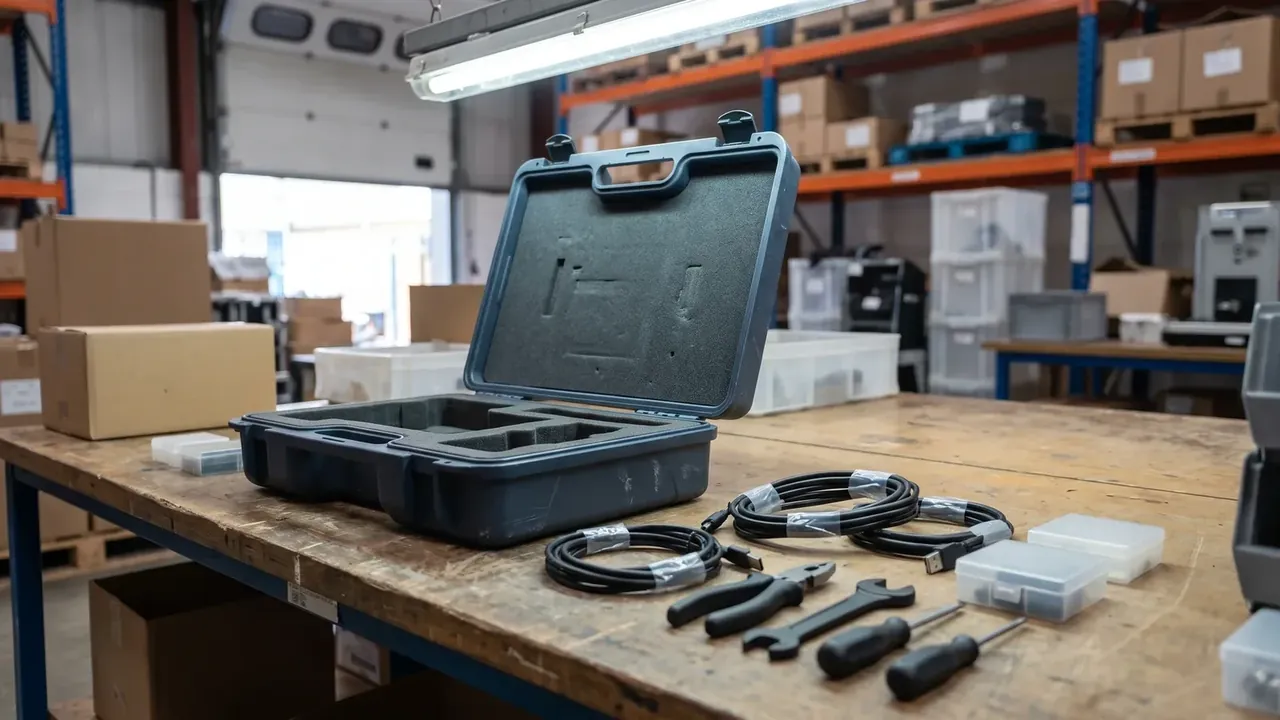
Quick answer: Industrial Case Export Manufacturer checks end at loading: 1,200 by 1,000 mm pallets, 24 cases each, 20 per 40HQ, 480 in total, six shipping marks.
Table of contents
- Pallet Stacking and Load Factor per Box
- Shipping Marks and Carton Labelling
- Destination Market Access and Certification
- Heat Treatment for Wooden Packaging
- Protecting Cases From Sea Humidity
- FAQ
1. Pallet Stacking and Load Factor per Box
In export work the last thing to jam is rarely the case; it is the pallet and the shipping mark. The scene repeats at every Industrial Case Export Manufacturer loading bay: the packing list says 480 units, the forklift pushes a pallet in, the pallet will not clear the door track, and the stack comes back out.
A 1,200 by 1,000 mm pallet is the industrial standard, and two fit across the 2.35 m width of a 40HQ, ten rows down the 12.03 m floor, so 20 pallets per box. At 24 cases each that is 480 units, a load factor near 82% by volume. The missing 18% is not waste: pallet gaps, bulging shells and door clearance.
| Loading unit | Footprint | Cases per pallet | Pattern in the box |
|---|---|---|---|
| Industrial pallet | 1,200 by 1,000 mm | 24 cases | Two columns wide, ten rows deep |
| Whole 40HQ | 12.03 by 2.35 m inside | 480 cases | 20 pallets, load factor near 82% |
| Door-end allowance | Not on the pallet | — | Left for the forklift and for surge |
Build a pallet for Industrial Case Export Manufacturer shipments from the bottom up. Lower cases carry the stack, so their feet must sit over the bearers; upper cases carry only themselves and can be cross-stacked. A bulge is usually slack stretch wrap, not a failed shell: over one sea leg the plastic breathes and a loose wrap lets the stack lean.
2. Shipping Marks and Carton Labelling
Industrial Case Export Manufacturer paperwork fixes six mark items: consignee code, product and specification, quantity, gross and net weight, carton and lot number, port of discharge. Miss one and the destination warehouse telephones for it while demurrage runs by the day.
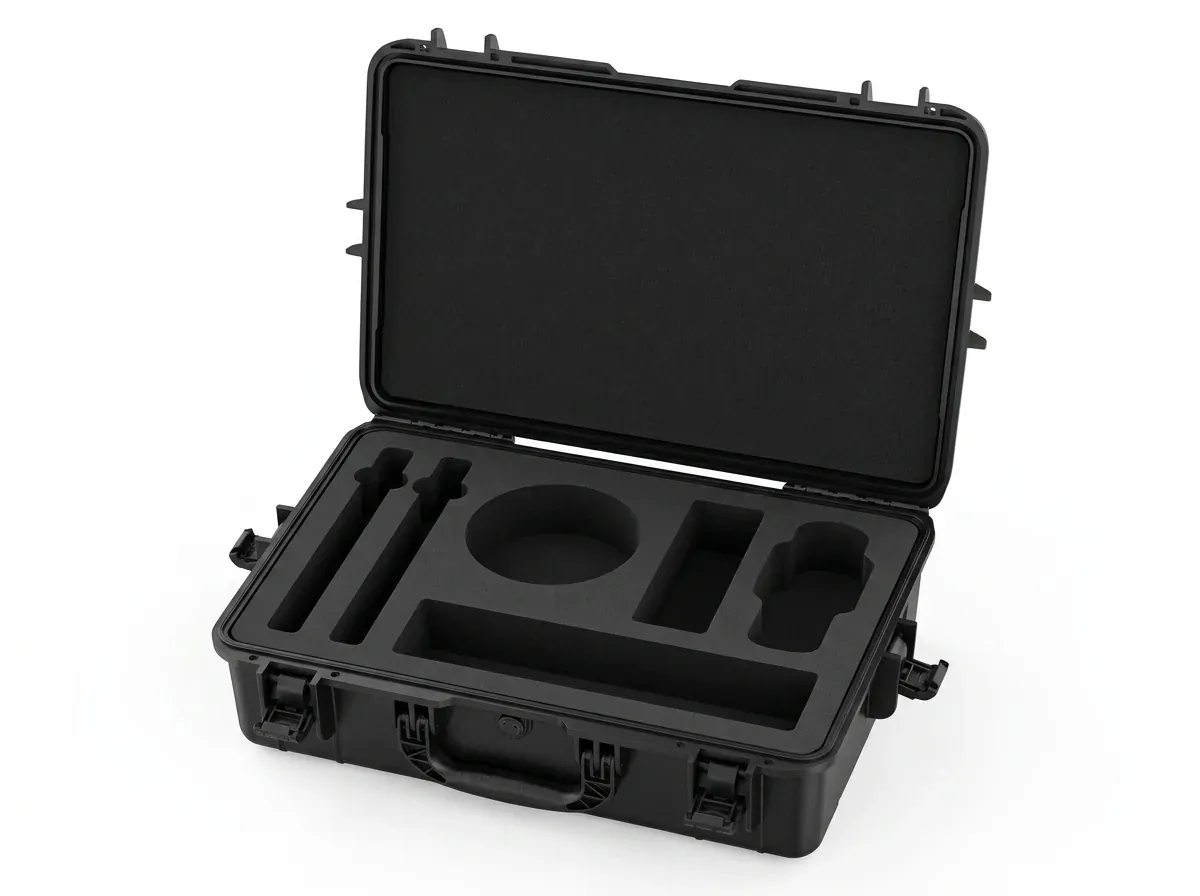
For Industrial Case Export Manufacturer shipments, lot here means the outbound lot, cut by box or by bill of lading, not the production lot on the shop floor. One order shipped over three months gives three outbound lots, and the number on the mark must follow, or the consignee cannot match cartons to paperwork.
Keep carton markings apart from case markings: a carton carries logistics data, a case carries product data, model, serial and inspection label. The usual mistake is screen-printing the shipping mark straight onto the case, which turns a batch into scrap the moment the consignee changes.
In Industrial Case Export Manufacturer practice a mark has a main face and side faces: the main face serves the crane and tally clerk with the largest type, the side faces serve the forklift and warehouse. Fill both and neither reads.
| Mark element | Which face | What it must say |
|---|---|---|
| Main mark | Front of the carton | Consignee code and port, largest type |
| Side mark | Both carton sides | Product, specification and piece count |
| Lot number | On the carton line | Ties the carton to the outbound lot |
| Weight | Lower right of the front | Gross and net, in kilograms |
Export verdict: a pallet that does not match the destination pallet standard, or a mark missing two items or more, fails the outbound lot and cannot be shipped.
3. Destination Market Access and Certification
Build the Industrial Case Export Manufacturer access list by destination, not by product. For the European Union that means the CE mark, RoHS, REACH and registration under the packaging rules, plus IPPC for any wood; for the United States, electromagnetic compatibility, California Proposition 65 and, for food contact, FDA; several Middle Eastern markets add pre-shipment inspection.
Use the list as a checklist, not reading material. In Industrial Case Export Manufacturer files, certificates, marks and the packing list form one chain, and a missing link parks the box at a daily cost.
Read the scope of each scheme. An empty case exported alone is judged on its shell material and any powered accessory; once equipment is packed inside and exported, the equipment's own directive applies. Ask at quotation, or samples pass and production stalls on documents.
4. Heat Treatment for Wooden Packaging
Wooden pallets are heat treated to ISPM 15: 56 ℃ at the core of the timber for 30 minutes, then stamped with the IPPC mark carrying the country code, producer registration and the code HT. Unmarked wood is turned back at European and North American borders, and the return freight exceeds the pallet's value.
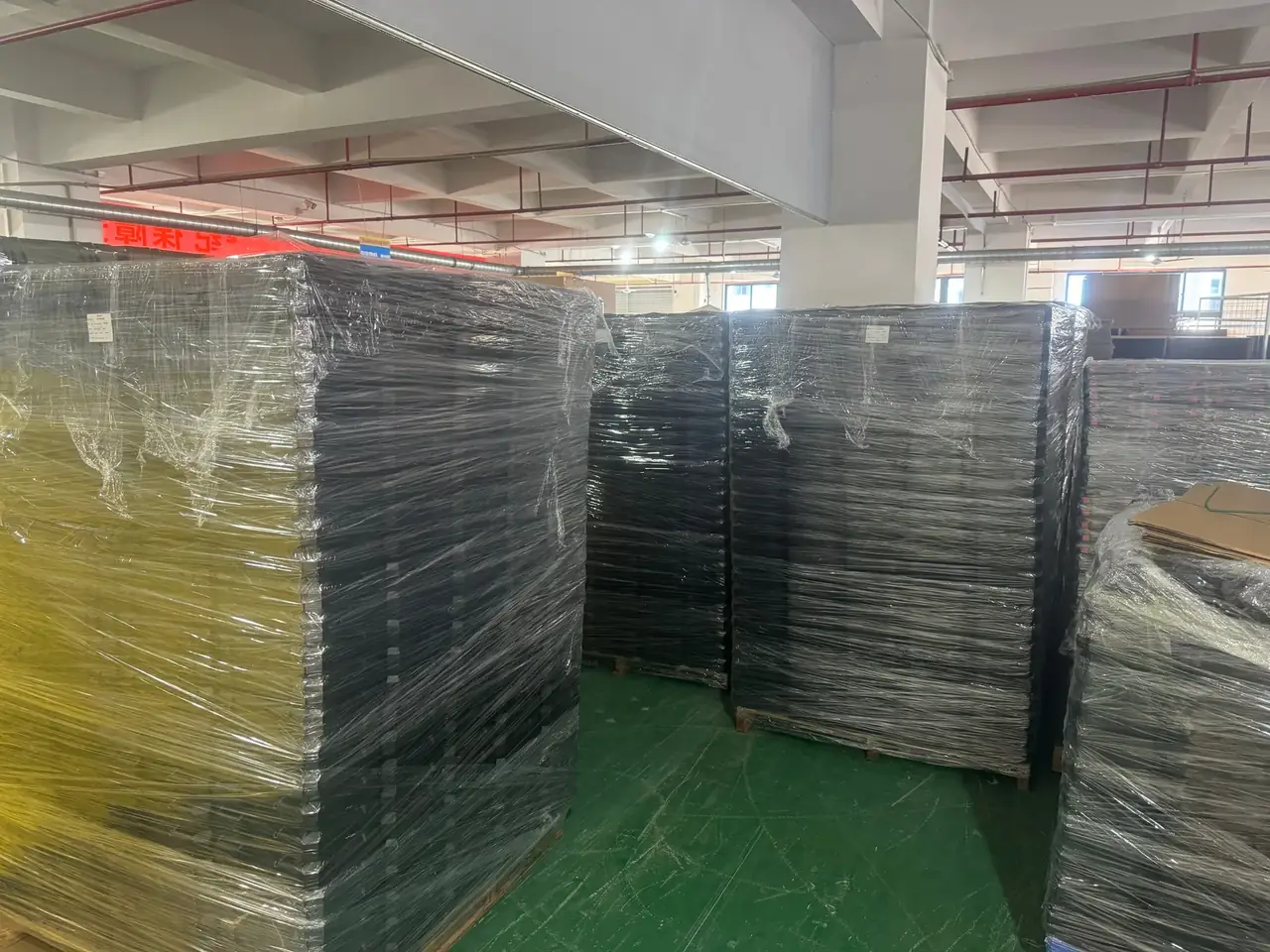
Heat treatment and fumigation are two roads. Heat drives moisture out and kills insects without residue; methyl bromide is faster, but most European markets no longer accept it. For wood, the Industrial Case Export Manufacturer should default to heat, since a treated pallet goes straight into the warehouse with no aeration wait.
Plastic and composite pallets need no treatment and weigh less, at a higher price and with fewer take-back routes. Wood is cheaper and carries more, at the cost of treatment, marking and moisture. Choose by destination and by the receiving equipment at the customer's dock.
5. Protecting Cases From Sea Humidity
Hold humidity runs 65% to 90%, and steel parts rust inside one sea leg at that level; the beads on a case are condensation, not leaks. The white mist at the container doors is container rain.
Humidity protection for Industrial Case Export Manufacturer cargo has three layers: desiccant inside the case at 500 g per pallet, a gasket seated and latches closed to cut air exchange, and hanging strips in the box to take condensation off the steel wall. The middle layer is the one that gets skipped, and a latch left half closed wastes the other two.
More desiccant is not better. The 500 g figure assumes one sea leg and a normal seal; past 30 days or through the tropics, 750 g is safer. Overfill and negative pressure pulls the gasket inward, so the case fights you at every opening.
Stowage order matters for Industrial Case Export Manufacturer loads: heavy cases low, light cases high, a channel between stacks and one to the wall, so condensation runs down the steel and never into a case.
Related Reading
- Layered design of export packaging for cases
- Comparing export packaging options
- EU compliance checklist for case exports
- Loading and securing cases for export
- Plastic cases against cartons for e-commerce
Related Products
- 8 Series — Gun Cases; Military Equipment Cases; Camera Equipment Cases; Drone Cases; Watch Cases; Knife Cases; First Aid Cases; Electronics Equipment Cases
- WL8-2812 PP Gun Case — model WL8-2812
- All protective cases and toolboxes: 7 series, 158 models