

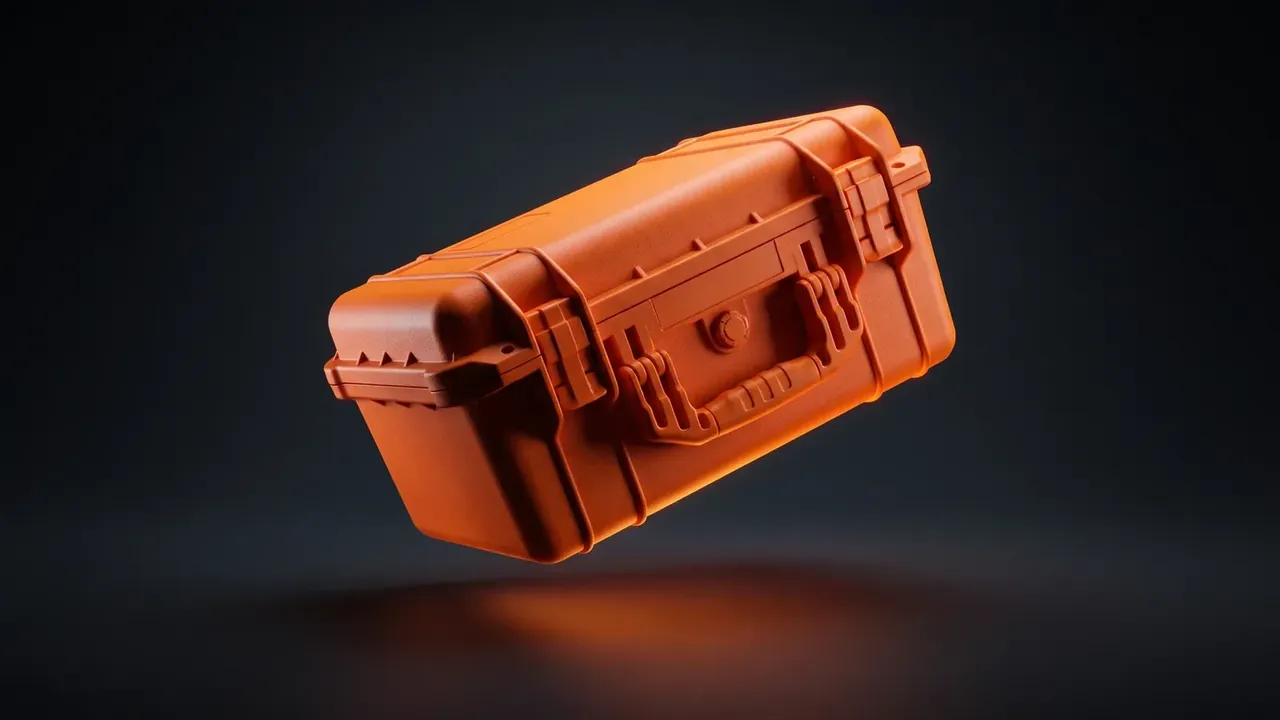
Quick answer: Industrial Case Purchasing Cost Analysis starts with 2.8 kg of resin at 9.5 CNY a kilo, an 180,000 CNY tool over 5,000 units and 4.2 CNY of freight.
Table of contents
- Material Cost by the Gram or by the Unit
- Three Ways to Amortise Tooling
- Labour Cost and Moulding Cadence
- Hidden Lines in Freight and Packing
- The Five-Year Life-Cycle Sum
- FAQ
1. Material Cost by the Gram or by the Unit
Two cases that look identical can differ twofold on a five-year ledger. Industrial Case Purchasing Cost Analysis breaks the price into four lines on one unit: 2.8 kg at 9.5 CNY a kilo is 26.6 CNY, a 180,000 CNY tool over 5,000 units is 36 CNY, labour 6 CNY, freight 4.2 CNY, total 72.8 CNY.
Quoting by the unit hides the most. Trimming the wall from 3.0 mm to 2.8 mm on a 1.2 m² shell cuts the charge by 0.23 kg and saves 2.2 CNY, with nothing visible outside and a step down in crush resistance.
Regrind is the second variable: a 15%–20% blend cuts pellets by 0.6–0.9 CNY a kilo, at the cost of colour drift between batches and a wider spread on drop impact. Industrial Case Purchasing Cost Analysis accepts only grams and CNY per kilo here, so an all-in material price has to be pulled back to those two before any comparison.
2. Three Ways to Amortise Tooling
Industrial Case Purchasing Cost Analysis finds the 180,000 CNY tool the hardest block in the sum. Over 5,000 units it adds 36 CNY each, over 20,000 it adds 9, over 1,000 it adds 180: one tool, three denominators, a twentyfold gap in unit cost.
Industrial Case Purchasing Cost Analysis recognises three methods. Per order uses the quantity in this purchase order; per life uses the designed shot count; per year splits the tool across three years.
| Method | Denominator | CNY each | Where it fits |
|---|---|---|---|
| Per order | 5,000 in this order | 36 | One-off project |
| Per life | 20,000 designed shots | 9 | Standard case, long run |
| Per year | 15,000 over 3 years | 12 | Model replaced soon |
| Per first lot | 1,000 units | 180 | Trial order, quoted apart |
Pick the wrong method and the comparison distorts. A supplier quoting 68 CNY against 74 may have parked tooling in a development charge, so the two together cost more; the tool has to be pulled back onto the unit whichever line it sits on.
Ownership follows the method. Once amortised the tool belongs to the buyer, and an order stopped halfway leaves a balance that the next quotation collects again.
3. Labour Cost and Moulding Cadence
Labour of 6 CNY a unit is handling, trimming and packing time. A 90-second cycle of 2 units gives 80 an hour and 640 a shift, and the shift wage divided by that count is the 6 CNY.
Ten seconds slower drops output to 72 an hour, a 10% fall, while the wage bill holds, so unit labour rises from 6 to 6.7 CNY. Industrial Case Purchasing Cost Analysis calls this cadence sensitivity.
Rework and inspection form a third block of hours: 3 seconds of visual check plus 1.5 minutes at a 2% defect rate adds 0.3 CNY, and at 5% it reaches 0.8, more than a resin discount.
Industrial Case Purchasing Cost Analysis leaves two levers: fewer handlings, and a robot taking the part out. Speeding the cycle past cooling time fails, because warp and flash hand the saving straight back.
4. Hidden Lines in Freight and Packing
Industrial Case Purchasing Cost Analysis puts freight at 4.2 CNY a unit on a full truck: 600 units at 2,520 CNY a load gives 4.2, while 400 units gives 6.3, so the fill rate rewrites this line.
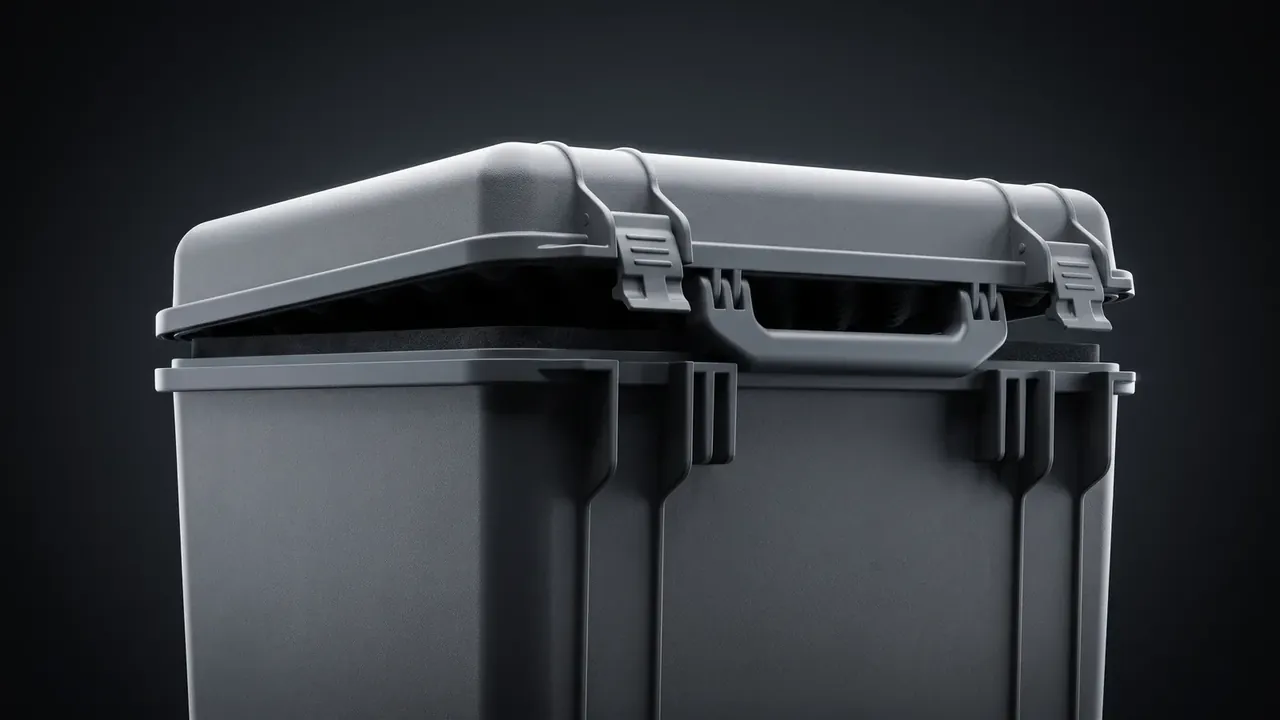
Packing of 4.1 CNY covers carton, foam bag and label: 2.6 for a five-ply carton one unit to a box, 0.9 for the bag, 0.6 for label and tape, with two to a carton saving 0.7 at a higher scuffing risk.
Damage closes the set at 0.5% transit damage, worth 0.4 CNY, and a return triples that through freight both ways and re-inspection, so a yuan saved on packing can cost three. Industrial Case Purchasing Cost Analysis audits the whole set on one table:
| Line | CNY each | Share | Basis |
|---|---|---|---|
| Material | 26.6 | 34.6% | 2.8 kg at 9.5 CNY a kilo |
| Tooling amortisation | 36.0 | 46.8% | 180,000 CNY over 5,000 units |
| Labour | 6.0 | 7.8% | Handling, trimming, packing |
| Trunk freight | 4.2 | 5.5% | Full truck of 600 units |
| Packing | 4.1 | 5.3% | Carton, foam bag, label |
| Total | 76.9 | 100% | Before repair and storage |
The audit rule reads: when tooling amortisation and packing are both missing and the gap against a comparable quote exceeds 8%, that quote cannot be compared side by side.
5. The Five-Year Life-Cycle Sum
Industrial Case Purchasing Cost Analysis ends at the life cycle, not the ex-works price. Five years at a 1.5% annual repair rate compounds to 7.5% on the 76.9 base, adding 5.8 and putting the cycle at 82.7 CNY, so reading 76.9 alone understates it by 7%.
Industrial Case Purchasing Cost Analysis books residual at zero, the conservative choice: a 2.8 kg shell fetches 3–5 CNY after five years, or 4%–6% of the cycle, while a shifting buy-back channel can leave the money uncollected.
| Year | Running total (CNY) | Repair inside it | Book value after depreciation |
|---|---|---|---|
| Year 1 | 78.1 | 1.2 | 61.5 |
| Year 2 | 79.2 | 2.3 | 46.2 |
| Year 3 | 80.4 | 3.5 | 30.8 |
| Year 4 | 81.5 | 4.6 | 15.4 |
| Year 5 | 82.7 | 5.8 | 0 |
The 8% tolerance is the ruler: under 5% is negotiation room, above 8% means a missing line, above 20% means tooling or packing sits outside the unit price. Industrial Case Purchasing Cost Analysis closes on the old line, that a quote stops at the factory gate while a cost runs to the scrap bin.
Related Reading
- How a single case cost is broken down
- Five-year total cost and payback
- Plastic case against wooden crate on cost
- Negotiating custom tooling charges
Related Products
- 8 Series — Gun Cases; Military Equipment Cases; Camera Equipment Cases; Drone Cases; Watch Cases; Knife Cases; First Aid Cases; Electronics Equipment Cases
- WL8-2812 PP Gun Case — model WL8-2812
- All protective cases and toolboxes: 7 series, 158 models