

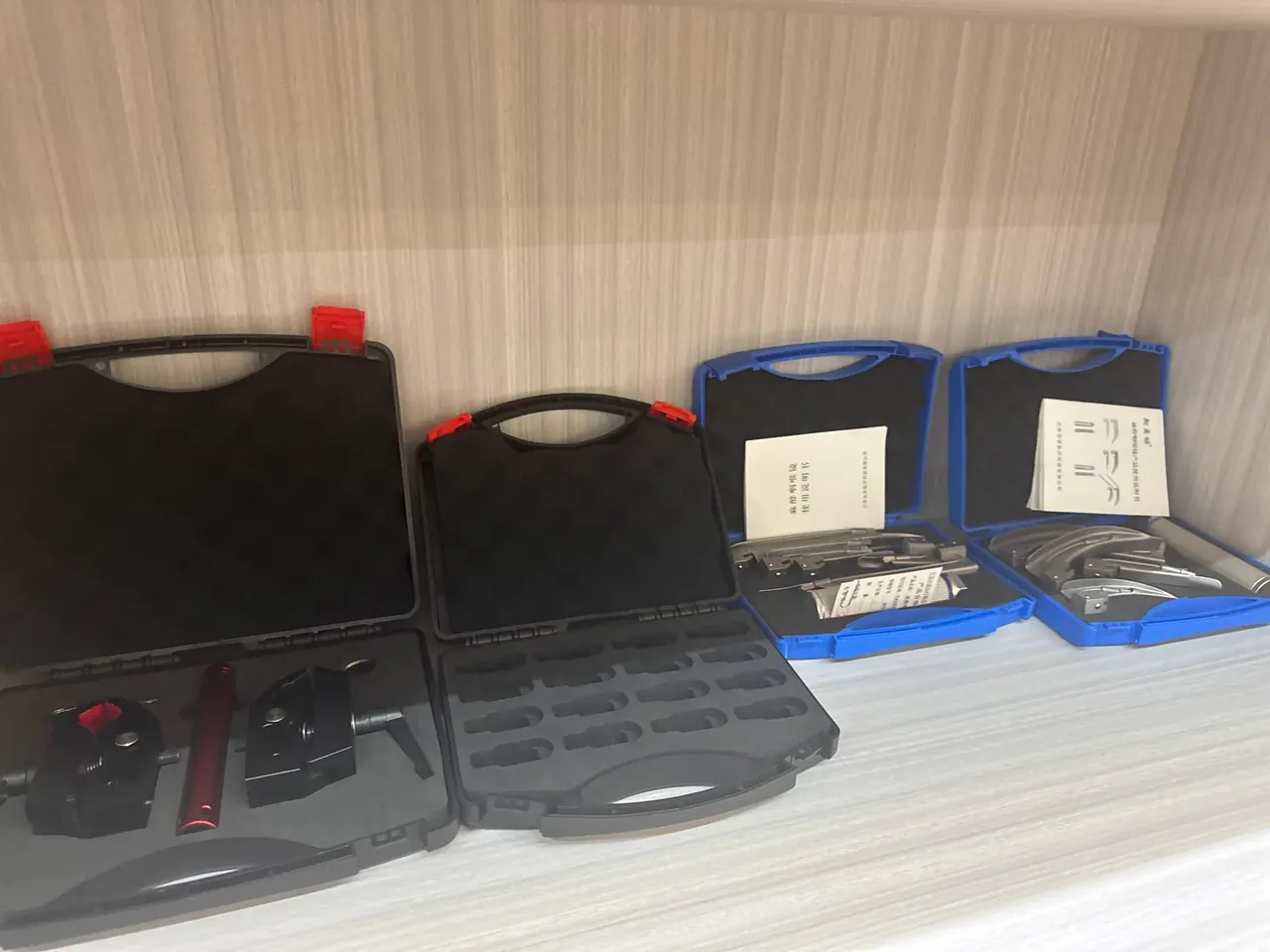
Quick answer: The Industrial hardware protective box with foam uses 35 kg/m³ foam cut into 32 slots, with ≤1.2 mm sag and ≥94% rebound after 5000 cycles.
Table of contents
- Why the Industrial hardware protective box with foam sorts slots by part weight
- Slot depth of 28 mm across 32 pockets
- Sag and rebound after 5000 insertion cycles
- How outer and inner dimensions set the liner
- Drop, IP65 and temperature effects on foam
- FAQ
1. Why the Industrial hardware protective box with foam sorts slots by part weight
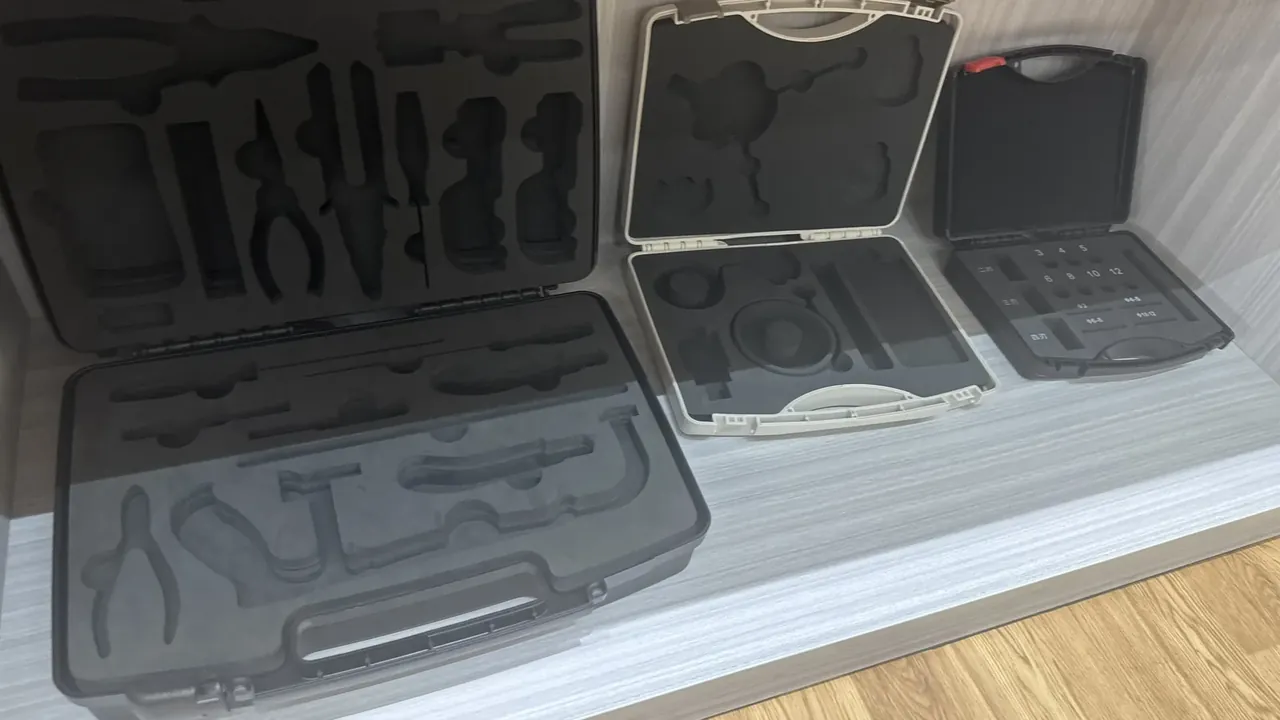
The Industrial hardware protective box with foam does not rely on one hollowed block. The 35 kg/m³ foam is split into 3 zones by part weight, and a light, a medium and a heavy zone each get a different slot width and support rib. A density of 35 kg/m³ balances cycle life against support: go lower and the slot walls slump after 5000 insertions; go higher and the slot mouth turns stiff, which makes removal slow. The zone table is fixed before any cutting, with 32 pockets divided 12, 12 and 8.
| Weight zone | Part mass kg | Pocket count | Slot width mm | Support rib |
|---|---|---|---|---|
| Light | up to 0.4 | 12 | 18 | single |
| Medium | 0.4 to 1.2 | 12 | 26 | double |
| Heavy | above 1.2 | 8 | 34 | grid |
2. Slot depth of 28 mm across 32 pockets
The Industrial hardware protective box with foam takes a single 28 mm slot depth, derived from the 150 mm cavity minus base allowance and lid liner thickness. Deeper is not better: at 28 mm the slot floor keeps 22 mm of parent material, enough to carry the part; 5 mm more thins that floor and pushes sag past 1.2 mm after 5000 cycles.
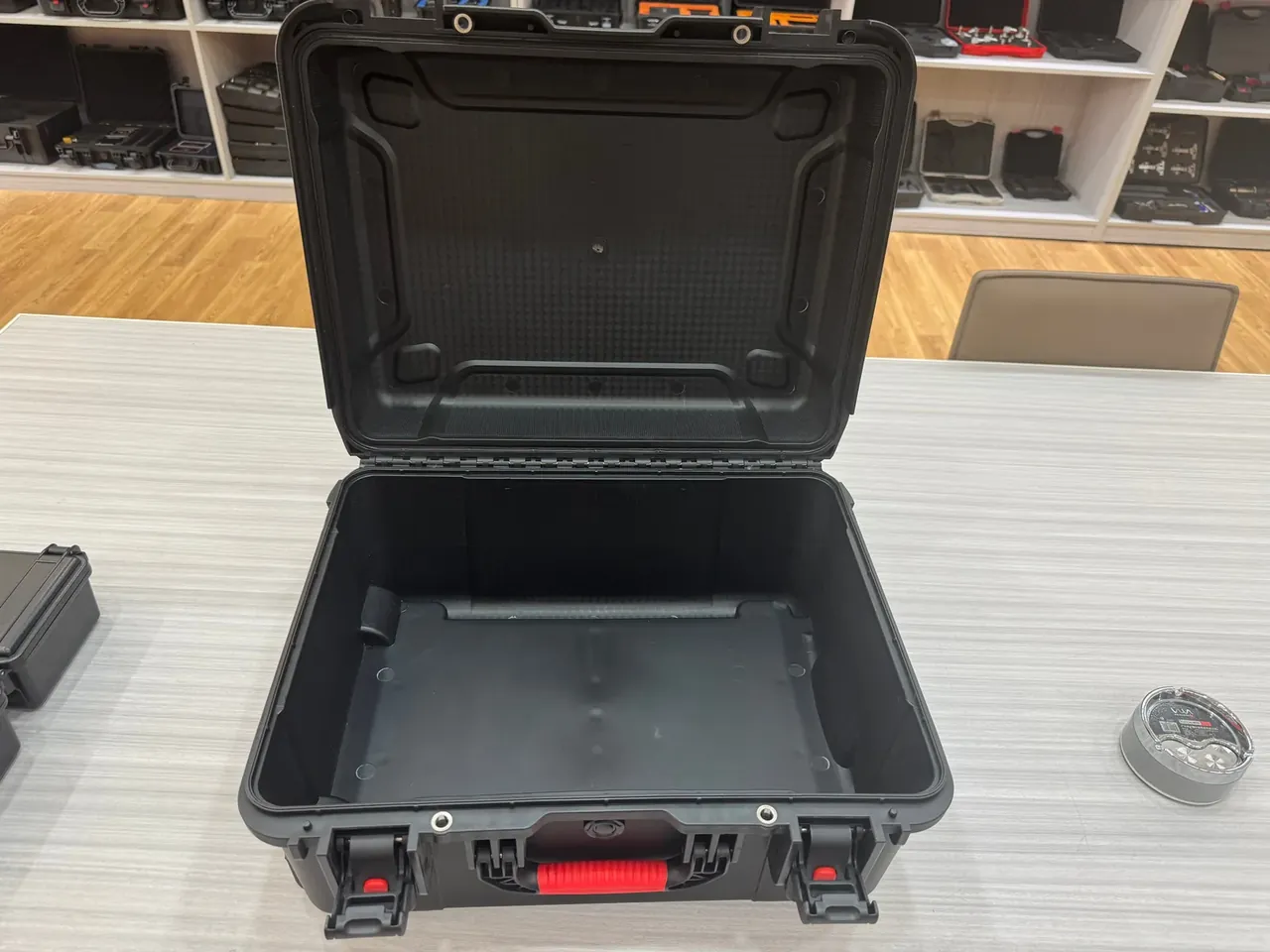
The 32 pockets sit on the 505 × 365 mm floor in 4 rows of 8, with a 6 mm rib between neighbours; ribs under 6 mm tend to fray under the cutter. The Industrial hardware protective box with foam places the 8 heavy pockets in the two hinge-side columns, the 12 light pockets along the opening and the remaining 12 in between. Only after the layout is fixed does depth grouping start; within one zone the depth stays constant so the lid liner can press flat.
| Slot depth | Zone | Floor left mm | Sag after 5000 mm | Verdict |
|---|---|---|---|---|
| 20 mm | light | 30 | 0.6 | pass |
| 24 mm | medium | 26 | 0.9 | pass |
| 28 mm | heavy | 22 | 1.2 | borderline pass |
| 32 mm | not used | 18 | 1.8 | fail |
3. Sag and rebound after 5000 insertion cycles
The Industrial hardware protective box with foam is judged after 5000 insertions, not when the foam leaves the cutter. Two criteria apply: slot sag ≤1.2 mm and rebound ≥94%. The first measures permanent set at the slot floor after repeated compression; the second measures how much wall thickness returns within 30 s of unloading. Both must hold at once, and passing one alone is not enough.
| Rebound | Cycle count | Sag mm | Slot mouth | Verdict |
|---|---|---|---|---|
| 100% | 0 | 0 | tight | baseline |
| 97% | 1000 | 0.5 | tight | pass |
| 95% | 3000 | 0.9 | slightly loose | pass |
| 94% | 5000 | 1.2 | slightly loose | lower limit |
4. How outer and inner dimensions set the liner
Between 560 × 420 × 190 mm outside and 505 × 365 × 150 mm inside, the 3.6 mm wall, the rim seal and the lid liner share the difference. The Industrial hardware protective box with foam cuts the liner 2 mm undersize on all four inner edges so that closing the lid never pushes it into the seal; a liner that fouls the rim leaves the lid unlatched and an IP65 spray test meaningless.
5. Drop, IP65 and temperature effects on foam
At −10 °C a generic foam drops below 88% rebound, so the formulation is calibrated to both the 55 °C upper and the −10 °C lower bound. The −10 °C to 55 °C working band belongs to the liner as much as to the shell: a foam that stiffens in the cold cannot hold the slot mouth, and one that softens in heat lets a 28 mm slot settle an extra 0.3 mm after a 1.0 m drop.
JUNZHIJIA samples each batch for the dimension chain, sag and rebound after 5000 insertions, and liner appearance after a 1.0 m drop plus IP65 spray. The manufacturer, KeXin New Materials (Guangdong) Co., Ltd., validates against methods only and writes no certificate numbers or test grade codes into the specification. The Industrial hardware protective box with foam is specified as a re-measurable table of density, depth, zones, sag and rebound, so a buyer never has to judge it from the look of a single foam block.
Conclusion
The Industrial hardware protective box with foam reduces its liner to three figures: 35 kg/m³ foam, 32 pockets in 3 weight zones and a 28 mm depth. Two criteria decide acceptance, sag ≤1.2 mm and rebound ≥94% after 5000 insertions, and both must hold at once. Outer 560 × 420 × 190 mm and inner 505 × 365 × 150 mm lock the liner stack, with a 3.6 mm wall, 4.6 kg empty and 12 kg loaded as boundary conditions. A 1.0 m drop, IP65 and −10 °C to 55 °C constrain the material. Keeping material, pocket geometry and criteria on separate lines stops a buyer from being swayed by the look of one foam block.
Related Reading
- Key values in custom case foam
- Checking EVA insert specifications
- Typical industrial tool box applications
- Slot layout in assembly line tool cases
Related Products
- 8 Series — Gun Cases; Military Equipment Cases; Camera Equipment Cases; Drone Cases; Watch Cases; Knife Cases; First Aid Cases; Electronics Equipment Cases
- WL8-2812 PP Gun Case — model WL8-2812
- All protective cases and toolboxes: 7 series, 158 models