

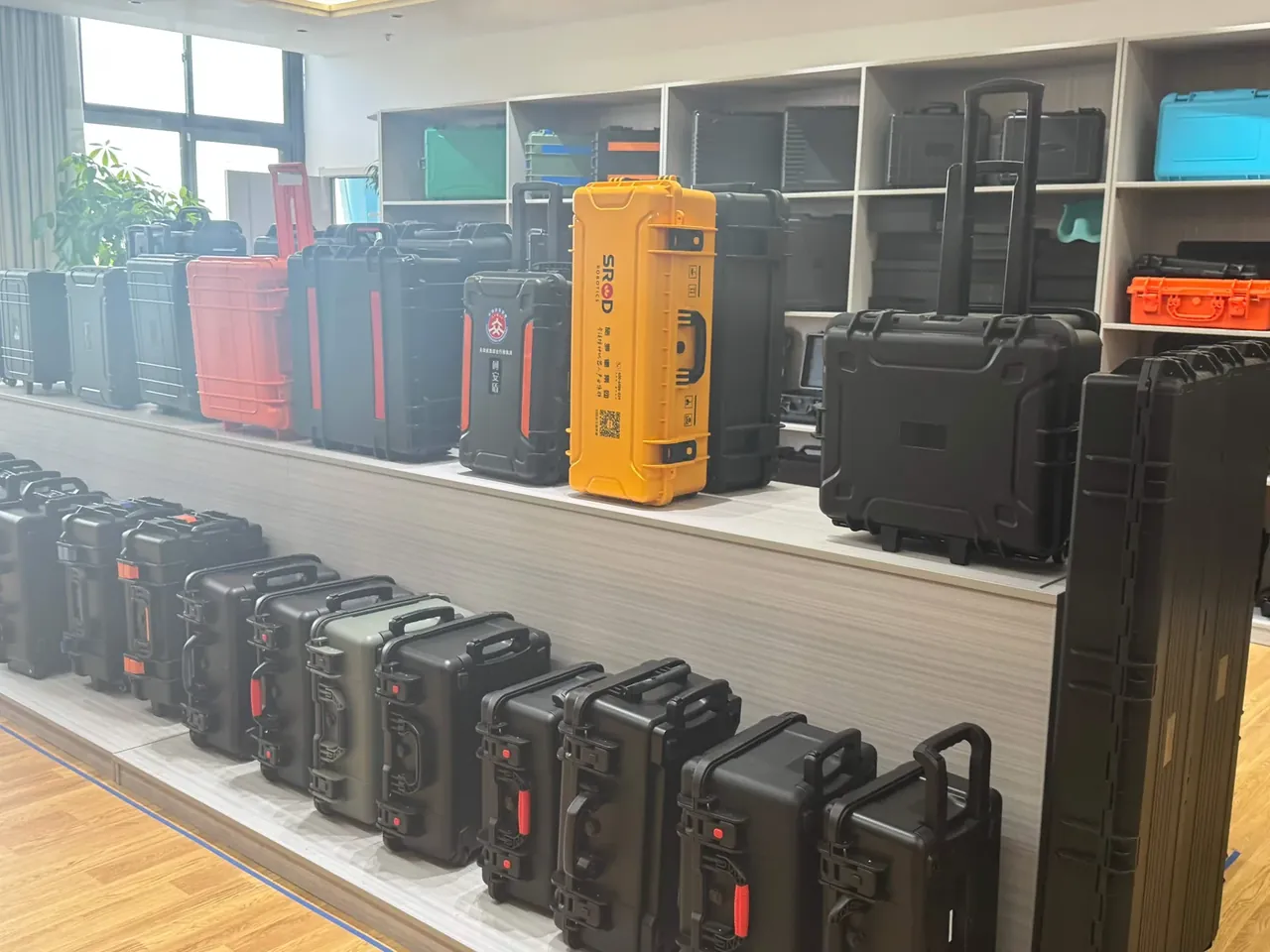
Quick answer: Industrial mold & spare parts protective transit box pairs 110 mm beam spacing with 2.5 mm corner codes, holding deflection to 1.8 mm under 3-tier / 48 h.
Table of contents
- Industrial mold & spare parts protective transit box beam spacing
- Wall-thickness allocation of the mouth corner codes
- Deflection readings within the static-load window
- Recheck judgement for four-tier stacking
- Spacing scrap threshold for the heavy-load batch
- FAQ
1. Industrial mold & spare parts protective transit box beam spacing
The Industrial mold & spare parts protective transit box has a 700 x 500 x 320 mm envelope, a 630 x 435 x 245 mm clear inside and a 5.2 mm shell wall. Its base uses a set of load beams along the long edge at 110 mm centre-to-centre instead of one solid slab. JUNZHIJIA takes 110 mm as the reference value for this lot, folding deflection, stacking and compression data back to it.
The 110 mm spacing is figured for a 9.2 kg empty case and a 22 kg loaded case. The Industrial mold & spare parts protective transit box marks it in the drawing tolerance band and sends any spot more than 0.4 mm off nominal back for tool correction.
Mouth trim and latches belong to the static-load condition too. Two gaskets at 22% compression seal the rim and four front latches each hold 470 N. The Industrial mold & spare parts protective transit box tightens the four latches diagonally before the bench log starts.
2. Wall-thickness allocation of the mouth corner codes
One corner code sits at each corner, all at 2.5 mm wall thickness. That figure works with the 110 mm spacing and the 22 kg load to spread upper load into the walls, keeping the box from collapsing under 3.2 kN at four stacked tiers. The Industrial mold & spare parts protective transit box takes all four codes from one material lot and sets aside anything more than 0.2 mm off.
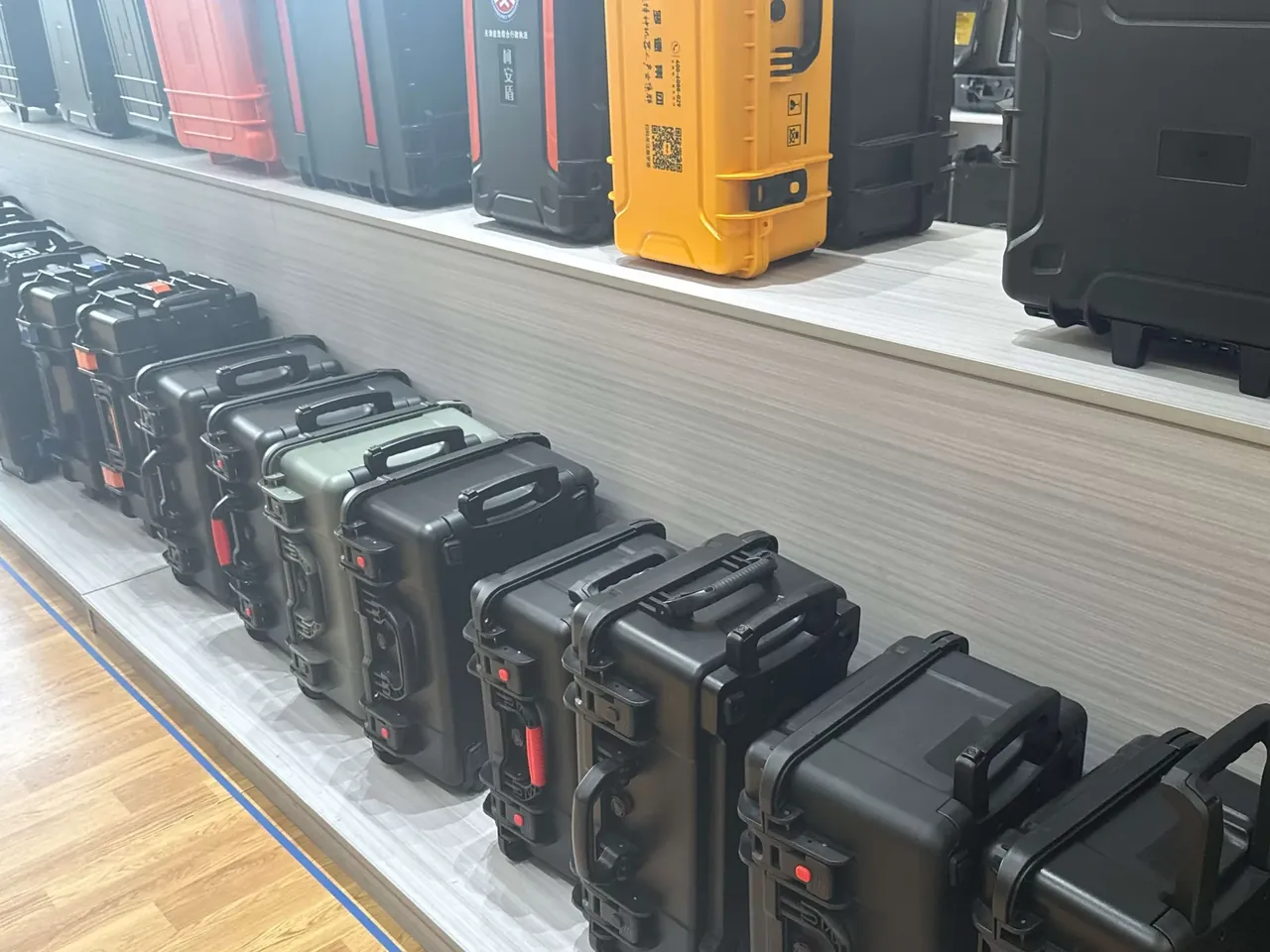
Code thickness also sets the load path: at 9.2 kg empty almost all load sits on the beams, at 22 kg loaded part transfers to walls and codes. The Industrial mold & spare parts protective transit box puts both readings into one table and remeasures the delta after 4200 open-close cycles, checking loosened codes when it drifts.
Keyed by beam spacing tier, the table below lists midspan bulge and compression margin after 3 tiers / 48 h of static load.
| Beam spacing tier | Midspan bulge | Compression margin |
|---|---|---|
| 90 mm | 1.1 mm | 3.6 kN |
| 110 mm | 1.4 mm | 3.4 kN |
| 130 mm | 2.3 mm | 2.7 kN |
The 110 mm tier holds midspan bulge to 1.4 mm, short of the 1.8 mm line, with a 3.4 kN margin clearing 3.2 kN.
3. Deflection readings within the static-load window
Static load means three stacked tiers pressed for 48 h with no shifting or latch release. The Industrial mold & spare parts protective transit box reads the base at fixed times inside the 3 tiers / 48 h window: a reference beam spans the mouth sides, a dial gauge records relative height, and the largest sag becomes deflection. The verdict waits for rebound after unloading; base deflection of 1.8 mm or less is kept, anything above returns to check spacing and code fit.
Change the tier count and the load changes with it. Keyed by stacked tiers, the table below lists peak deflection at 48 h and the dominant zone.
| Stacked tiers | Peak deflection at 48 h | Dominant zone |
|---|---|---|
| 1 tier | 0.5 mm | Long-edge midspan |
| 3 tiers | 1.4 mm | Midspan between beams |
| 4 tiers | 1.7 mm | Inside corner codes |
The four-tier figure sits close to 1.8 mm and serves only as an upper-stack reference; the formal verdict still uses 3 tiers / 48 h. The Industrial mold & spare parts protective transit box centres remeasurement on the three-tier condition, with five points along the long edge because midspan and near-code zones deform differently.
4. Recheck judgement for four-tier stacking
Four stacked tiers with no collapse at 3.2 kN is the first gate for this heavy lot. A collapse or outward-flipped code sends the case back to adjust code thickness or spacing. The Industrial mold & spare parts protective transit box writes this pre-check into the bench sequence so later deflection reflects only normal beam and code deformation.
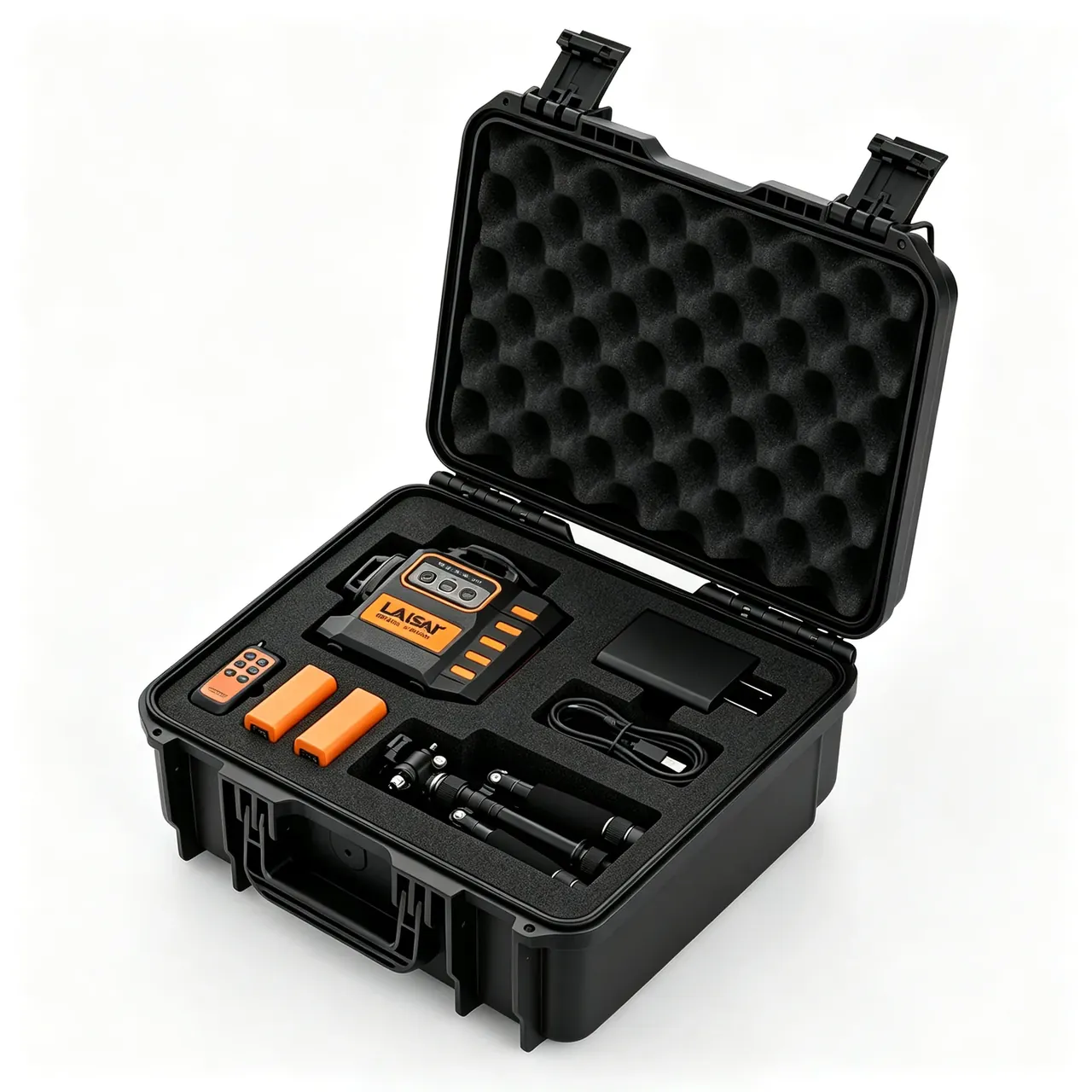
Durability rechecks follow. Each of the six faces takes one 1.2 m drop with the base measured right after, then 4200 open-close cycles run before latch force and both gaskets' compression are read again. The Industrial mold & spare parts protective transit box has to clear three things at once: deflection no worse than 1.8 mm, each latch still holding 470 N, gasket compression near 22%. IP66 dust and spray conditions only reference mouth sealing and are filed apart from deflection.
5. Spacing scrap threshold for the heavy-load batch
The heavy lot is sorted by deflection value; the table below spells out the three dispositions.
| Deflection value | Recheck verdict | Lot action |
|---|---|---|
| 1.2 mm or less | Wide margin | Normal release |
| 1.2-1.8 mm | Borderline | One more static run |
| above 1.8 mm | Past budget | Return for spacing review |
A base landing in 1.2-1.8 mm takes one more 3 tiers / 48 h press, and both runs must sit on the line before release.
The 1.8 mm line absorbs 110 mm spacing spread, 2.5 mm code wall variation and residual sag after 48 h. A fixed share of each lot gets the full bench, the rest only static deflection and latch force. JUNZHIJIA and its manufacturing partner work to one aligned tolerance drawing, with the bench sequence written as repeatable items.
Conclusion
The Industrial mold & spare parts protective transit box builds a repeatable measurement chain from 110 mm beam spacing, 2.5 mm corner codes and 3 tiers / 48 h of static load, landing on base deflection of 1.8 mm or less and no collapse at 3.2 kN across four stacked tiers. A 700 x 500 x 320 mm envelope, 5.2 mm wall, four 470 N latches and two gaskets strip mouth angle out of the readings. JUNZHIJIA files each heavy lot.
Related Reading
- Blow molding machine parts case: head, mold and clamp unit transport protection
- Protective case mold trial run guide: T1/T2 and production validation
- Protective case cross-border logistics: export packing and customs documents
- Broaching machine tooling case: broach and fixture transport protection
Related Products
- 8 Series — Gun Cases; Military Equipment Cases; Camera Equipment Cases; Drone Cases; Watch Cases; Knife Cases; First Aid Cases; Electronics Equipment Cases
- WL8-2812 PP Gun Case — model WL8-2812
- All protective cases and toolboxes: 7 series, 158 models