

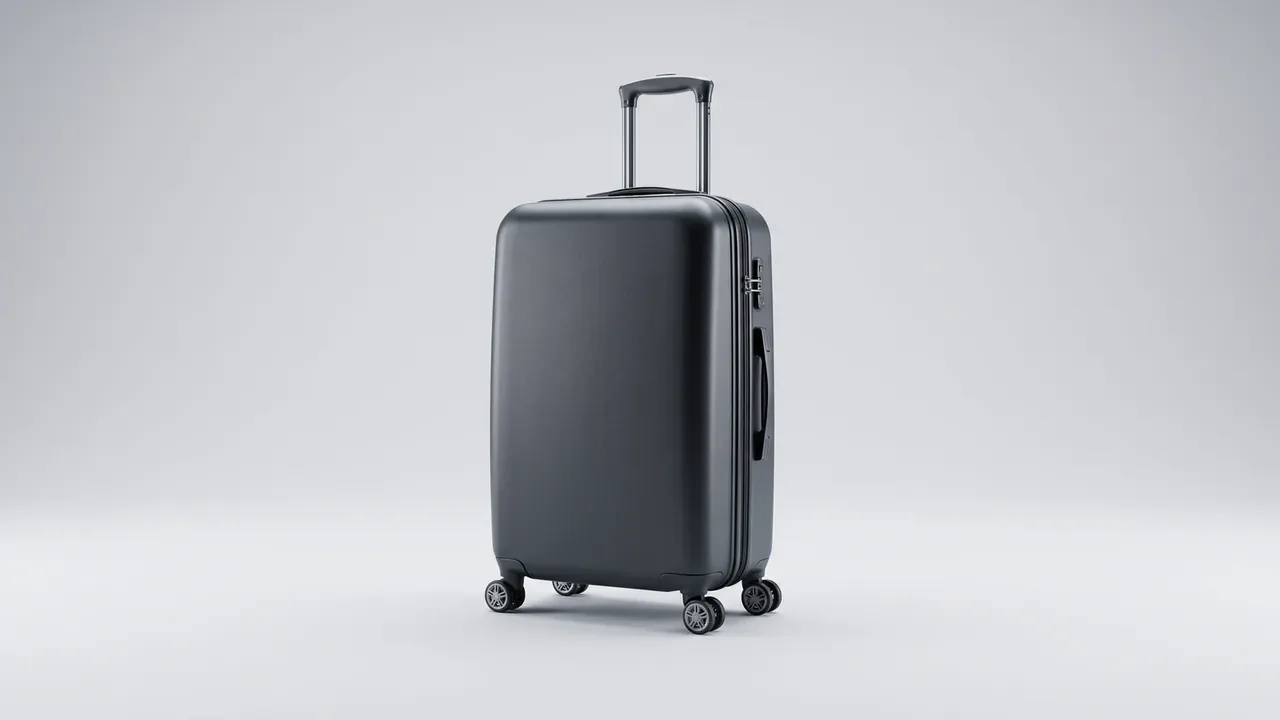
Quick answer: On a 500-piece order with a 560 × 430 × 250 mm cavity, two plants quoted 268 and 205 CNY; once wall thickness, regrind, leak testing, packaging and tooling were put on the same basis, the 63 CNY gap shrank to 17 CNY and changed direction.
Table of contents
- Two Quotes, One Cavity Size
- Tooling: Who Pays, How Often, Who Keeps It
- The Order Ladder from 300 to 6,000 Pieces
- Which Date the 25 Days Count From
- Payment Terms and Five Quote Traps
- FAQ
1. Two Quotes, One Cavity Size
Last November an integrator of mobile lighting rigs needed 500 cases for lamp controllers. Cavity 560 × 430 × 250 mm, outside 620 × 490 × 285 mm, wall 4.0 mm, 4.6 kg with hardware. Five inquiries went out; two came back in three days. Plant A quoted 268 CNY, Plant B quoted 205. The buyer put both sheets side by side and reached for the phone to squeeze A, because 63 CNY times 500 is 31,500.
The engineer on the other end asked one question: what wall thickness did B quote?
That question moved the comparison from numbers back to definitions. B's 205 assumed a 3.2 mm wall, 30 percent regrind, sampling instead of full leak testing, and a three-ply carton. A's 268 assumed 4.0 mm, all-virgin resin, a full leak test on every unit and a five-ply carton. These were not the same product. B was asked to re-quote on the same basis and came back at 259.
| Item | Plant A | Plant B, first round | Plant B, re-quoted |
|---|---|---|---|
| Unit price | 268 CNY | 205 CNY | 259 CNY |
| Nominal wall | 4.0 mm | 3.2 mm | 4.0 mm |
| Regrind content | 0 | 30 percent | 0 |
| Leak test | Every unit, included | Sampling, 6 CNY extra | Every unit, 6 CNY extra |
| Carton | Five-ply, included | Three-ply, 3 CNY extra | Five-ply, 3 CNY extra |
| Tooling | 54,000 CNY, amortized at 18 CNY over 3,000 | 52,000 CNY, billed separately | 52,000 CNY, billed separately |
| Landed unit cost at 500 | 268 CNY | 231.3 CNY | 285.3 CNY |
The correction is mechanical. Moving from 3.2 to 4.0 mm added 42 CNY, dropping regrind added 12, full leak testing 6, the five-ply carton 3, and tooling spread over 3,000 pieces 17.3. The total lands at 285.3, or 17.3 above Plant A. Of the original 63 CNY gap, 54 came from wall and regrind definitions, 9 from testing and packing, and the 52,000 CNY tool never appeared in B's unit price at all.
The gap did not vanish. It moved.
That seven-row sheet became the integrator's standing template. Any quote from an industrial waterproof case manufacturer gets split the same way before anyone talks about discount, and a sheet that cannot be split goes on the pending pile.
2. Tooling: Who Pays, How Often, Who Keeps It
Tooling is the only asset in this purchase that follows the buyer, and the item most likely to turn hostile when orders stop.
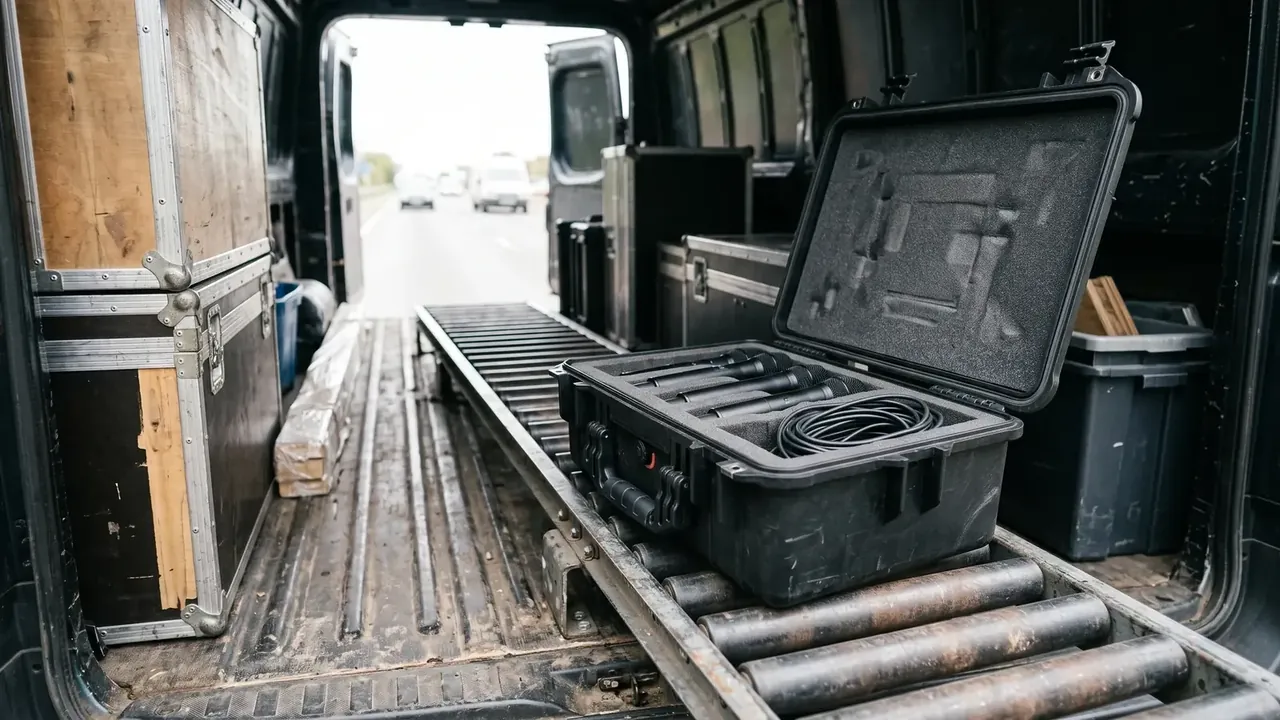
In 2026 a single-cavity P20 mold runs 52,000 to 68,000 CNY including the first trial and two reworks; a two-cavity tool starts near 78,000. Plant A quoted 54,000 and Plant B 52,000, close enough on paper, yet A wrote that title passes to the buyer on final payment while B wrote that the tool is held on consignment.
Three sentences belong in the contract. Title passes on final payment. The supplier stores the tool free of charge for twelve months after the last order. On release, the mold base drawing, cooling circuit map and spare-parts list travel with it. The third clause is the one everyone drops, and it is the reason a mold arrives at a new plant and will not mount: the hot-runner model and water fittings do not match, and adapting them costs another 20,000 to 30,000.
Service life needs a number. At a 300,000-shot design life the corners and boss seats fatigue first; past 200,000 shots the gasket groove drifts toward 0.1 mm, and no new O-ring will hold water at that point.
Order three samples, not one. The first goes into a 1 m immersion for 30 minutes, the second onto a vibration table, the third is signed and sealed as the reference. Photograph the sealed box and file it, because every later batch dispute rests on that photograph.
3. The Order Ladder from 300 to 6,000 Pieces
A minimum order is not a number. It is a staircase, and each step carries a mold change and its scrap.
Ask an industrial waterproof case manufacturer for the ladder rather than a single price.
| Quantity | Price index | Conditions |
|---|---|---|
| 300 | 118 | Floor for a single-cavity tool, no color change |
| 500 | 108 | Standard minimum, one color included |
| 1,000 | 100 | Base tier, packaging selectable |
| 3,000 | 91 | Dedicated compound and hardness negotiable |
| 6,000 | 85 | Moves to a two-cavity tool, tooling re-quoted |
Two rules sit outside the table. A color change needs at least 500 pieces, and going from dark to light requires purging, booked at 25 kg of scrap. Switching PP to ABS improves impact resistance, lifts the price about 12 percent, and forces a shrink-rate recheck.
The 300-piece tier exists because one setup on a single-cavity machine only pays back at that volume; after mold change and scrap, the unit price sits 18 percent above the 1,000 tier.
A plant that accepts 100 pieces is slotting the job into someone else's mold time. Delivery and design changes then belong to that other customer, and you find out in the week you need them.
4. Which Date the 25 Days Count From
Twenty-five days means two different dates depending on where the clock starts.
Plant A counts from sample approval. Plant B counts from the deposit, and B's press time still waits for the previous mold to come off the machine.
| Milestone | Plant A, working days | Plant B, working days |
|---|---|---|
| Drawing and sample approval | 5 | 5 |
| Deposit to T1 | 25 | 25 |
| T2 rework | 12 | 12 |
| Production | 18 | 18 |
| Queue before the press | 0 | 22 |
| Total | 60 | 82 |
Write the lead time as two dates plus one condition: the deposit date, the sample approval date, and the calendar days counted from approval.
A single total-days clause guarantees an argument in peak season.
September to November is export peak, when molding schedules slide about ten days. The same order placed in March and in October can arrive three weeks apart.
5. Payment Terms and Five Quote Traps
Payment is the tightest point of cash flow in the chain.
Five hundred pieces at 268 CNY is 134,000 CNY of goods. Plant A asks 30 percent down, 60 before dispatch and 10 after acceptance, so the first payment is 40,200. Plant B wants 50 percent, or 67,000, tying up an extra 26,800 for an extra sixty days.
An industrial waterproof case manufacturer asking under 20 percent up front is usually short of working capital, and the tool schedule shows it before T1.
The traps cluster in five places, and each can be checked on the spot.
- A bare price without leak testing: ask for the test fee as a separate line and whether it is full or sampling
- Tooling split into build and trial: contract a single sum that includes T1 and two reworks
- Weight-based pricing: put wall thickness and gram weight on the drawing, weigh three units on arrival, reject beyond 3 percent
- Three-ply cartons sold as five-ply: count the plies at inspection and write edge-crush strength into the order
- Unstated regrind: request resin grade and batch, keep a first-article sample for infrared comparison
Audit the plant on three hard numbers: a press of 380 tonnes clamp force or more, a leak bench that holds 0.3 bar for 60 seconds, and salt-spray capability rated to 48 hours of neutral fog. Once those exist, price and terms are worth discussing.
Write claims by batch. A sampled leak rate above 2 percent returns the lot at the supplier's freight cost, and gasket hardness outside Shore A 70 ±5 is replaced free.
Conclusion
The order went to Plant A, not because it was cheaper but because every row of the sheet reconciled. Once the 63 CNY gap was split into material, testing, packing and tooling, the buyer held a repeatable comparison rule instead of a quotation. Choosing an industrial waterproof case manufacturer comes down to choosing a quote that can be taken apart.
This article discusses only the container (case body) side of specifications and design intent, and does not cover any handling, loading or use of the contents.
Related Reading
- How waterproof hard case ratings are judged and tested
- Minimum order and retooling cost in small-batch customization
- Who changes the drawing during case customization
- Load and towing choices for wheeled protective cases
Related Products
- 8 Series — Gun Cases; Military Equipment Cases; Camera Equipment Cases; Drone Cases; Watch Cases; Knife Cases; First Aid Cases; Electronics Equipment Cases
- WL8-2812 PP Gun Case — model WL8-2812
- All protective cases and toolboxes: 7 series, 158 models