

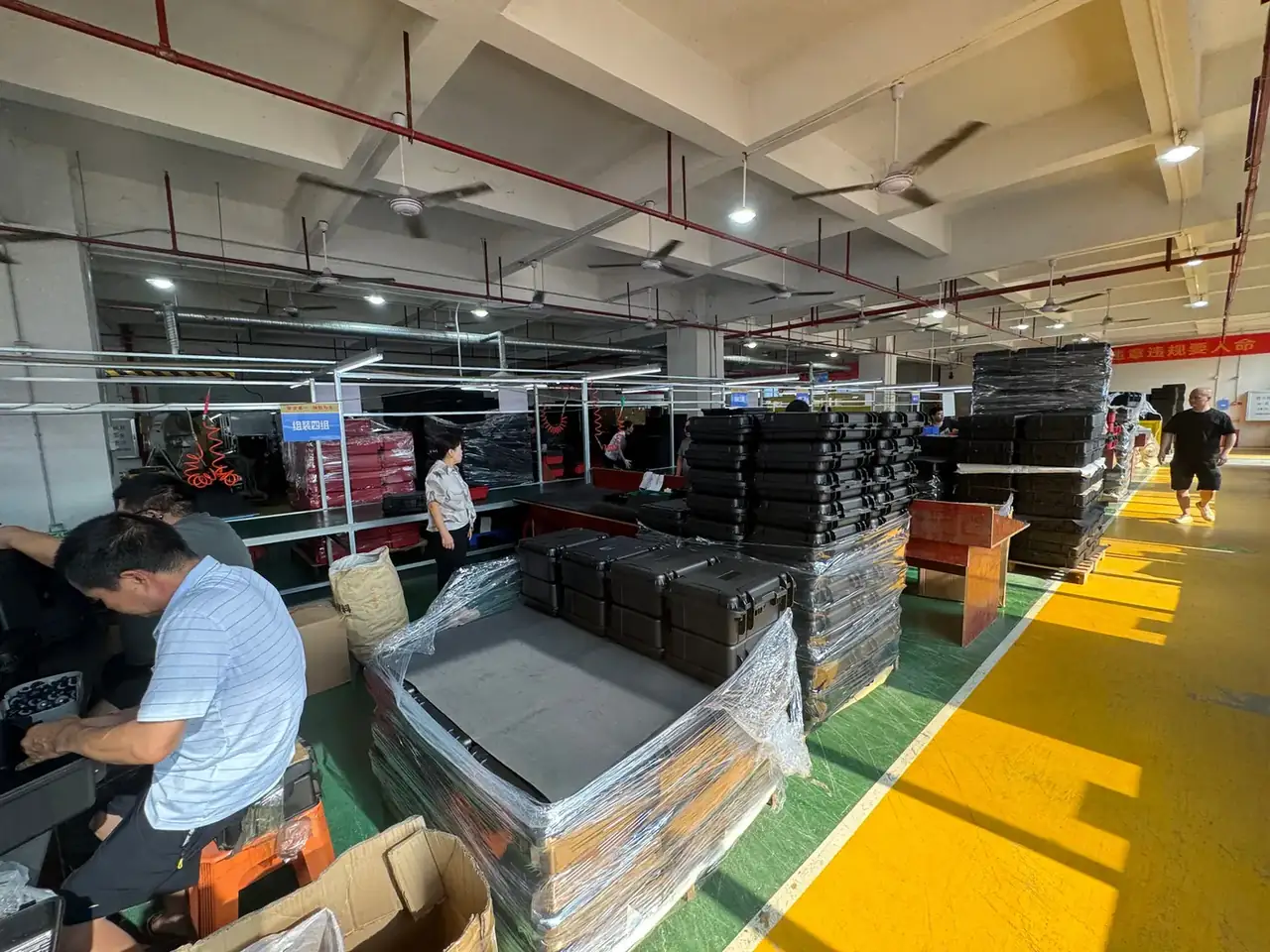
Quick answer: An Injection Molded Protective Case is not replaced when it breaks. Inspect every six months, audit fully at eighteen, and measure three things: seal lip leaks, closing gap and hinge pin wear. Cross a limit and the part is swapped; a through-crack retires the whole case.
Table of contents
- Six Places to Inspect First
- Cleaning: Water Temperature and Drying Time
- When Seals and Latches Must Be Replaced
- An Eighteen-Month Log
- Three Habits That Extend Life
- FAQ
1. Six Places to Inspect First
Failures on an Injection Molded Protective Case are not spread evenly. Eight in ten land on six spots: the seal lip, the latches and bosses, the hinge pin, the rim plane, rib roots, and handle or caster mounts.
No teardown is needed. Close the lid, run a torch along the seam and look for light; then press down and listen. Two latches that sound different have already lost preload.
| Spot | Method | Limit |
|---|---|---|
| Seal lip | Torch along the seam | Light leak over 20 mm |
| Latch boss | White crazing at the root | Any crack |
| Hinge pin | Rock the lid | Play over 0.3 mm |
| Rim plane | Rule plus feeler gauge | Gap over 1.5 mm |
| Rib root | Caliper at the base | 10 per cent thinner |
| Handle mount | Load, watch the root | 2 mm set |
The first three are monthly, the rest quarterly. A log of pass and fail alone gives nothing to compare in year two.
2. Cleaning: Water Temperature and Drying Time
Cleaning is the cheapest way to extend life and the easiest to overdo. Most bodies are PP, and water above 40 C with detergent residue whitens the rim, then makes it brittle.
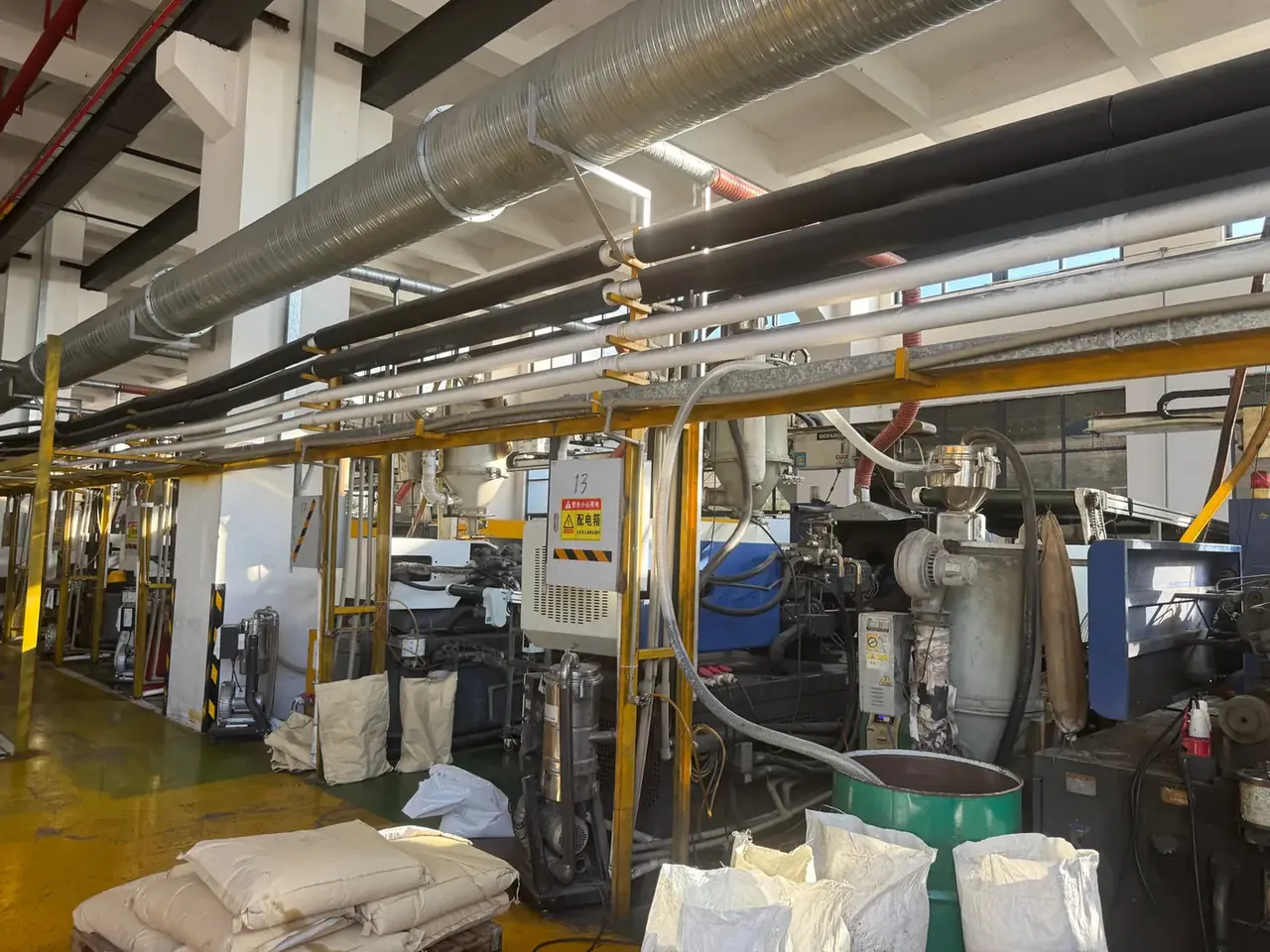
Keep wash water at 30 to 40 C and use a neutral detergent between pH 6 and 8. Never use ester, ketone or chlorinated solvents: they craze the surface within weeks, invisibly, until the skin powders under a rag. Hold the pressure washer 300 mm from the seal. The lip is a thin edge, a direct jet folds it back, and it never seats again. Drying depends on the room: 20 minutes open at 25 C and 60 per cent humidity, 40 minutes above 80 per cent. Closing an Injection Molded Protective Case with water still in the groove is the common error, and mould marks set within days.
3. When Seals and Latches Must Be Replaced
A seal is consumable, judged by compression set rather than looks. Pull it out, rest it 30 minutes, measure the section: recovery under 70 per cent, a set above 30 per cent, means it is spent.
Latches are judged by the closing gap. With the lid shut, slip a feeler gauge beside the latch; over 1.5 mm means preload is gone, usually from boss creep or a worn body. Change the body first.
| Part | Signal | Limit |
|---|---|---|
| Seal | Slow recovery | Set over 30 per cent |
| Latch body | Dull click, pops open | Gap over 1.5 mm |
| Hinge pin | Stiff swing, droop | Wear over 0.3 mm |
| Handle | Root whitening | Set after 15 kg |
Replace all four seal corners at once, never one section. Old and new compress differently, and the joint between them leaks even when the rest passes.
4. An Eighteen-Month Log
An inspection answers one question: how long will this Injection Molded Protective Case last. The answer sits in the gap between readings, not in one.
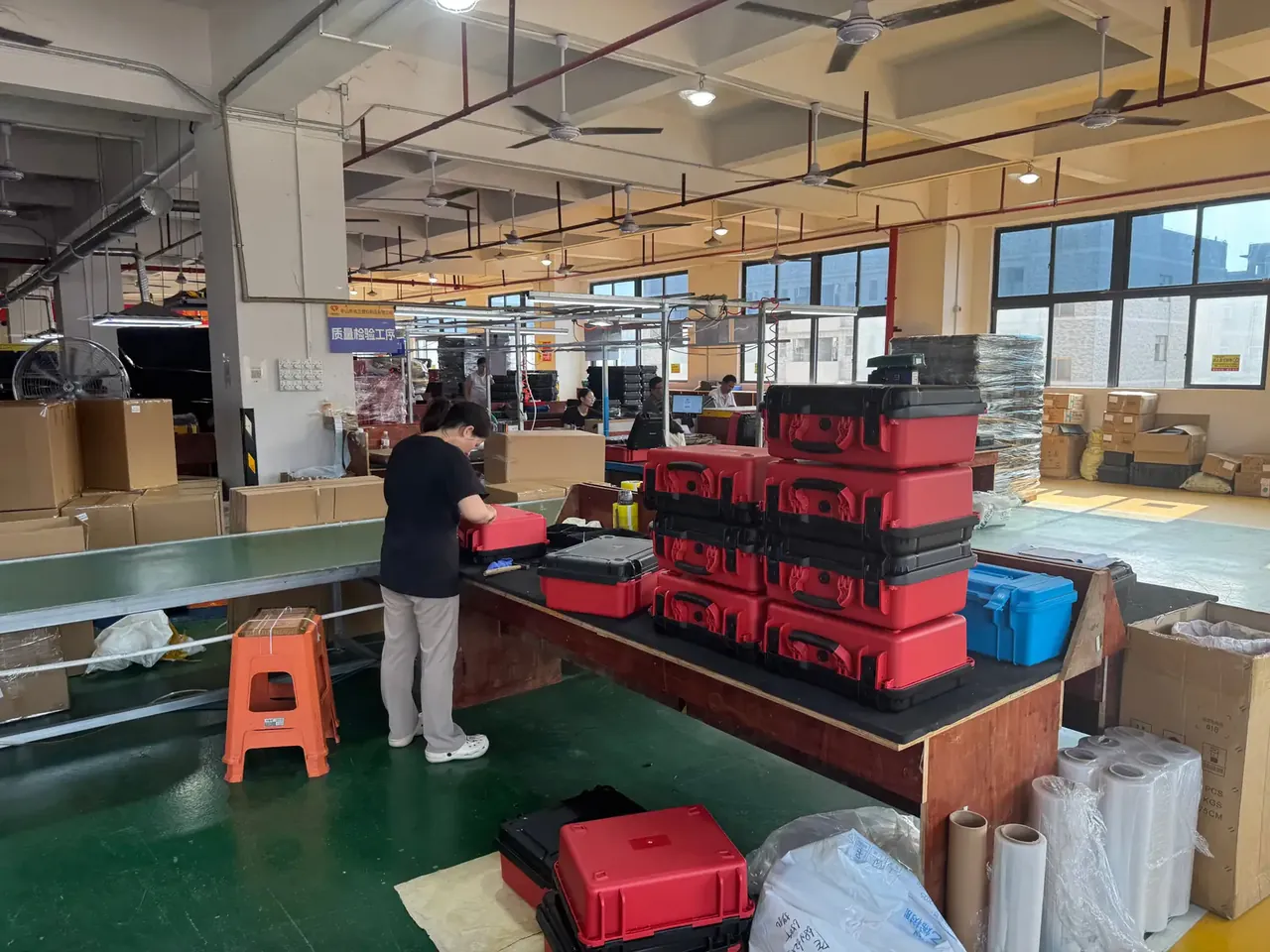
Log five values for the Injection Molded Protective Case: date, ambient temperature, closing gap, seal Shore hardness and pin play. The first two are context; the rest are the trend. A gap opening 0.2 mm per half year, or hardness climbing five points, is early warning.
Inspect every six months, audit fully at eighteen. The audit opens the lid, checks rib roots, runs a 30-minute spray test and re-torques the latches: 6 to 8 N·m is normal, under 4 N·m means replacement.
Eighteen months is also the keep-or-retire call. Three trends inside limits, keep running. Two trends worse by 20 per cent twice running, watchlist, with spares on the shelf.
5. Three Habits That Extend Life
- Storage: out of sustained sun above 55 C, and no repeated folding below -20 C, where PP impact strength halves.
- Stacking: three high for long storage, five only for short moves; creep in the bottom unit is irreversible.
- Handling: under 20 opening cycles a day, and both latches loaded together instead of forcing one side.
Retirement comes in two tiers. Part level: seal set over 30 per cent, gap over 1.5 mm, pin wear over 0.3 mm, swap the part. Case level: a through-crack, a split latch boss, or walls 10 per cent thinner and brittle, and the Injection Molded Protective Case retires, because no repair restores the strength.
Conclusion
Maintenance is not patching, it is recording three measurable numbers on a rhythm: seal set, latch gap and hinge pin wear. Once the readings form a line, the moment to swap a part or retire a unit appears on its own, without waiting for a leak or a lid that springs open. Inspect, clean and log, and an Injection Molded Protective Case usually serves two years longer than one run without records.
This article discusses only the container (case body) side of specifications and design intent, and does not cover any handling, loading or use of the contents.
Related Reading
- Routine checks on injection molding machines
- Wheel and handle maintenance on wheeled cases
- How rotomolded case repair differs
- Storage and periodic checks for reserve cases
Related Products
- 8 Series — Gun Cases; Military Equipment Cases; Camera Equipment Cases; Drone Cases; Watch Cases; Knife Cases; First Aid Cases; Electronics Equipment Cases
- WL8-2812 PP Gun Case — model WL8-2812
- All protective cases and toolboxes: 7 series, 158 models