

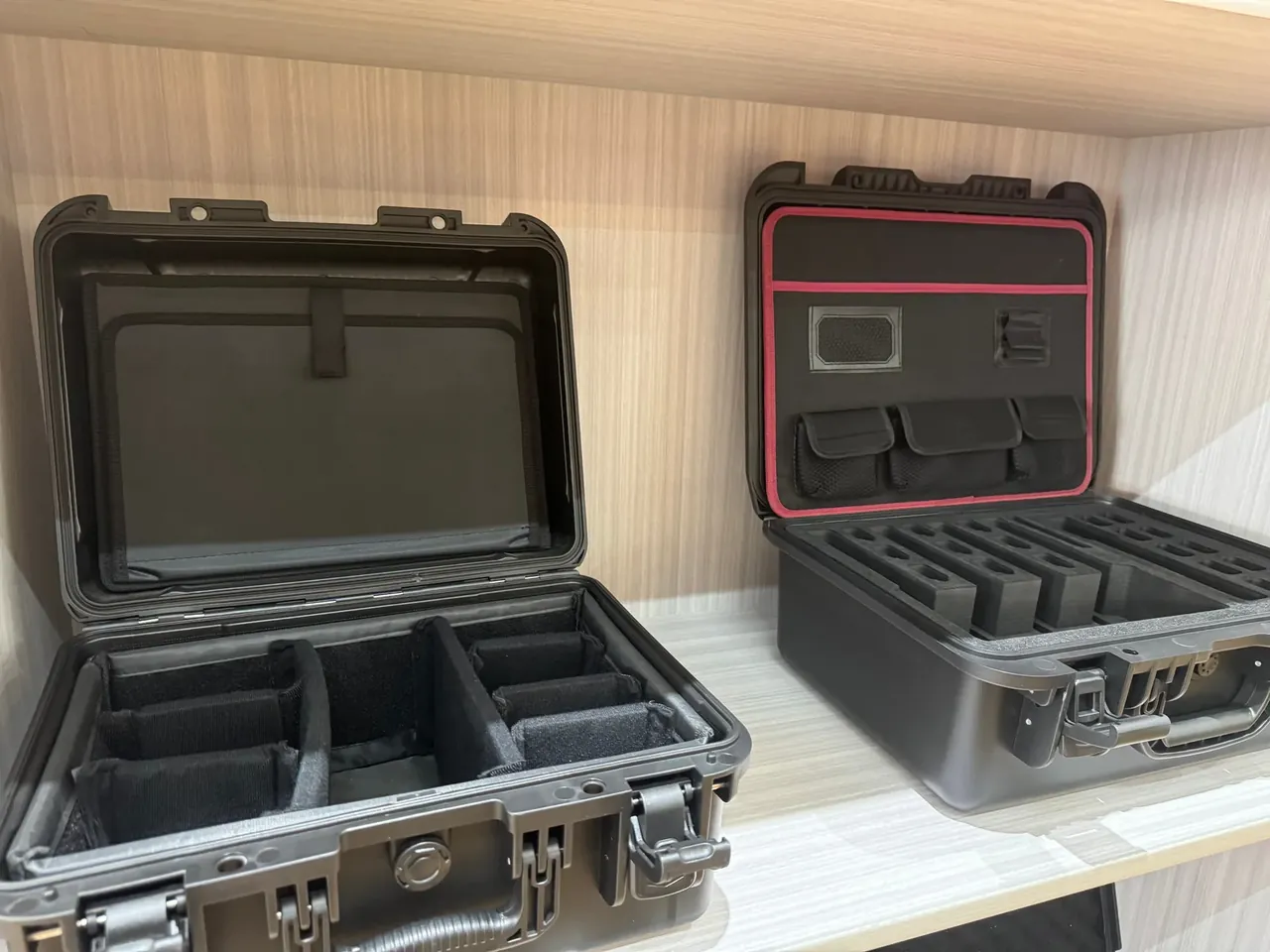
Quick answer: At an insert assembly station one case takes 95 s from pick to press, and 11 s is waiting for glue to cool. Split the cycle four ways and 2.4 percent rework holds.
Table of contents
- Splitting a 95-Second Cycle
- 0.8 g Glue Dots and a 30-Second Press
- A 1.2 m2 Rework Bay Against 2.4 Percent
- Three Datum Faces for Insert Location
- Fifteen-Minute Changeover Kit
- FAQ
1. Splitting a 95-Second Cycle
An insert assembly station cycle of 95 s splits twice: by motion, then by waiting. Picking takes 18 s, locating 22 s, gluing and pressing 34 s, checking and unloading 21 s. Under half is work on the insert.
Spread, not average, shows where the cycle leaks. Pressing is locked by the timer, locating swings widest: one missed datum costs 40 s of rework. Fix the datum, then shorten the walk to the tote.
| Leg | Standard time | Spread | Main wait | Lever |
|---|---|---|---|---|
| Pick insert | 18 s | 16-21 s | none | tote nearer the bench edge |
| Locate to datum | 22 s | 18-40 s | finding the face | L-shaped fence |
| Glue and press | 34 s | 33-35 s | 11 s of cooling | platen held at 35 C |
| Inspect and unload | 21 s | 19-25 s | empty case slot | gravity chute |
Eleven of those seconds are pure waiting; a platen at 35 C takes them out, landing the insert assembly station at 84 s, worth about 40 cases in a 280-case shift.
2. 0.8 g Glue Dots and a 30-Second Press
0.8 g is the weight of one dot, not of a metre of bead. At about 0.9 g per millimetre it spreads into a 90 mm line that flattens to a 12 mm disc, 0.6 mm high. That thin disc holds the insert, not a pile of glue.
Pitch follows the perimeter: a 620 by 460 mm case measures about 2.16 m, so 60 mm gives 36 dots, 28.8 g of glue; at 90 mm the count falls to 24 dots.
The 30 s press at the insert assembly station cools the glue rather than pressing it. Hot melt must drop from 160 C to below 40 C, which takes 34 s at 15 C and 26 s at 30 C. A fixed 30 s holds only at the 23 C, 50 percent RH reference.
| Method | Glue per dot | Pitch | Press dwell | Batch size |
|---|---|---|---|---|
| Hand-run bead | 1.5 g | continuous | 40 s | under 30 |
| Manual gun | 0.8-1.2 g | 60 mm | 30 s | under 50 |
| Semi-automatic | 0.8 g | 45 mm | 25 s | 200-500 |
| Automatic | 0.7 g | 30 mm | 20 s | over 1000 |
Overflow cools into a rim the lid liner lands on; too little lifts the corners. The insert assembly station check watches both.
3. A 1.2 m2 Rework Bay Against 2.4 Percent
The insert assembly station keeps 1.2 m2 for rework: one open case, a heat gun, a glue roll, a parts box. The bench runs 1.5 by 0.8 m at 900 mm, 3 m downstream.
At 2.4 percent an insert assembly station day of 280 cases yields 6.7 pieces. Four minutes each is 27 min a day that never enters the cycle, so the bay stays close: 10 s out, 10 s back.
| Bay area | Cases open | Walk each way | Daily ceiling | Fit |
|---|---|---|---|---|
| 0.5 m2 | 1 | 6 s | 20 | micro cases, under 1 percent |
| 0.8 m2 | 1 | 8 s | 40 | small cases, about 1.5 percent |
| 1.2 m2 | 2 | 12 s | 90 | mid cases, 2-3 percent |
| 1.8 m2 | 3 | 18 s | 150 | large cases, over 4 percent |
Staying under 2.4 percent is about sorting failures, not buying floor: blades for overflow, glue and heat for gaps, a fence for misalignment. The aisle back to the line stays at 800 mm.
4. Three Datum Faces for Insert Location
Bottom first, then the long side, then the short end. Height, left-right, front-back; with all three the insert has 0.5 mm left. Start at the short end and it ends 2 mm off, already glued.
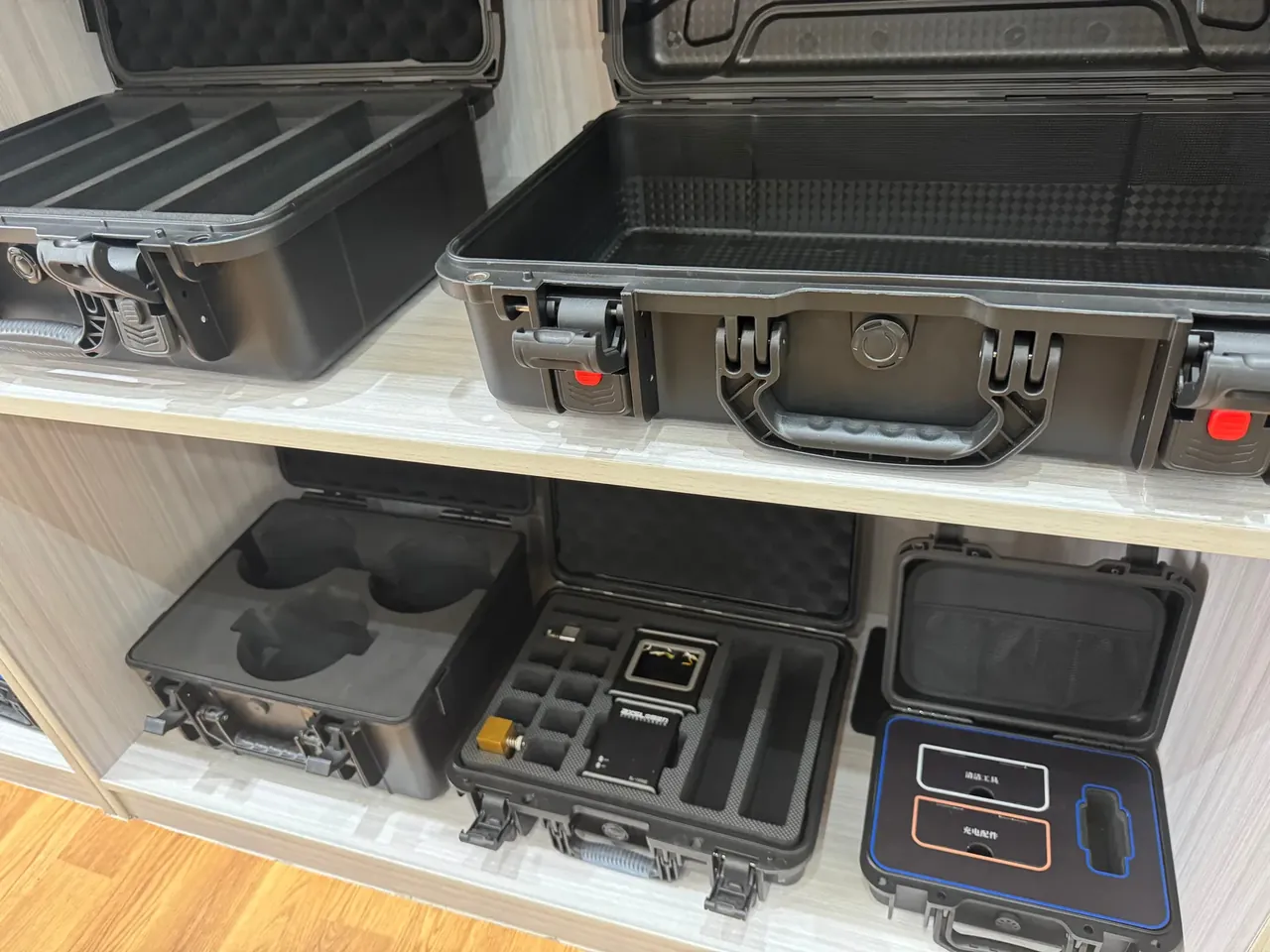
The datum is three features on the wall: four corner pads, two vertical ribs, one radiused land. They form with the case and hold 0.3 mm, tighter than the insert cut.
The fence on the insert assembly station is two 300 mm plates at 90 degrees, fixed to the cutting table, not the case. Set the case down, take two edges, press the corners.
Misalignment costs most: overflow wipes off in 30 s, a gap fills in 40 s, a peeled insert takes 4 min and a fresh one.
5. Fifteen-Minute Changeover Kit
An insert assembly station changeover runs 15 min: 4 min to strip the fixture, 3 min to swap totes and fence, 5 min for the first piece, 3 min to log. Only the trial needs two people.
The checklist hangs on the board in changeover order: hex key at the top, totes in the middle, calipers at the bottom.
| Step | Content | Time | Owner |
|---|---|---|---|
| Strip fixture | 4 hex screws, fence off | 4 min | operator |
| Swap totes | 6 totes, new labels | 3 min | operator |
| First piece | 1 case, 3 dimensions | 5 min | operator and lead |
| Log and clear | sheet, old stock out | 3 min | lead |
One label in the wrong slot flips a batch and pushes rework from 2.4 to 8 percent. Colour zones beat written text, and both beat serial numbers.
The insert assembly station rests on three numbers: a 95 s cycle, a 0.8 g dot, a 1.2 m2 bay. Hold all three and 2.4 percent is an outcome rather than a slogan; let one slip and a larger bay only arranges the same problem more neatly.
Related Reading
- How a case assembly workstation is laid out
- Efficiency bottlenecks at assembly stations
- Usable cavity ratio and corner loss
- Custom foam inserts and cushioning
JUNZHIJIA
Related Products
- 8 Series — Gun Cases; Military Equipment Cases; Camera Equipment Cases; Drone Cases; Watch Cases; Knife Cases; First Aid Cases; Electronics Equipment Cases
- WL8-2812 PP Gun Case — model WL8-2812
- All protective cases and toolboxes: 7 series, 158 models