

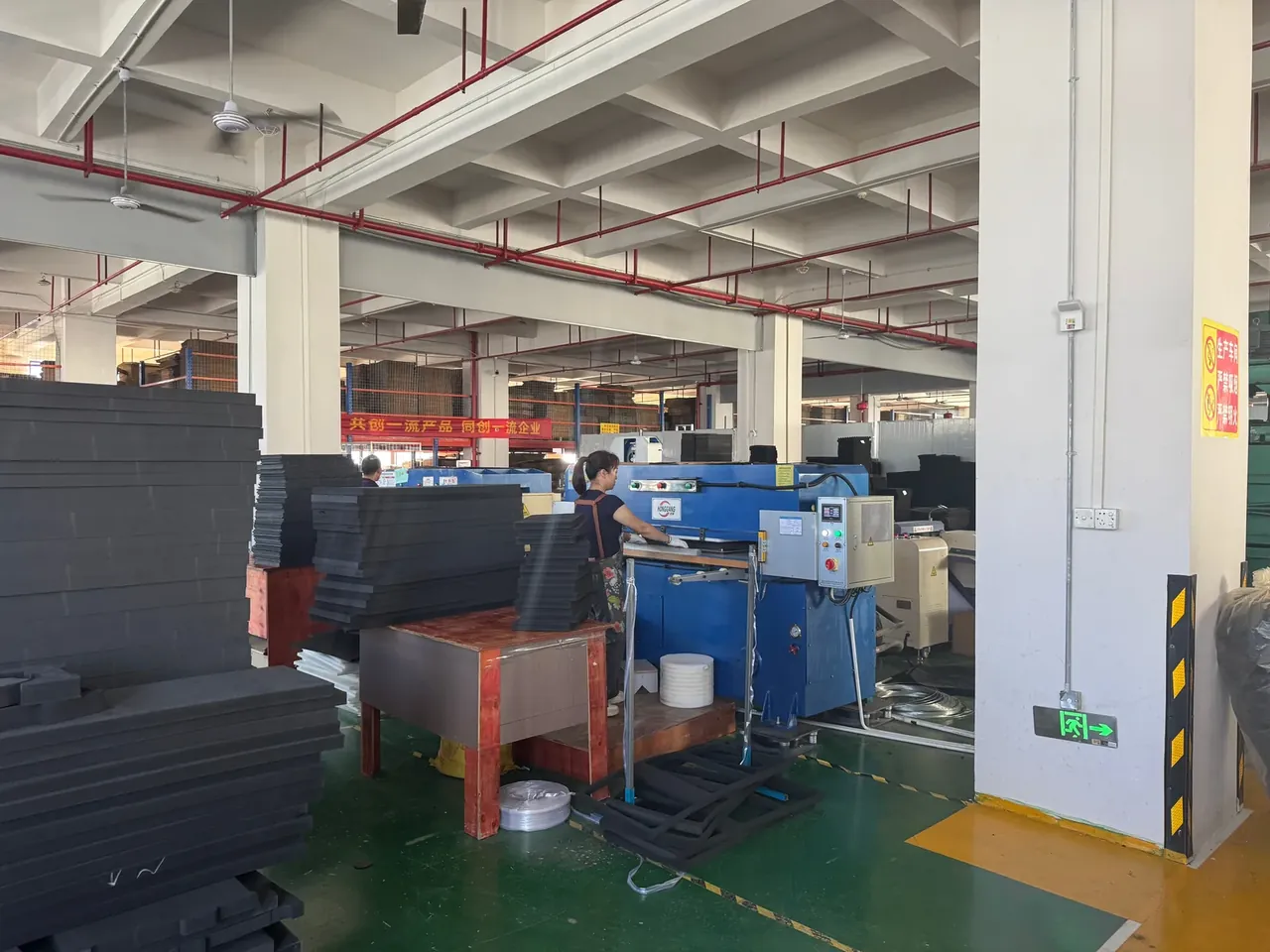
Quick answer: Insert Bonding sets a 2.5 mm bead, 1.8 g/m of glue, 20 s open time and 0.4 MPa for 15 s; a bubble over 10 mm is rejected.
Table of contents
- Four Process Stages in Insert Bonding
- Bead Diameter and the Glue Path
- Open Time, Pressure, and Dwell Seconds
- Cure Windows at 24 and 72 Hours
- Rejection Lines for Bubbles, Peel, and Edge Lift
- FAQ
1. Four Process Stages in Insert Bonding
On a 480×360×180 mm black case the glue line under the foam runs 1.1 m, and that 1.1 m carries every shear load in a drop. Insert Bonding splits the work into dispensing, pressing, curing and rejection, each with a window the next stage cannot recover.
The order is fixed. The bead sets film thickness, the press flattens it and drives air out, the cure entangles the chains, and inspection only confirms what the first three did. Inspect before pressing and no blister exists yet.
| Stage | Parameter | Typical band | Going outside |
|---|---|---|---|
| Dispensing | Bead diameter | 2 to 3 mm | under 2 mm breaks, over 3 mm will not flatten |
| Dispensing | Glue weight | 1.5 to 2.0 g/m | below 1.2 g/m dry patches appear |
| Pressing | Open time | 5 to 30 s | film skins over, nothing sticks |
| Pressing | Pressure | 0.3 to 0.5 MPa | low leaves air cells, high crushes foam |
| Pressing | Dwell | 10 to 30 s | under 10 s the edge lifts |
| Curing | Green strength | 80% at 24 h | palletising early prints the foam |
| Rejection | Bubble size | 10 mm or less | larger is a void, not a mark |
Below 2 mm the melt breaks into dashes at 165 °C; above 3 mm the layer exceeds the foam's compression allowance and the press lifts a ridge. Insert Bonding holds ±0.3 mm on diameter.
2. Bead Diameter and the Glue Path
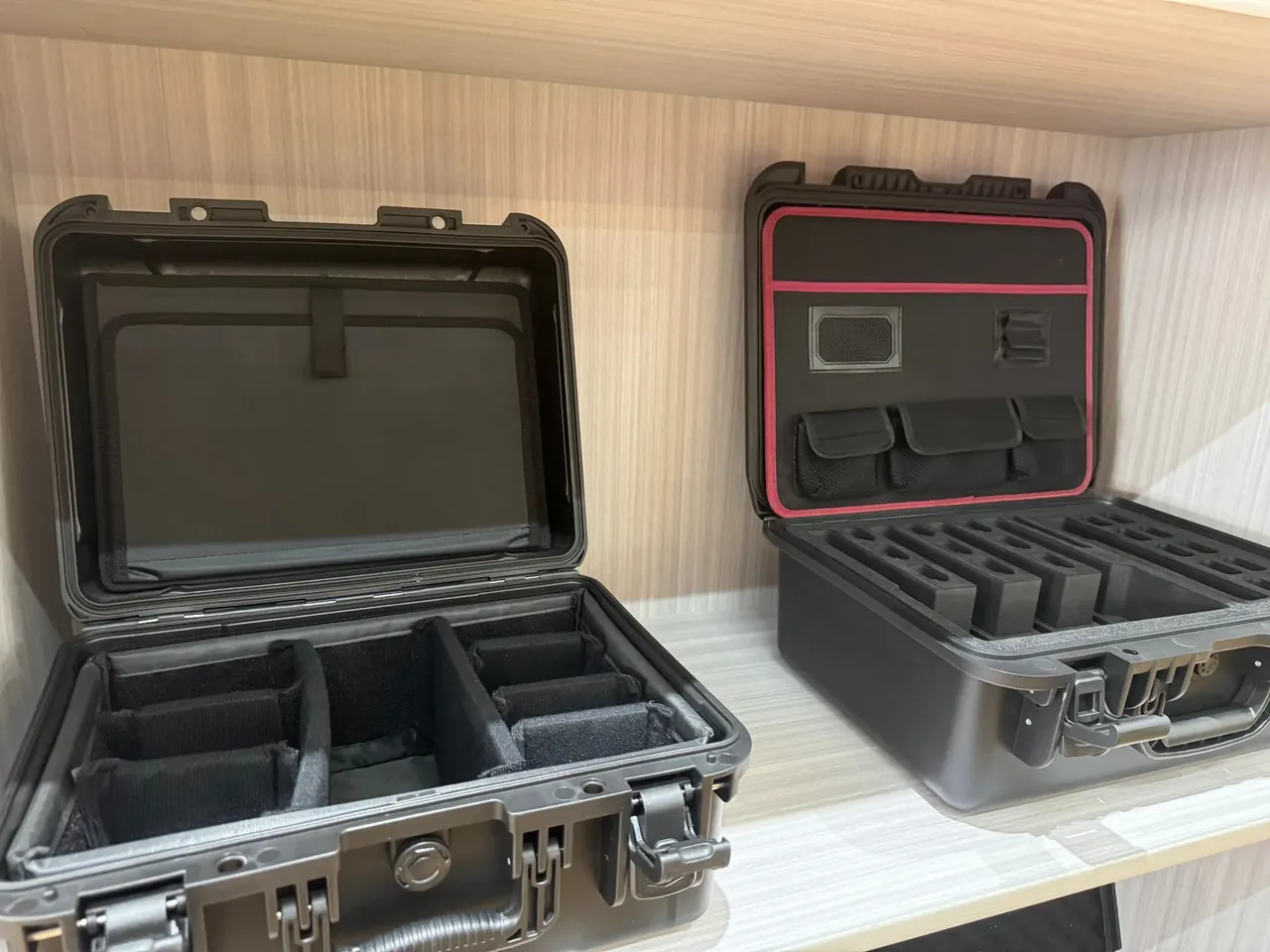
Keep the bead 8 to 10 mm in from the inner wall to clear the sink zone, and space the two runs 40 to 60 mm apart so the foam middle bridges on its own stiffness.
Full coverage feels safer and is a blister factory: a thicker layer traps air, and within 24 h blisters line up along the bead edge. At 1.5 to 2.0 g/m the dry film is 0.05 mm.
PP sits at 29 to 31 mN/m of surface energy, so wetting is hard. Wipe with isopropanol and wait 60 s; a case left over 2 h gets wiped again. Below 18 °C the open time halves, so a winter line holds the station at 20 °C.
| Bead diameter | Weight per run | Coverage | Foam thickness |
|---|---|---|---|
| 2.0 mm | 0.8 to 1.0 g/m | about 30% | 5 to 10 mm sheet |
| 2.5 mm | 1.2 to 1.5 g/m | about 40% | 15 to 20 mm sheet |
| 3.0 mm | 1.6 to 2.0 g/m | about 50% | 25 mm or a two-layer stack |
EVA has a tight skin hot melt can bite; EPE carries mould-release residue and needs a corona pass or a contact adhesive with a 10 to 20 min flash. Pick wrong in Insert Bonding and the sheet falls away at 72 h.
3. Open Time, Pressure, and Dwell Seconds
Hot melt at 165 °C stays open 5 to 30 s. Once the bead skins over, pressing two cold surfaces achieves nothing. Touch the bead: if it strings it will still bond.
Contact adhesive gives 10 to 30 min at 23 °C, paid for by a solvent flash. Press early and solvent seals inside, then a white haze creeps out two weeks later. Insert Bonding uses hot melt under 0.05 m², contact adhesive above.
Pressure runs 0.3 to 0.5 MPa with a 10 to 30 s dwell. Under 0.3 MPa the glue never films; over 0.5 MPa a 15 mm foam compresses past 40% and rebounds off the floor. Hand stations use a 15 kg roller.
Even pressure comes from the fixture: a flat platen with a 3 mm silicone pad turns point load into area load, slotted at the rib positions. Seven in ten Insert Bonding reworks trace to rib misalignment.
4. Cure Windows at 24 and 72 Hours
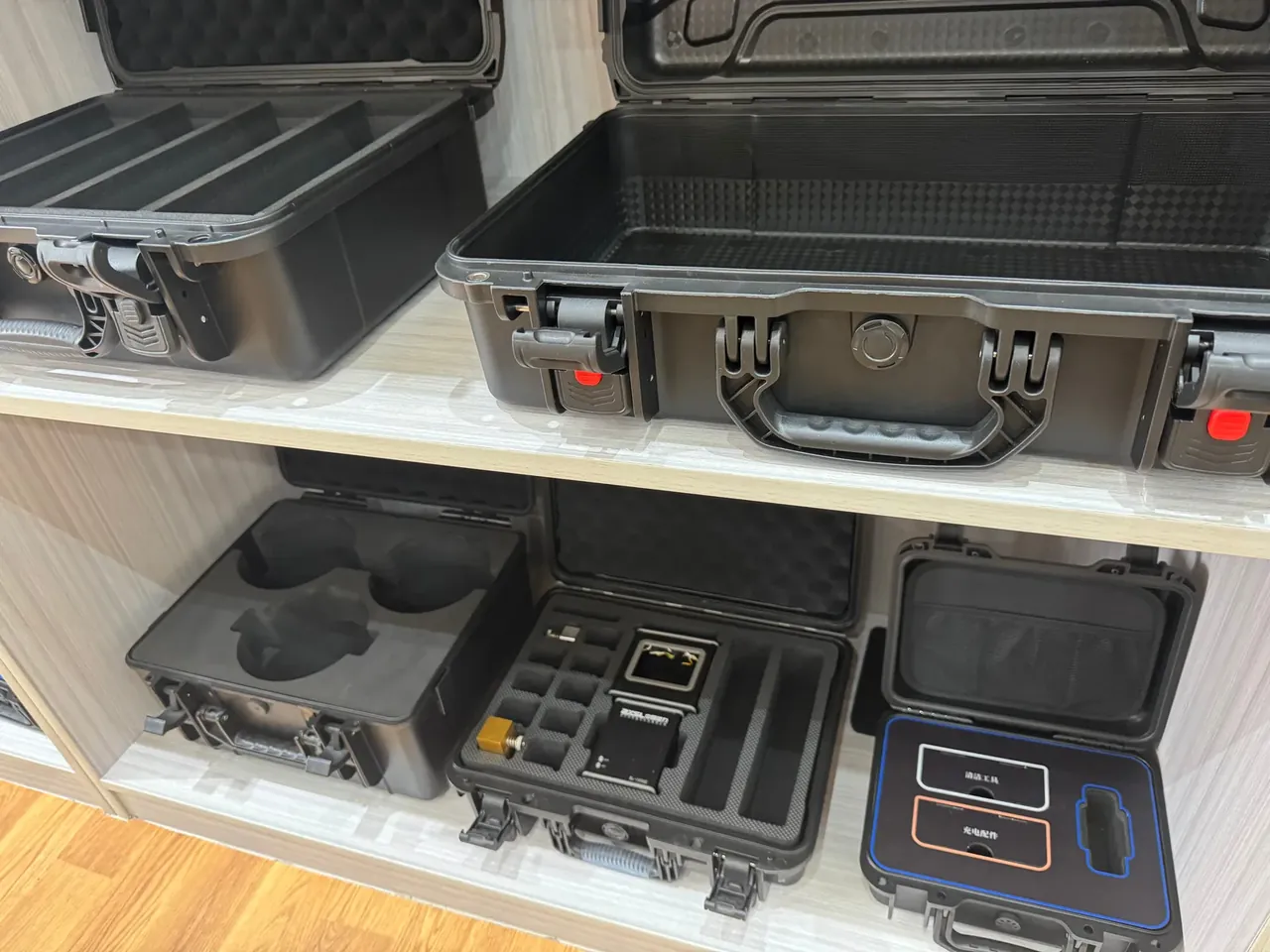
Pressed is not bonded. At 24 h the glue reaches about 80% of final strength, and only at 72 h is the job done. Two things ruin the wait: palletising early and storing cold.
Take 24 cases per pallet at 4 kg each and the bottom case carries 92 kg. A half-cured bond pressed like that takes a 0.5 mm groove along the bead, which sets as it cures. Hold one empty pallet position per run for the full 24 h.
Below 15 °C the cure slows by half and 72 h stretches to 120 h. In winter, hold the Insert Bonding cure area at 22 to 25 °C and 50% RH. A rush order can swap 24 h for 4 h at 40 °C, hot melt only.
5. Rejection Lines for Bubbles, Peel, and Edge Lift
A bubble means air stayed in, edge lift means the interface never wet out, low peel means the wrong adhesive. Pass all three and the liner is set.
Measure bubbles with a steel rule across the surface, reading chord and height. Up to 10 mm across and 1 mm high is acceptable, inside the foam's compression reserve; past that the blister bursts and tears 30 mm along the bead.
Probe edge lift with a 0.5 mm feeler gauge; past 2 mm deep it gets reworked, since the edge is where stress enters. Peel follows ASTM D903 on a 25 mm specimen at 152 mm/min, conditioned 24 h at 23 °C and 50% RH. The limit is 1.5 N/mm, against 2 to 6 N/mm typical.
| Defect | Measured by | Limit | Action |
|---|---|---|---|
| Bubble | steel rule across chord and height | over 10 mm or 1 mm high | slit, re-glue, re-press |
| Edge lift | 0.5 mm feeler gauge | deeper than 2 mm | pull 5 more from the lot |
| Peel | ASTM D903, 25 mm wide | under 1.5 N/mm | quarantine the batch |
Insert Bonding sampling starts at first piece plus 1 in 200, dropping to 1 in 500 after three clean lots.
Conclusion
The four numbers in Insert Bonding form a chain rather than a list: bead, press, cure, and inspection signing off on all three. Break one link and the rest cannot compensate, so rework traces to a stage, not a person.
This article covers the container (case) side of specifications and design intent only; it does not address any handling, loading or use of the contents.
Related Reading
- Fitting and locating a foam liner
- EVA versus EPE foam performance
- Usable volume and cavity ratio
- Where assembly quality gates sit
Related Products
- 8 Series — Gun Cases; Military Equipment Cases; Camera Equipment Cases; Drone Cases; Watch Cases; Knife Cases; First Aid Cases; Electronics Equipment Cases
- WL8-2812 PP Gun Case — model WL8-2812
- All protective cases and toolboxes: 7 series, 158 models