

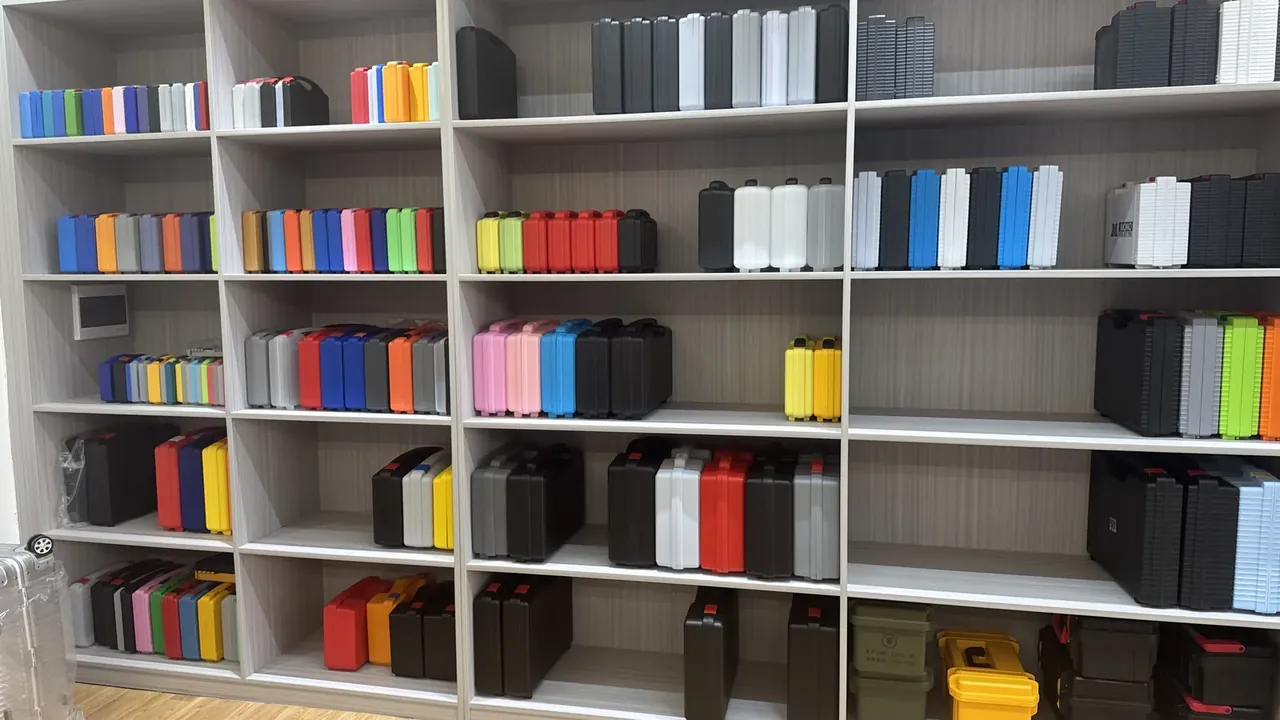
Quick answer: An Instrument box with automatic pressure relief valve vents at 4 kPa and admits air at 3 kPa, holds closing hysteresis within 1.2 kPa, keeps relative humidity rise under 3% after 50 cycles between +8 and -8 kPa, and drifts no more than 0.8 kPa after 24 h at each of -30 °C and 70 °C.
Table of contents
- Valve opening differential of the Instrument box with automatic pressure relief valve
- Silicone diaphragm temperature window and hardness
- Sealing and the breathing cycle
- Air freight and high-altitude differentials
- Re-check interval and replacement verdict
- FAQ
1. Valve opening differential of the Instrument box with automatic pressure relief valve
The disc vents at 4 kPa and admits at 3 kPa, and the gap between the two comes from unequal working areas on either side of the disc rather than from a stiffer spring. Bore is 6 mm, the seat keeps 0.3 mm of preload on the disc, and open flow is rated at 45 mL/min. Set the opening too low and the shell breathes on its own during lift travel or a door slam, dragging moisture in and out; set it too high and the 26 kPa of a freight hold bows the lid enough that opening it on the ground takes real force. Hysteresis is held under 1.2 kPa so the disc seats again and leaves no permanent gap across the seal.
The valve sits low on the front wall, 25 mm above the base and clear of the stacking zone. That height follows condensate: water runs down, and a valve mounted higher collects a ring of water film at the port that cuts the 45 mL/min rating to under 20 mL/min.
| Parameter | Value | Effect |
|---|---|---|
| Vent opening | 4 kPa | Stays shut below it |
| Admit opening | 3 kPa | Refills on descent |
| Closing hysteresis | ≤1.2 kPa | Disc re-seats |
| Bore and flow | 6 mm / 45 mL/min | Release rate |
2. Silicone diaphragm temperature window and hardness
The diaphragm is 0.6 mm silicone at Shore 40A, rated from -30 °C to 70 °C. In the cold it stiffens, the same differential no longer lifts the disc, and the opening point drifts up about 0.8 kPa; in heat it softens and starts leaking at 2 kPa, widening hysteresis. One grade harder at 50A all but removes cold-weather breathing, and one grade softer at 30A lets the diaphragm creep against the seat at room temperature until opening falls to 2.5 kPa within three months. A 1 mm raised ring on the body takes the clamping load; a flat joint leaks once the temperature cycles.
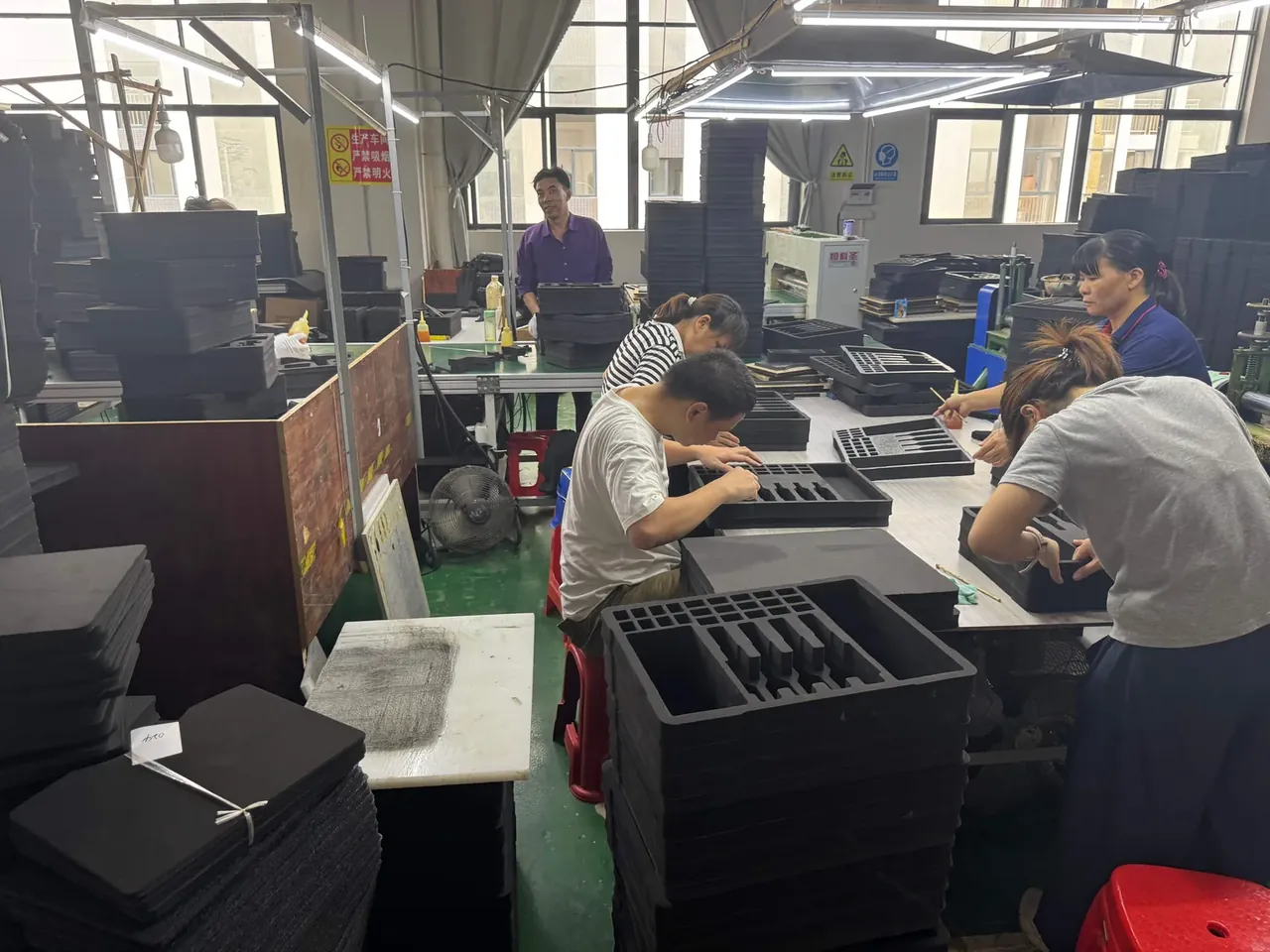
Temperature cycling runs 24 h at -30 °C and 24 h at 70 °C, with a 2 h rest at 23 °C between the two, and opening is measured again afterwards against the factory figure.
| Temperature | Diaphragm state | Opening shift |
|---|---|---|
| -30 °C | Stiffened | About +0.8 kPa |
| 23 °C | Reference | 4.0 kPa |
| 70 °C | Softened | About -1.5 kPa |
3. Sealing and the breathing cycle
Immersion follows an IP67 benchmark, but a vent adds a second layer to the sealing verdict: static immersion only shows whether water gets in, while breathing shows whether the valve carries vapour with it. The shell goes into a differential chamber, runs from +8 kPa to -8 kPa and back to zero, 50 cycles at 30 s each, ramped evenly. The lid comes off straight after the run and relative humidity is read; a rise past 3% means the diaphragm took on moisture in the negative phase and the valve has to come out for a look at the raised ring. Gasket squeeze is set at 30%, with a 1.8 mm groove and a 2.4 mm cord, and squeeze is judged apart from opening differential.
Squeeze above 35% flattens the cord into a rectangle inside the groove, rebound drops, and a slow leak appears after 200 lid cycles. Below 25% the joint never closes, and water tracks along the back of the cord. Neither end is judged by feel: a feeler gauge reads lid-to-shell gap at the four edge midpoints.
4. Air freight and high-altitude differentials
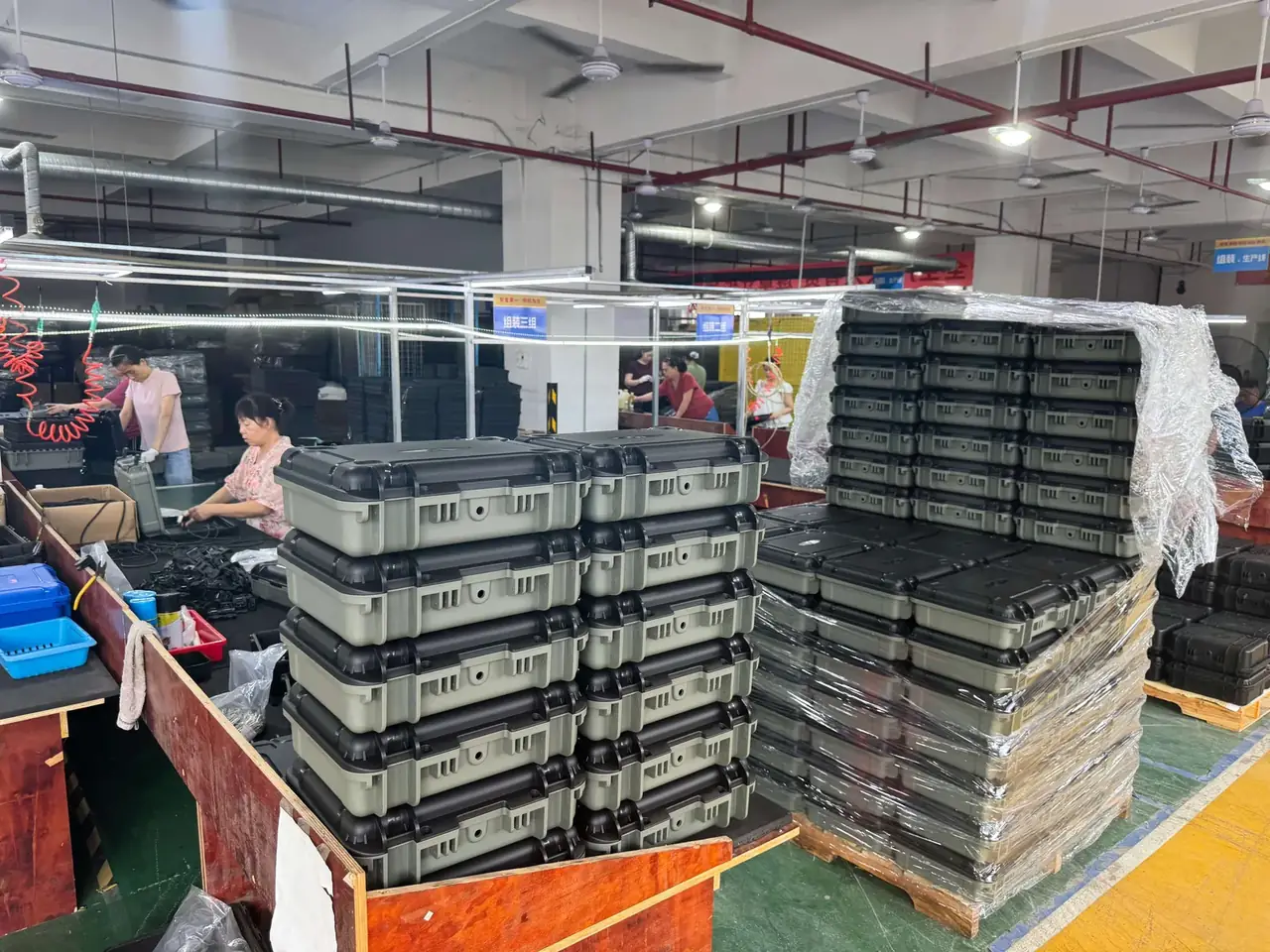
In cruise the hold sits at an equivalent 2400 m, about 75 kPa, while packing on the ground leaves 101 kPa inside, a 26 kPa difference built up within 20 min of take-off. A valve opening at 4 kPa equalises within minutes and the lid carries nothing; a stuck valve leaves all 26 kPa on a 0.18 m² lid, roughly 4.7 kN of force shared by two latches and eight hinge pins. After landing the outside returns to 101 kPa with 75 kPa still inside, and the admit side opens at 3 kPa, so opening force does not jump.
Road transport at altitude is milder: at 4000 m the outside is about 62 kPa, a 39 kPa difference from the packing site, but the change is slow and the valve has time to vent, so freight figures do not set it.
5. Re-check interval and replacement verdict
Re-checks fall every 12 months, with leakage capped at 5 mL/min. The valve is screwed onto a tooling plug and pressure climbs slowly from 2 kPa to 6 kPa while the flow meter is watched for the step; a step that drifts past 6 kPa sends the check first to a ring-shaped dent in the diaphragm and then to swarf on the seat. The valve core is replaced as a set at five years, with the gasket left in place so repeated handling does not scratch the groove. Opening force is read in the same operation: 40 N when new, 65 N at five years, and past 80 N means the port is fouled with condensate or dust.
The record keeps three columns — step differential, leakage and opening force — while immersion results are filed separately; the two are never merged or used to prove each other.
Conclusion
The Instrument box with automatic pressure relief valve ties 4 kPa venting, 3 kPa intake, 1.2 kPa hysteresis, a 6 mm bore with 45 mL/min flow, a 3% humidity rise after 50 cycles at ±8 kPa and 4.7 kN on the lid under a 26 kPa freight differential into one pressure chain on the case side. The six readings sit on the valve bench, the differential chamber, the freight case and the re-check station. The shop keeps Shore 40A, 0.6 mm diaphragm, 30% squeeze and the 12-month interval on a single parameter sheet. All of it covers case and valve specification only.
This article discusses the case side of the specification only and does not cover handling, loading or use of anything carried inside.
Related Reading
- How instrument cases are built and used
- Matching inner height to foam thickness
- Specification items and pressure demands for air transport cases
- Depth and centre of gravity in instrument cases
Related Products
- 8 Series — Gun Cases; Military Equipment Cases; Camera Equipment Cases; Drone Cases; Watch Cases; Knife Cases; First Aid Cases; Electronics Equipment Cases
- WL8-2812 PP Gun Case — model WL8-2812
- All protective cases and toolboxes: 7 series, 158 models