

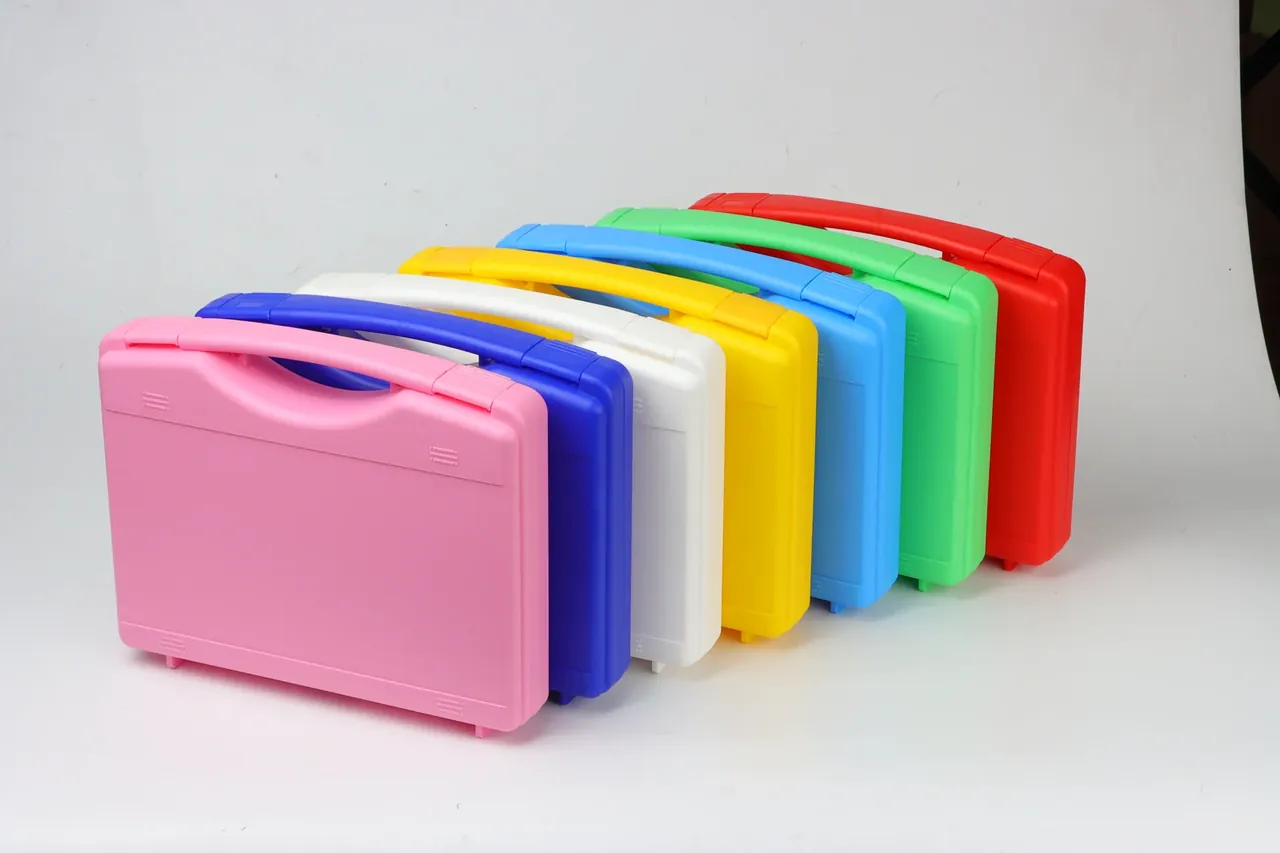
Quick answer: An IP Rating always splits into two tests: the first digit measures dust at 2 kg/m³ and 20 mbar for 8 hours, the second measures water at 1 m for 30 minutes. A case marked IPX7 has never been dust tested.
Table of contents
- One Code, Two Independent Tests
- Dust Digits 0 to 6: Eight Hours of Talcum
- Water Digits 0 to 9: Drips, Jets, Immersion
- Write Both Marks: IP6X plus IPX7
- Four Checks That Keep Digits Apart
- FAQ
1. One Code, Two Independent Tests
An IP Rating is the letters IP, a first digit, a second digit and optional suffix letters. The first digit means solid particles and nothing else; the second means liquid and nothing else. IEC 60529 runs them as two rigs with two sample sets, so no dust result says anything about water.
Read the marking literally: IP67 is dust grade 6 plus water grade 7, while IPX7 leaves the dust position empty. X is not grade zero, it means the position was never specified.
The costliest mistake is treating one immersion result as a verdict on the whole case: grade 7 proves only that no water entered in 30 minutes at 1 m, while dust entry depends on gasket compression and latch count.
2. Dust Digits 0 to 6: Eight Hours of Talcum
The medium is talcum powder, not sand. The chamber holds 2 kg/m³ of powder with a median particle size near 75 μm, and the case interior is pulled 20 mbar below ambient for 8 hours.
Grade 6 is judged inside: wipe the shell, open the lid, inspect inner walls and each latch. No visible deposit is allowed beyond a 1 mm trace in the gasket groove. Grade 5 permits a little dust as long as it misses live parts.
| Dust digit | What it covers | How it is run |
|---|---|---|
| 1 | Solids above 50 mm | 50 mm sphere |
| 2 | Solids above 12.5 mm | 12.5 mm sphere |
| 3 | Solids above 2.5 mm | 2.5 mm probe |
| 4 | Solids above 1.0 mm | 1.0 mm probe |
| 5 | Limited dust, no effect | Talcum 2 kg/m³, 8 hours |
| 6 | No dust entry | Talcum 2 kg/m³, 20 mbar, 8 hours |
Digits 0 to 4 need only a sphere or probe and return in a day; only 5 and 6 need the chamber. Grade 6 adds a double gasket and a 3.2 mm lid lip, lifting price 15% to 25%.
3. Water Digits 0 to 9: Drips, Jets, Immersion
Digits 1 and 2 drip at 1 mm/min onto a turntable at 1 r/min for 10 minutes, grade 2 tilting the case 15°. Grade 3 is an oscillating tube of 200 mm radius; grade 4 splashes 10 L/min from a 6.3 mm nozzle.
Grades 5 and 6 are jets: 6.3 mm at 12.5 L/min and 30 kPa against 12.5 mm at 100 L/min and 100 kPa, each for 1 minute per face. Grade 7 is the first immersion grade, 1 m for 30 minutes; grade 8 is continued immersion by agreement, often 1.5 m; grade 9 is an 80 °C jet at 80 to 100 bar.
| Water digit | Key parameters | Duration |
|---|---|---|
| 1 | 1 mm/min drip | 10 minutes |
| 2 | 1 mm/min, 15° tilt | 2.5 minutes per face |
| 3 | 0.07 L/min per hole | 10 minutes |
| 4 | 6.3 mm nozzle, 10 L/min | 5 minutes minimum |
| 5 | 12.5 L/min, 30 kPa | 1 minute per face |
| 6 | 100 L/min, 100 kPa | 1 minute per face |
| 7 | 1 m below surface | 30 minutes |
| 8 | Depth by agreement | Often 1.5 m, 30 minutes |
| 9 | 80 °C, 80 to 100 bar | Per agreement |
Two misreadings persist. Grade 6 sounds violent at 100 L/min but lasts one minute per face, so it never proves a case can be submerged; grade 7 stops at 30 minutes.
4. Write Both Marks: IP6X plus IPX7
IP67 is complete under the standard yet degrades in a contract, because a supplier can deliver one water report and write exempt on the dust page. Splitting the mark into IP6X and IPX7 on separate lines removes that gap.
| Order wording | Exposure |
|---|---|
| IP67 | Two pages needed, easily merged into one |
| IP6X plus IPX7 | Clear clause, checked page by page |
| IPX7 | Dust enters freely, the marking hides it |
| IP6X | Fails at the first standing water |
| IP65 | Rain fine, dropping in water is not |
| IP54 | Splash only, never wash down |
Splitting also makes quotes comparable: dust plus immersion needs six cases in total, so a quote budgeting three has dropped one rig.
5. Four Checks That Keep Digits Apart
Never judge a report by its conclusion page, which only says compliant with IP67. The item table should hold two records, one for dust with powder type, vacuum and duration, one for water with depth, duration and orientation.
- Read the test basis. The front page must cite IEC 60529 and list both digits.
- Check the sample build. Wall thickness, gasket hardness and latch count must match production, or a lid lip cut from 4.5 mm to 3.8 mm hides behind a stale report.
- Demand photographs. Dust reports should show the cavity after opening; water reports need the depth scale.
- Set a retest interval. Retest water at 24 months and let dust run to 36 months.
One item is easy to miss: a pressure equalisation valve has a membrane with a pore size, so both marks must run with it fitted.
Conclusion
Keeping the two digits apart is the cheapest audit step in case procurement. Write IP6X and IPX7 on separate lines of the technical clause, demand one photographed report each, and read results against the rig rather than the label: talcum at 2 kg/m³ and 20 mbar for 8 hours, water at 1 m for 30 minutes. Insist that samples match production wall thickness and gasket hardness, because a report from a heavier build describes a case nobody will receive.
Related Reading
- How to read both digits of an IP rating
- IP67 versus IP68: where the grades diverge
- How the 30 minute IP67 immersion test runs
- How to verify an IP67 certificate
Related Products
- 8 Series — Gun Cases; Military Equipment Cases; Camera Equipment Cases; Drone Cases; Watch Cases; Knife Cases; First Aid Cases; Electronics Equipment Cases
- WL8-2812 PP Gun Case — model WL8-2812
- All protective cases and toolboxes: 7 series, 158 models