

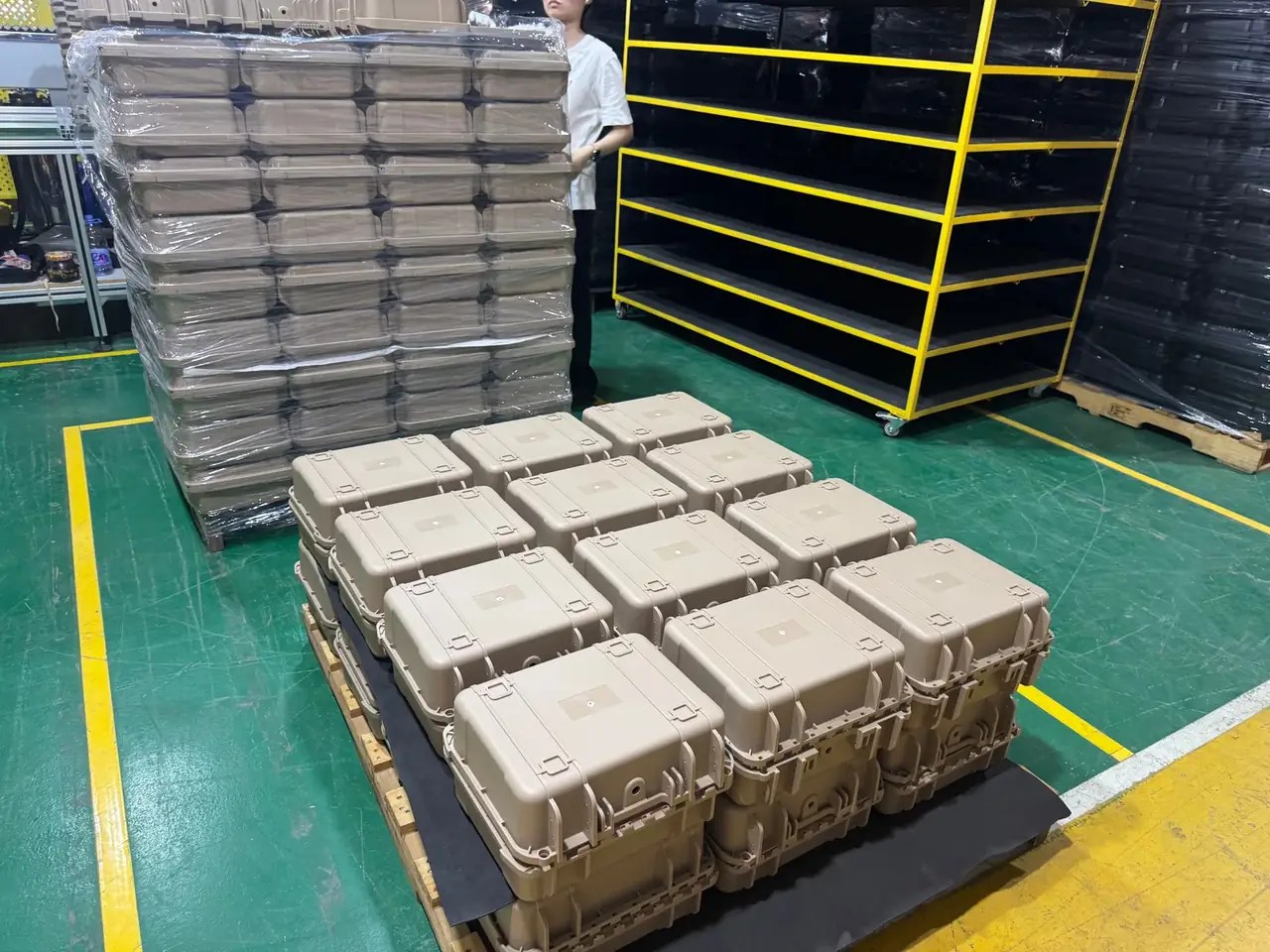
Quick answer: Case ista test: 1A proves strength with 10 drops and 30 min fixed vibration, 3A simulates parcels with 9 drops and 90 min random vibration.
Table of contents
- 1A passes, 3A unlatches on the second axis
- ISTA 1A: 10 drops and fixed vibration
- ISTA 3A: graded drops and random vibration
- One sample against three
- Pass criteria: no damage or no failure
- FAQ
1. 1A passes, 3A unlatches on the second axis
A 480 × 350 × 220 mm rotomoulded case with 12 kg of ballast ran 1A with 10 drops and 30 min of fixed vibration: latches tight, lid uncracked, no seam gap. Another unit ran 3A, survived axis 1, and at 18 min into axis 2 the front latch hooks walked out of their catches, opening a 3 mm gap. Fail.
The difference is not the case, it is the test. 1A asks whether the case is strong enough; 3A asks whether it survives the chain. One applies a fixed load, the other a sequence ordered the way transport orders it.
Both lines sit inside the case ista test system, and the wrong one still yields a green report. A 1A-only product in the parcel network pops that same latch.
| Item | ISTA 1A | ISTA 3A |
|---|---|---|
| Drops | 10, one sample | 9, height graded by weight |
| Vibration | Fixed frequency, 25 mm peak to peak | Random, 1 to 200 Hz |
| Axes | Vertical only | Three mutually perpendicular |
| Duration | 30 min | 30 min per axis, 90 min total |
| Samples | 1 | 3 |
| Criterion | No damage to the case | No functional failure |
The axes and sample rows are the ones quotes skip.
2. ISTA 1A: 10 drops and fixed vibration
The 10 drops land on one sample: flat on the base once, on each of the four bottom edges once, on each of the four bottom corners once, then once more on the weakest point the lab selects. Height follows weight, 760 mm below 4.5 kg, 460 mm from 9.1 to 18.2 kg, and 250 mm above 45 kg.
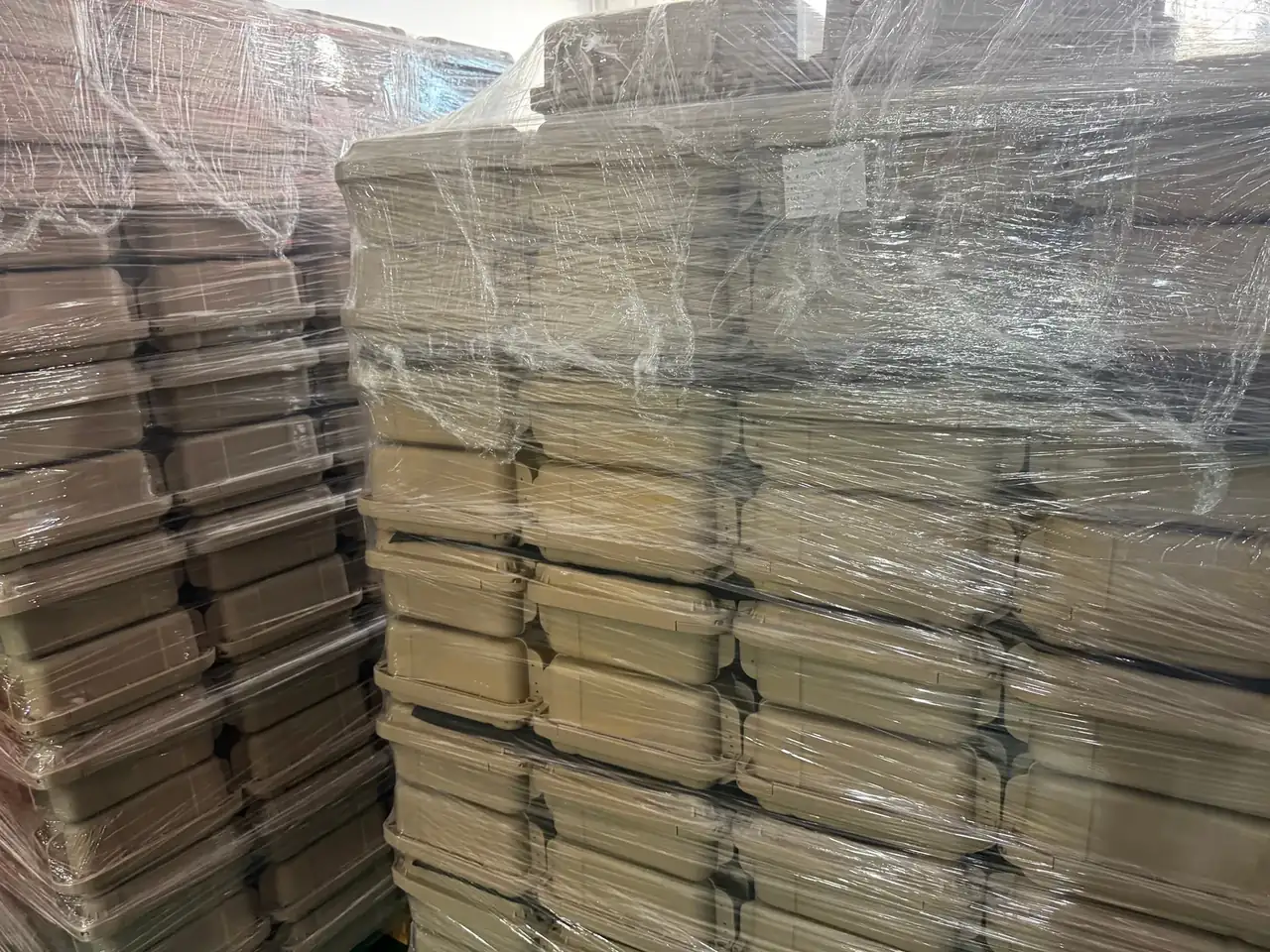
Fixed vibration uses three numbers only: 25 mm peak-to-peak displacement, 200 rpm, 30 min vertical. They never move with weight, which is why one mechanical shaker runs 1A without a spectrum controller.
The value of 1A is comparability. Change a masterbatch, a supplier or the lid from 3 mm to 3.5 mm, rerun it, and two days later you have figures to compare.
Its weakness is the same fixity: a 12 kg and a 3 kg case share the 760 mm drop, and one axis never finds a loose side wall.
3. ISTA 3A: graded drops and random vibration
The case ista test under 3A runs 9 drops in six weight bands, and one case can face three times the severity across two bands. Bands come from the current table, not from interpolation.
| Unit weight (kg) | Drop height (mm) | Typical case |
|---|---|---|
| Under 4.5 | 760 | Small instrument and camera cases |
| 4.5 to 9.1 | 610 | Mid-size tool cases |
| 9.1 to 18.2 | 460 | Single-person equipment cases |
| 18.2 to 27.3 | 410 | Test instrument cases |
| 27.3 to 45 | 310 | Large rotomoulded cases |
| Above 45 | 250 | Two-person carry cases |
Random vibration is the core: 1 to 200 Hz, peak power spectral density 0.02 g²/Hz near 10 Hz, 1.05 Grms, 30 min per axis. The axes are not repeats, since vertical loads the base and latch seats, fore-aft the hinges, lateral the handle and side walls.
Drops and vibration are mandatory; optional items follow the pack format, such as rotational edge drops and concentrated impact. Mark both on the order form and in the report.
Order cannot be swapped: drop first and a crack keeps growing under vibration, vibrate first and the drop hides it.
4. One sample against three
1A asks for one sample through the whole sequence, so the verdict covers that unit. Shells vary in wall thickness and latch seats between shots, and one good sample releases the batch.
3A uses three samples, one per axis. The point is confidence, not quantity: three clean units cut the batch failure ceiling from 95% to 63%.
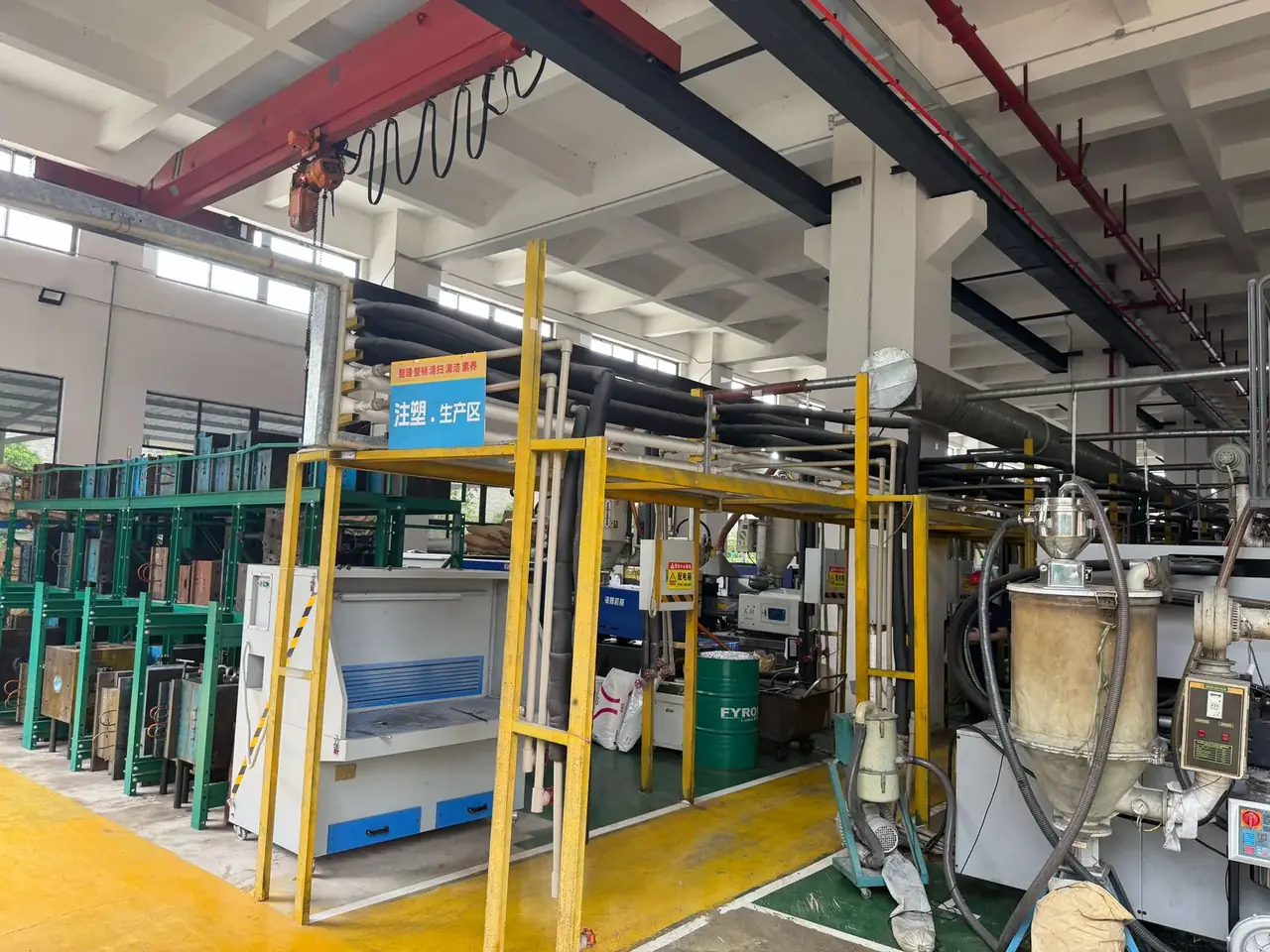
How the three are drawn matters: take them from different moulding cycles, since units off one cycle vary little. Cross-cycle sampling may hand you the thin-walled unit, and wall thickness is where rotomoulding fails.
5. Pass criteria: no damage or no failure
The 1A criterion is no damage: no lid crack, no missing latch part, no pulled hinge, seam gap no wider than 2 mm. Whether the contents work sits outside 1A.
The 3A criterion is no functional failure: scratches and dents are allowed, but the contents must work after removal, checked for sealing, power, dimensions and fit. A case that dents yet protects its load passes 3A and may fail 1A.
Swapping the criteria causes trouble. The 1A cosmetic line condemns a case that still works under 3A; the 3A functional line passes a shell that has already cracked.
A report carries six items: programme and revision, drop count and height, spectrum and duration, sample numbers, failure description, verdict. A 1A crack points at a weld line in the tool; a 3A failure needs the axis and minute.
Conclusion
Choosing inside the case ista test system starts with how the case leaves the building. Single parcels need the chute drop and three random axes, so 3A is the floor; pallet loads make that single-pack load irrelevant. 1A earns its place in screening: new material, new hardware, new lid, two days to a verdict, at the cost of one axis and one height. Match the criterion to the programme too, since swapping them condemns good units and releases cracked ones. Fix programme, sample count and criterion in one template, and only weight and batch change between runs.
| Shipping mode | Unit weight | Programme | Reason |
|---|---|---|---|
| Parcel and e-commerce | Under 23 kg | 3A | Sorting drops plus 3-axis random |
| LTL and full pallet | Any | 3E | Single-pack load misses the case |
| Prototype screening | Any | 1A | Fixed load, two-day verdict |
| Tender or military reference | Any | 1A plus 3A | Integrity and simulation evidence |
This article discusses container-side specifications and design implications only, and does not cover any handling, loading or use of the contents.
Related Reading
- Choosing the right ISTA programme
- ISTA 3A against 3E
- Reading transit damage rates
- Transit case structure and selection
Related Products
- 8 Series — Gun Cases; Military Equipment Cases; Camera Equipment Cases; Drone Cases; Watch Cases; Knife Cases; First Aid Cases; Electronics Equipment Cases
- WL8-2812 PP Gun Case — model WL8-2812
- All protective cases and toolboxes: 7 series, 158 models