

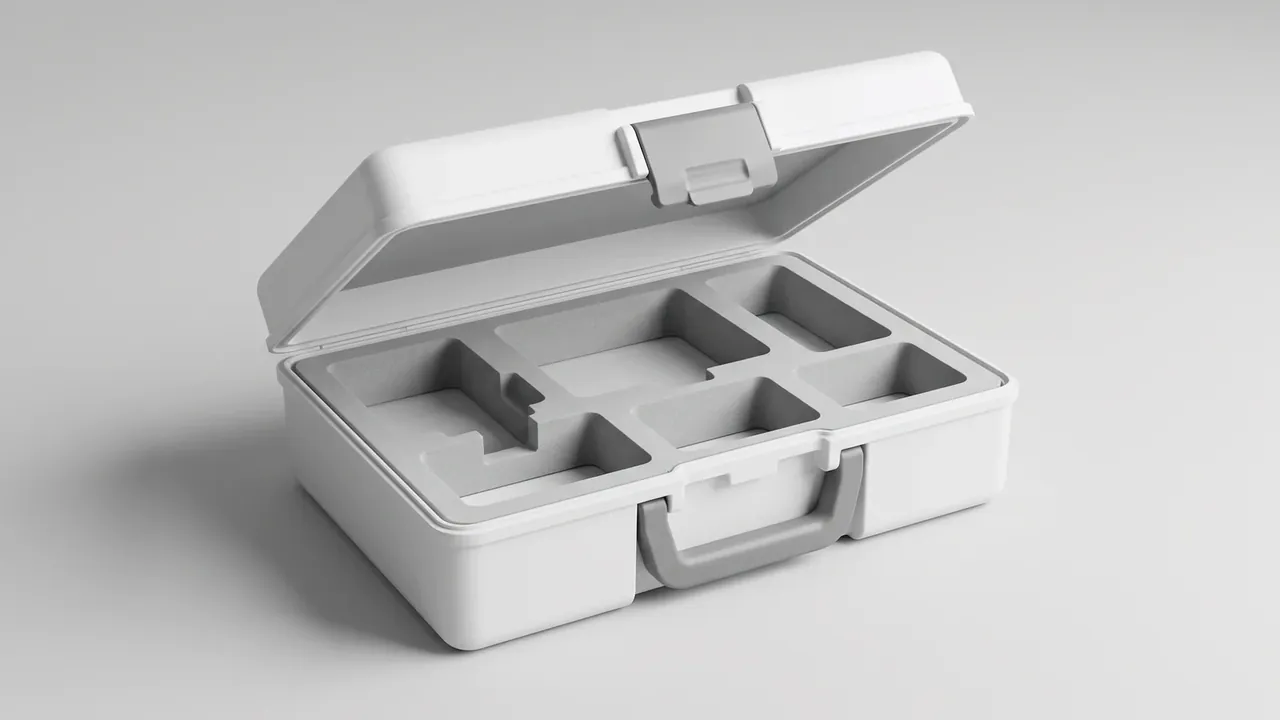
Quick answer: A custom tool case sizes from the small end up: part count sets the cells, deepest part sets the height, loaded weight sets the wall.
Table of contents
- Custom tool case size tiers and cell counts
- Clear lid thickness and light transmission
- Multi cell insert depth and finger access
- Load rating handle pull and stacking
- Filling the specification sheet before tooling
- FAQ
1. Custom tool case size tiers and cell counts
A custom tool case starts from the part count, not the outer length. Tool six parts into a four-part body and the extra cells come out too narrow for sockets, so usable volume drops near 70 percent. Cells first, then the cavity, then wall and lid height.
Tiers sit close together: every 40 mm of length adds about 30 percent volume while the wall only moves from 1.8 mm to 2.5 mm, because stiffness comes from the rim flange.
| Outer mm | Cavity mm | Cells | Wall mm | Load kg |
|---|---|---|---|---|
| 145 | 130x95x35 | 3-4 | 1.8 | 3 |
| 180 | 165x120x45 | 5-6 | 2.0 | 5 |
| 225 | 205x150x55 | 6-8 | 2.2 | 8 |
| 260 | 240x175x65 | 8-10 | 2.5 | 12 |
Height follows the deepest part, not the average. A 42 mm part takes a 45 mm cavity with 2 mm of lid foam compression.
2. Clear lid thickness and light transmission
The clear lid separates a custom tool case from a plain one and is easy to ruin. Polycarbonate at 1.5 mm gives 88 percent transmission and takes a 500 g ball dropped from 300 mm; polystyrene gives 90 percent and cracks.
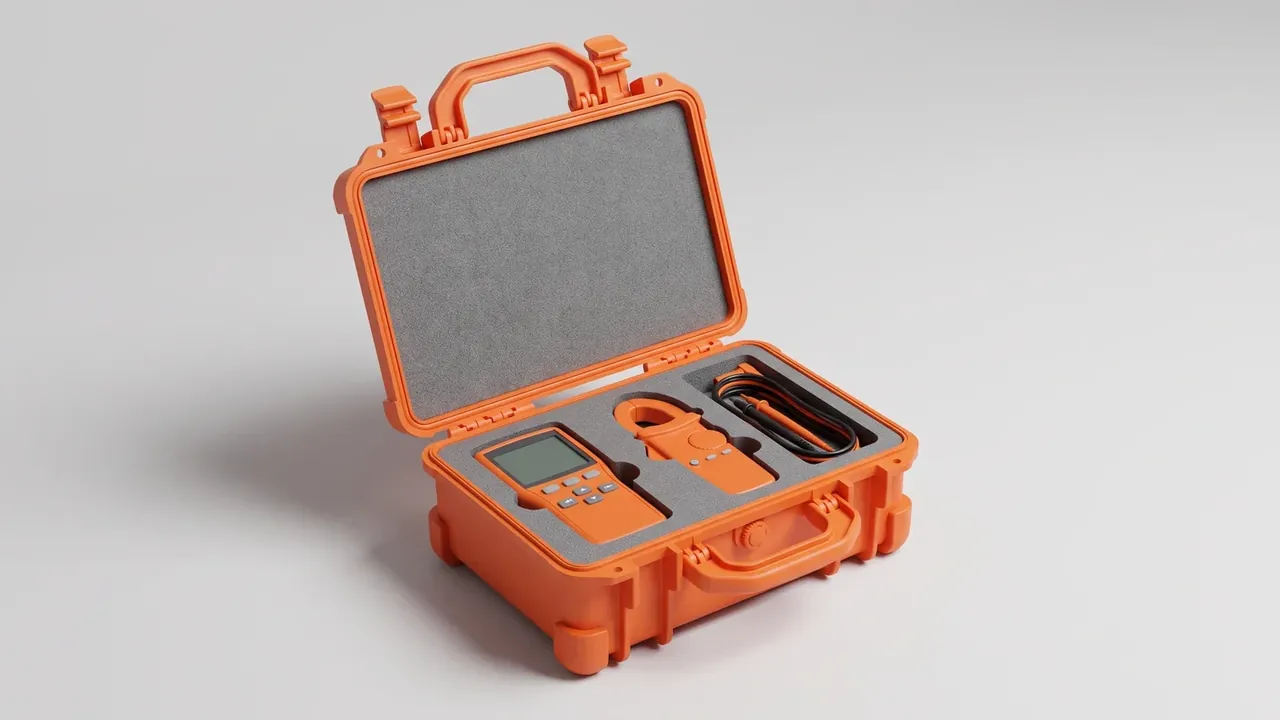
Rim fit matters more than sheet thickness. A 0.3 mm step with two 2 mm dust lips presses against the inner wall and keeps dust out; push it to 0.5 mm and the latch feels stiff, which users read as broken. A clear lid cannot carry a full gasket, because it blocks the view.
3. Multi cell insert depth and finger access
More cells is not better, because clear cell width is the limit. Under 22 mm a finger cannot reach in, and going from 6 cells to 10 drops average width from 45 mm to 28 mm.
Depth is part height plus 3 mm and the finger notch is R8: under R5 there is no grip, over R12 the neighbouring divider thins. Dividers run 1.2 mm in the body material with a 0.8 mm root fillet.
| Cell type | Clear size mm | Divider mm | Part length mm |
|---|---|---|---|
| Long | 180x35x30 | 1.2 | 150-175 |
| Square | 70x70x35 | 1.5 | 60-68 |
| Narrow | 25x25x40 | 1.0 | 20-24 |
Depth also has to clear the lid foam: with 8 mm of foam, part height plus 8 mm must stay inside the cavity, or the cell floor whitens.
4. Load rating handle pull and stacking
Load runs 3 kg to 12 kg per case, each cell rated at a third. Handle pull is 150 N held 60 seconds, near double the margin over 8 kg; the 145 mm tier uses a thumb notch, because the handle root is where small cases crack first.
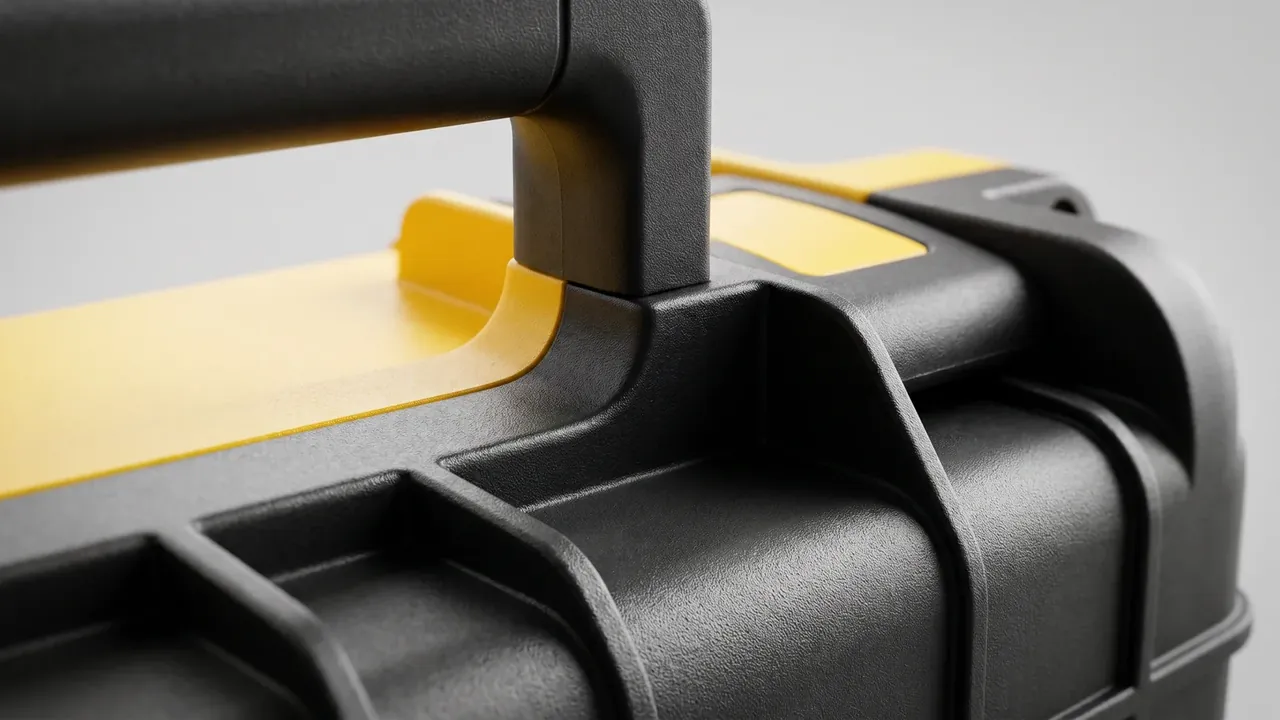
Hinges take 6000 cycles, and a 0.8 mm living hinge shows a white line by then. Two latches sit at 18 N to 25 N: under 18 N the lid springs open, over 25 N it cannot be worked one-handed. Stacking stops at three high, where the bottom lid carries 16 kg and may sink 0.5 mm in 24 hours.
5. Filling the specification sheet before tooling
Finish the sheet before the mould is cut, because a change afterwards costs tooling. Write tolerances for calipers, grams for scales and newtons for pull tests.
| Field | How to write it | How to measure |
|---|---|---|
| Cavity | 205x150x55 mm, plus or minus 0.6 mm | Calipers, three points |
| Wall | 2.2 mm, minus 0.10 mm at most | Ultrasonic gauge, five points |
| Clear lid | 1.5 mm, transmission 85 percent or more | Micrometer and light meter |
| Load | 8 kg distributed for 24 hours | Sand bag loading |
First article checks are three actions: weigh it, gauge the cavity, check the lid for light leaks. A 5 percent mass error means the wall drifted, a 0.6 mm cavity spread means uneven cooling.
Conclusion
Cells, depth, wall, hinge and load form one line: part count sets the cells, the deepest part sets the height, and loaded weight sets the wall the hinge must survive. Every field carries a tolerance, because 2 mm decides whether the custom tool case shuts.
This article discusses only the container (case body) side of specifications and design intent, and does not cover any handling, loading or use of the contents.
Related Reading
- Multi cell inserts in tool cases
- Tool box lid structure and materials
- Portable tool box problems
- Vehicle tool case scenarios
Related Products
- 8 Series — Gun Cases; Military Equipment Cases; Camera Equipment Cases; Drone Cases; Watch Cases; Knife Cases; First Aid Cases; Electronics Equipment Cases
- WL8-2812 PP Gun Case — model WL8-2812
- All protective cases and toolboxes: 7 series, 158 models