

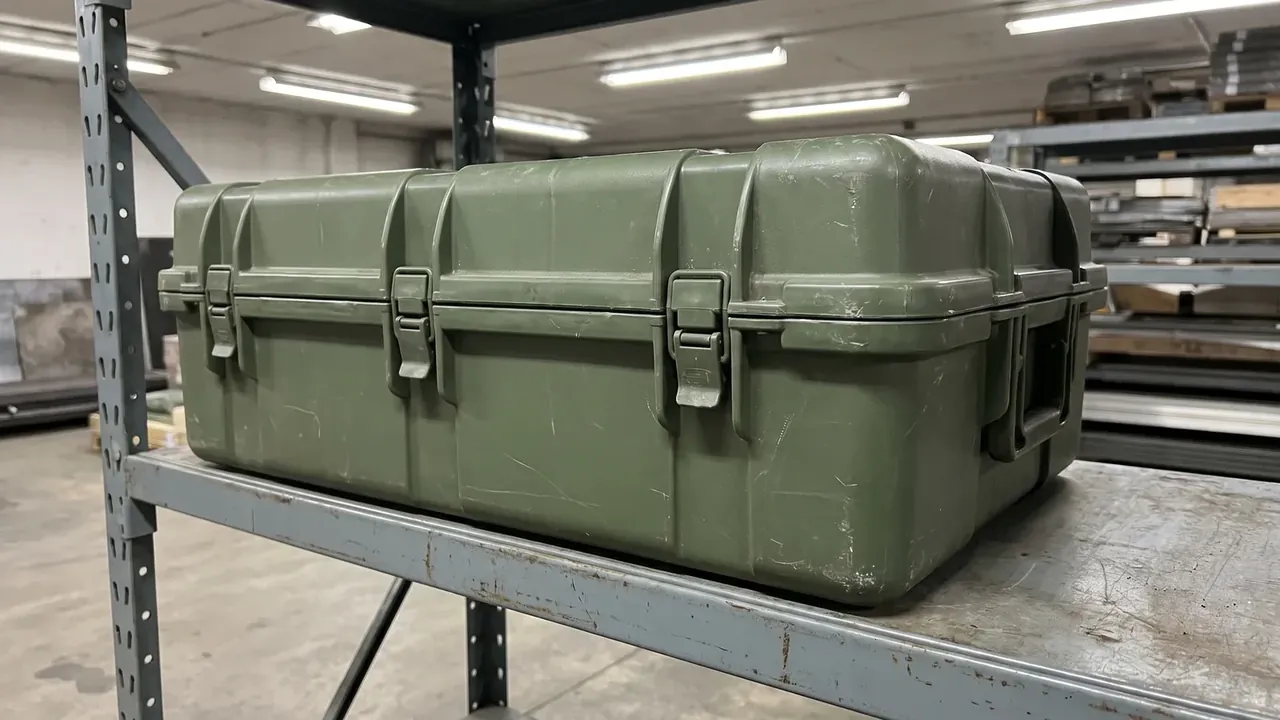
Quick answer: The Laboratory glassware safety transit container uses a 28/42 kg/m³ foam gradient and 7.5 mm walls to hold cell drift under 0.6 mm after 20 transfers.
Table of contents
- Foam density gradient in the Laboratory glassware safety transit container
- Wall thickness of the bottom cells
- Cell drift readings by transfer sequence
- Foam spring-back under stack recheck
- Density grading for glassware batches
- FAQ
1. Foam density gradient in the Laboratory glassware safety transit container
Cell drift is cumulative; a first transfer shows almost nothing, and small mismatches between the foam density gradient and cell-wall stiffness grow round by round. The Laboratory glassware safety transit container measures 600×430×260 mm outside, 530×365×190 mm inside, with a 4.6 mm shell wall and a 28/42 kg/m³ foam lap. A 7.5 mm bottom-cell wall is used. The bench weighs an empty 6.4 kg, then loads 14 kg and plots coordinates once per transfer over 20 transfers.
Only the foam changes across the three steps, so the cell wall stays a controlled variable.
| Density step | Lap length | Cell wall | First-cell drift |
|---|---|---|---|
| Soft | 12 mm | 7.5 mm | 0.5 mm |
| Middle | 20 mm | 7.5 mm | 0.3 mm |
| Hard | 28 mm | 7.5 mm | 0.4 mm |
When the Laboratory glassware safety transit container sets a density step, the watched value is first-cell drift, not whole-slab hardness. At a 12 mm lap the soft step reaches 0.5 mm first, the 28 mm hard step presses spring-back to the 90% edge, and the 20 mm middle step leaves margin on both. Horizontal and vertical components are logged apart, three samples per step averaged.
2. Wall thickness of the bottom cells
The 7.5 mm cell wall is fixed in the same round as the gradient. A thicker bottom-cell wall in the Laboratory glassware safety transit container blocks drift while the foam follows the outline; a thinner wall sends lateral force into the foam and the cell creeps after a few transfers. The bench trial-fits 6.0 mm, 7.5 mm and 9.0 mm walls and compares drift at transfer 20.
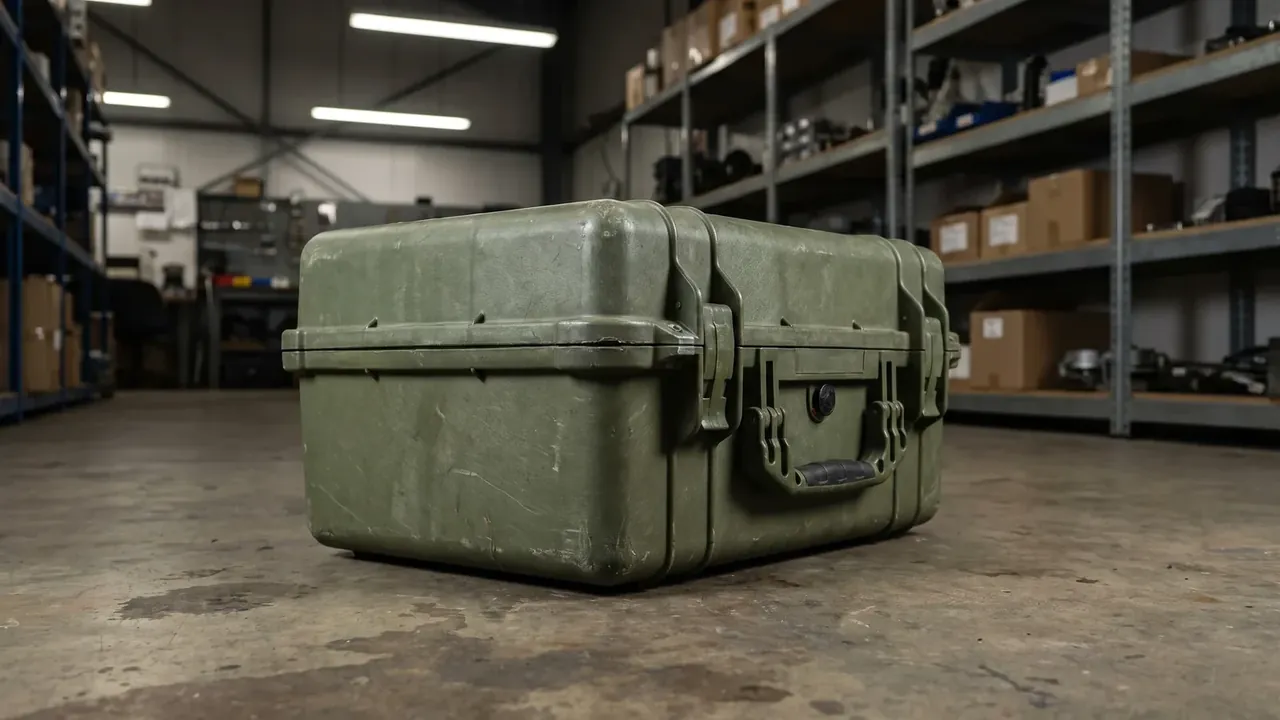
Open-close and sealing checks belong here too. The Laboratory glassware safety transit container completes 4100 open-close cycles with 4 latches at 420 N each logged round by round; the two seal rings at 21% compression are retested at cycle end, and the rain and dust conditions mapped to IP66 are archived by method. After a 4-layer / 12 h stack, spring-back must read at least 90%.
3. Cell drift readings by transfer sequence
Drift readings are ordered by transfer sequence, not taken as one maximum. The Laboratory glassware safety transit container numbers 20 transfers, plots cell coordinates every 5 transfers, and reads offsets from the initial plot; combined displacement must stay inside 0.6 mm to pass. Sequence, load state and plot time go onto the bench card.
| Transfer sequence | Cumulative count | Cell drift | Foam spring-back |
|---|---|---|---|
| 5th | 5 | 0.2 mm | 96% |
| 10th | 10 | 0.4 mm | 93% |
| 20th | 20 | 0.6 mm | 90% |
The sequence curve is the main line for grading this Laboratory glassware safety transit container. Drift sits at 0.2 mm by transfer 5, rises to 0.4 mm by transfer 10 and closes at 0.6 mm by transfer 20, while spring-back falls from 96% to 90%. The curve steepens toward the end, which a first-round-only reading would miss.
The plotting method is fixed too. A datum mark sits at each cell corner, and a two-dimensional rule reads each cell. Every transfer returns to the bench for a 10 min rest so spring-back settles before plotting. Horizontal and vertical components are logged apart, and combined displacement is the square root of the sum of squares, not a plain sum. One sample keeps one mark set throughout, and a round with a lost mark is discarded. Sequence, coordinates and spring-back sit side by side on the card, so the next batch follows the same trend.
4. Foam spring-back under stack recheck
The stack recheck asks whether the foam still pushes the cell back into place. The Laboratory glassware safety transit container is held for 4 layers / 12 h, unloaded and rested, then coordinates are read against the pre-stack position; only spring-back of at least 90% keeps the sample in the batch. Layer number, load direction and rest time go into the recheck column.
Open-close rounds are folded into the recheck too. After 4100 open-close cycles, the Laboratory glassware safety transit container takes one more 4-layer / 12 h stack; samples whose spring-back fell below the first round are flagged and sent back to the density step. Pre-stack and post-stack coordinates share one chart, so the recovery gap is visible at a glance.
5. Density grading for glassware batches
When density grades converge into the batch table, the step before the trend break is taken. The Laboratory glassware safety transit container puts first-cell drift, the transfer-20 sequence curve and post-stack spring-back into one table, sorts by drift value, and sends edge samples through one extra 20-transfer run.
| Drift value | Matched step | Lap length | Batch call |
|---|---|---|---|
| 0.4 mm | Middle | 20 mm | Listed |
| 0.6 mm | Soft | 12 mm | Line check |
| 0.8 mm | Long lap | 28 mm | Returned |
Density grading locks at the step before drift first exceeds 0.6 mm; every later transfer is only checked against it, never re-graded. By that line the 20 mm middle step enters the batch table, the 12 mm soft step stays at a line check, and the 28 mm long lap returns for re-grading. Batch coordinates are still reviewed sample by sample.
Conclusion
Cell drift in the Laboratory glassware safety transit container comes down to how the 28/42 kg/m³ gradient and 7.5 mm cell wall share the cumulative disturbance of 20 transfers. Three laps, the sequence-plotted curve and spring-back after a 4-layer / 12 h stack are the grading basis. The 4100 open-close cycles and IP66-mapped retest add endurance and environment, closing back on the 0.6 mm line. Graded this way, the Laboratory glassware safety transit container gives glassware batches a reproducible release criterion.
Related Reading
- Laboratory glassware transport case
- Anti-breakage protection box for lab bottles
- Laboratory sample transport case: sealing and leak control
- How to set case divider spacing
Related Products
- 8 Series — Gun Cases; Military Equipment Cases; Camera Equipment Cases; Drone Cases; Watch Cases; Knife Cases; First Aid Cases; Electronics Equipment Cases
- WL8-2812 PP Gun Case — model WL8-2812
- All protective cases and toolboxes: 7 series, 158 models