

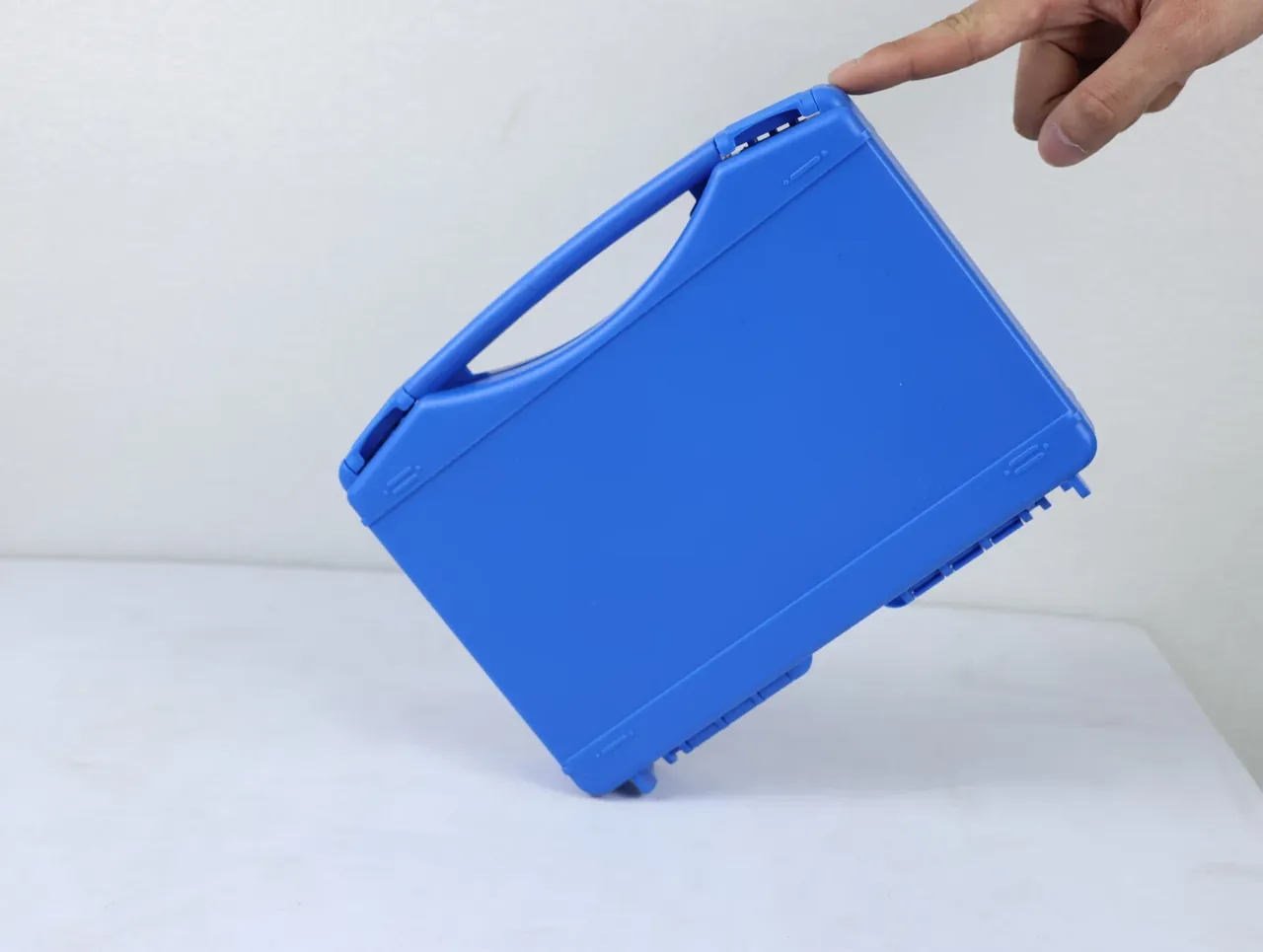
Quick answer: Service a Large Protective Case by counters, not the calendar. Replace the 14 mm seal when set passes 2 mm or hardness hits 78 Shore A; read axle play every 500 km, proof-load lift points yearly, and drop a stack layer at a 1.0 mm rim set.
Table of contents
- Inspection Rhythm for a Large Protective Case
- Seal Compression: A 14 mm Profile and Two Replacement Lines
- Wheel Axles and Lift Points: Two Loaded Parts
- Judging Stack Deformation
- Stretch the Service Life: Washing, Storage, Spares
- FAQ
1. Inspection Rhythm for a Large Protective Case
Three counters set the schedule for a Large Protective Case: lid cycles, transport kilometres, humidity of the store. Indoors for three years the seals stay soft; two years on a truck and the axles go first.
Past one metre and 18 kg empty, the lid doubles hinge load for one person, so tighten the schedule.
| Item | Interval | Limit | Action |
|---|---|---|---|
| Seal surface | 3 months | no cracks or glazed skin | replace the run |
| Compression | 12 months | 9.8 mm left when latched | adjust or reseal |
| Axle end play | 6 months or 500 km | 1.2 mm maximum | new bearing |
| Wheel wear | 6 months | 118 mm minimum | new wheel set |
| Lift points | before every lift | no whitening or bulges | out of service |
Twelve months is the longest gap; axles sit at six because wear speeds up after 500 km, taking another 0.3 mm of tread every 100 km.
2. Seal Compression: A 14 mm Profile and Two Replacement Lines
Most Large Protective Case bodies take an EPDM hollow seal, 14 mm tall, in a 4.5 mm groove. At 30 percent compression it stands 9.8 mm; under 8.4 mm the groove is shallow or the bulb has collapsed.
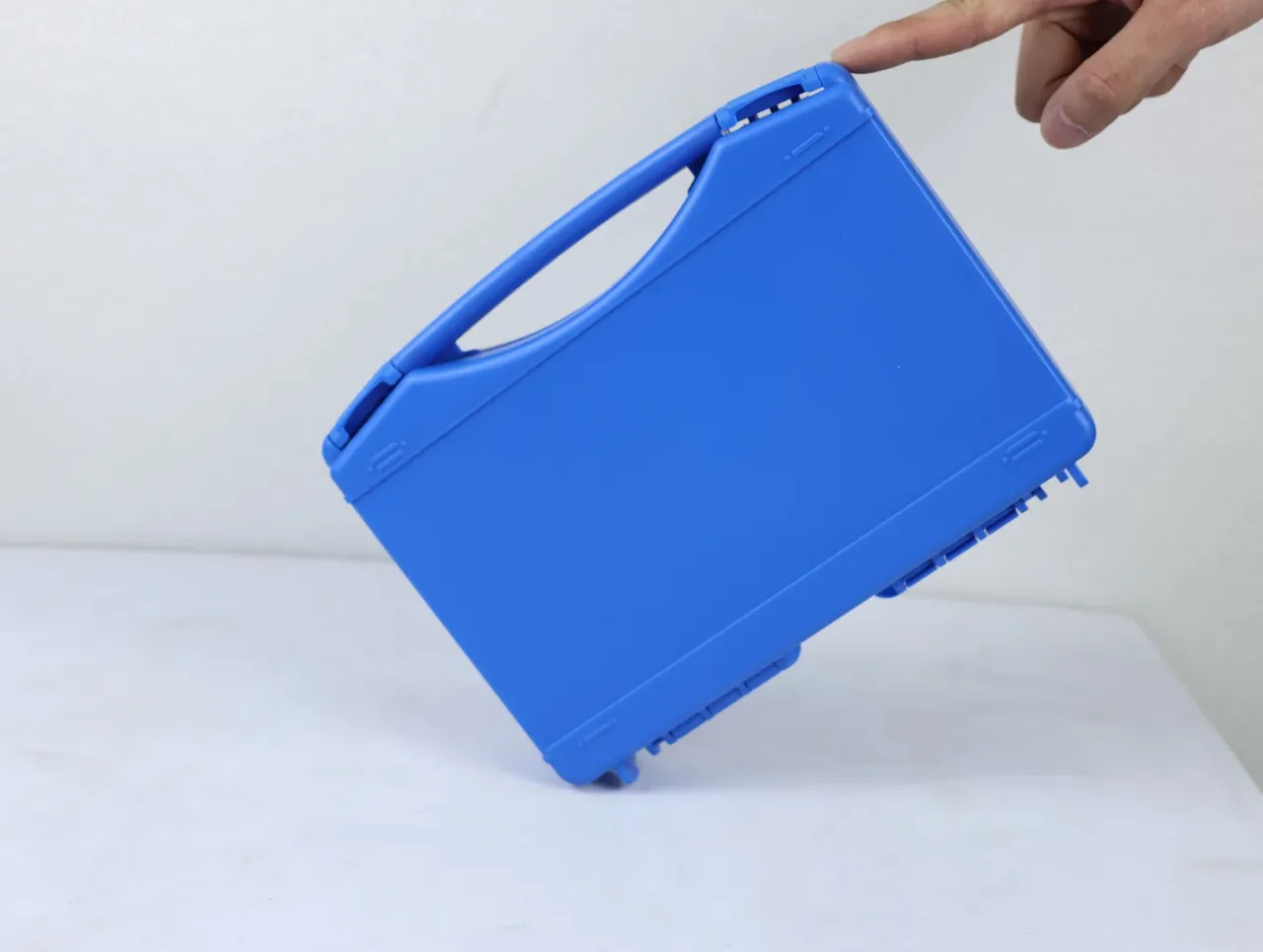
Two lines force replacement: a profile recovering to under 12.6 mm after a 30 minute rest has lost a tenth of its elasticity, and Shore A climbing from 65 to 78 means it cracks at minus ten degrees. Either one means a full run, never a splice.
Dust, salt and grease build a film that speeds plasticiser loss, so wipe every three months with a neutral cleaner at pH 6 to 8 and water under 40 degrees Celsius. Acetone, thinner and alcohol above 75 percent strip the anti-ageing layer and craze the surface within six months. Finish with silicone grease at 0.2 g per metre to block ozone; in coastal air halve the interval, and in storage leave the lid open 5 mm.
3. Wheel Axles and Lift Points: Two Loaded Parts
The first parts to fail are the axles and lift points, both metal cast into plastic with almost no warning.
| Part | Spec | Interval | Limit |
|---|---|---|---|
| Axle | 125 mm wheel, 8 mm 304 shaft, 2RS bearings | 6 months or 500 km | 1.2 mm play, new wheel at 118 mm |
| Housing | M8 bolts | 6 months | 12 N·m, no white ring in the counterbore |
| Lift points | M12 inserts | before every lift | no whitening, crack or bulge |
| Proof load | 1.25 times rating | 12 months | 10 minutes, 53 kg on a 42 kg body |
| Retorque | lift bolts | 12 months | 25 N·m, never past 30 N·m |
A body lifted 22 times a year has pushed its inserts through 22 cycles, which is when the proof load cannot be skipped.
Lift points are not tie-downs: side pull creeps a bell mouth into the plastic within six months.
4. Judging Stack Deformation
Two loaded units put upper weight on the lower rim for 30 days, and polyolefin creeps visibly above 40 degrees Celsius, the temperature of a top rack in summer.
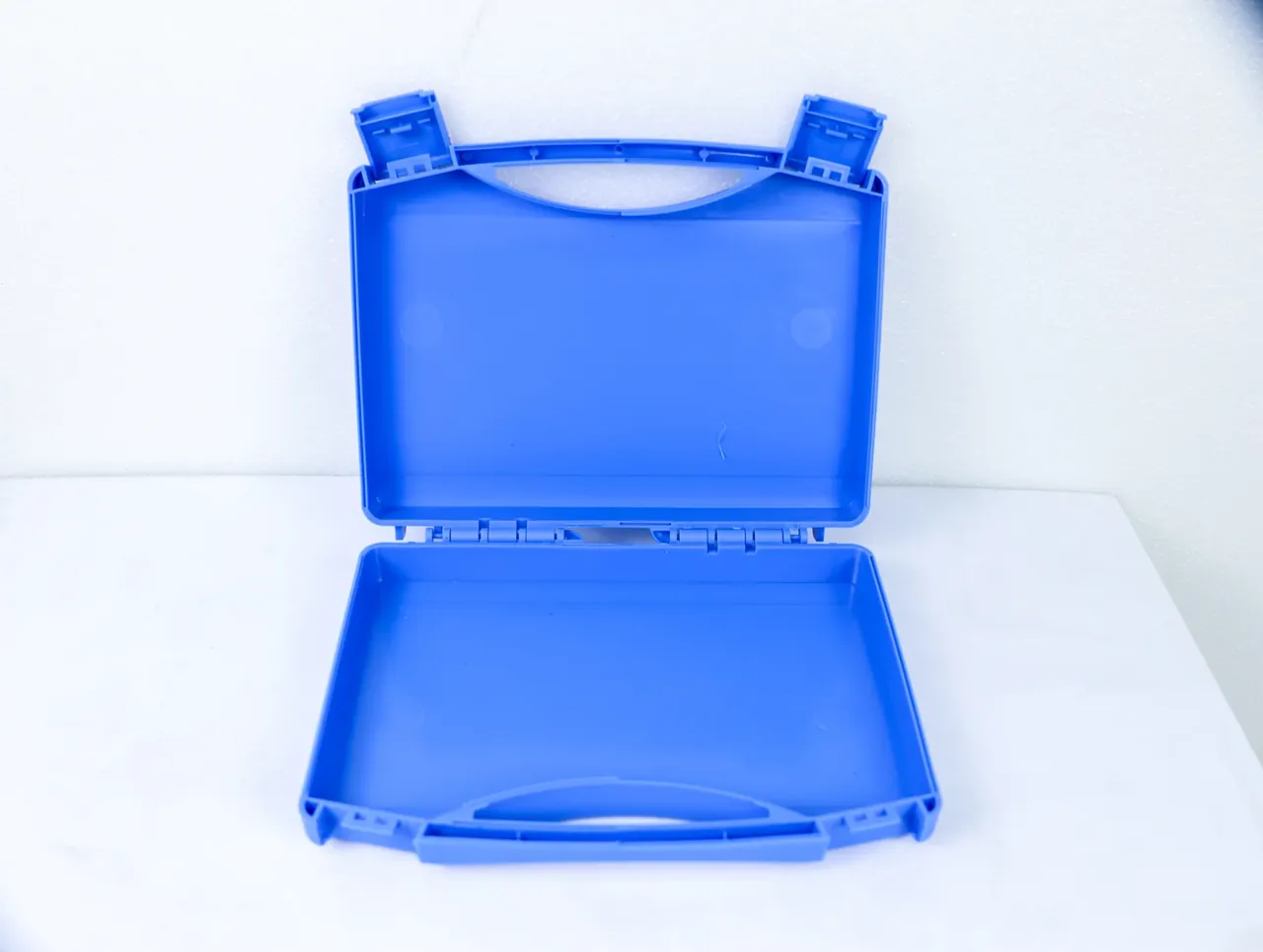
A 500 mm straight edge with a 0.1 mm feeler settles it: slip under at 1.0 mm and the set is permanent. Base diagonals 2 mm apart mean the frame is out of square.
Past 1.0 mm it will not spring back, it only stacks lower.
A 12 mm plywood pallet spreads the load; on bare concrete the corners sink 0.8 mm in 30 days. Empty bodies stack three high, loaded ones two, with base bosses 3 mm inside the lid recess.
5. Stretch the Service Life: Washing, Storage, Spares
A Large Protective Case is rated for eight years if it is washed, stored and repaired correctly.
- Washing: neutral cleaner, water under 40 degrees Celsius, pH 6 to 8; pressure washer 300 mm away, under 80 bar.
- Storage: 5 to 35 degrees Celsius, under 70 percent humidity, 100 mm off the floor.
- Hardware: 304 pins, no red rust after 96 hours of salt spray.
- Spares: hold 5 percent of seal runs, wheel sets and latches.
Order from the same batch: 1 mm of seal height changes compression by 7 percent, and a seal that looks seated still leaks.
Conclusion
Wipe the seal every three months, read the axle every 500 km, hang 53 kg once a year, measure the base corners at every intake. Do those four and eight years is delivered, not claimed. Keep the schedule on the body and a Large Protective Case will not leak by year three.
This article discusses only the container (case body) side of specifications and design intent, and does not cover any handling, loading or use of the contents.
Related Reading
- Wheeled protective case maintenance: wheels, handle, corners
- Wall thickness, ribs and lift points of a large case
- War reserve case upkeep and sealed storage checks
- Hard shell suitcase care and replacement parts
Related Products
- 8 Series — Gun Cases; Military Equipment Cases; Camera Equipment Cases; Drone Cases; Watch Cases; Knife Cases; First Aid Cases; Electronics Equipment Cases
- WL8-2812 PP Gun Case — model WL8-2812
- All protective cases and toolboxes: 7 series, 158 models