

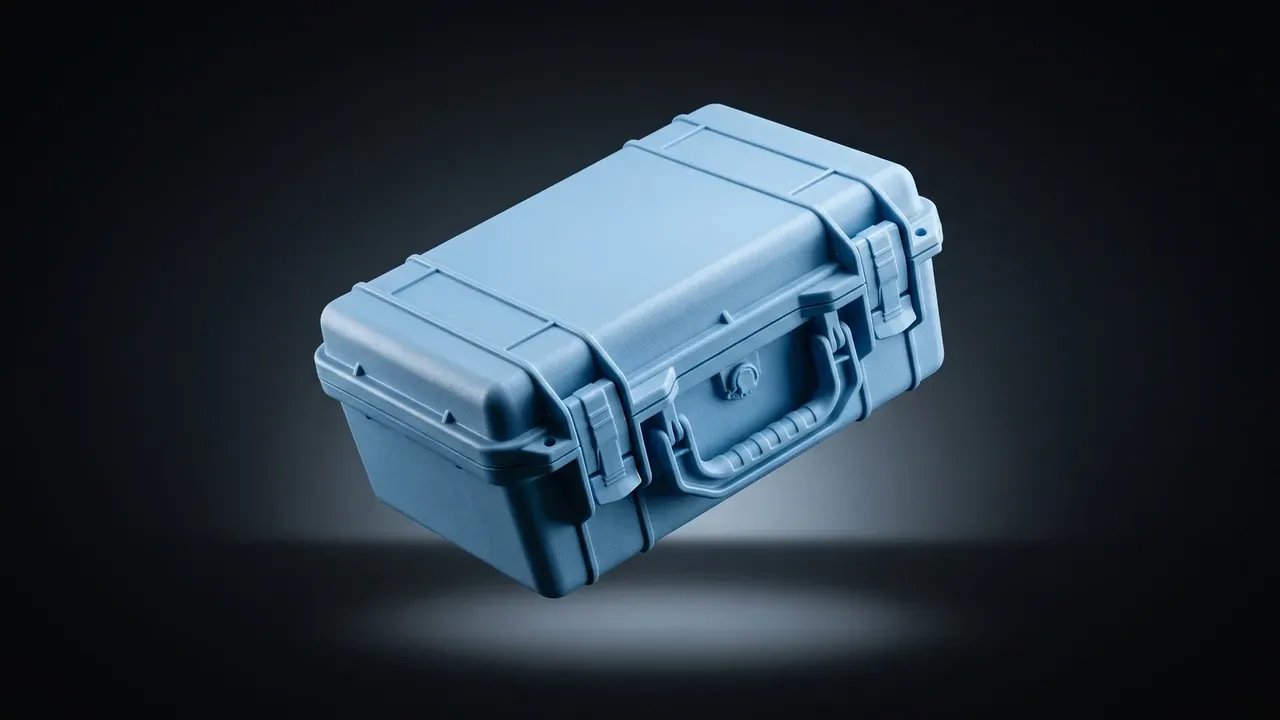
Quick answer: Picking a logistics transport plastic case comes down to four numbers: volume, loaded weight, stack height and units per pallet layer. Measure them on site, add a 1.0 m drop test and a 300-cycle record, and the choice stops relying on feel.
Table of contents
- How to Calculate the Loading Unit
- Volume Choices and the Truck versus LTL Gap
- Stacking Four High and Checking the Bottom Case
- Pallet Layout and Label Placement
- Cycle Count and Drop Height Acceptance
- FAQ
1. How to Calculate the Loading Unit
The loading unit for a logistics transport plastic case exists before the case does. A 9.6 m truck gives about 9.4 m of usable length, so 1200×1000 mm pallets yield 22 positions per layer. LTL is billed per 1.2 m of deck; thin utilisation switches to volumetric weight. A 20 mm difference in footprint can cost a whole row.
Volume of 40–200 L covers resupply, equipment rotation and spare parts. A 200 L case loaded to the brim often passes 25 kg and needs two handlers.
| Criterion | How to measure | Acceptable range |
|---|---|---|
| Case volume | Internal length × width × height | 40–200 L |
| Loaded weight | Whole case on a platform scale | ≤25 kg |
| Stack height | Real stack with cargo inside | 4 high |
| Bottom load | Creep marks at lid corners, side-wall bulge | ≥120 kg |
| Drop height | Corner drop rig, impact recorded | 1.0 m |
| Cycle count | Rotation ledger or rig cycling | 300 cycles |
2. Volume Choices and the Truck versus LTL Gap
The same case behaves differently on a full truck and on LTL. Full-truck freight is billed by pallet position, so a 600×400 mm footprint module saves money. LTL bills the greater of actual and volumetric weight, and every millimetre of wall adds 0.6 kg to a 200 L unit.
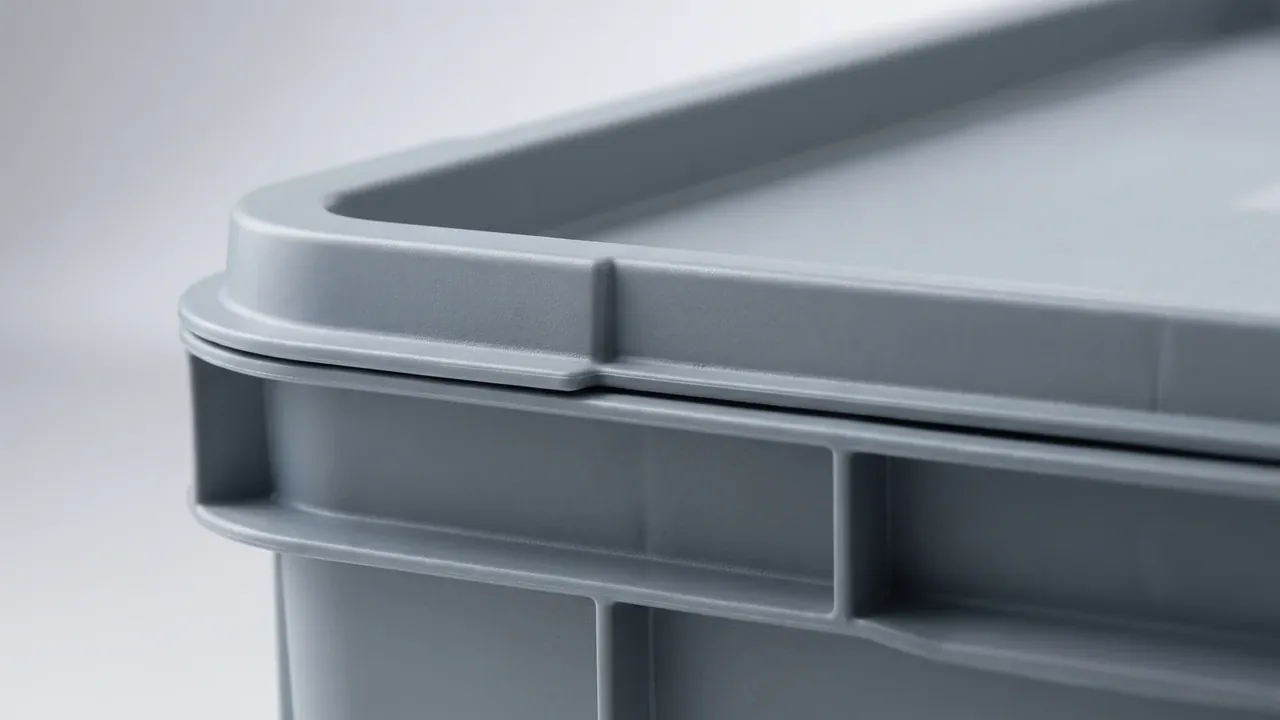
The gap is usually lost at the lid. A flat lid stacks one tier higher. A bossed lid self-aligns. It adds 15–20 mm each, becoming 60–80 mm over four tiers. That can erase a pallet position's headroom. Full-truck lanes justify the bossed lid; LTL lanes do not.
A 40 L case suits single tools, 80 L consumables, and above 120 L you need wheels or two-person handles. Never mix the three on one pallet: load then lands on the lid edge, not the corners.
3. Stacking Four High and Checking the Bottom Case
Stack height for a logistics transport plastic case is not a catalogue value; it is what a loaded stack does. A checklist beats a table:
- Weigh the empty case first; 40 L units run 3.5–4.5 kg
- Load to the 25 kg ceiling, not an empty-case estimate
- Build a real four-high stack; the bottom unit carries 75 kg
- Rate that bottom case at 120 kg, a 1.6× margin
- After 72 hours, measure bulge; past 3 mm the ribbing is short
- Look for white creep marks at the bottom lid corners
Creep marks are the most honest evidence. A sample looks rigid on a plinth, then goes chalky at the rib roots once 25 kg sits three tiers above it: the hoop ribs are not passing load into the side walls.
The base matters too. A flat bottom bears on four corners and bows over time; a ribbed grid spreads load and stays flat, costing 8–12 mm of internal height.
4. Pallet Layout and Label Placement
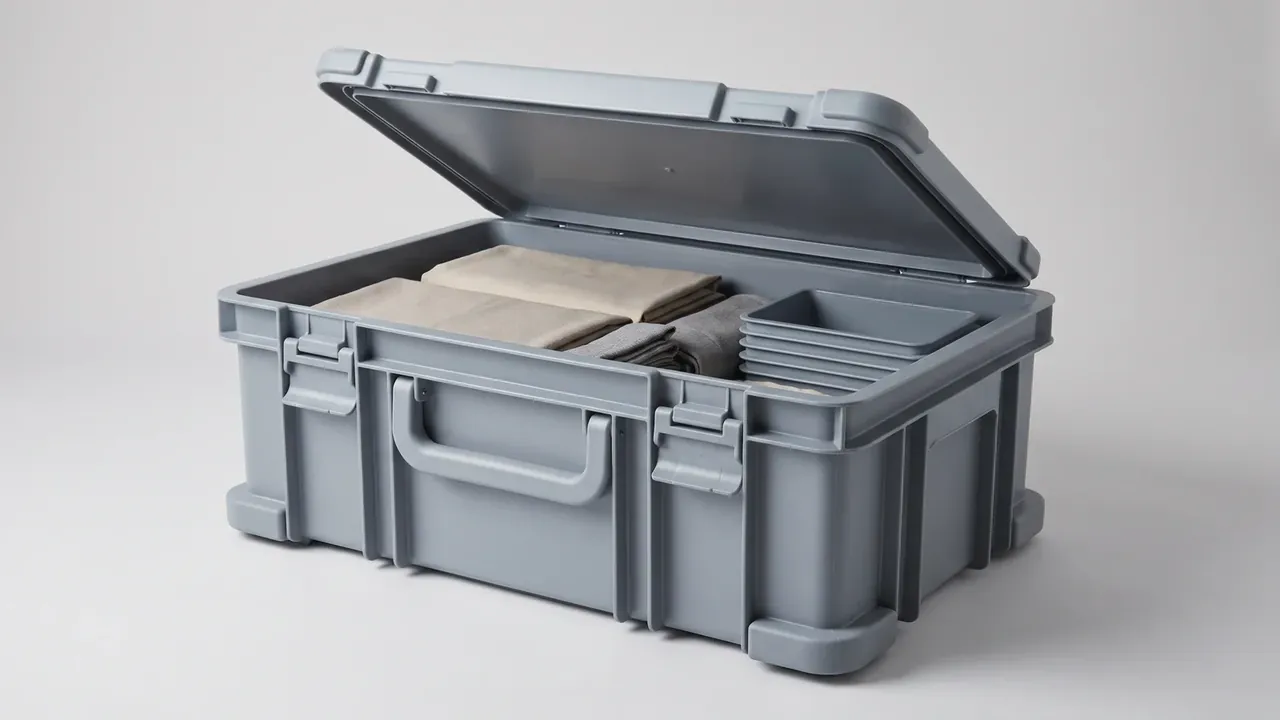
At 1200×1000 mm, the common returnable pallet, the divisibility of a logistics transport plastic case footprint decides how many units fit in a layer. Twenty millimetres looks trivial until a layer loses one case and four tiers lose four.
| Base footprint | Units per layer | Leftover space |
|---|---|---|
| 600×400 mm | 4, up to 5 mixed | 200 mm strip |
| 500×400 mm | 6 | 200 mm on the long side |
| 400×300 mm | 9 | 100 mm on the short side |
| 800×600 mm | 2 | 400 mm, not advised |
Label position affects read rates more than material. Put it on the short side, 50 mm below the top edge, one per face, clear of latches and the handle. At four tiers that height stays at eye level, so the scanner does not bend. A label on the lid top is covered by the tier above.
5. Cycle Count and Drop Height Acceptance
For a returnable logistics transport plastic case, 300 cycles is the usual threshold: loaded, handled, stacked, shuttled, still closing properly afterwards. Acceptance checks three points: latch preload, hinge pin wear under 0.5 mm, gasket compression set under 30 percent. Any one out of range and cycle life must be recalculated.
The drop is 1.0 m at a corner, six faces, aimed at the weakest bottom corner. The verdict is whether the latch still closes one-handed and the lid gap stays under 1.5 mm.
Rig data and field data are not interchangeable: the rig cycles on a flat floor, field rotation includes steps and forklift knocks.
Conclusion
Choosing a logistics transport plastic case is subtraction along the load chain: cap volume at 40–200 L, hold loaded weight under 25 kg, fix stacking at four high with a 1.6× margin at the bottom, and align the footprint to a 1200×1000 mm pallet. Only then do wall thickness and material deserve debate. Write the 1.0 m drop and the 300-cycle record into the acceptance clause, and a supplier promise lands somewhere. A logistics transport plastic case derived from the loading unit is the one that survives a year of rotation.
This article discusses only the container (case body) side of specifications and design intent, and does not cover any handling, loading or use of the contents.
Related Reading
- Selection criteria for logistics support boxes
- Key points for military supply transport cases
- Inspection items for firearm transport cases
- Standard requirements for cartridge transport boxes
Related Products
- 8 Series — Gun Cases; Military Equipment Cases; Camera Equipment Cases; Drone Cases; Watch Cases; Knife Cases; First Aid Cases; Electronics Equipment Cases
- WL8-2812 PP Gun Case — model WL8-2812
- All protective cases and toolboxes: 7 series, 158 models