

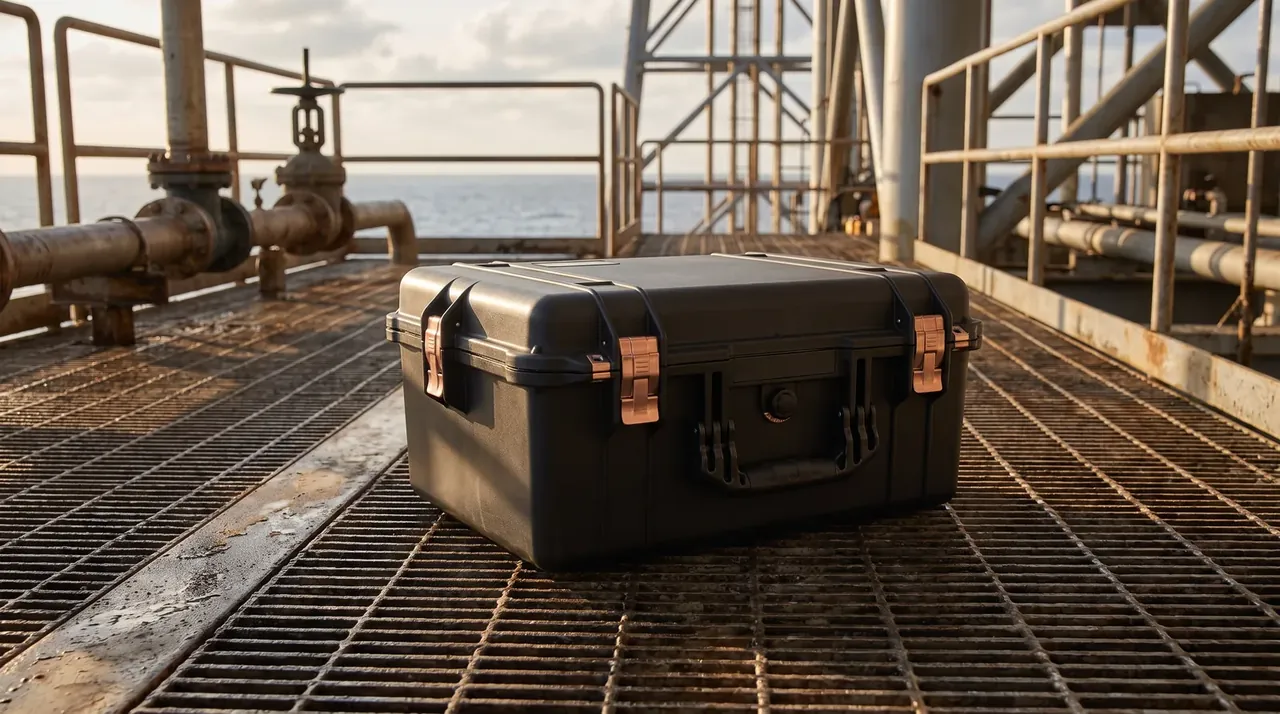
Quick answer: Case low temp impact is judged by impact retention: one PP grade fell from 52 kJ/m² at 25 ℃ to 23 kJ/m² at −30 ℃, only 44.2% retained.
Table of contents
- Quantifying retention as a ratio
- Soaking for 4 h or 16 h
- Charpy and Izod specimen geometry
- Converting retention into drop height
- FAQ
1. Quantifying retention as a ratio
One homopolymer PP grade read 52 kJ/m² unnotched Charpy at 25 ℃ and 23 kJ/m² after 4 h at −30 ℃, a retention of 44.2%. That 29 kJ/m² gap is what the wall and the latch bosses must absorb.
Retention is cold impact over warm impact, and the denominator must state 25 ℃ ±2 ℃, the same notch and the same 4 J pendulum, or a report can show 130% and mean nothing.
| Item | Charpy ISO 179-1 | Izod ISO 180 |
|---|---|---|
| Specimen | 80 mm × 10 mm × 4 mm | 80 mm × 10 mm × 4 mm |
| Notch | Type A, 0.25 mm root radius | Type 1A, 45° |
| Remaining width | 8 mm | 8 mm |
| Span or clamp | 62 mm span | 22 mm clamped |
| Pendulum | 4 J | 5.5 J |
| Conditioning | −30 ℃ ±2 ℃, 4 h | −30 ℃ ±2 ℃, 4 h |
Ten specimens, median rather than mean. Five scatter beyond 12%, ten hold within 8%, and scatter at −30 ℃ is twice the 25 ℃ figure, so a short set flatters retention by 5 points. One mould, one orientation: cross-flow and along-flow samples differ by 7 points.
2. Soaking for 4 h or 16 h
Four hours is the floor for a 4 mm specimen. A 0.5 mm thermocouple in the core reads −28 ℃ at 22 min and −29.5 ℃ at 1 h 40 min, then flattens.
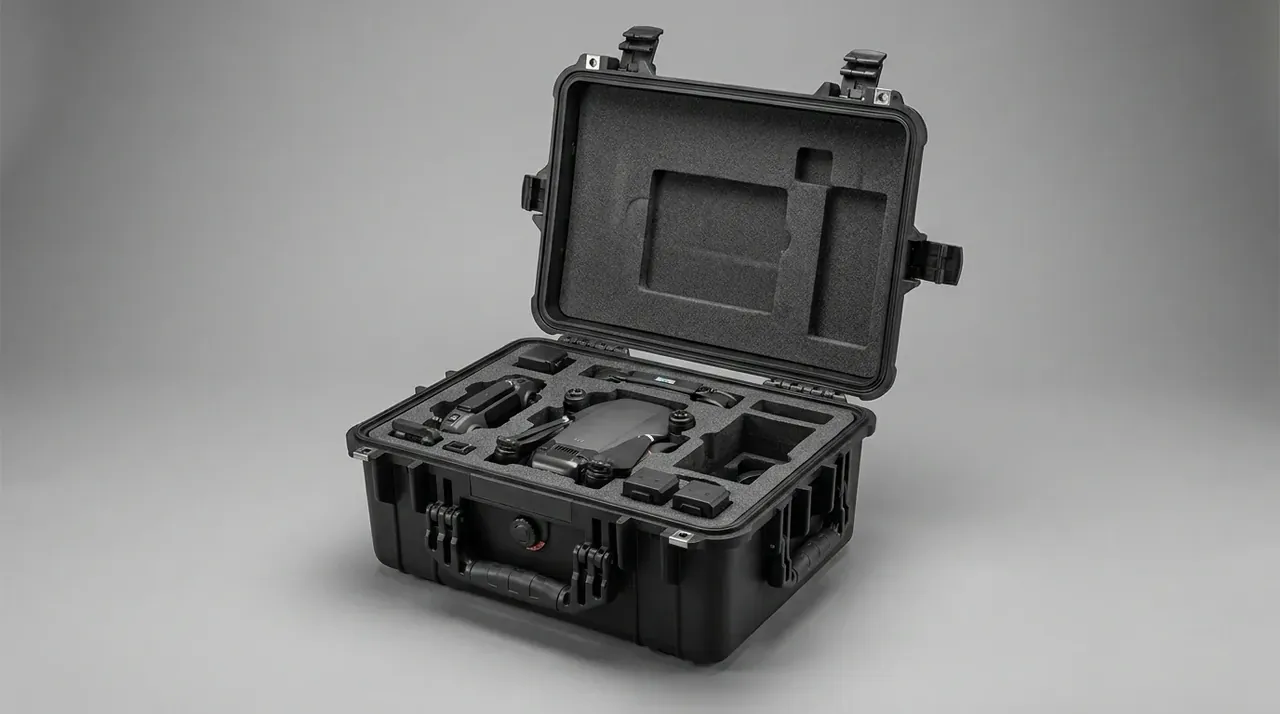
Sixteen hours belongs to sections above 6 mm and to annealed parts, where crystallinity recovers 3% to 5% and impact drops another 6 to 9 kJ/m². Half of all bad case low temp impact numbers start with a short soak.
Draught is the quieter fault: a fan frosts the surface, the frost seeds cracks at the notch, and readings fall over 10%.
Time out of the chamber decides the rest. Break within 5 s as ISO 179 asks; at 8 s the −30 ℃ value runs 3 to 5 kJ/m² high, because the surface warms about 1.8 ℃ per second.
3. Charpy and Izod specimen geometry
Specimens are 80 mm × 10 mm × 4 mm with a type A notch, 0.25 mm root radius, 8 mm remaining width and a 62 mm span. Open that radius to 1.0 mm and the same grade reads 8.9 instead of 6.4 kJ/m² warm, 4.4 instead of 2.6 kJ/m² cold.

Notched retention is 41% against 44.2% unnotched. The corner of a latch boss behaves like a 0.3 to 0.5 mm notch, so structural checks use the notched figure.
| Grade | 25 ℃ (kJ/m²) | −30 ℃ (kJ/m²) | Retention | Fracture |
|---|---|---|---|---|
| Homopolymer PP | 52 | 23 | 44.2% | Flat, brittle |
| Block copolymer PP | 48 | 27 | 56% | Partly fibrous |
| PP + 20% glass fibre | 35 | 24.5 | 70% | Fibre pull-out |
| FR ABS | 38 | 28 | 74% | Brittle, crazed |
| HDPE | 60 | 18 | 30% | Fully brittle |
The 70% of the glass-filled grade is bridging, not a tougher matrix. Turn the flow 90° to the strike and retention falls from 70% to 52%, a 26% drop nobody notices until a claim arrives.
Homopolymer fractures flat, above 90% mirror zone; copolymer tears 20% to 30% fibrous and spends energy there. Below 45%, keep it out of load-bearing cold work.
Check the machine too: calibrate the pendulum every 12 months, and remember 0.2 mm of support wear lifts readings by 4%.
4. Converting retention into drop height
Cold height = warm height × retention ÷ 1.15. An 18 kg case passing 1.30 m warm is limited to 0.50 m cold, and that is the figure for the drawing.
| Retention | Allowed drop, 18 kg | Grade | Verdict |
|---|---|---|---|
| 30% | 0.34 m | HDPE | Static storage |
| 44% | 0.50 m | Homopolymer PP | Add 20 mm foam |
| 56% | 0.63 m | Block copolymer PP | General transport |
| 70% | 0.79 m | PP + 20% glass fibre | Export transport |
| 85% | 0.96 m | Copolymer + 8% POE | Cold store handling |
The 1.15 factor is an edge drop. A corner drop raises it to 1.42 and removes another 19% of height, so 0.50 m on a corner equals 0.40 m flat.
Brittleness temperature draws the second line. Homopolymer PP sits near −15 ℃, already 15 ℃ past a −30 ℃ service point; copolymer sits at −35 ℃ and keeps 5 ℃ in hand. Adding 8% POE pushes the point down 6 ℃ and lifts retention to 85%, for 12% of tensile strength and 0.3 mm of wall.
Field check: 3 cases, 16 h at −30 ℃, a 0.50 m corner drop within 30 min aimed under the latch boss. Pass means no through crack, no latch release, no more than 1.5 mm of lid shift. All 3 must pass.
Conclusion
Case low temp impact ends at a division, not an adjective: 52 kJ/m² over 23 kJ/m² leaves 44.2%. Under 45% only static storage boxes qualify; 45% to 55% needs 20 mm of foam and a 0.50 m limit; 56% to 70% covers block copolymer and glass-filled cases; above 70%, with a brittleness point under −40 ℃, toughened copolymer goes into cold store clauses. Sample at 4 mm for 4 h or 6 mm for 16 h, break within 5 s, take the median of ten. Then close with the formula: allowed height = 1.30 m × retention ÷ 1.15, and if the result sits under the height the customer unloads from, change grade rather than stiffen the wall.
This article discusses container-side specifications and design implications only, and does not cover any handling, loading or use of the contents.
Related Reading
- Cold drop testing and pass criteria
- Case materials for cold weather sites
- How drop tests set height and attitude
- Case selection for Nordic cold climates
Related Products
- 8 Series — Gun Cases; Military Equipment Cases; Camera Equipment Cases; Drone Cases; Watch Cases; Knife Cases; First Aid Cases; Electronics Equipment Cases
- WL8-2812 PP Gun Case — model WL8-2812
- All protective cases and toolboxes: 7 series, 158 models