

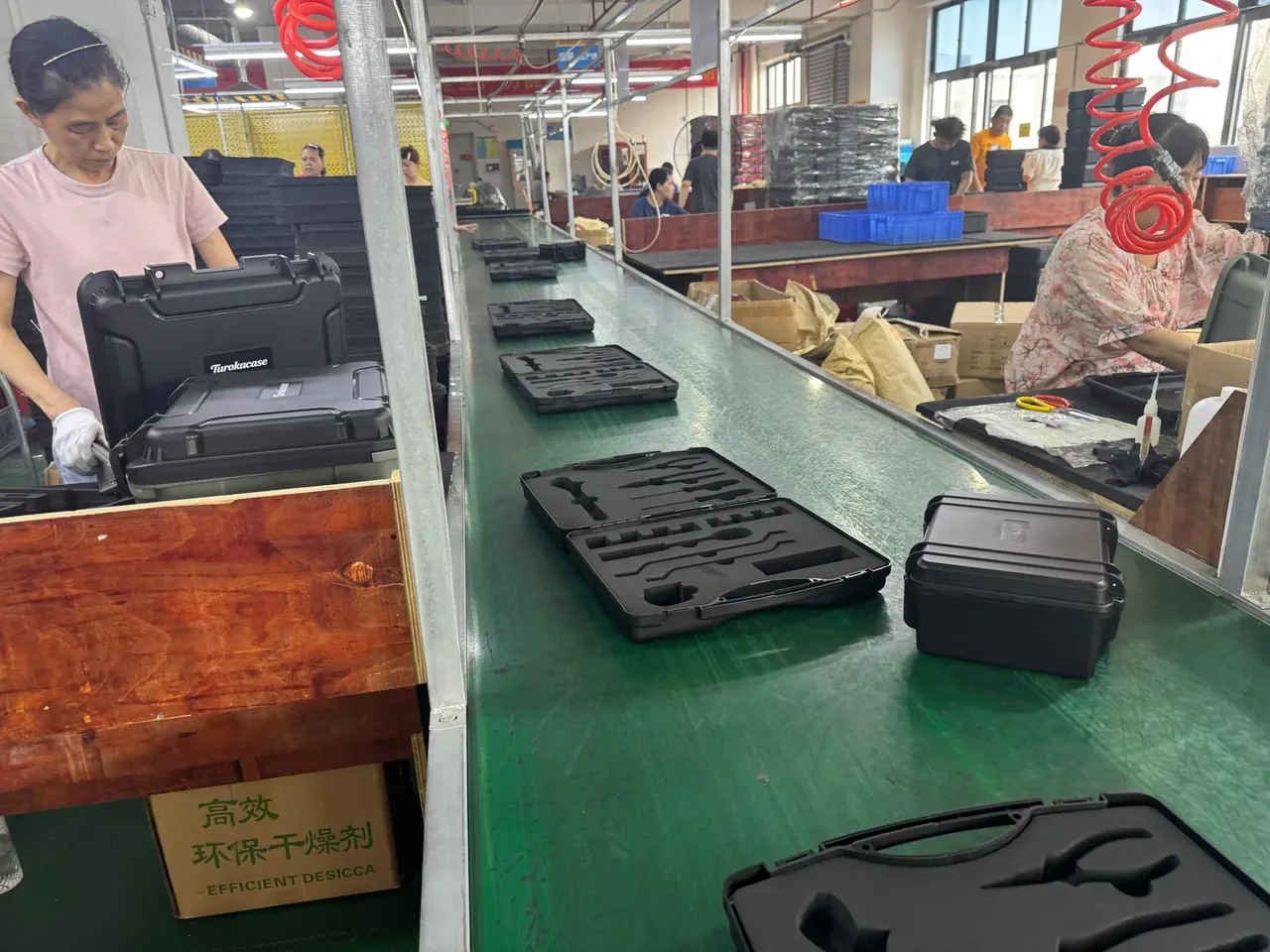
Quick answer: A medical controlled drugs lockable safety box sets bushing wall at 2.6 mm and lid stop at 10 mm, keeping alignment within 0.35 mm after 6000 cycles.
Table of contents
- Bushing wall thickness in the medical controlled drugs lockable safety box
- Height of the lid limit stop
- Alignment readings across open-close cycles
- Lock-hole roundness after the drop retest
- Wall-thickness reject line for lockable batches
- FAQ
1. Bushing wall thickness in the medical controlled drugs lockable safety box
An outer shell of 460×330×175 mm, an inner cavity of 400×275×120 mm and a 3.9 mm wall fix the bushing of the medical controlled drugs lockable safety box at 2.6 mm. The bushing sits in the lid lock-hole bore, with the latch tongue outside and the stop inside sharing one centring datum. Thinner walls wear oval under repeated tongue travel; thicker walls narrow the clearance until the tongue binds. A plug gauge checks each bore before cycling starts.
Moulded as one piece with the lid, the bushing holds a tighter wall tolerance than any other shell face, since half the ≤0.35 mm alignment criterion rests on it. At 3.7 kg empty and 6.8 kg loaded, two latches at 335 N each press the lid down; a thin spot lets that preload dent the bore, and 6000 cycles turn the dents into alignment drift. Each bushing is numbered to its lid and a lot out of grade is returned before it reaches the cycling rig.
| Bushing grade | Alignment after 6000 cycles | Verdict |
|---|---|---|
| 2.0 mm | 0.52 mm | Reject |
| 2.6 mm | ≤0.35 mm | Threshold |
| 3.2 mm | 0.30 mm, too tight | Reject |
Only 2.6 mm clears the ≤0.35 mm line without binding on insertion.
2. Height of the lid limit stop
The 10 mm limit stop is the step that arrests lid travel. In the medical controlled drugs lockable safety box it is formed with the lid root: the stop lands on the mouth ledge first, then the tongue slides into the bore. A short stop sinks the lid and splits the tongue and hole centrelines; a tall stop keeps the single gasket from reaching 19% compression.
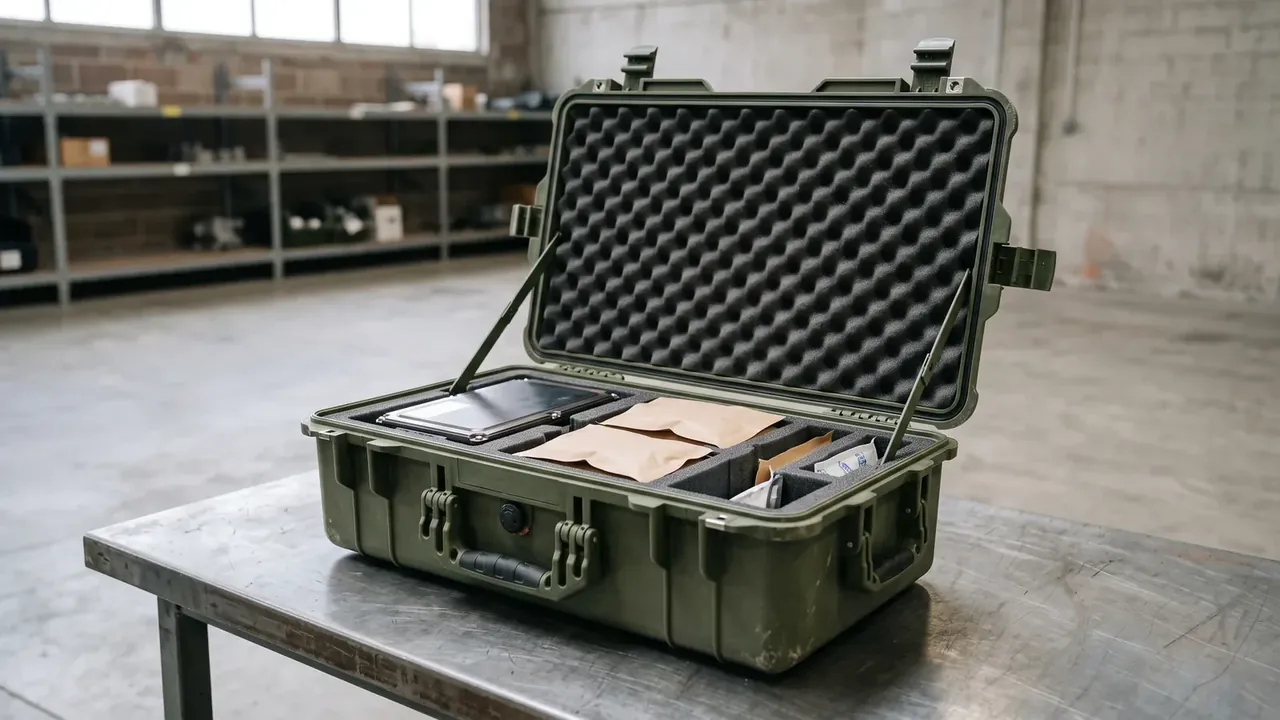
The 10 mm carries wear allowance over 6000 cycles, so it is set a touch high rather than low. One stop per side shares a contact plane, or a worn edge cocks the lid and shears the tongue. Once the two 335 N latches seat, the stops carry no load and only limit travel. Read together with bushing wall, this explains why the tongue of the medical controlled drugs lockable safety box still lands on the bore centre after thousands of cycles.
3. Alignment readings across open-close cycles
Alignment is logged every 1000 cycles on a jig, not only at the 6000th. After each block the medical controlled drugs lockable safety box rests, a centring mandrel enters the lock hole, and the mandrel-to-guide gap is converted into alignment; stop-crown wear is noted too. At 6000 cycles the figure must stay within ≤0.35 mm, and an early crossing stops the run.
| Open-close count | Tongue alignment | Stop wear |
|---|---|---|
| 1000th | 0.08 mm | 0.02 mm |
| 3000th | 0.21 mm | 0.05 mm |
| 6000th | ≤0.35 mm | ≤0.09 mm |
The 6000th row at ≤0.35 mm is the line. Alignment is bore wear plus stop sink read together: a spread above 0.08 mm across three parallel cases points to uneven moulding, checked before the criterion is reconsidered. Cycling speed and rest intervals go into the record, or the six readings have no comparison. The cycle sheet of the medical controlled drugs lockable safety box shows the build-up a lone end value cannot.
4. Lock-hole roundness after the drop retest
Roundness is remeasured after a 1.0 m drop. The bore of the medical controlled drugs lockable safety box has taken 6000 cycles of friction, and the drop asks whether lid and bushing are squeezed oval; a gauge sweeps the hole section and alignment is checked again, with roundness held within ≤0.15 mm.
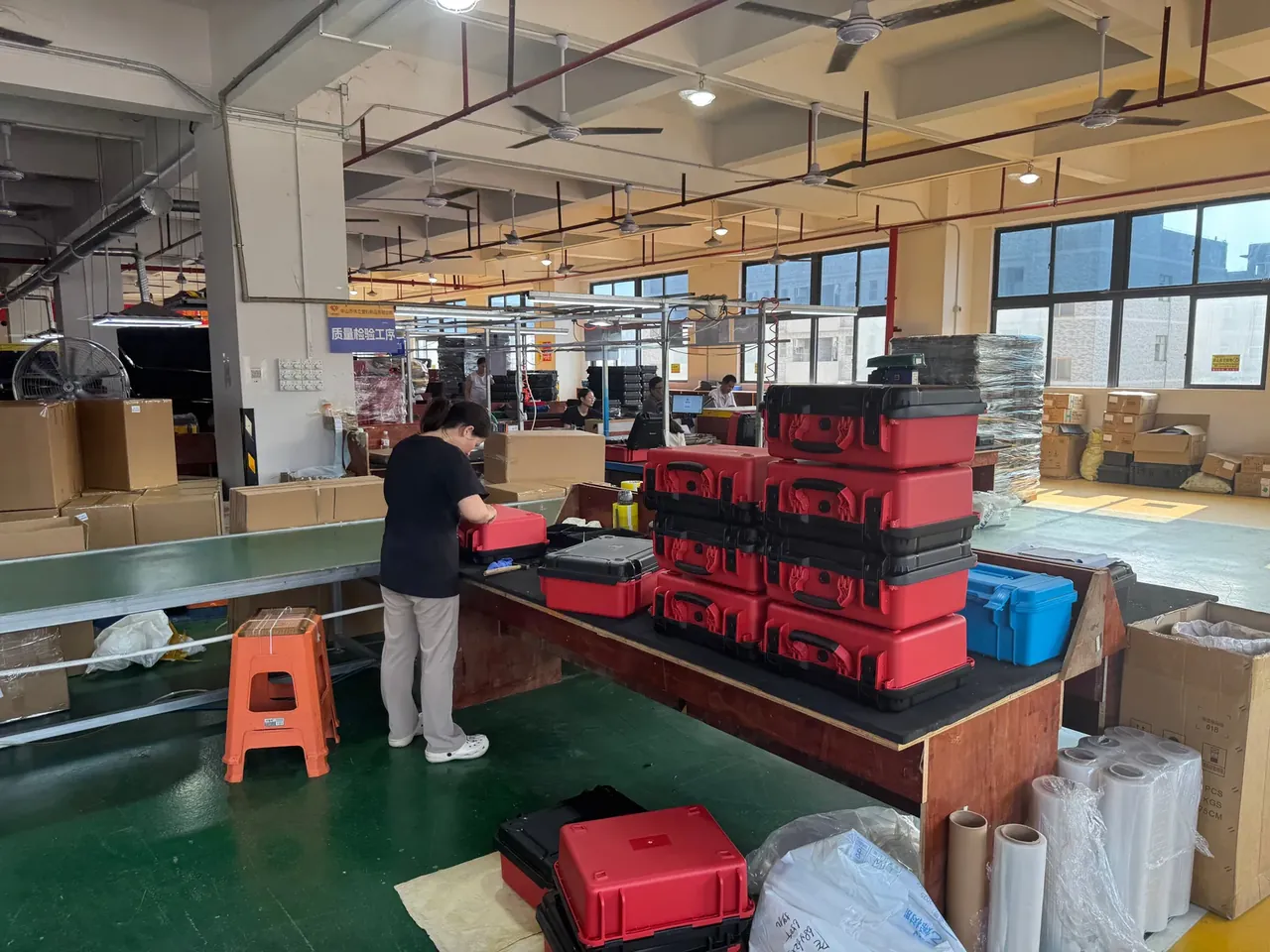
Debris is cleared before reading, since chips inflate a ≤0.15 mm figure. The single gasket at 19% and the two 335 N latches are checked first if give appears: the fault is then latch preload, not the bushing. A stop corner bruised by the drop lets lid sink accumulate, and roundness follows it. IP66 is written in as a benchmark method only. Read on one sheet, the question is single: can the bushing of the medical controlled drugs lockable safety box still point the tongue at the bore centre after cycling plus a drop.
5. Wall-thickness reject line for lockable batches
The reject line rests on two checks: the lower deviation of the 2.6 mm bushing wall, and alignment after 6000 cycles. Every medical controlled drugs lockable safety box lot is gauged for wall first, then fatigue is backed out from alignment, and both must clear. Wall is listed apart because it sets initial centring and the margin left after 6000 cycles, exposing incoming drift early.
| Alignment reading | Matching bushing wall | Batch verdict |
|---|---|---|
| 0.52 mm | 2.0 mm | Reject |
| ≤0.35 mm | 2.6 mm | Threshold |
| 0.30 mm | 3.2 mm | Too tight |
The 0.52 mm row with 2.0 mm misses ≤0.35 mm and is rejected; 0.30 mm with 3.2 mm binds on insertion. JUNZHIJIA centres lockable lots on 2.6 mm, ≤0.35 mm and ≤0.15 mm, and the maker signs each unit only when wall, stop height and the 6000th-cycle alignment are all filled. One blank cell leaves that unit outside the sum. Run this way, the medical controlled drugs lockable safety box keeps its lots comparable.
Conclusion
Whether the medical controlled drugs lockable safety box ships depends on bushing wall and lid stop still centring the tongue after 6000 cycles. The four figures 2.6 mm, 10 mm, ≤0.35 mm and ≤0.15 mm must come from one lot: separately each looks fine, together they may not pass. Sign per unit, sum per lot, and only a full three-cell row counts; one handsome figure cannot carry a whole batch.
Related Reading
- Protective case lock customization and padlock holes
- Case lock holes 6 vs 8 mm
- Tamper-evident seals and lock holes
- Lockable storage box lock points and pry resistance
Related Products
- 8 Series — Gun Cases; Military Equipment Cases; Camera Equipment Cases; Drone Cases; Watch Cases; Knife Cases; First Aid Cases; Electronics Equipment Cases
- WL8-2812 PP Gun Case — model WL8-2812
- All protective cases and toolboxes: 7 series, 158 models