

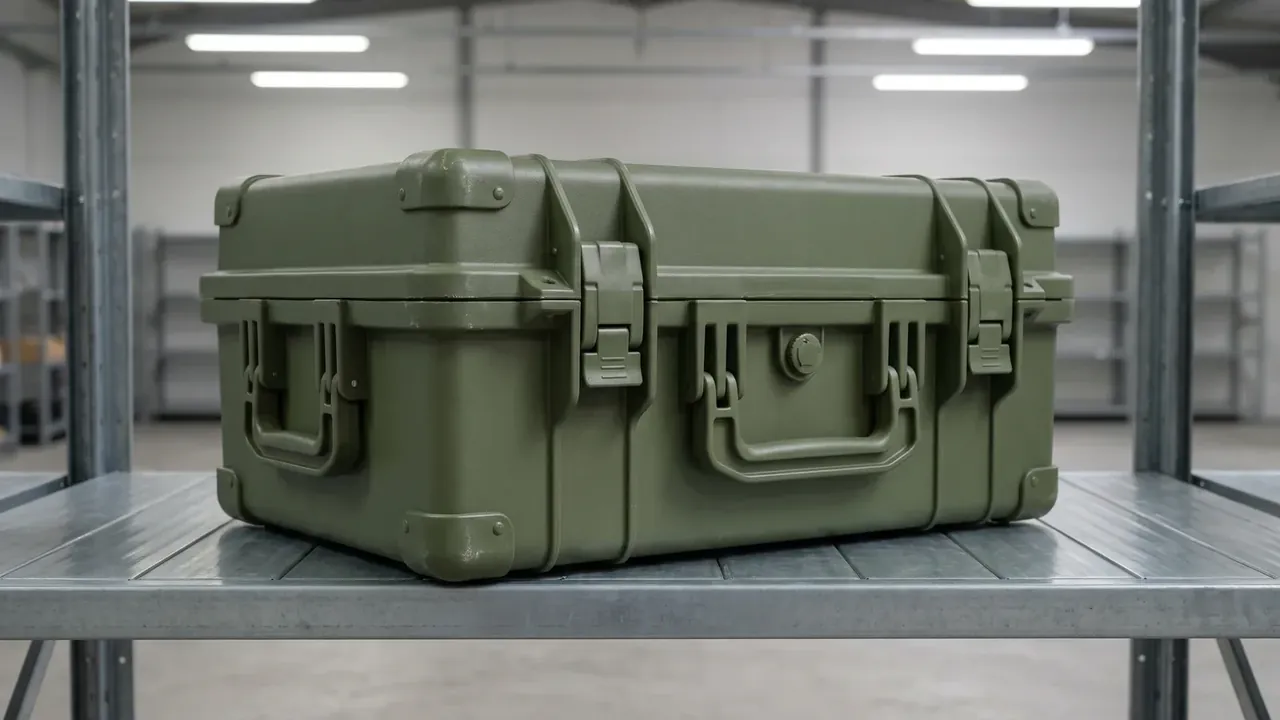
Quick answer: Medical device OEM/ODM plastic protective case runs four gates: 38k–120k RMB tooling, 25–35 days, 7 days to T1, MOQ 300–500.
Table of contents
- Design Review: The Three Documents
- Tooling: Sliders and Draft
- T1: Four Dimensions to Measure
- Production Release: Sampling and Records
- System Files a Medical Project Needs
- FAQ
1. Design Review: The Three Documents
The most expensive part of a medical tooling project is not the tool but the revision round: one unasked question costs three weeks after the trial shot. Review is the cheapest of the four gates.
The first document is the device drawing, carrying overall envelope, centre of gravity and support points. The envelope sets clearance, the centre of gravity decides which side the handle and hinge sit on, the support points decide where the tray carries load. A drawing without a centre of gravity gives a medical device OEM/ODM plastic protective case that hangs nose-heavy and lifts with the lid rim open.
The second is a cleaning and sterilisation statement. Wiping, immersion, UV and ethylene oxide ask for different materials and gaskets; one designed for wiping passes water in a week of immersion.
The third is annual volume plus the line interface. Volume sets the cavity count; the interface decides whether the base is flat or carries locating feet. Without it, neither tooling cost nor MOQ can be quoted honestly.
| Document | What it must state | What goes wrong without it |
|---|---|---|
| Device drawing | Envelope, centre of gravity, supports | Handle offset, nose-heavy body |
| Cleaning statement | Wipe, immersion or sterilisation | Wrong gasket, leaks in week one |
| Volume and interface | Annual quantity, line location | Cavity count and price float |
Three documents, and the review closes in two hours.
2. Tooling: Sliders and Draft
The costly decision at tooling is the slider. A medical device OEM/ODM plastic protective case carries undercuts in three places: handle root, latch seat and interior steps. Every slider adds cost and days, and inside a 25–35 day build it owns the critical path.
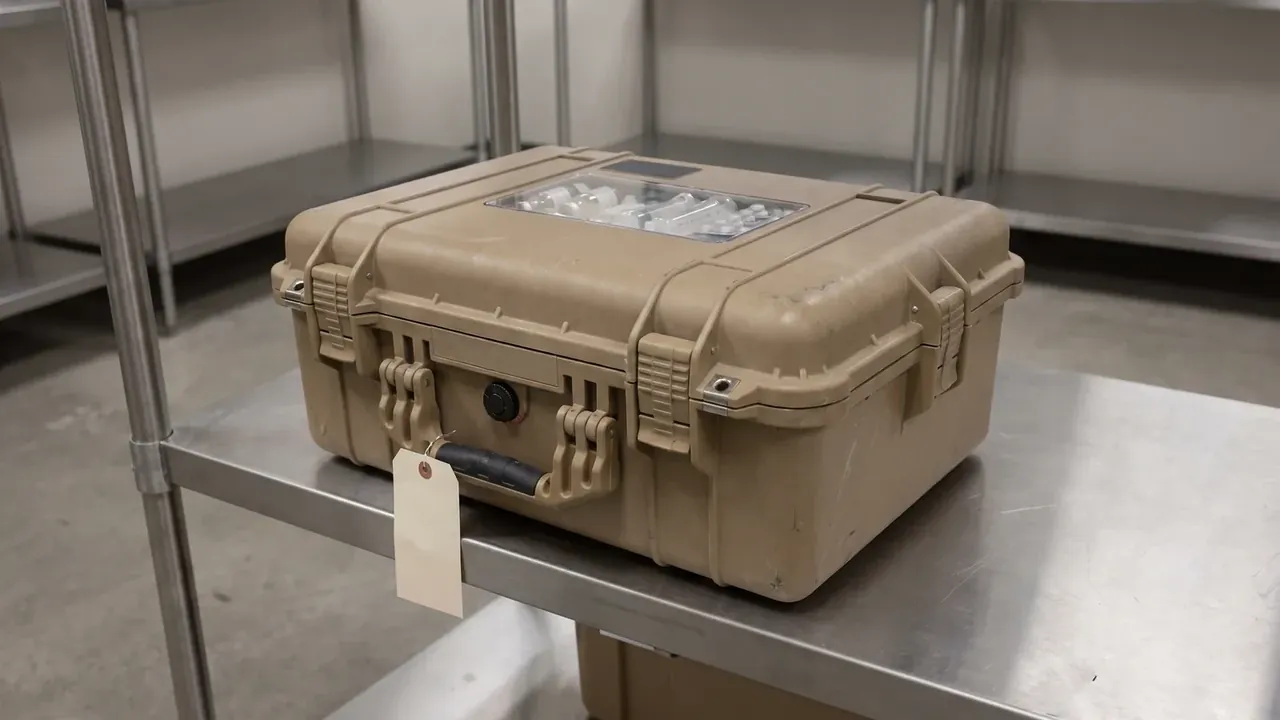
Three tests decide it: undercut depth, release direction and whether the face is seen. A deep front-face undercut needs a slider; a shallow internal one can be redesigned away or served by a lifter. The grain on a medical device OEM/ODM plastic protective case breaks wherever the parting line lands.
Draft follows the finish: 0.5° to 1° polished, 1° to 2° on fine grain, adding about 0.4° per 0.1 mm of grain depth. On a 2.5–3.0 mm wall a shallow draft shows as a white stress line when the tool opens.
The frame runs on 718H, pre-hardened at 33–38 HRC, so no further heat treatment is needed; slider faces are nitrided for wear.
| Undercut | Treatment | What it costs |
|---|---|---|
| Handle root | Internal slider | Tooling cost and days |
| Latch seat | Lifter | Ejector mark inside the cavity |
| Interior step | Redesign the undercut away | Customer must approve the shape |
| Front face | Slider plus a parting line | Grain interrupted at the line |
3. T1: Four Dimensions to Measure
T1 arrives in 7 days and should not be loaded with a device. Four dimensions come first, appearance second; let the shot rest 24 h at 23 °C, because a warm part reads small.
One: lid-to-body gap at eight points around the rim. Two: latch holding force on a gauge. Three: wall thickness at six points. Four: the diagonal difference, where 1 mm or more means one corner closes first.
Tooling rule: after T1, a lid-to-body gap above 0.8 mm or a latch force under 180 N means the tool goes back for correction, not into release.
Shrinkage must become a number: ABS at 0.4%–0.7% on a 480 mm body means cutting the cavity about 2.4 mm larger. Run the same block in PP at 1.0%–2.5% and every dimension moves, so a medical device OEM/ODM plastic protective case cannot reuse it.
| Dimension | Method | Limit |
|---|---|---|
| Lid-body gap | Eight points, feeler gauge | 0.8 mm or less |
| Latch force | Gauge on every sample | 180 N or more |
| Wall thickness | Six points, caliper or ultrasonic | 2.5–3.0 mm |
| Diagonal | Once on lid, once on body | Within 1 mm |
Two of the four out of limit and the tool is corrected; machine settings move pressure, not a cavity.
4. Production Release: Sampling and Records
Release of a medical device OEM/ODM plastic protective case is decided on records, not samples: a sample proves one part, records prove the next thousand. The table holds the first article report, tool history and material lot sheet.
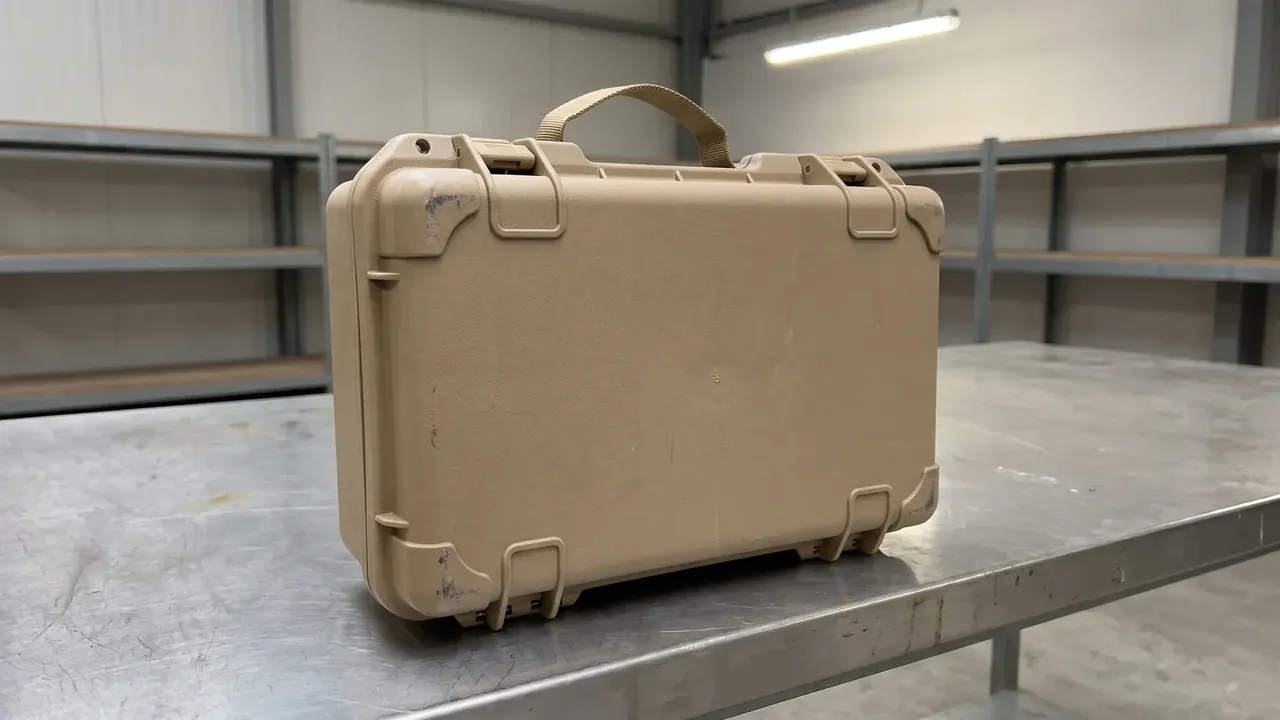
Sampling runs at AQL 1.0, general level II: a 300–500 lot lands on 50 pieces with Ac 1 and Re 2, so two defectives send the lot back. Full inspection would cost more than the tool.
Five records: first article dimensions, trial and revision notes, material grade and lot, tool maintenance, and the raw data per lot. Retention follows the device lifecycle, since a registration change brings the auditor back.
Revision rounds usually land between 2 and 3. The first corrects the lid gap, the second the latch force, and the third is nearly always appearance.
5. System Files a Medical Project Needs
A medical project carries one more layer of paperwork. ISO 13485 asks for records across design input, output, review, verification and change, and a customer audit follows exactly that line. Drawing changes on a medical device OEM/ODM plastic protective case need a revision number and an effective date.
For electrically active devices the shell supports IEC 60601-1. The number belongs in the specification; leakage current and dielectric limits are set by the device maker, and the case factory does not sign that judgement.
Keep OEM and ODM apart. In OEM the customer supplies the drawing and the factory owns tooling and production, so design responsibility stays with the customer; in ODM the factory owns structure and appearance and carries the design. Same file set, different signature.
Paperwork is not for the auditor. When a revision round goes wrong, the document that pulls the project back is usually the original design input.
Conclusion
The four gates only work in order: review fixes structure, tooling fixes cost, T1 fixes dimensions, release fixes volume. A medical device OEM/ODM plastic protective case is rarely expensive because of the tool, but because of the revision round; one more question buys back three weeks.
This article discusses only the container (case body) side of specifications and design intent, and does not cover any handling, loading or use of the contents.
Related Reading
- What to negotiate when buying medical cases
- Standards and paperwork behind a medical case
- How to write a medical case specification
- Cartons versus hard cases for e-commerce
Related Products
- 8 Series — Gun Cases; Military Equipment Cases; Camera Equipment Cases; Drone Cases; Watch Cases; Knife Cases; First Aid Cases; Electronics Equipment Cases
- WL8-2812 PP Gun Case — model WL8-2812
- All protective cases and toolboxes: 7 series, 158 models