

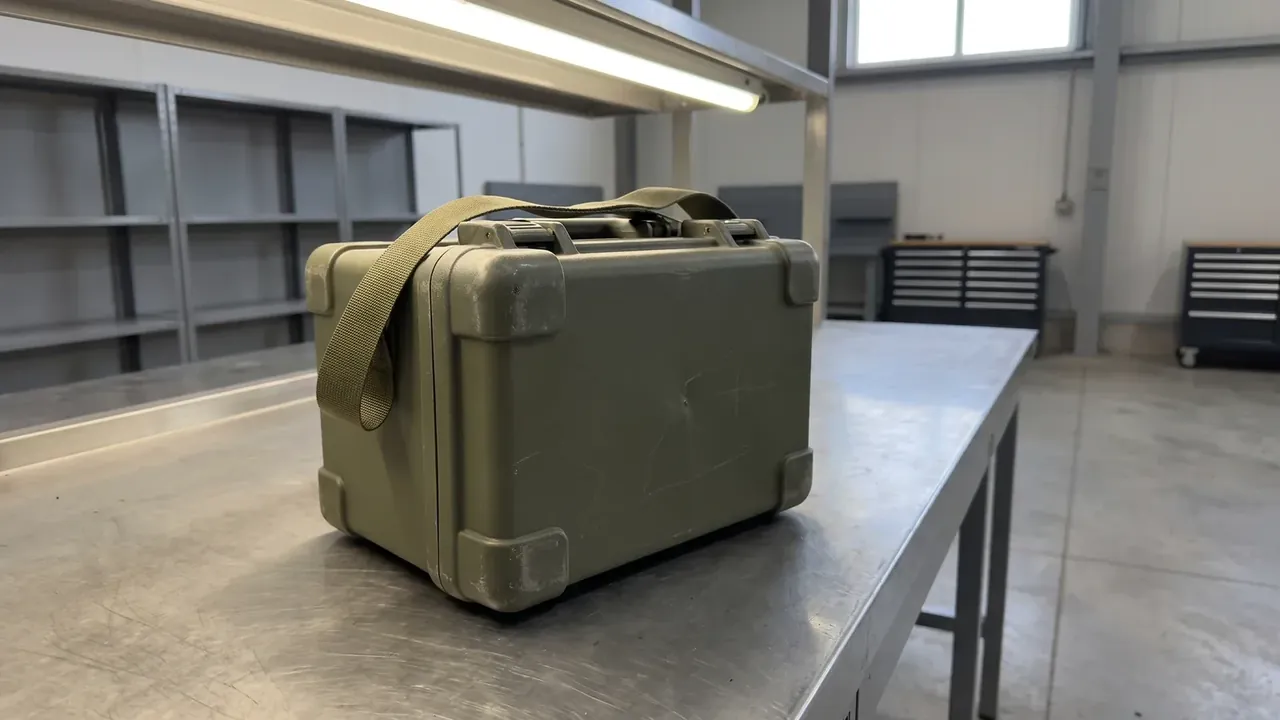
Quick answer:Three deductions at 10 mm per side and 15 percent foam compression leave a medical equipment case shell 35 to 50 mm larger than the cavity it offers, with usable volume near 68 percent. A bare shell weighs 3.8 to 6.5 kg before anything goes in, so weigh it against the load you intend to carry.
Table of contents
- Measure the Instrument Before the Case
- Three Deductions from Shell to Cavity
- Outer Dimensions and Transport Limits
- Depth and Lid Opening Angle
- Weight and Carrying Distance
- FAQ
1. Measure the Instrument Before the Case
A wrong size is usually not a case that is too small; it is a case whose outer dimensions were mistaken for a cavity. A catalogue figure of 460 by 350 by 210 mm includes bumpers and handle bosses, and walls, radii and latch seats take it down to about 400 by 300 by 180 mm.
Start with the largest projection. A monitor body is 340 by 280 mm, but its handle, connectors and battery hatch stick out and belong in that figure, or the lid will not seat. Next the high point: knobs, fins and bracket mounts add 15 to 25 mm over nominal thickness, which decides whether the lid needs extra depth.
Cables come third. An 8 mm lead wound into a 150 mm coil claims a corner on its own, so settle early whether the cavity needs a side channel.
2. Three Deductions from Shell to Cavity
Subtracting one wall from the outside is not a cavity calculation. Work inward in three steps: wall plus corner radius, 3 to 5 mm of wall and a 15 to 25 mm radius, removing 20 mm from length and width; foam compressed 15 percent, where a 20 mm layer stays 20 mm; finger room of 10 mm per side.
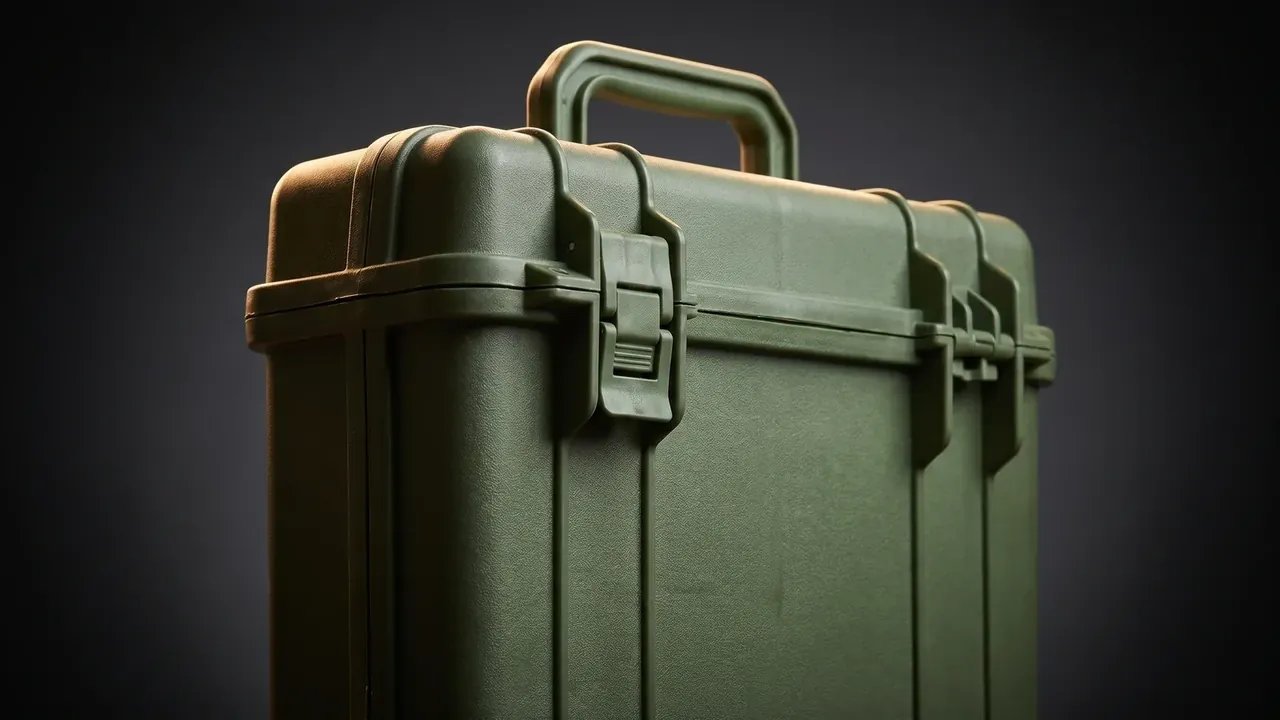
Run them in a fixed order and the numbers fall out without trial fitting.
| Step | Deduction | Per side | Length |
|---|---|---|---|
| First | wall and corner radius | 20 mm | 440 mm shell, 400 mm cavity |
| Second | foam insert | 20 mm | 400 mm down to 360 mm |
| Third | finger room | 10 mm | 360 mm down to a 340 mm seat |
A 340 mm instrument then sits in a 400 mm cavity inside a 440 mm shell. Usable volume lands near 68 percent, the other 32 percent being walls, radii, latch seats and the handle recess, and that ratio runs backwards to size a cavity.
Narrow instruments bend the rule: 10 mm of finger room on one side of the length, both sides of the width, plus 5 mm of foam so the item does not shift sideways.
3. Outer Dimensions and Transport Limits
Past a point, transport dictates the outer size rather than the instrument. The 35 to 50 mm between shell and cavity is wall, radius, bumper and latch seat together; shave 10 mm and the wall nears 2.5 mm, which splits at the corner on the first drop.
| Mode | Single-unit limit | A 440 by 370 by 230 mm case | What the size costs |
|---|---|---|---|
| Cabin carry | 115 cm across three sides | hand luggage | no outer carton |
| Parcel road freight | longest side under 100 cm | ships singly, corner guards | carton adds 30 mm |
| Air freight | 30 kg per piece | six per pallet layer | pallet takes 1200 by 1000 mm |
| Box van | 2.4 m internal width | five side by side | 50 mm gaps for straps |
Pallets and van walls are the real ceiling: a 1200 by 1000 mm pallet takes six 440 mm cases per layer, twelve in two layers, under 1.6 m.
At the same 12 kg payload, 60 mm more length and width can add 3 to 5 kg of volumetric weight.
4. Depth and Lid Opening Angle
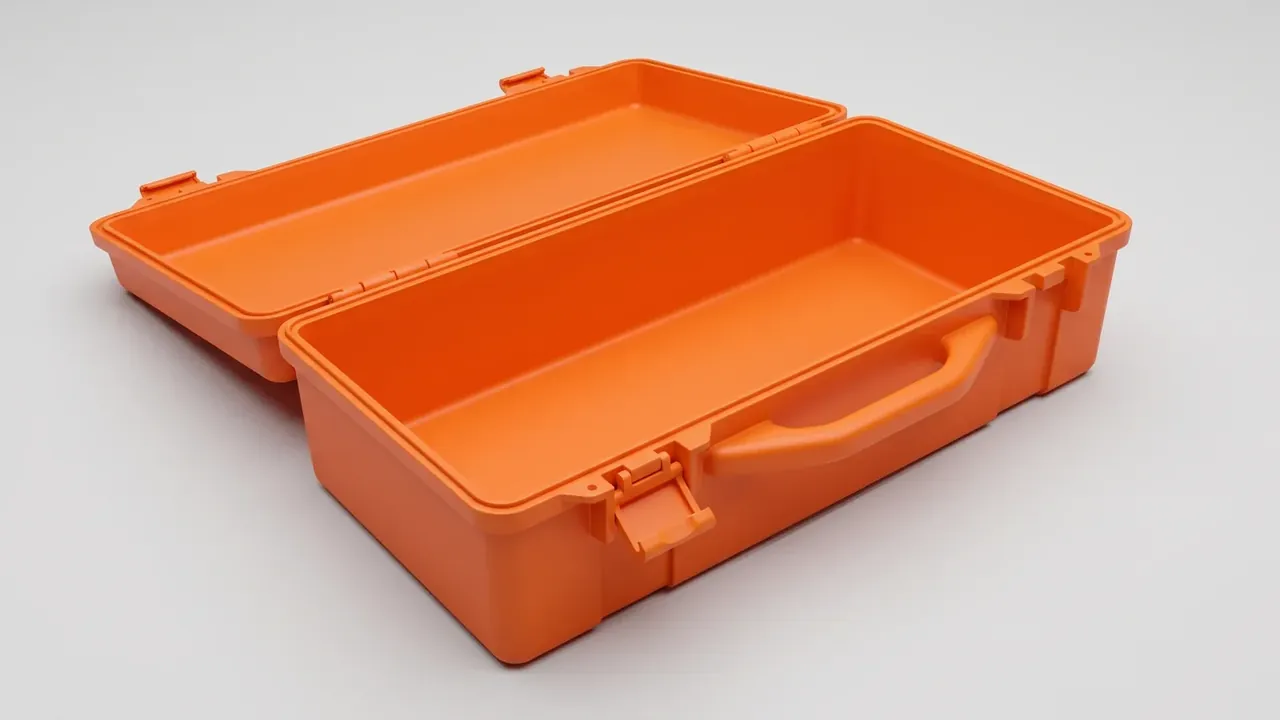
Depth hides behind adequate length and width. A 150 mm instrument wants a 190 mm cavity, the extra 40 mm split between foam layers and fingers; at 170 mm the foam compresses to 10 mm and no cushion is left.
| Tier | Cavity length, width, depth | Typical instruments | Loaded weight |
|---|---|---|---|
| Small | 300 by 220 by 150 mm | oximeter, ear thermometer, probe box | about 4 kg |
| Mid | 400 by 330 by 190 mm | monitor, infusion pump, defibrillator kit | about 12 kg |
| Large | 520 by 400 by 230 mm | portable ultrasound, transport ventilator | about 18 kg |
The lid stop goes to 105 degrees, 15 past square, where the centre of gravity passes the hinge line and the lid stays put instead of falling back on a hand. It leaves 20 mm between lid foam and instrument, and on a lid under 60 mm it exposes the pockets without lifting the case.
Bench space counts: opened to 105 degrees, a 440 mm case reaches 210 mm behind the hinge and meets the wall on a worktop under 600 mm deep.
5. Weight and Carrying Distance
A shell of 3.8 to 6.5 kg is the usual range, rotomoulded heavy and injection moulded light, and it has to be read with the payload: each size step adds about 1 kg empty and more loaded, while distance falls faster than weight rises.
Handle to centre of gravity, 120 mm on a mid-size case, predicts the carry. At 12 kg and 120 mm one hand tires within 200 m; at an 80 mm offset the same load goes twice as far.
Distance splits three ways: one carrier under 50 m, one carrier changing hands under 200 m, two carriers past 500 m. That last band caps width near 300 mm, or a wide case catches the door frame.
Related Reading
- Usable volume and corner loss
- Volume efficiency: plastic case against wooden crate
- Medical case selection checklist
- Common sizes for laboratory diagnostic equipment cases
Conclusion
Size selection for a medical equipment case runs instrument, deductions, then transport and carry checks. Skip any step and the case either will not close or will close and refuse to move.
This article covers only the case side of specification and design.
Related Products
- 8 Series — Gun Cases; Military Equipment Cases; Camera Equipment Cases; Drone Cases; Watch Cases; Knife Cases; First Aid Cases; Electronics Equipment Cases
- WL8-2812 PP Gun Case — model WL8-2812
- All protective cases and toolboxes: 7 series, 158 models