

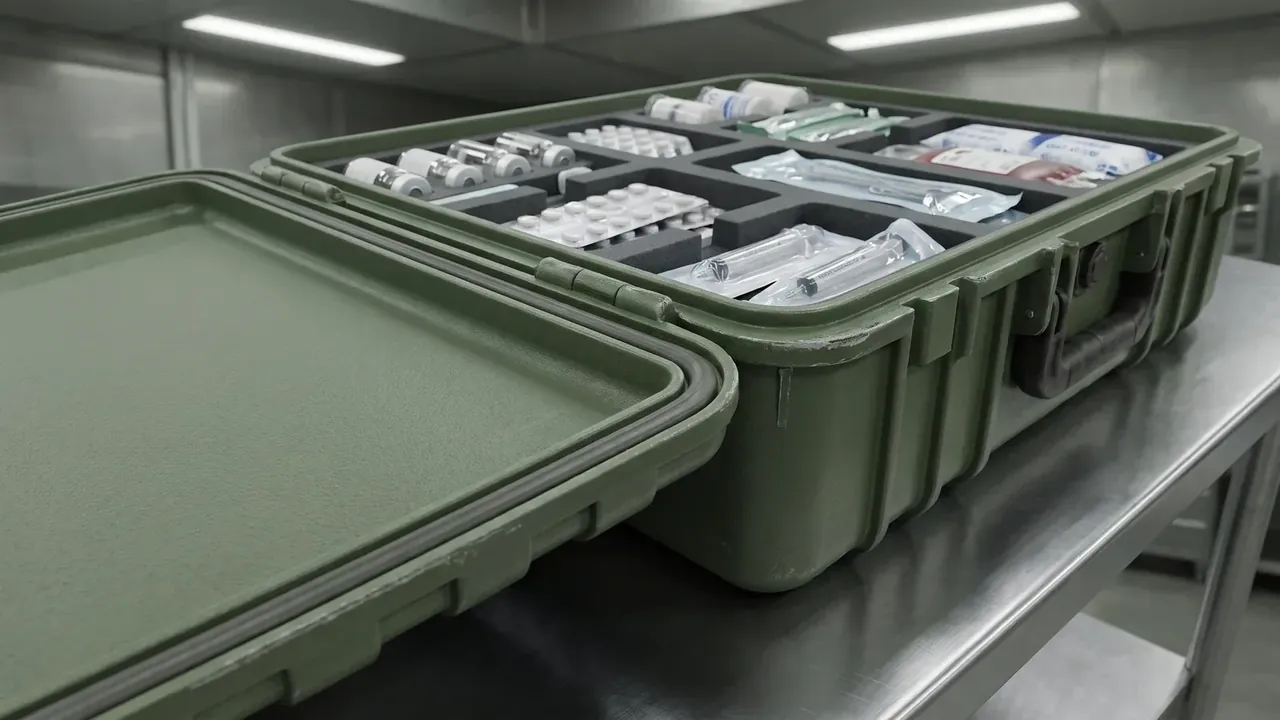
Quick answer:A Medical Equipment Field Service Case splits 22 L into three layers that never mix: 8 L of tools, 9 L of spares, 5 L of consumables. Tools are fixed by hand-feel, spares sealed against moisture and static, consumables ordered by expiry; at a 200 km radius that ordering is what saves the visit.
Table of contents
- A field service case carries three families of kit
- Fixing the tool layer
- Keeping spares dry and static-safe
- Draw order in the consumable layer
- Can the lid double as a bench
- FAQ
1. A field service case carries three families of kit
The hard part is not packing more; it is finding everything in one pass once you stand in front of the customer.
A visit runs 4 h, about 1.5 h on the 200 km round trip, leaving 2 h of work plus paperwork. A Medical Equipment Field Service Case divides 22 L three ways: 8 L of tools holding 18 pieces, 9 L of spares covering 12 part families, 5 L of consumables. Tools eat space, spares eat slots, consumables eat thickness.
| Layer | Holds | Count and limits | Fixing | Replenish rhythm |
|---|---|---|---|---|
| Tools, 8 L | Drivers, torque wrench, hex keys, meter | 18 pieces, longest 220 mm | Carved EVA plus elastic | Quarterly, replace gaps |
| Spares, 9 L | Boards, sensors, seals, filters, cells | 12 families, none over 0.5 kg | Slots with static bags | Review every 3 visits |
| Consumables, 5 L | Gloves, dressings, syringes, ties, labels | 6 routine types | Upright, labels up | Top up each trip |
A 5 mm loose divider separates the layers and lifts out whole, so counting spares never means unloading tools. It stops 15 mm short of the lid, letting air move between layers instead of trapping condensate.
2. Fixing the tool layer
Of the 18 pieces in a Medical Equipment Field Service Case, the longest hex key runs 220 mm and the shortest bit 45 mm. Layer height follows the long item; slot width adds 2 mm to the tool diameter so a gloved hand can still pinch it out.
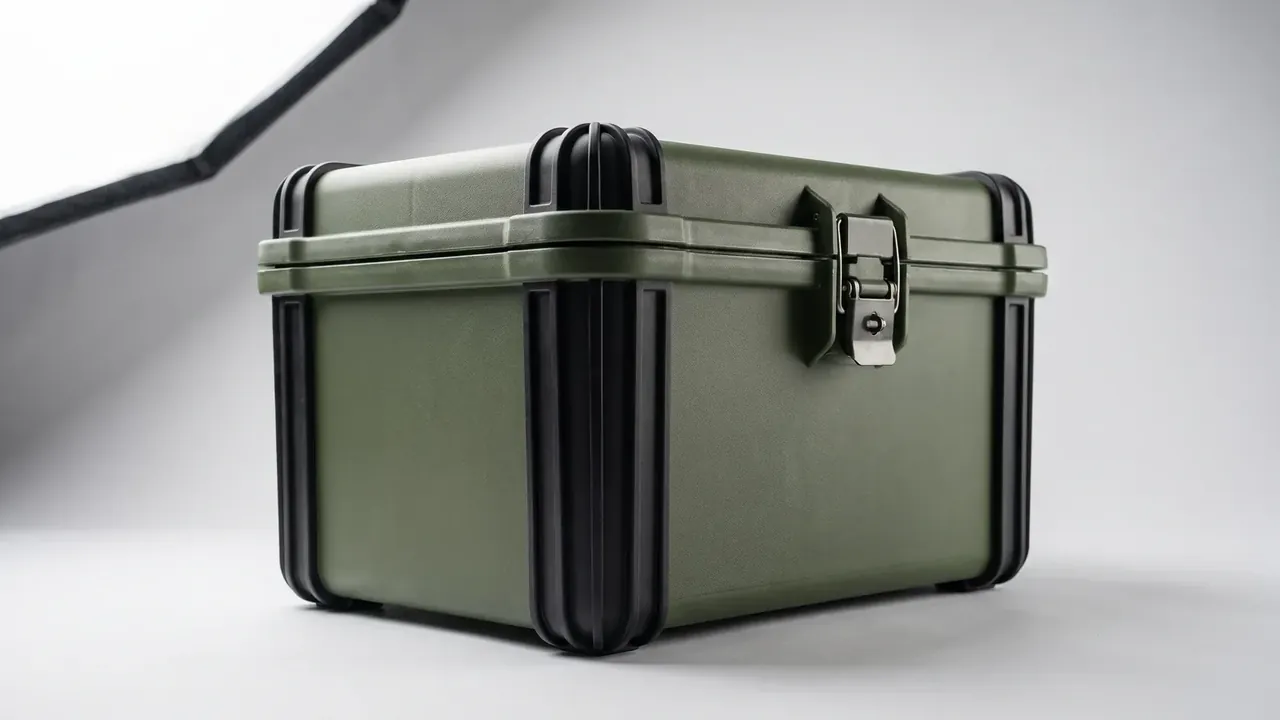
Three fixing methods compete, and the question is not which looks tidy but whether the tool is still in its slot after rough road. Carved EVA holds by the spring of the material: density 24–180 kg/m³, 45 kg/m³ the usual pick, hardness 15–65 Shore C, compression stress 32–170 kPa.
| Method | Draw time | Ride-through | Change cost | Tools it suits |
|---|---|---|---|---|
| Carved EVA | 1–2 s | Good | Medium, recut | Wrenches, pliers |
| Elastic webbing | 2–3 s | Fair | Low | Drivers, bits, probes |
| Magnetic strip | Under 1 s | Poor | Low | Small bits |
A Medical Equipment Field Service Case carves EVA for the base, adds webbing over long thin items, and keeps magnets to three small pieces at most. Van vibration loosens a magnet first, dropping a tool onto the spares below. Cutters get slots 5 mm deeper than the tool, and the lid pad closes the sandwich.
3. Keeping spares dry and static-safe
Of the 12 families, boards and sensors fear static, seals and filters fear moisture, cells fear both heat and damp. Three fears mean three packs.
Static damage rarely shows at once: it shifts a component's parameters, the part works on install, and an alarm appears two weeks later. A Medical Equipment Field Service Case bags each board in antistatic film with conductive foam between bags. Humidity is held at 40%–60%, since below 40% charge builds and above 60% seals absorb water. A three-spot card turns at 40%, 50% and 60%.
Rubber parts suffer most from long compression, so the spare layer skips clamp-down fixing: shallow pockets, soft dividers, 3 mm between items. A 2 mm closed-cell mat underneath blocks condensate from the shell floor.
4. Draw order in the consumable layer
Consumables are sequenced by expiry, not by type: nearest date outside, so the hand meets the oldest stock first.
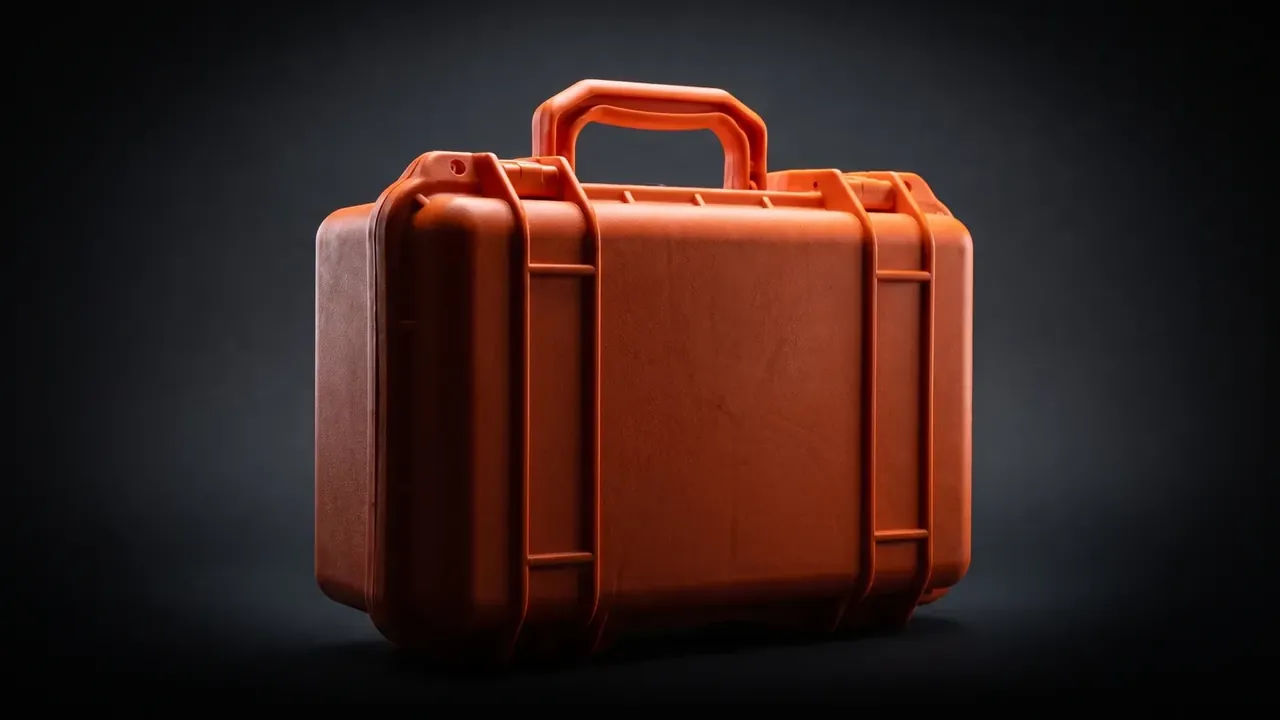
Upright beats flat. Glove boxes stand on end, single-use connectors sit nose down in tall pockets, labels and ties roll into the side channel. In a Medical Equipment Field Service Case the layer is only 60 mm tall, which forces upright storage; anything laid flat pushes the lid up.
| Consumable | Use per call | Reorder trigger | Minimum on board |
|---|---|---|---|
| Disposable gloves | 4–6 pairs | 2 pairs left | 2 pairs |
| Dressings and tape | 3–5 pieces | 3 left | 3 pieces |
| Syringes and connectors | 2–4 pieces | 2 left | 2 pieces |
| Labels and ties | 5–8 pieces | 5 left | 5 pieces |
The trigger sits one step above the minimum to cover a single visit's lag. A Medical Equipment Field Service Case tops up after every trip rather than running to empty.
5. Can the lid double as a bench
In a Medical Equipment Field Service Case the lid holds things but is not a bench. On a 22 L shell it covers under 0.3 m², while a working mat runs about 0.6 m² at 600 mm by 1000 mm, so the lid covers barely half.
Staging is what it does well: screws into a small tray, the meter stood in a corner, a harness clear of the floor. Soldering still wants the case flat and the mat beside it. The lid pad presses on tools when closed and takes a removed panel when open.
Flatness matters too: latch load bows the middle, and screws roll into the hollow. Height matters more, since a case on the floor means half an hour crouched, so a 400 mm stand earns its space.
Related Reading
- Field medical equipment case layout
- How to specify a service case
- Static-safe cases for spares
- Where field service cases get used
Conclusion
Field efficiency lives in the thirty seconds after the lid opens. A Medical Equipment Field Service Case settles that with three layers: tools held in place, spares sealed against damp and static, consumables queued by date. Keep each layer to its job and 4 h on site stays work time.
This article covers the specification and design meaning on the case side only.
Related Products
- 8 Series — Gun Cases; Military Equipment Cases; Camera Equipment Cases; Drone Cases; Watch Cases; Knife Cases; First Aid Cases; Electronics Equipment Cases
- WL8-2812 PP Gun Case — model WL8-2812
- All protective cases and toolboxes: 7 series, 158 models