

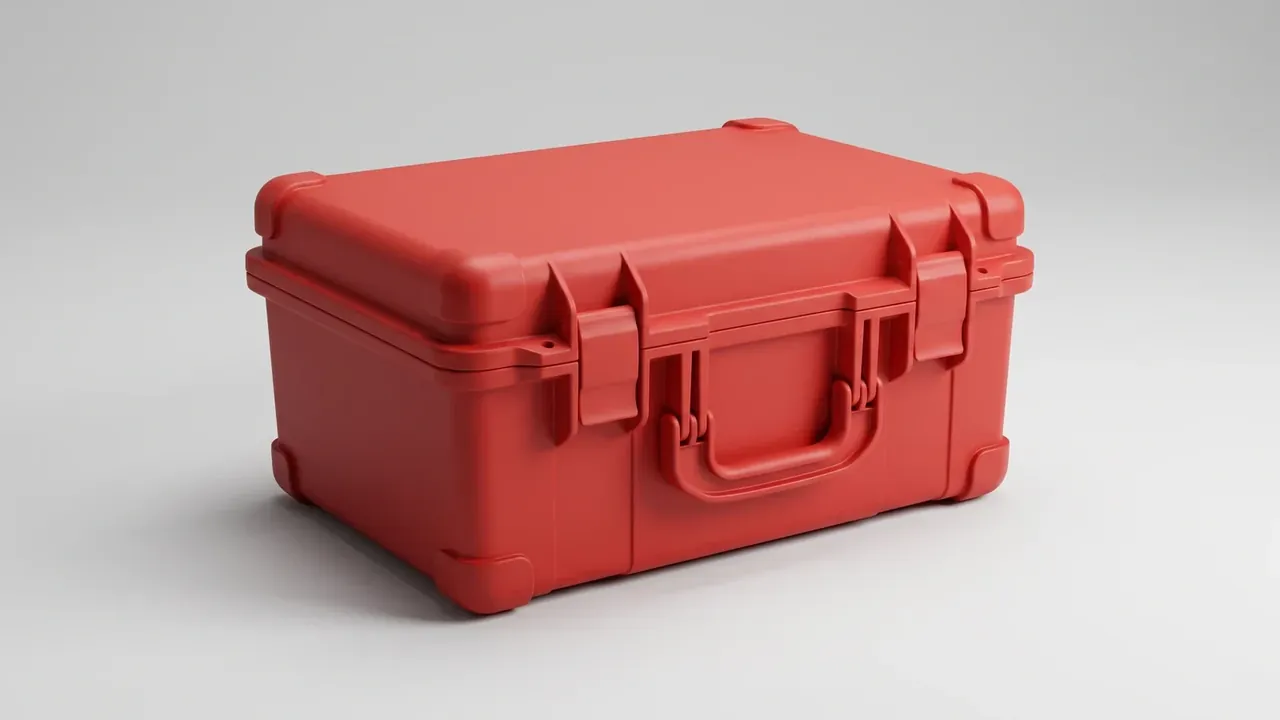
Quick answer: A medical first aid case passes review on three reproducible numbers, not on how solid the shell feels: gasket compression left after 500 alcohol wipes, whether the label still reads at 3 m, and whether consumables, drugs and seals each carry a separate expiry date.
Table of contents
- Three documents an auditor asks for
- Sealing: alcohol ages a gasket faster than water
- Labelling: one label against two wipes a day
- Expiry: three clocks that end on different days
- Monthly inspection in six steps
- FAQ
1. Three documents an auditor asks for
Most medical first aid cases are not registered as devices themselves, but a hospital manages one as an accessory of the devices inside, so purchasing and infection control both sign the file. The review asks for three documents: a resin grade declaration, a seal verification record and a disinfection tolerance record. The third goes missing because it is the only one a supplier cannot issue from a template.
The grade has to reach a specific number. Homopolymer and copolymer PP differ in chemical resistance, and ABS keeps its impact strength against chlorine only after modification; a declaration reading engineering plastic declares nothing. Ask for the grade code and compare it with the agent the ward uses.
Sealing is proven by an IP report or by the buyer's air test: 20 kPa held 60 seconds, accepting 0.5 kPa or less, which repeats on every batch rather than once at type test. Disinfection tolerance is arithmetic: 75 percent ethanol twice a day is 730 wipes a year.
2. Sealing: alcohol ages a gasket faster than water
An IP67 rating describes immersion; a ward does wiping. Water loads the whole profile, alcohol dissolves the cord surface.
A typical build runs 50 to 55 Shore A silicone, a 4 mm cord in a 3 mm groove, closed to 3 mm for 25 percent compression. Ethanol strips the low-molecular oil first and the face turns white. At 500 wipes the cord measures 3.6 mm, compression falls to 10 percent in the same groove, and the lid seam opens a 0.2 mm light band.
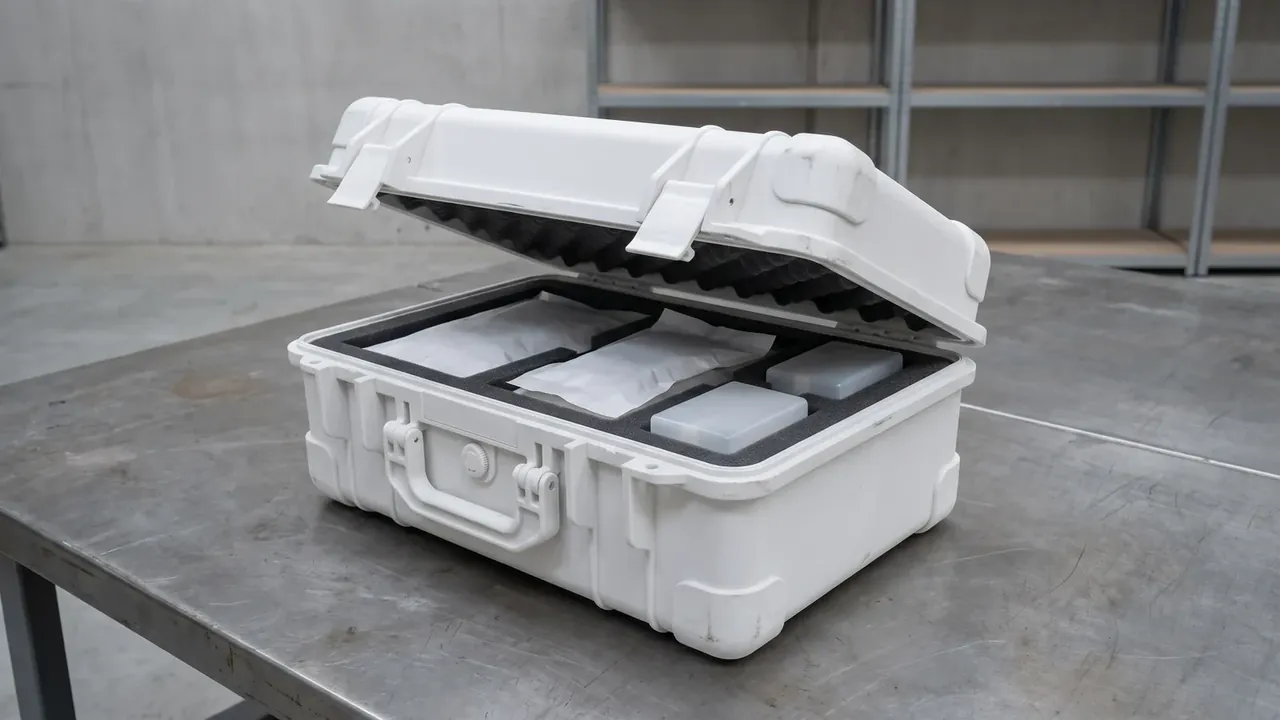
| Method | Working strength | Effect on the seal | Suggested use |
|---|---|---|---|
| Ethanol wipe | 75 percent | Face whitens, compression halves by 500 wipes | Daily, grease quarterly |
| Chlorine | 1000 mg/L free | Pits a 304 pin in 48 hours | After contamination, rinse after |
| Quaternary ammonium | Per label | Mild on silicone, leaves a tacky film | Rotate with ethanol |
| Hydrogen peroxide | 3 percent | Cord swells about 3 percent | Not for routine wiping |
Chlorine brings a metal problem: at 1000 mg/L free chlorine a 304 latch pin pits in 48 hours, while a 316 pin takes 200 hours to show the first rust point, which is why coastal hospitals fail cases that still pass a water test.
Maintenance is two actions: 0.2 g of silicone grease into the groove each quarter, and the lid left open 30 minutes after cleaning.
3. Labelling: one label against two wipes a day
Labels fail in order: the edge lifts, the print fades, the whole label lets go. Synthetic paper with acrylic adhesive survives about 200 ethanol wipes; coated paper lifts at 30, which decides whether the case is identifiable in year two.
Eight fields are the minimum: case number, department, owner, instrument list, inspection date, restock date, disinfection status, emergency contact. A 5 mm character height reads at 3 m.
| Field | Acceptable entry | Common gap |
|---|---|---|
| Case number | Department code plus serial, e.g. ER-07 | Serial only, duplicates across sites |
| Instrument list | Name plus quantity, matching the tray | Category only, no count |
| Inspection date | Date plus initials | Month only |
| Restock date | Exact date, flagged 30 days ahead | Written as next inspection |
| Disinfection status | Three-colour tag with date | Colour with no date |
Placement fails more often than content. Put the label on the lid face, upper left, 15 mm clear of the latch and 15 mm clear of the handle, away from the patch a thumb presses on opening. A side-wall label wears off first in a vehicle.
Colour codes read faster than text. Green for in service, yellow for awaiting restock, red for sealed pending inspection. A three-colour sticker costs about 0.3 CNY.
4. Expiry: three clocks that end on different days
Three clocks run in one case and their cycles differ by a factor of three, so the shortest is the one missed.
- Consumables: 3 years sealed, 30 days once opened
- Drugs: 12 to 24 months by label, 28 days after opening
- Seals: gasket 3 years, silicone grease 24 months
- Tags: 12 months, replaced on fading rather than on date
Log the date on receipt, confirm monthly, turn the tag yellow 30 days out and red on the day. For drugs the smallest package sets the date: once a bulk pack is decanted, the 28-day clock overrides the remaining shelf life.
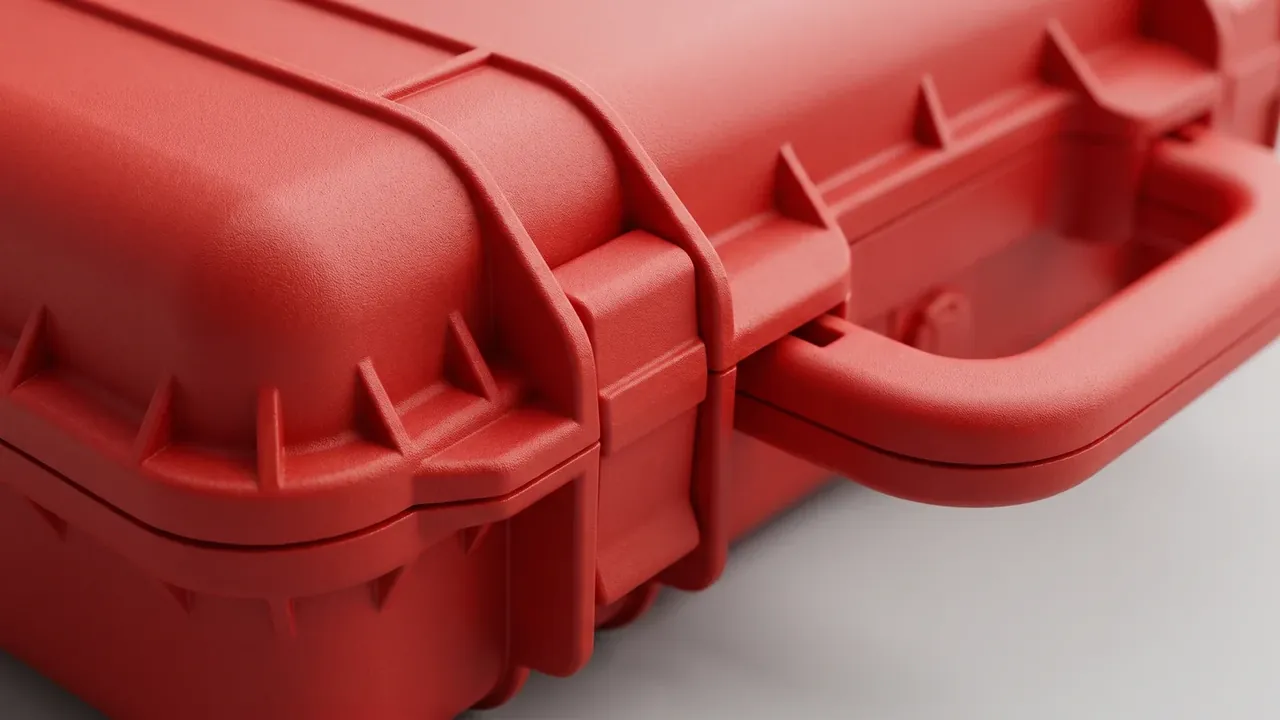
5. Monthly inspection in six steps
The check runs in a fixed order and takes under 12 minutes per case:
- Read the colour tag and label date before opening
- Count against the list, log shortages on the spot
- Feel the gasket for flat spots, cracks and whitening
- Air test at 20 kPa for 60 seconds
- Wipe inside and out, leave open 30 minutes
- Close, update the date and the colour tag
| Item | Criterion | Action if out |
|---|---|---|
| Gasket compression | 20 to 30 percent when closed | Replace below 20 percent |
| Air hold | 0.5 kPa or less at 20 kPa in 60 s | Retest once, then replace |
| Latch force | 80 to 120 N per latch | Adjust hinge above, replace below |
| Lid gap | 0.4 mm or less when latched | Check groove first, then hinge |
| Label legibility | Complete at 3 m | Replace on lifting, no re-gluing |
Storage rules only work when written down: 5 to 30 °C, humidity under 70 percent, no more than three cases stacked. Beside a radiator an ABS body yellows within a year and gasket hardness climbs 5 points. Cleaning runs in reverse of disinfection: water, agent for its contact time, then water again, because chlorine left in the groove overnight hardens the cord.
Conclusion
Compliance for a medical first aid case is three lines that re-check: compression above 20 percent after 500 wipes, a label readable at 3 m, and separate expiry warnings for consumables, drugs and seals. Put those on the monthly sheet and the audit becomes a matter of pulling records.
This article discusses only the container (case body) side of specifications and design intent, and does not cover any handling, loading or use of the contents.
Related Reading
- How a medical case is layered inside
- Writing specifications for a first aid case
- Case configuration across three medical settings
- Selection criteria for emergency supply cases
Related Products
- 8 Series — Gun Cases; Military Equipment Cases; Camera Equipment Cases; Drone Cases; Watch Cases; Knife Cases; First Aid Cases; Electronics Equipment Cases
- WL8-2812 PP Gun Case — model WL8-2812
- All protective cases and toolboxes: 7 series, 158 models