

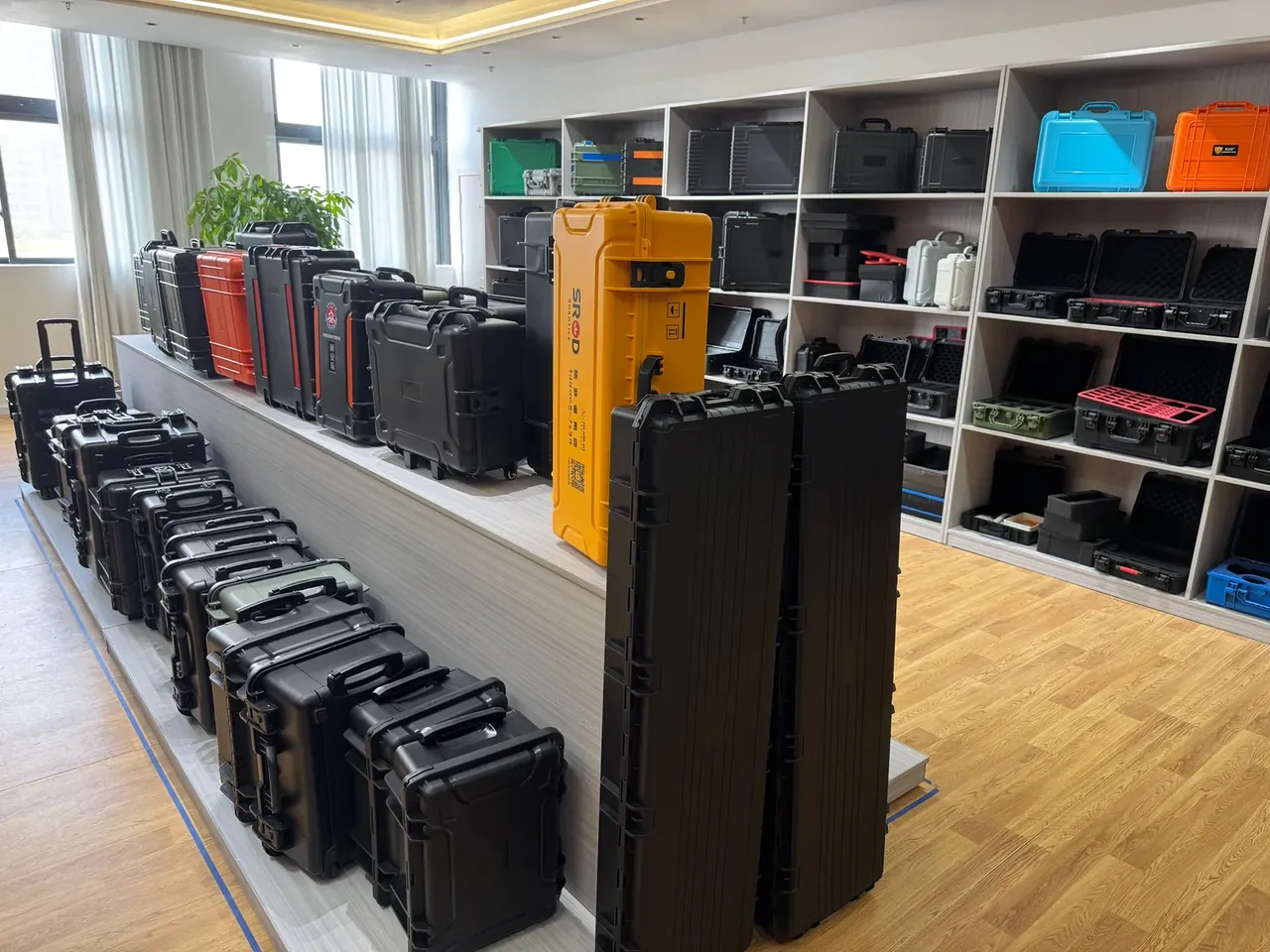
Quick answer: A Medical refrigerated reagent latch briefcase holds 2 to 8 °C for 8 hours at 6.8 kg loaded, on a 3.0 mm wall at 30 percent gasket squeeze.
Table of contents
- Temperature window and case-side division
- What a 3.0 mm wall does for eight hours
- Clamp travel behind 30 percent squeeze
- Warm-up from a 30 second opening
- Logger pocket and pack bay partition
- FAQ
1. Temperature window and case-side division
A lid lifted and set back costs something in a 2 to 8 °C band. Every opening spills cold air and leaves the packs to repay it. The Medical refrigerated reagent latch briefcase is built around that debt: close fast, clamp firm, stay open briefly.
Four jobs sit in four places. Shell and lid block heat, splash and knocks; the liner holds cold air; the bay stores cold; the pocket keeps the record. In the Medical refrigerated reagent latch briefcase, the 400 by 300 by 180 mm outer and the 340 by 240 by 120 mm cavity sit 3.0 mm of wall and one rib ring apart.
| Case zone | Job it carries | Value assigned |
|---|---|---|
| Shell and lid | heat, splash, knocks | 3.0 mm wall |
| Rim seal line | gap breathing | 30 percent squeeze |
| Pack bay partition | cold in one zone | 8 mm divider |
| Logger pocket | cavity record | 15 mm off the wall |
2. What a 3.0 mm wall does for eight hours
Polypropylene runs 0.12 to 0.24 W/(m·K), so a solid 3.0 mm wall resists little; the eight hours come mostly from the air behind it and the foam liner. Thinner, and the Medical refrigerated reagent latch briefcase distorts at 6.8 kg loaded, pulling the rim seal out of line. Thicker, and the empty shell passes 2.2 kg and a 4.6 kg load turns awkward.
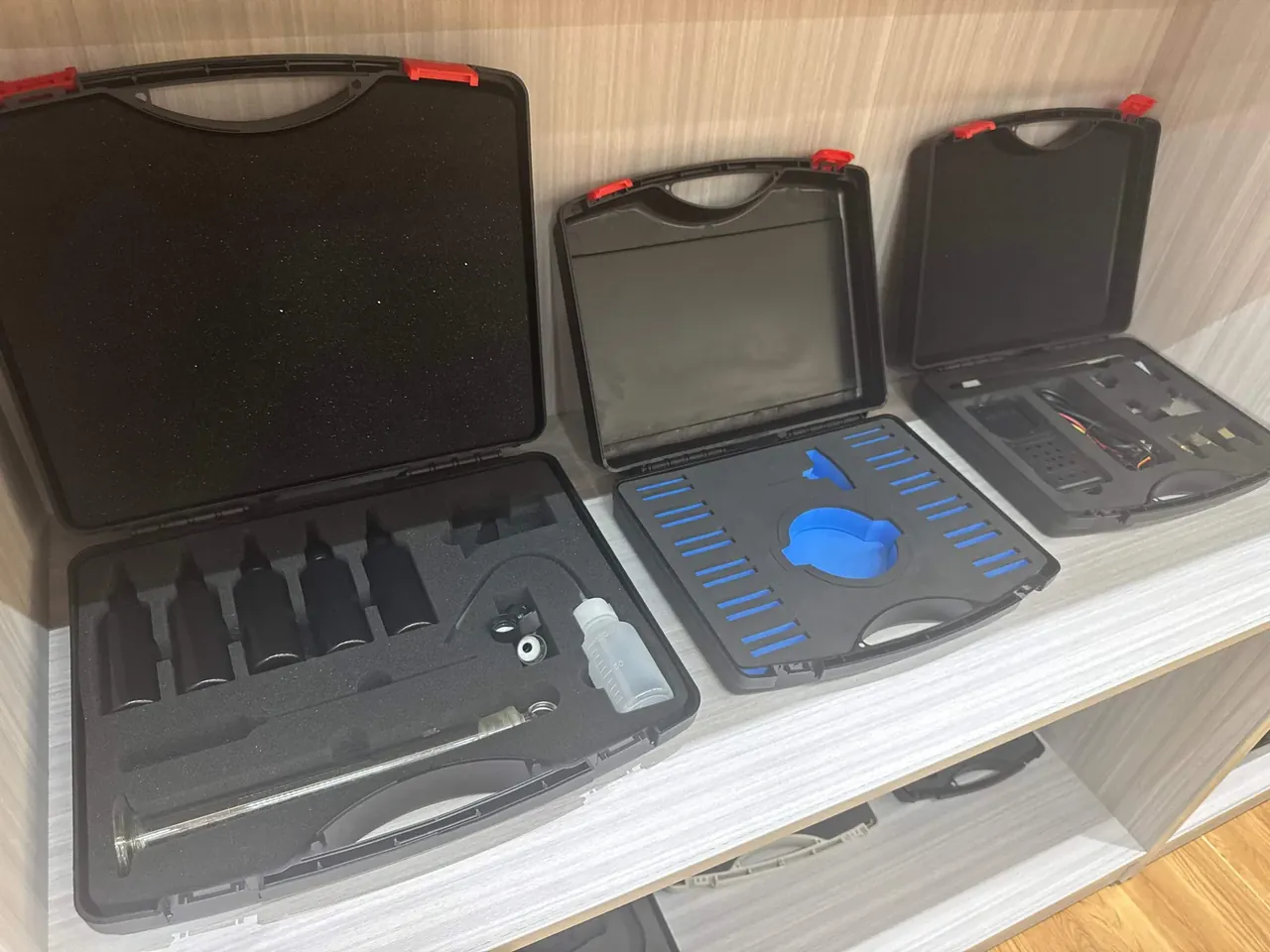
Moulding adds a limit. Polypropylene shrinks 1.5 to 2.5 percent, and a uniform wall lets that run evenly, so the rim stays flat. Uneven shrink shows as a gasket that will not sit down, never as a cosmetic fault. Liners measure 25 mm in the lid, 20 mm in the base.
Eight hours is not one variable. The cavity is about 9.8 L, leaving some 5 L of air after a 4.6 kg load. With ice at 334 kJ/kg, stored cold against wall leakage sets the curve, and a 6 K band punishes leakage.
3. Clamp travel behind 30 percent squeeze
Clamp travel is how far the lid is pulled onto the shell once catches close, and it sets how far the gasket flattens. An 8 mm section pressed to 5.6 mm is at 30 percent squeeze, the top of the 20 to 30 percent range for static seals. Shallower, contact stress falls and a 6 K gradient breathes through. Deeper, the rubber takes a set.
| Clamp travel set | Gasket height after closing | Seal result and feel |
|---|---|---|
| 2.4 mm, 30 percent squeeze | 5.6 mm | firm contact, heavier opening |
| 2.0 mm, 25 percent squeeze | 6.0 mm | middle value, holds in tolerance |
| 1.6 mm, 20 percent squeeze | 6.4 mm | light feel, breathing risk |
Catch stroke delivers that travel; a hand cannot judge it. The catch seat counterbore fixes the stop: sink it 0.2 mm and 0.2 mm of squeeze goes, which on 8 mm is 2.5 percentage points.
Travel drags opening force along. Press deep and the gasket lifts the lid; press shallow and it sits loose, each cycle a small air exchange. Two catches landing together stop one corner dropping first.
Ingress protection is benchmarked to IP65, a 6.3 mm nozzle at 12.5 L/min for 3 minutes. The Medical refrigerated reagent latch briefcase treats that benchmark and the squeeze as one problem: below 30 percent the jet finds the lower rim and the liner wets out.
4. Warm-up from a 30 second opening
Warm-up needs a method before 0.8 °C means anything. Set two thermocouples, one on the inner wall and one at the geometric centre, sampling once a minute. Settle the loaded briefcase at 30 °C for 2 hours, open 30 seconds, close, then log 5 minutes before to 20 minutes after.
In those 30 seconds cold air sinks and room air enters from above, so the Medical refrigerated reagent latch briefcase loses its upper cavity first. After closing, the curve holds a plateau before it drops. A full bay and a half bay differ twofold, so any record must state both.
| Probe position | Change after a 30 second opening | Note |
|---|---|---|
| Geometric centre | up 0.8 °C | the criterion reads here |
| Middle of inner wall | up 0.5 °C | slowed by wall mass |
| Lid inner face | up 1.4 °C | closest to the opening |
Read together, 0.8 °C belongs to the centre, not a whole-cavity average. It sits there because the logger probe usually rests in the same band.
5. Logger pocket and pack bay partition
The Medical refrigerated reagent latch briefcase separates pocket from bay for two reasons: the logger dislikes cold, and it dislikes a local low against a pack. The pocket sits at the hinge end, 15 mm off the wall, with a 3 mm vent gap; taped to a pack, the same probe reads 3 to 4 °C low.
In the Medical refrigerated reagent latch briefcase an 8 mm divider splits bay from cavity, its top edge 10 mm below the rim. Cold air spills over while melt water stays put, and packs cannot slide into the logger during a carry.
Working temperature of −10 to 45 °C limits shell and gasket together. Low end, polypropylene keeps toughness for a drop; high end, compression set accelerates. Both are stated as benchmarks with a method, not a certificate.
Conclusion
The Medical refrigerated reagent latch briefcase turns the 2 to 8 °C band into four case-side decisions: wall, clamp travel, opening length, partition. A 3.0 mm wall at 30 percent squeeze closes the rim, a 30 second opening stays within 0.8 °C, and an 8 mm divider keeps the bay off the logger. Eight hours, 6.8 kg and the 340 by 240 by 120 mm cavity are three readings on one chain, and JUNZHIJIA delivers to that specification.
This article covers container (case body) specifications and design meaning only, and does not address any handling, loading or use of the items inside.
Related Reading
- Wholesale specifications for insulated medical cold chain cases
- How reagent bottles are held inside a case
- Rim sealing practice for low temperature blood product shipping
- Case body sizing for portable clinical trial drug kits
Related Products
- 8 Series — Gun Cases; Military Equipment Cases; Camera Equipment Cases; Drone Cases; Watch Cases; Knife Cases; First Aid Cases; Electronics Equipment Cases
- WL8-2812 PP Gun Case — model WL8-2812
- All protective cases and toolboxes: 7 series, 158 models