

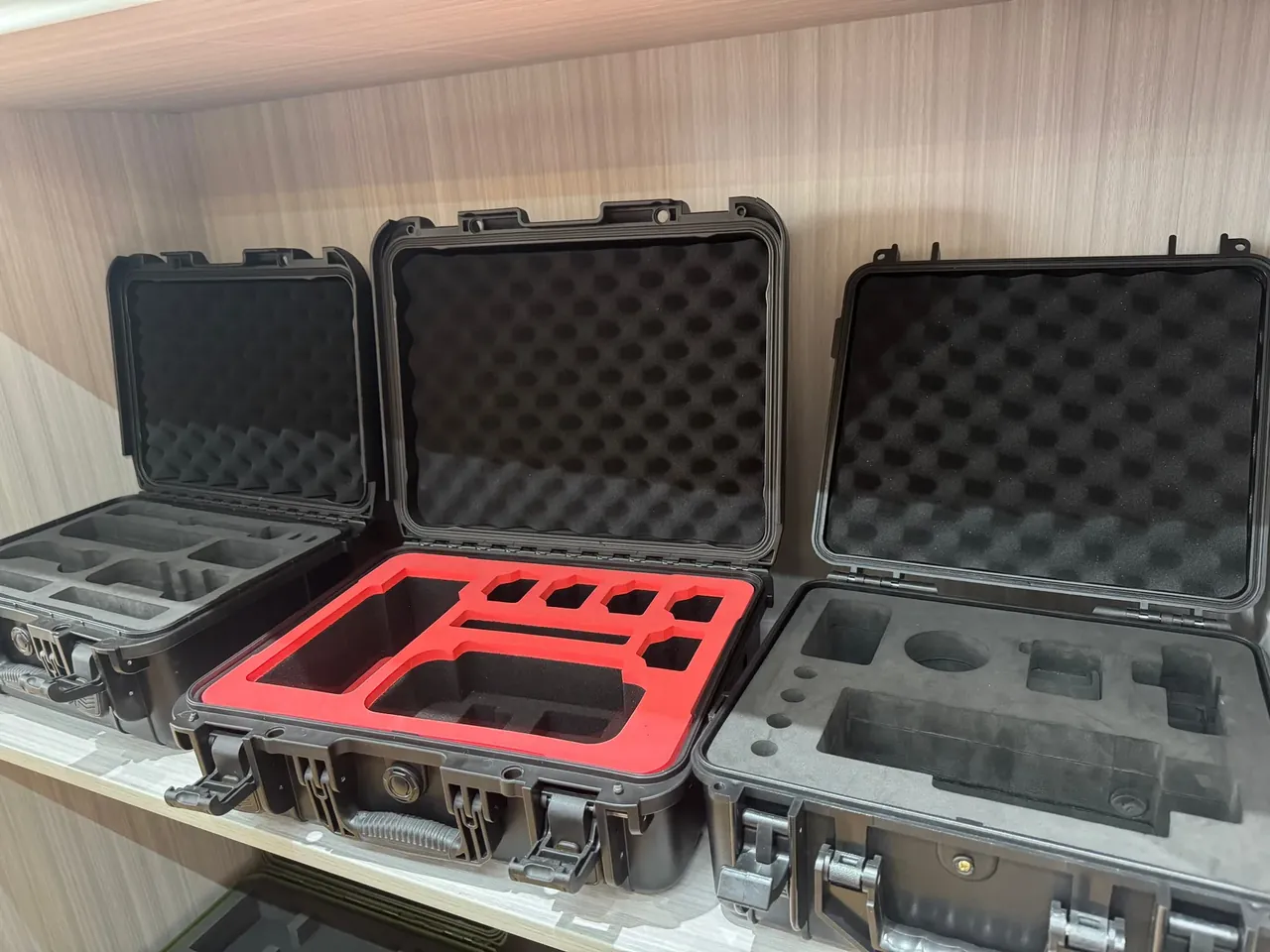
Quick answer: Medical stethoscope & otoscope hard storage box: a 2.8 mm lip keeps ingress under 0.4 mL after 45 min angled spray; rebound tops 92%.
Table of contents
- Seal-lip height of the Medical stethoscope & otoscope hard storage box
- Drain-channel width at the lid joint
- Water ingress after a 45-minute angled spray
- Lip rebound on a rested recheck
- Batch lip-height setpoint
- FAQ
1. Seal-lip height of the Medical stethoscope & otoscope hard storage box
An angled jet across the lid joint for forty-five minutes shows whether the lip seats firmly and the drain channel clears. The Medical stethoscope & otoscope hard storage box measures 470 x 335 x 155 mm outside, 410 x 280 x 110 mm inside, with a 3.6 mm wall. A 2.8 mm seal lip runs around the lid, backed by one gasket at 16 percent compression against IP65 spray.
| Lip-height tier | Lip measured | Compression | 45 min ingress |
|---|---|---|---|
| Short tier | 2.4 mm | 13 percent | 0.62 mL |
| Nominal tier | 2.8 mm | 16 percent | 0.31 mL |
| Tall tier | 3.2 mm | 19 percent | 0.18 mL |
A taller lip is not automatically safer: press too hard and the latches hit their force ceiling; press too little and the jet finds the parting line. The Medical stethoscope & otoscope hard storage box is weighed at 3.2 kg empty and 7.5 kg loaded, since a heavier case keeps the lip under static pressure longer. Depth-gauge readings at four lid corners send the mold back if the spread exceeds 0.2 mm.
2. Drain-channel width at the lid joint
A 6.5 mm channel along the outer lid edge carries water off the lip rather than pooling on the rim. On the Medical stethoscope & otoscope hard storage box the floor tilts outward and a step separates the mouth from the lip root, so the jet lands in the trough and leaves through both open ends. Below 4 mm the channel overtops and throws water back at the lip.
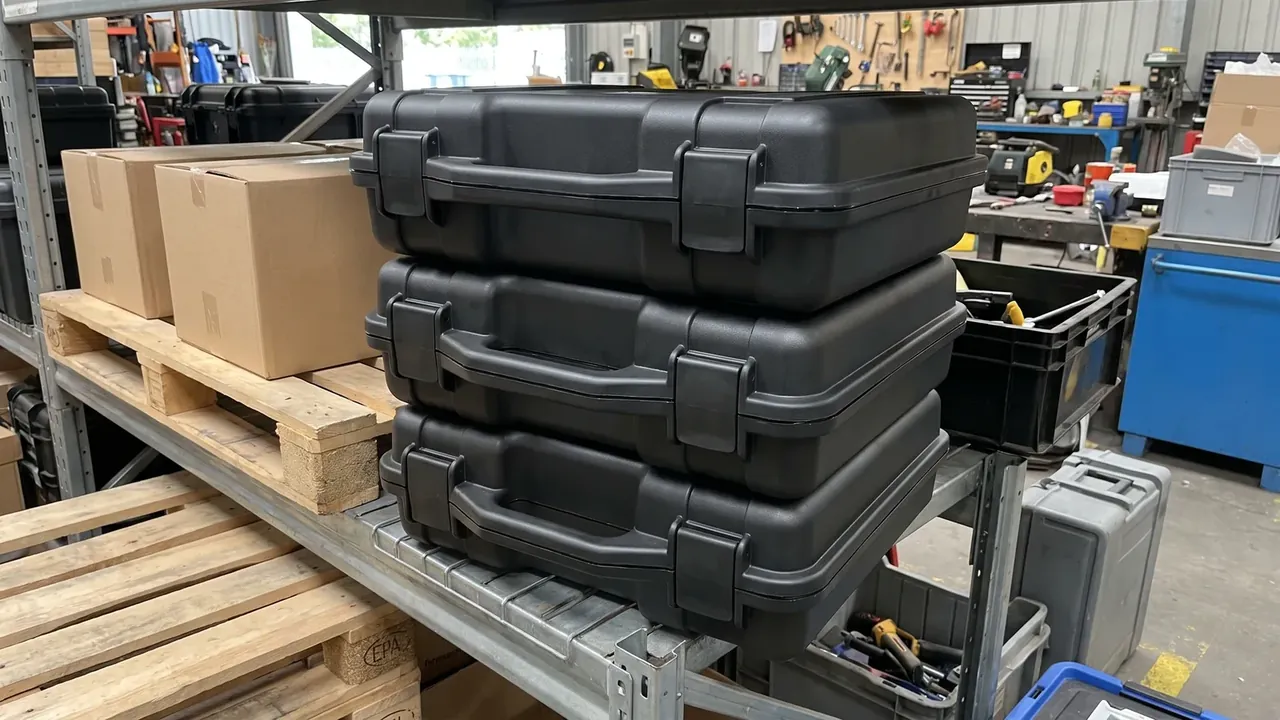
Two latches are each rated at 305 N, and the parting line must stay flush after 4800 open-close cycles or the channel width drifts with lid warpage. The Medical stethoscope & otoscope hard storage box is measured empty on the rig and at the 7.5 kg load, with the difference logged to the batch. The handle is molded into the lid to stop twist.
3. Water ingress after a 45-minute angled spray
The rig fixes the nozzle at an angle, delivers 10 L/min for 45 min, and sweeps the parting line. The Medical stethoscope & otoscope hard storage box is weighed before and after, with ingress capped at 0.4 mL; the channel and liner corners are checked for dampness. Fix the jet angle and batches compare; shift it and the same shell reads differently.
| Spray interval | Cumulative water | Ingress | Channel residue |
|---|---|---|---|
| Minute 15 | 150 L | 0.08 mL | None |
| Minute 30 | 300 L | 0.19 mL | Trace |
| Minute 45 | 450 L | 0.31 mL | Drained |
Ingress is averaged over three runs; a jump sends the lip to be checked for debris before latch seating is questioned. After 450 L the nominal 2.8 mm lip holds at 0.31 mL, clear of 0.4 mL, while the short tier has crossed the reject line.
4. Lip rebound on a rested recheck
After the spray stops, the lid rests closed, then reopens to see whether the lip springs back, with rebound held at 92 percent. The Medical stethoscope & otoscope hard storage box runs its single gasket at 16 percent compression for the full forty-five minutes; poor recovery leaves a set mark on the lip and breaks the sealing face.

The rested recheck also watches for a parting-line step, since uneven rebound can tug the channel out of shape. Rebound, re-measured width and step go on one sheet, and all three must pass before assembly. Lip set is read with a feeler gauge on a flat plate; shells above 0.2 mm are tagged apart.
| Ingress reading | Rebound | Set depth | Disposition |
|---|---|---|---|
| 0.18 mL | 95 percent | 0.09 mm | Archive |
| 0.31 mL | 93 percent | 0.14 mm | Accept |
| 0.62 mL | 88 percent | 0.27 mm | Dry-turnover only |
The three tiers link ingress, rebound and set: a tighter seal keeps the lip compressed longer, so rebound needs closer watching. Readings are logged tier by tier, not averaged across lip heights, so the batch sheet shows which tier earns the setpoint.
5. Batch lip-height setpoint
The setpoint is the shortest tier whose ingress at minute forty-five stays below 0.4 mL; shorter lips go to dry-environment turnover. The Medical stethoscope & otoscope hard storage box fixes 2.8 mm: the 2.4 mm short tier stays off the assembly list, and the 3.2 mm tall tier pushes latch force to the 305 N ceiling despite lower ingress.
With the value fixed, every shell is trimmed on the same mold, assembled with the same rivet pattern, and passed for ribs, bonding and finish. Cosmetic checks cover sink marks, parting-line straightness and latch plating scratches. The batch card logs lip height, compression and the 4800-cycle recheck; the JUNZHIJIA line ships to this single setpoint.
Conclusion
The Medical stethoscope & otoscope hard storage box ties a 2.8 mm lip, a 6.5 mm channel and 16 percent compression into one set, with spray ingress, rested rebound and batch setpoint leaning on each other. Read the spray figure first to confirm it sits under 0.4 mL, then check that the lip springs back, then confirm the setpoint on the batch card. A finer inspection log makes the same sealing behavior easier to reproduce across one batch of shells.
Related Reading
- Instrument Case: Bonded Foam vs Dividers
- Medical Case: Instrument Zoning and Sterilization Compatibility
- Air-tight sealed instrument latch case
- Should a Protective Case Use Dividers or Foam Liner? Divider vs. Foam Comparison Table and Selection Advice
Related Products
- 8 Series — Gun Cases; Military Equipment Cases; Camera Equipment Cases; Drone Cases; Watch Cases; Knife Cases; First Aid Cases; Electronics Equipment Cases
- WL8-2812 PP Gun Case — model WL8-2812
- All protective cases and toolboxes: 7 series, 158 models