

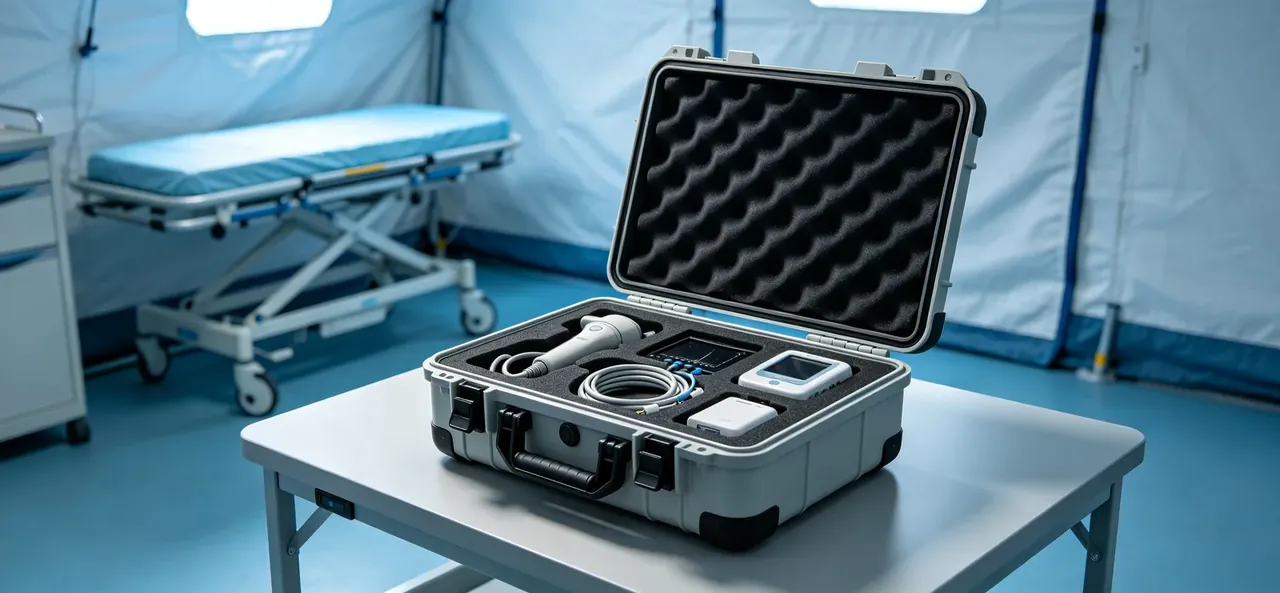
Quick answer: Medical testing device shockproof trolley case is checked at 12 kg, 5-200 Hz sweep, 3.2 g transmission and 0.9 mm liner shift after a 1.0 m drop.
Table of contents
- Tube clearance in a Medical testing device shockproof trolley case
- Wheel-seat inserts and base stiffness
- Transmitted acceleration across the sweep band
- Liner displacement after drop retest
- Wheel-seat looseness after cycle life
- FAQ
1. Tube clearance in a Medical testing device shockproof trolley case
A Medical testing device shockproof trolley case measures 560 x 400 x 230 mm outside and 495 x 340 x 165 mm inside, with a 3.9 mm wall, 5.2 kg empty and a 12 kg rated load. The two-section handle tube runs at 0.4 mm clearance, which sets both pull feel and how much torsional vibration reaches the base.
Open that clearance past 0.4 mm and the tube rocks against the base during a sweep; torsional energy lands on the tube seat first and spreads across the floor. Close it too far and pull force rises with a risk of cold binding. A Medical testing device shockproof trolley case is accepted at 0.4 mm, gauged at three points on each section.
Tube positions are listed separately because base stiffness is not one figure. Upper tube, lower tube, four wheel-seat inserts and the floor locating sleeve share a single load path; an out-of-tolerance gap anywhere lifts the 5-200 Hz transmission reading.
| Tube position | Fit clearance | Recheck item |
|---|---|---|
| Upper tube | 0.4 mm | Vibration transfer |
| Lower tube | 0.4 mm | Vibration transfer |
| Four wheel-seat inserts | 0.4 mm | Torque 2.6 N.m |
| Floor locating sleeve | 0.4 mm | Pad compression |
The 0.4 mm figure is an assembly tolerance, not a wear allowance. The tube seat and inserts hold it after release.
2. Wheel-seat inserts and base stiffness
Four wheel-seat inserts in a Medical testing device shockproof trolley case are torqued to 2.6 N.m, spreading wheel and handle point loads across the broad floor. A drilled-in insert leaves a leak path at the hole; a moulded-in one must stay sealed and must not thin the 3.9 mm floor.
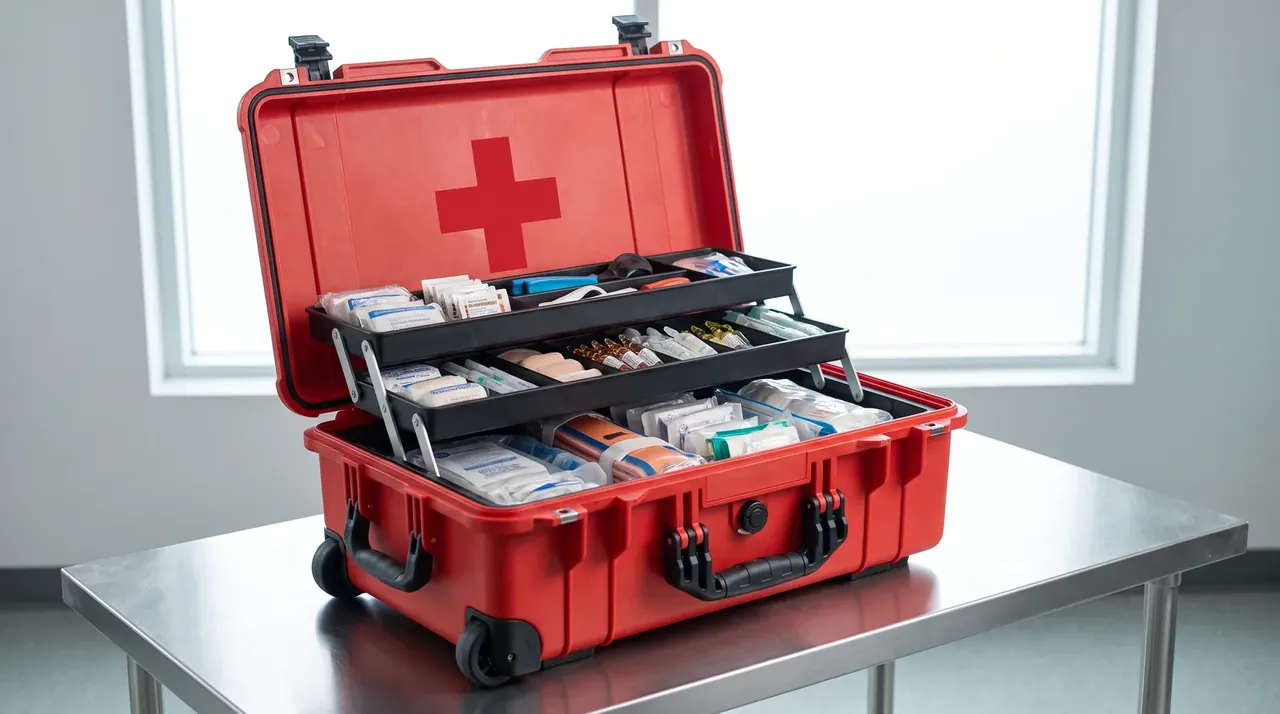
Two latches at 360 N each close the front, and preload passes through the inner frame onto the gasket. A soft base lets the frame shift against the mouth, opening a mid-span gap and enlarging the liner displacement seen after a drop.
A Medical testing device shockproof trolley case logs insert torque and pad density on one inspection sheet, because either alone cannot judge base stiffness.
The base load order is worth writing down. Torsional vibration from the handle reaches the tube seat first. The seat splits it into the floor ribs. The ribs carry it into the four wheel-seat inserts. If torque there decays from 2.6 N.m, the foam pad takes the point load directly. An EVA pad at 48 kg/m3 absorbs what remains in layers, and 40 mm of thickness gives it travel. Base stiffness, insert torque and pad density are therefore three links of one chain, logged separately instead of reduced to a single acceleration peak.
3. Transmitted acceleration across the sweep band
A Medical testing device shockproof trolley case is swept from 5-200 Hz at 12 kg, and transmitted acceleration must stay within 3.2 g. The reading is the amplification of a floor point against the table, set by pad travel at low frequency and by base stiffness and insert contact high up.
A Medical testing device shockproof trolley case records the band in steps: 5-30 Hz shows whether the pad bottoms out, 80-150 Hz whether an insert has loosened, 150-200 Hz whether the inner frame resonates locally. One peak alone hides the worst step.
| Sweep step | Transmitted acceleration | Verdict |
|---|---|---|
| 5-30 Hz | 1.8 g | Pass |
| 30-80 Hz | 2.6 g | Pass |
| 80-150 Hz | 3.2 g | <= 3.2 g |
| 150-200 Hz | 2.4 g | Pass |
The EVA pad is layered at 48 kg/m3 with 40 mm total thickness, leaving low-frequency travel; too dense passes acceleration straight to the floor, too soft bottoms out in the 5-30 Hz step.
4. Liner displacement after drop retest
A Medical testing device shockproof trolley case is retested with a 1.0 m six-face drop, and liner displacement must stay within 0.9 mm. A clean sweep only proves steady energy is contained; a drop is transient and can shift a pocket against the frame once.
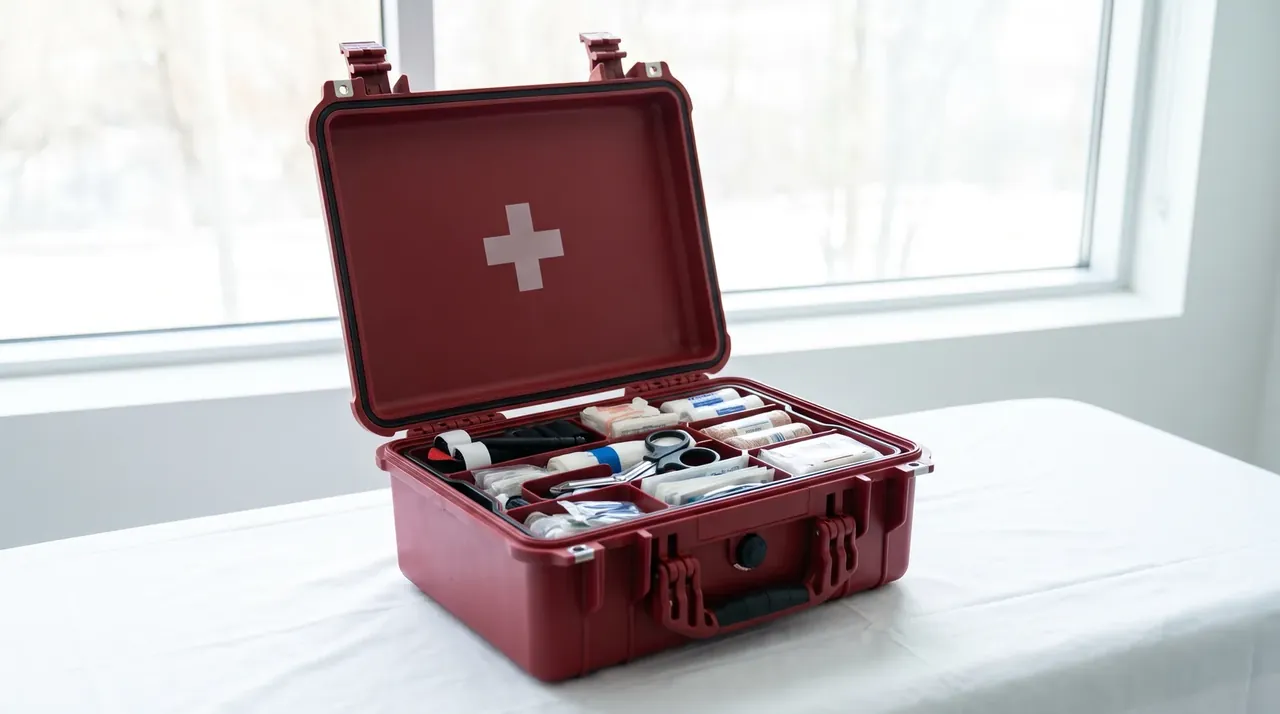
Displacement for a Medical testing device shockproof trolley case is the pocket-to-frame offset read at four corners after impact, with the largest value kept. Above 0.9 mm, check frame height and pad rebound before blaming the liner.
| Acceleration reading | Gauge point | Verdict |
|---|---|---|
| 1.8 g | Floor centre | Pass |
| 2.6 g | Wheel-seat insert | Pass |
| 3.2 g | Inner frame | <= 3.2 g |
| 2.4 g | Tube end | Pass |
5. Wheel-seat looseness after cycle life
A Medical testing device shockproof trolley case runs 3600 open-close cycles, retorquing the wheel-seat inserts every 900 cycles; torque below 2.6 N.m counts as loose, and 360 N latch preload may decay by no more than a tenth.
The reject line for a Medical testing device shockproof trolley case also rechecks the 495 x 340 x 165 mm cavity, since a loose insert lets the floor sag and tilts the frame. JUNZHIJIA records cycle count, retorque value and displacement in one report for lot tracing.
Conclusion
Retesting a Medical testing device shockproof trolley case follows five steps: tube clearance, base stiffness, sweep readings, drop displacement and wheel-seat looseness. The 0.4 mm gap, 2.6 N.m torque, 48 kg/m3 pad and 40 mm thickness each bound one part of the load path, and 3.2 g transmission with 0.9 mm liner shift are two separate gates. Ask for load mass and fastening torque before comparing figures.
Related Reading
- Custom foam instrument case specifications
- Detection instrument case selection notes
- Case wheels and trolley handle construction
- Airtight leak testing for case seals
Related Products
- 8 Series — Gun Cases; Military Equipment Cases; Camera Equipment Cases; Drone Cases; Watch Cases; Knife Cases; First Aid Cases; Electronics Equipment Cases
- WL8-2812 PP Gun Case — model WL8-2812
- All protective cases and toolboxes: 7 series, 158 models