

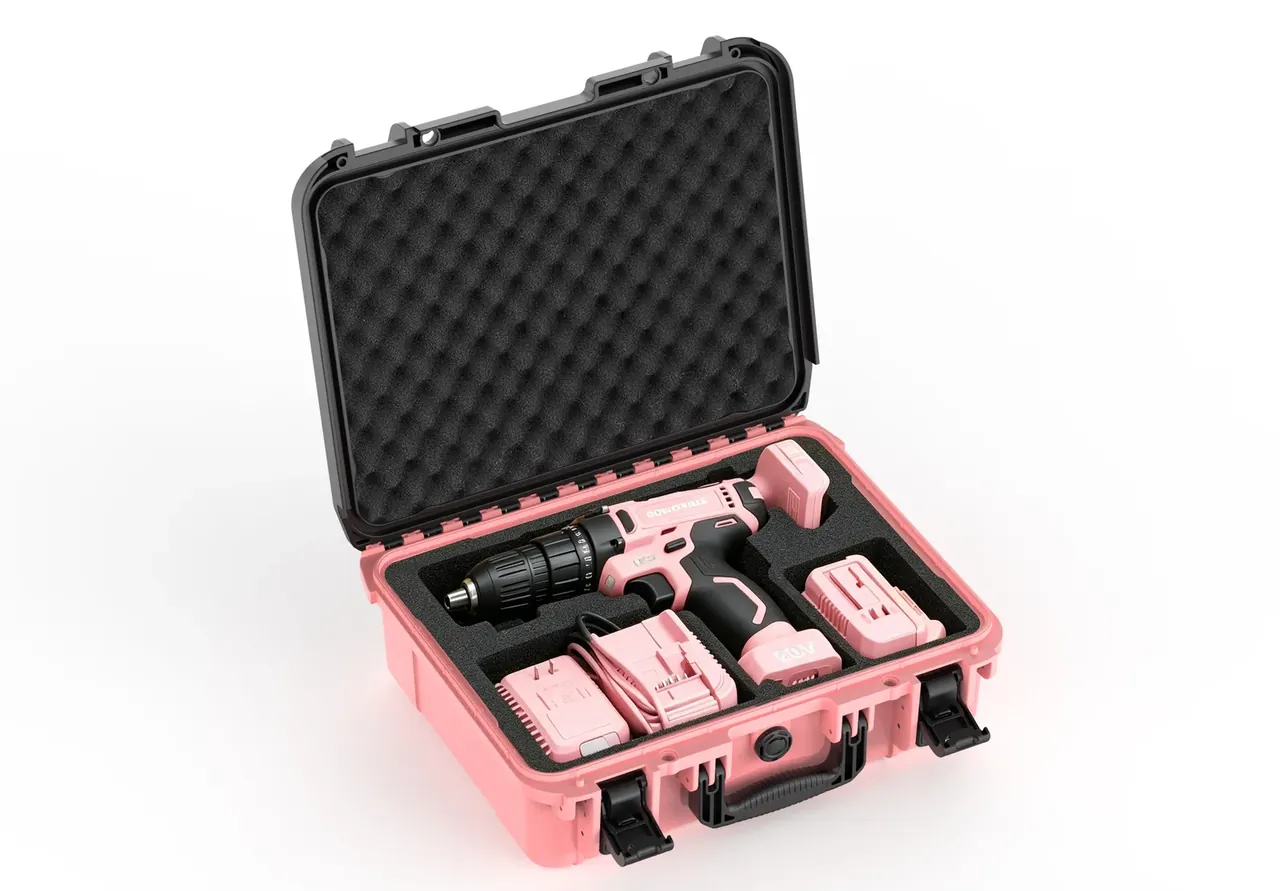
Quick answer: A Medical waste emergency disposal sealed box pairs a 3.2 mm wall with twin gaskets at 25 percent squeeze, 0.4 mm rim flatness and a 0.3 m soak.
Table of contents
- Twin gasket construction on the sealed box
- How 25 percent squeeze maps to catch force
- The 0.3 m static water criterion
- Gasket state after 300 hypochlorite wipes
- Rim flatness of 0.4 mm and where it leaks
- FAQ
1. Twin gasket construction on the sealed box
Press the lid down and the outer lip meets first; two millimetres later the inner ring loads. That shift from light to heavy is the seating order. The Medical waste emergency disposal sealed box divides the work rather than stacking redundancy.
The outer run is a 7 mm lip on the rim face, the inner a 5 mm ring on the groove floor, with a 4 mm relief cavity between. Liquid passing the lip spreads in that open space before it reaches the ring. The rim path is a closed loop with R2 corners.
| Gasket run | Section and form | Control value |
|---|---|---|
| Outer lip | 7 mm lip on the rim face | 5.25 mm after closing |
| Inner ring | 5 mm ring on the groove floor | 3.75 mm after closing |
| Between the runs | relief cavity for liquid | 4 mm wide |
Two runs are not twice the safety; the spacing carries that. Too close and the cavity holds nothing; too wide and the lid bows, lifting the outer lip.
2. How 25 percent squeeze maps to catch force
In the Medical waste emergency disposal sealed box, squeeze is the thickness a gasket loses as a share of its free height. A 7 mm lip closed to 5.25 mm and a 5 mm ring closed to 3.75 mm sit at 25 percent, mid-band in the 20 to 30 percent range for static seals. The middle beats the upper edge here because the box opens 20 times a day.
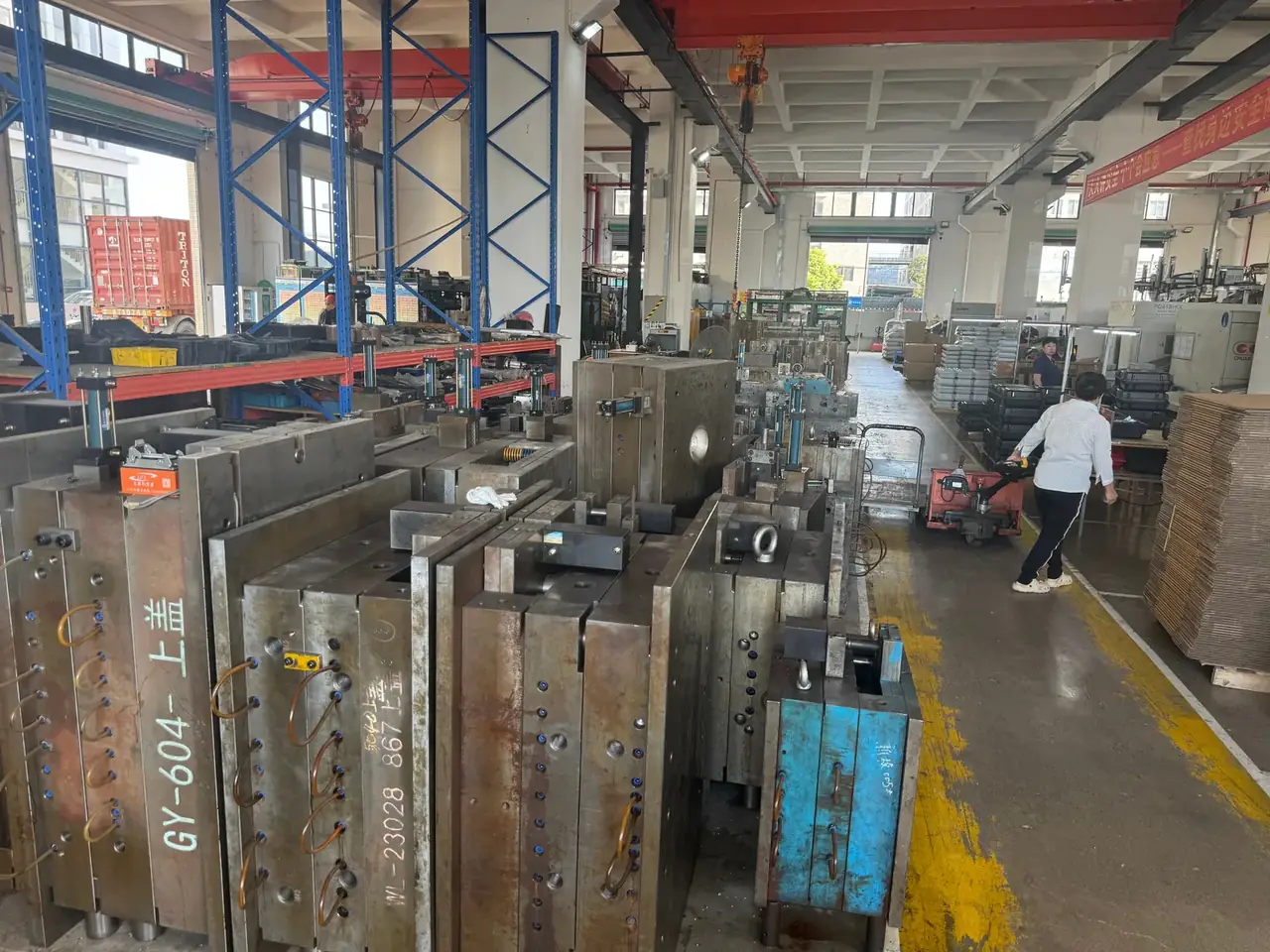
Catch force reads against that squeeze. One catch front and one rear pull the lid down 1.75 mm each, exactly 25 percent of the 7 mm lip, and together they must cover the loop rebound or the rim centre lifts a gap. Each seat sits on a raised boss feeding the 3.2 mm wall.
| Squeeze set | Catch force needed | Verdict |
|---|---|---|
| 30 percent | high, catch feels dead | rebound fades early |
| 25 percent | one catch front and rear | squeeze and rebound balanced |
| 20 percent | low, rim centre lifts | static water test seeps |
Hardness moves the figure too: a harder compound needs more force for 25 percent, a softer one gives too little contact stress.
3. The 0.3 m static water criterion
On a Medical waste emergency disposal sealed box, a 0.3 m head is about 2.9 kPa, which matches a box tipped on its side and half drowned. Fill the 400 by 290 by 170 mm cavity to eight tenths, latch, lay the box on its side in 0.3 m of water for 30 minutes, dry the outside and open it.
| Check | Method and condition | Pass line |
|---|---|---|
| Static immersion | 0.3 m depth, 30 minutes, on its side | no water in the cavity |
| Air hold | 20 kPa inside, held 5 minutes | no continuous bubbles |
| After cycling | 50 closures, then immerse again | still dry inside |
The air hold borrows a packaging method: hold the box under water, charge it with 20 kPa and watch 5 minutes. It finds a path a soak alone hides: the soak gives the verdict, the air the location.
Failures cluster at a rim corner or beside a catch seat. A corner stretches the outside of the section and compresses the inside, so squeeze is never even. Near a seat the wall thins and flatness goes first. Thirty minutes is used because a short dip hides a creeping path.
4. Gasket state after 300 hypochlorite wipes
Chlorine attacks the surface first. Soaking EPDM in 5000 mg/L available chlorine for 30 minutes swells the section about 8 percent, and past 10 percent the rubber stands proud, the lid never bottoms out and sealing ends. Polypropylene outside climbs from Ra 1.6 to Ra 2.8 μm.
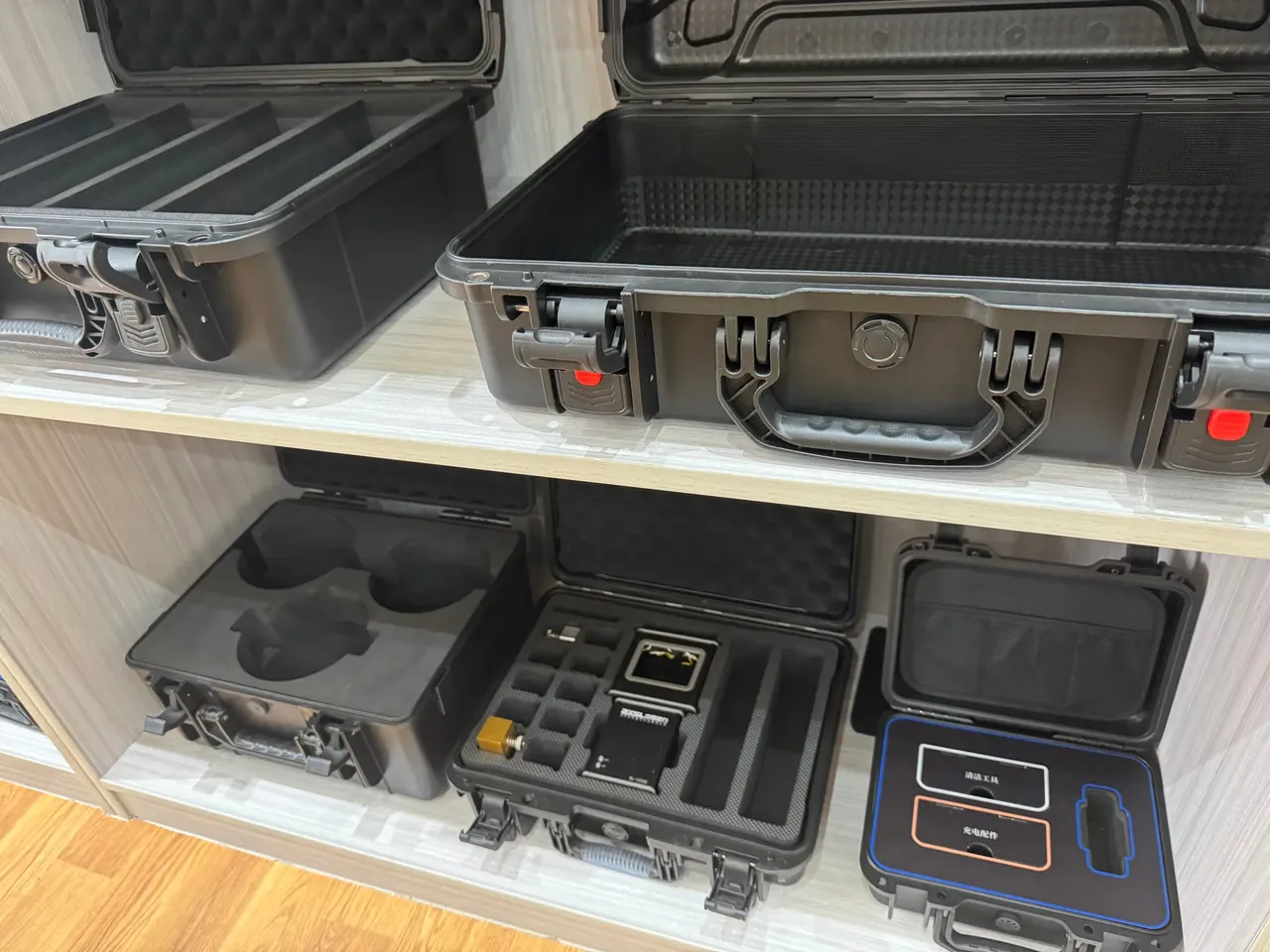
The 300 figure is cumulative, not a soak. Each wipe uses 1000 mg/L chlorine, dwells 1 minute and is followed by a clean water cloth. Residue does more harm than the wipe: as moisture dries, concentration climbs again.
After 300 wipes on a Medical waste emergency disposal sealed box, check three measurements rather than colour: section thickness change under 5 percent, hardness change under 5 points, no tacky groove. Any one out of line means a new gasket. The Medical waste emergency disposal sealed box stops its guidance there.
5. Rim flatness of 0.4 mm and where it leaks
Flatness of 0.4 mm on the Medical waste emergency disposal sealed box is the height spread around the rim loop. A 25 percent squeeze gives only 1.75 mm of travel, so a 0.4 mm ripple eats nearly a quarter of it and the low stretch keeps under 20 percent. That stretch leaks first.
Flatness is held by material and tool together. ABS at 0.4 to 0.7 percent shrink against 1.5 to 2.5 percent for polypropylene keeps the 440 mm edge inside 0.4 mm. The gate sits opposite the rim, so melt advances evenly and no cold weld forms.
Check the Medical waste emergency disposal sealed box on a surface plate with a feeler gauge, or sweep the loop on a coordinate machine. Rest it at 23 °C for 2 hours first; a fresh moulding reads high. Out of flatness, re-cut the rim cavity rather than thicken the gasket.
Conclusion
The Medical waste emergency disposal sealed box writes sealing as three dimensions: a 7 mm outer lip, a 5 mm inner ring and a 4 mm relief cavity, both runs at 25 percent squeeze. A 0.3 m soak for 30 minutes and a 20 kPa air hold for 5 minutes are the two criteria, and 0.4 mm of flatness lets them hold. Loaded at 9.6 kg with a 400 by 290 by 170 mm cavity, the box keeps all of it on one dimension chain.
This article covers container (case body) specifications and design meaning only, and does not address any handling, loading or use of the items inside.
Related Reading
- Sealed polymer tool case shell practice for medical use
- Sealing and wipe routines for infection control test cases
- Easy-clean surface treatment on high density medical boxes
- Choosing between a hard case and a carton for shipping
Related Products
- 8 Series — Gun Cases; Military Equipment Cases; Camera Equipment Cases; Drone Cases; Watch Cases; Knife Cases; First Aid Cases; Electronics Equipment Cases
- WL8-2812 PP Gun Case — model WL8-2812
- All protective cases and toolboxes: 7 series, 158 models