

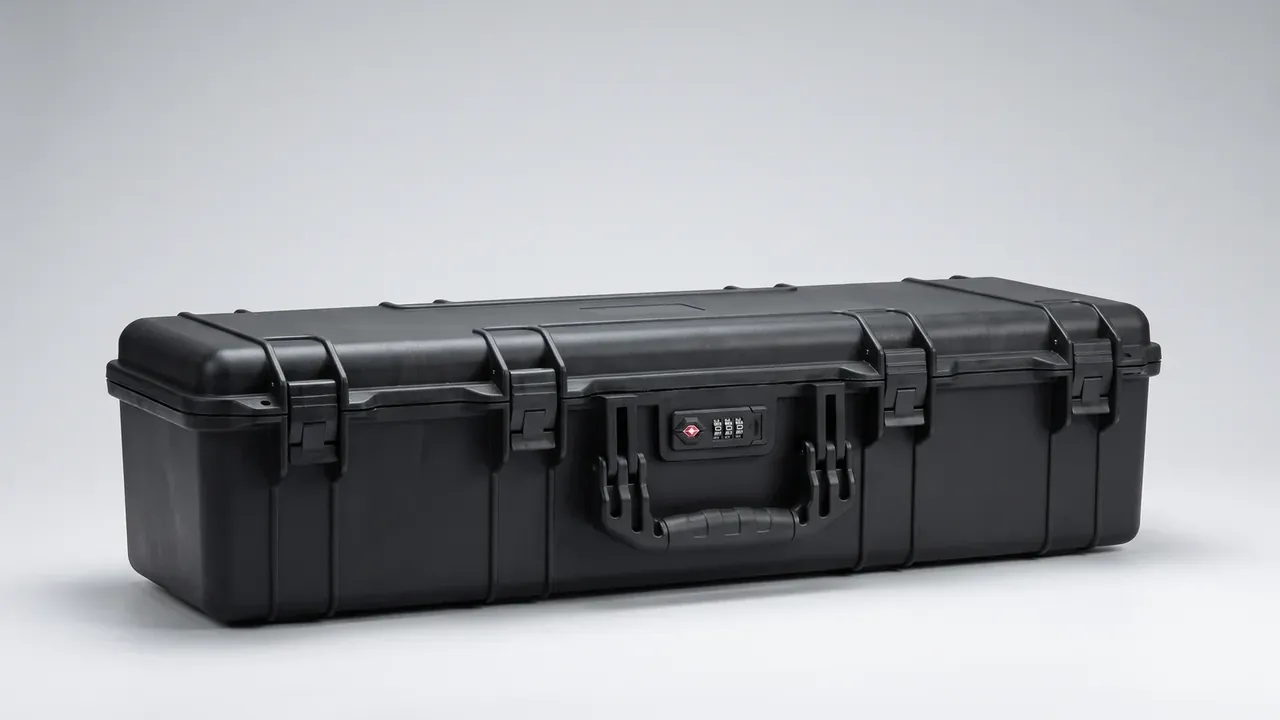
Quick answer: One Metal Ammunition Box drawing serves a range, a store, a field site and a van, but cavity height, latch count, lining and handling change with the work. Get one of the four wrong and the case turns awkward every day.
Table of contents
- How the fit-out changes across four sites
- Range use: what happens after the lid opens
- Fixed stores: shelf spacing and full-case handling
- Field stowage: ground, rain and temperature swings
- Vehicle loading: anchor points and three failures
- FAQ
1. How the fit-out changes across four sites
The same Metal Ammunition Box drawing lands in four jobs, and four items change each time: cavity height, latch count, lining and the way it is carried. None follows floor area; all four follow the motion of a hand.
| Site | Cavity height | Latches | Lining | Usual mistake |
|---|---|---|---|---|
| Indoor range | 220 mm | Four | Lid foam | Lid blocks the hand |
| Fixed store | 180 mm | Two | Layer boards | Shelf gap too tight |
| Field site | 260 mm | Four plus padlock ears | Six-face foam | Damp floor |
| Vehicle | 200 mm | Four | Base mat | Wrong anchor point |
Cavity height buys room for the hand once the lid is up. A range crew reaches in for single rounds, so under 200 mm leaves knuckles on the lid edge. A store lifts the case whole and opens it rarely, so a lower cavity saves volume.
2. Range use: what happens after the lid opens
On a range the case is opened and closed rather than stored, and forty cycles a day is ordinary.
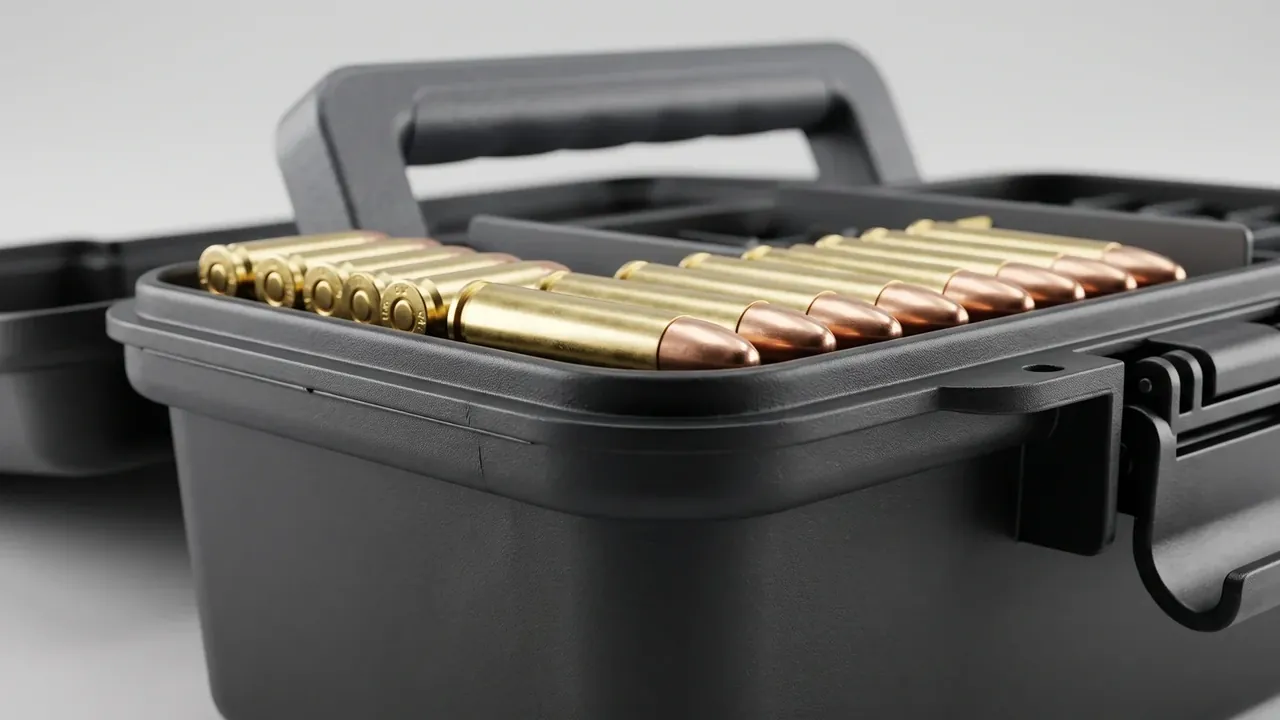
Lid angle decides whether the motion feels natural. A hinged stop at 105 degrees clears the back of the hand and lets one arm reach the far cell; a lid that stops at 90 degrees catches the wrist. With 30 rounds per cell and 78 mm of depth, a practised hand empties a cell in about 9 seconds.
Foam cut 2 mm wider than the cartridge looks helpful and rattles. Lid foam compressed too hard forces the lid down onto the latches.
3. Fixed stores: shelf spacing and full-case handling
In a store the priority moves from opening often to lifting the whole case.
- Allow 80 mm of hand clearance, so shelf pitch lands near 380 mm
- Keep five levels under 1.9 m so the top row is reachable standing
- A lined case weighs 18.5 kg; above 20 kg plan for two people or a trolley
- Main aisle 900 mm, side aisle 700 mm, before forklift traffic is counted
- A 100 mm pallet under the bottom row keeps damp off
- Leave a 40 mm label strip for the scanner
Shelf pitch is the mistake that repeats. Set it to case height alone and fingers cannot get under the base, so a Metal Ammunition Box gets dragged by its handle and the handle loosens first.
4. Field stowage: ground, rain and temperature swings
In the field there is no floor, so the case becomes part of the floor, and a badly chosen surface attacks the bottom edge first.
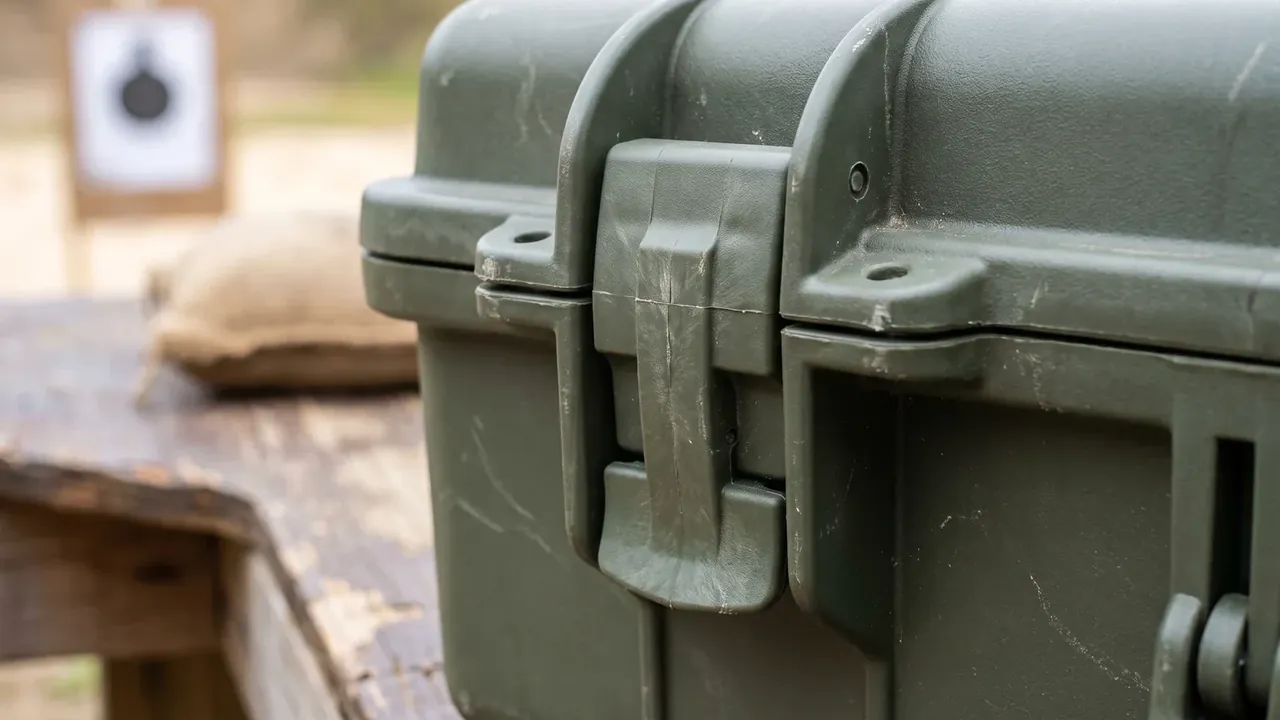
A bench 420 mm off the ground keeps the base out of wet grass, and twenty minutes after rain the ground is still soaked while the cavity stays dry. Left on the ground overnight, a Metal Ammunition Box draws a film of water along the bottom seam.
Temperature swings do more damage than rain. At 38 °C by day and 16 °C at night, twenty-two degrees of movement pumps the sealed cavity, which is where a relief valve earns its place. A surface tilted past 3 degrees pools water in the rib channel.
Finding the case again is the other field problem. An olive green body disappears in grass beyond ten metres, so contrast strips on the lid corners cut the search to seconds.
5. Vehicle loading: anchor points and three failures
Failures in a van almost always happen in the first kilometre.
| Failure | What you see | Result | Fix |
|---|---|---|---|
| Strap over the lid edge | Lid pressed down 5 mm | Seal crushed | Strap the lower body |
| Anchored on one side | 40 mm slip in a turn | Corner strikes the wall | Two symmetric anchors |
| No base mat | 30 mm creep under braking | Stack tips | 8 mm rubber mat |
Anchor on the line between rib and foot, never on the handle. A handle is sized for one case, not for the inertia of a loaded Metal Ammunition Box in a moving van, and two 25 mm ratchet straps over the lower body do the job.
Loading time counts. Two people, a pallet and a tail lift move one case from van to shelf in about 6 minutes, and an awkward anchor point doubles that.
Conclusion
The fit-out of a Metal Ammunition Box is not one universal specification but four answers to four motions: reach on a range, lift and stack in a store, raise and drain in the field, strap and hold in a van. Write those motions into the buying conditions and nobody complains about the Metal Ammunition Box a month after delivery.
This article discusses only the container (case body) side of specifications and design intent, and does not cover any handling, loading or use of the contents.
Related Reading
- Corrosion and seal replacement
- Steel and aluminium compared
- Stowage practice by scenario
- Transit case use across transport legs
Related Products
- 8 Series — Gun Cases; Military Equipment Cases; Camera Equipment Cases; Drone Cases; Watch Cases; Knife Cases; First Aid Cases; Electronics Equipment Cases
- WL8-2812 PP Gun Case — model WL8-2812
- All protective cases and toolboxes: 7 series, 158 models