

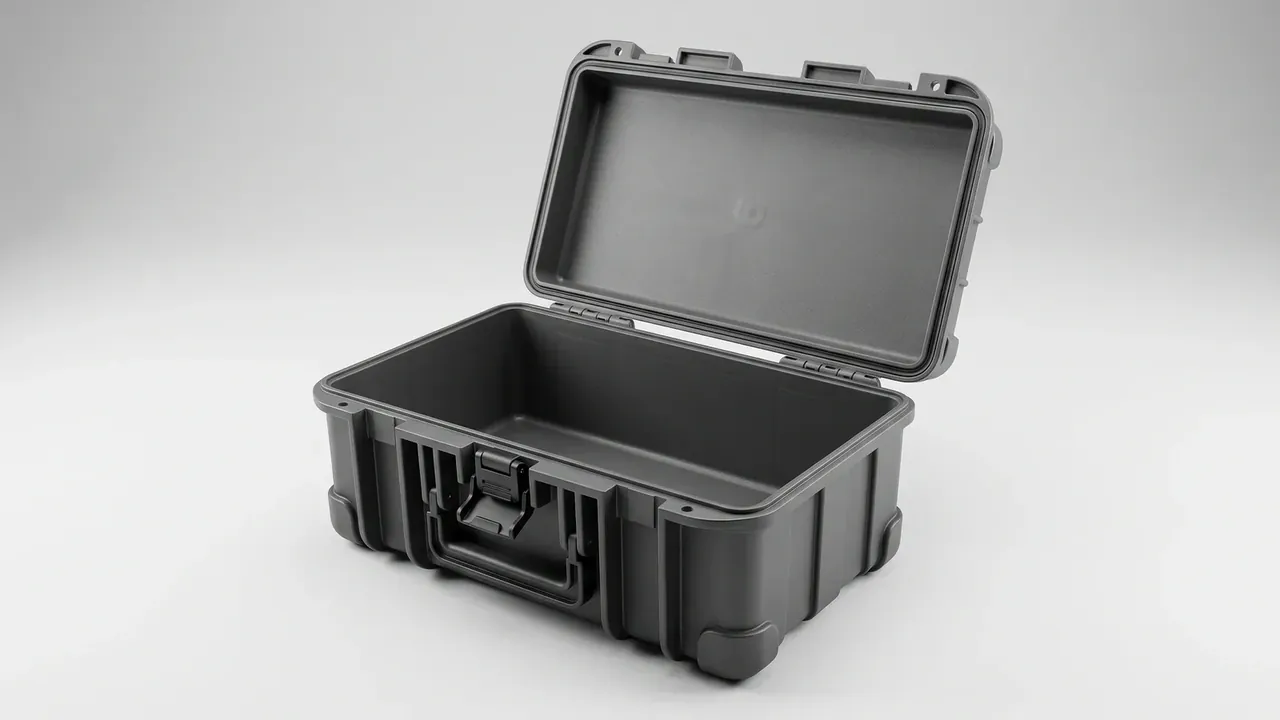
Quick answer: After forty-eight hours on a winter road at minus thirty, a Metal Ammunition Box needs five checks: walls and bumpers, welds and coating, seal pressure decay, latch load, condensation. Each carries a repeatable number, so a batch is cleared or held within half an hour.
Table of contents
- Order of checks when a load arrives
- Three cut-off lines on walls and welds
- Seal verdicts: pressure decay, immersion, cold rebound
- Latches, handles and tie-down ears
- What to do with a failed batch
- FAQ
1. Order of checks when a load arrives
Work from the outside in. A dent changes the flatness of the sealing face, so a pressure test run first measures a surface that is already distorted.
The first part to suffer in cold transit is the gasket, not the case body. Nitrile and EPDM harden at minus thirty and lose rebound, so a Metal Ammunition Box that passed at the factory sits on the line after a cold soak. Warm the pallet above 15 °C for four hours first.
Then dry it: water films bridge a pinhole and make the drop look smaller.
| Step | Item | Field method | Pass line |
|---|---|---|---|
| 1 | Walls, bumpers | Visual, hand pressure | No penetration, bumpers attached |
| 2 | Welds, coating | Cross-hatch knife | No continuous rust, grade 1 |
| 3 | Sealing face | Pressure gauge | Under 1 kPa drop at 20 kPa, 60 s |
| 4 | Latches, handle | Spring scale, 20 cycles | 80 to 120 N, no binding |
| 5 | Interior | White cloth wipe | No condensation, no salt bloom |
2. Three cut-off lines on walls and welds
An incoming Metal Ammunition Box is checked for three marks: dents, weld rust, coating loss.
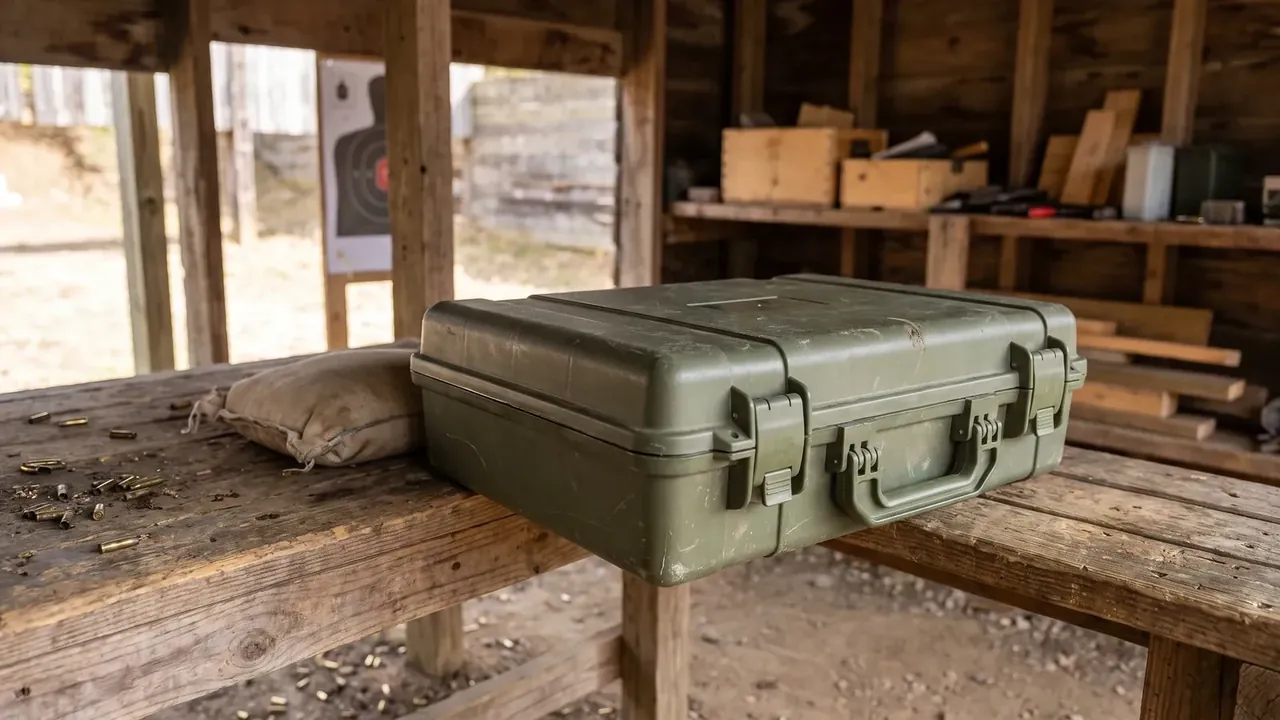
The dent line is 2 mm of depth, read with a depth gauge from the original surface. On the sealing face any dent fails, because a gasket cannot press against a surface that is no longer flat.
The weld line is 10 mm of continuous rust. Spot rust is a workshop repair; a continuous run means the coating over the heat-affected zone has failed as a sheet.
Coating is read by cross-hatch: grade 2 fails and the sample doubles.
| Defect | Cut-off | Action |
|---|---|---|
| Dent, general wall | Deeper than 2 mm | Downgrade to storage |
| Dent on sealing face | Any depth | Reject the unit |
| Weld rust | Continuous run over 10 mm | Grind, prime, re-inspect |
| Coating loss | Cross-hatch grade 2 | Double the sample |
3. Seal verdicts: pressure decay, immersion, cold rebound
Pressure decay gives a number in three minutes. Latch the lid, pressurise to 20 kPa, shut the valve, read after 60 seconds: under 1 kPa passes, 1 to 3 kPa is retested, above 3 kPa is a leak.
Immersion is the referee. Stand the Metal Ammunition Box in 100 mm of water for five minutes, dry it, then look for a water line inside the gasket.
Rebound needs its own column: compression between twenty-five and thirty percent, recovery within three seconds of releasing the latch. Cold slows rebound before it worsens the reading, so record decay, immersion and rebound per serial for every Metal Ammunition Box, and hold any unit missing a column.
4. Latches, handles and tie-down ears
Latches on a Metal Ammunition Box must be tested cold. Catch bodies are engineering plastic and shrink at a different rate from the steel shell, so a latch that snaps shut at room temperature sits half a notch loose after a cold soak.
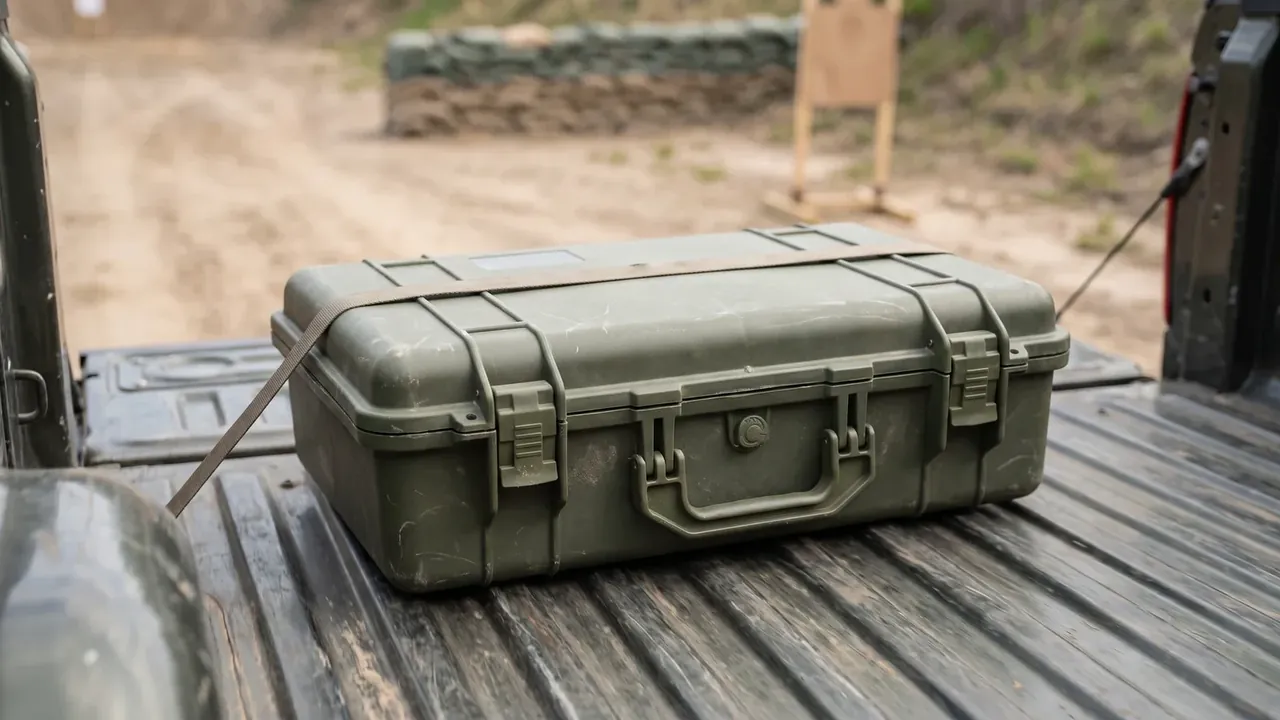
Pull the catch tongue with a spring scale: 80 to 120 N is normal, below 80 N the hook is worn, above 120 N the body has deformed.
Load the handle at three times its rating for five minutes and look for whitening at the root.
Tie-down ears are the most skipped item: each holds 2,000 N of webbing preload, and the root weld should be checked with a magnifier for porosity.
| Test | Load or cycles | Hold | Verdict |
|---|---|---|---|
| Latch closing | 80 to 120 N | Instant | No binding, no self-opening |
| Handle, static | 3 times rating | 5 minutes | No whitening, no set |
| Tie-down ear | 2,000 N | 10 seconds | No porosity, no elongation |
| Hinge cycling | 5,000 cycles | Not applicable | No play, no noise |
5. What to do with a failed batch
Sort the failures into four buckets.
- Repair: spot rust or grade 2 coating. Grind, prime, topcoat, re-inspect, book into stock.
- Downgrade: a 2 to 3 mm dent off the sealing face. Fixed storage only, never back onto a vehicle.
- Reject: a dent on the sealing face, decay above 3 kPa, porosity at an ear. Return whole, no yard patching.
- Escalate sampling: two defects of one type lift the sample from five to twenty percent.
Stamp the serial inside the lid of each Metal Ammunition Box and log date and verdict; two quarters later the pattern shows whether the fault came from the welding line or from the road.
Conclusion
Acceptance rests on an order and four numbers, not on a senior eye: outside before inside, warm before cold, dry before wet, act the moment a line is crossed. A minus thirty haul creates no new failure mode, it amplifies the old ones. With the five steps on one form, any lot of Metal Ammunition Box units is cleared or held within half an hour.
This article discusses only the container (case body) side of specifications and design intent, and does not cover any handling, loading or use of the contents.
Related Reading
- Inspection items for ammunition box packing
- Acceptance points for small arms ammunition boxes
- Corrosion control and gasket replacement
- Setting impact loads for airdrop cases
Related Products
- 8 Series — Gun Cases; Military Equipment Cases; Camera Equipment Cases; Drone Cases; Watch Cases; Knife Cases; First Aid Cases; Electronics Equipment Cases
- WL8-2812 PP Gun Case — model WL8-2812
- All protective cases and toolboxes: 7 series, 158 models