

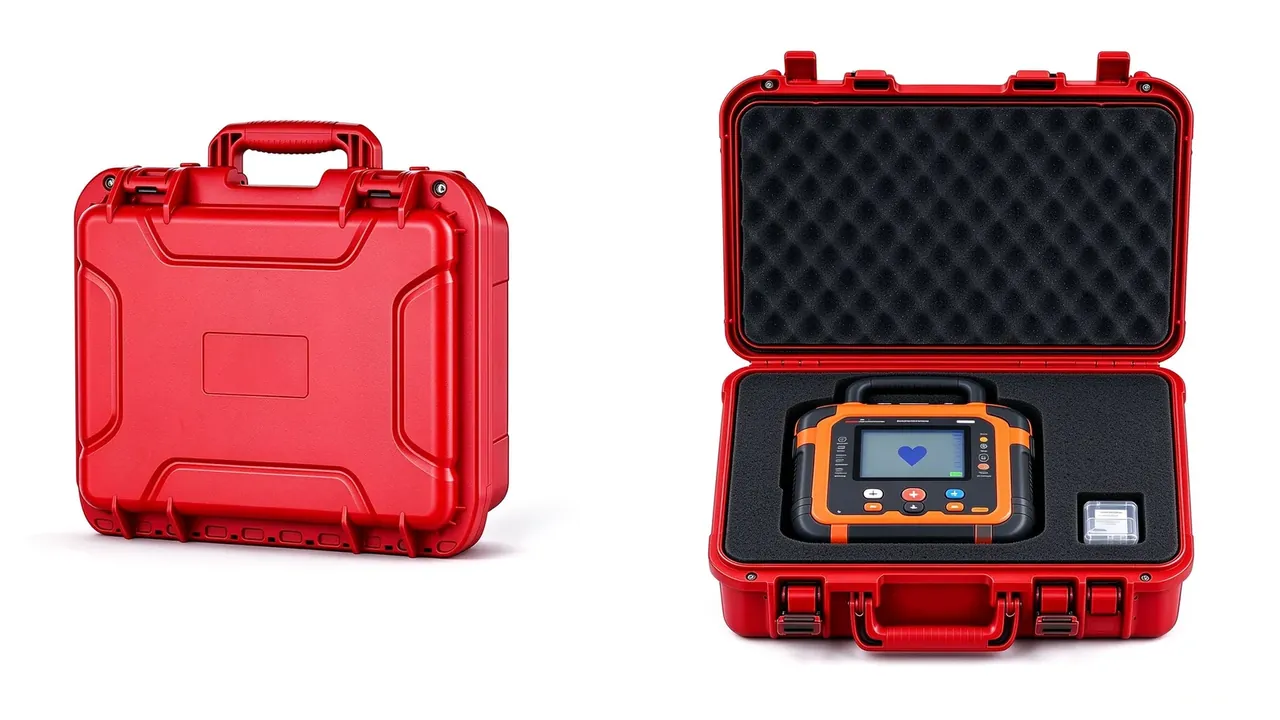
Quick answer: In mil std 810h, Method 512 is immersion and Method 516 is shock: 1 m of water for 30 min against a 40 g, 11 ms pulse. Run 516 first.
Table of contents
- What Method 512 and Method 516 Actually Test
- Immersion: One Metre, Thirty Minutes, and a Temperature Gap
- Functional Shock: 40 g, 11 ms, Eighteen Hits
- Run 516 Before 512
- Fixtures, Channels and What the Report Must Keep
- FAQ
1. What Method 512 and Method 516 Actually Test
An enquiry asking for "vibration to Method 512" gets a confirmation email back, because 512 is immersion, vibration sits at 514 and shock at 516. The numbers are adjacent and every title ends in "test", so the mix-up costs a re-run. This article compares 512.6 with 516.8; vibration at 514.8 is out of scope.
The fastest way to separate them is to ask what load reaches the case. Method 512.6 applies static water pressure, always inward, rising with depth. Method 516.8 applies transient acceleration, its direction following the mounting attitude. One hunts a leak path, the other a weak section.
| Method | What is judged | Typical level | Failure seen |
|---|---|---|---|
| 512.6 immersion | Lid joint and gasket | 1 m depth / 30 min | Water inside, wet foam |
| 514.8 vibration | Bolt preload, bracket roots | 10–500 Hz / 1 h per axis | Fasteners backing out |
| 516.8 shock | Latches, hinges, corners | 40 g / 11 ms / 18 hits | Latch release, cracks |
Record sheets differ as well: immersion logs depth, duration, water temperature and weight gain; shock logs pulse shape, peak, hits per direction and the table spectrum. Merge the two and the reviewer sends it back.
2. Immersion: One Metre, Thirty Minutes, and a Temperature Gap
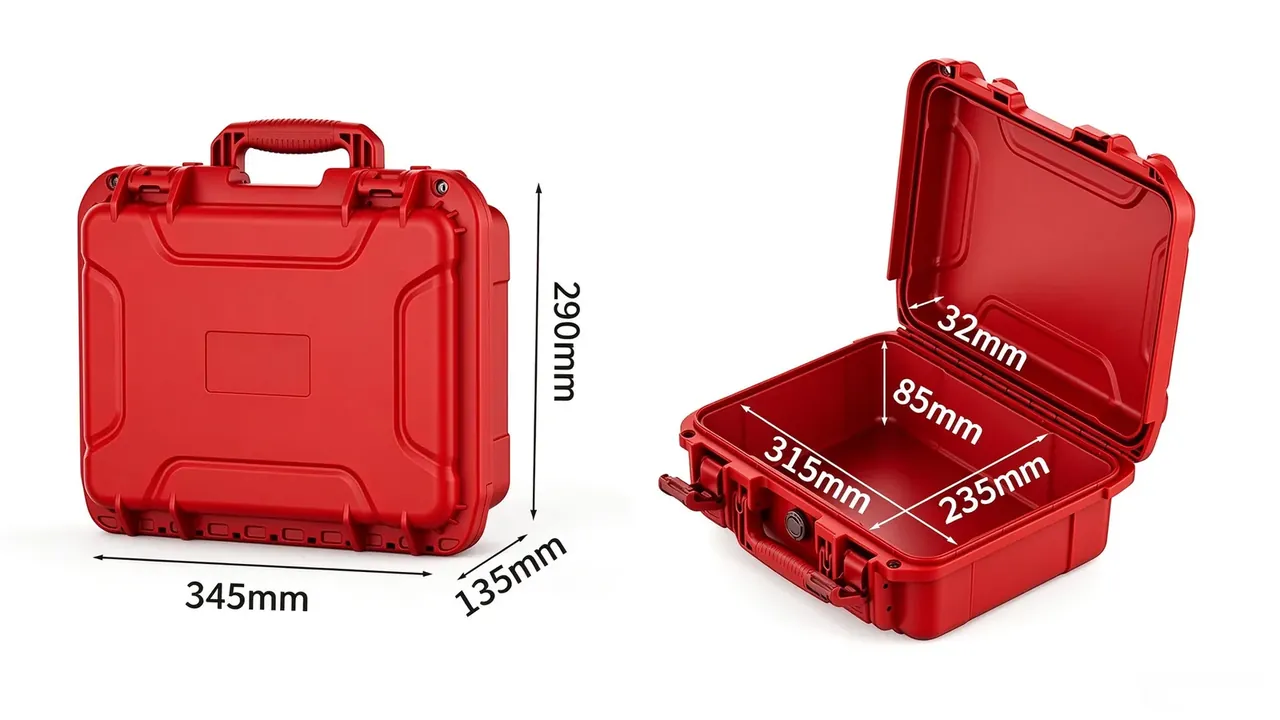
Method 512.6 gives two numbers only: 1 m and 30 min. A metre of water is about 9.8 kPa, under a tenth of an atmosphere, which sounds mild until it is multiplied by lid area. On a 315 mm by 235 mm lid the resultant force is close to 730 N.
What drives water in is the temperature step, not the head. Soak the case at 50 °C for 4 h, then lower it into the tank: trapped air falls to about 25 °C and loses roughly 8% of its pressure. That 8 kPa of vacuum stacks on the 9.8 kPa outside, so any under-compressed spot in the gasket becomes an inlet. Immersing at ambient proves only that the gasket touches.
Gasket compression is amplified here. At 25% compression the rebound reserve is 0.6 mm, and a 0.3 mm flatness error in the moulded lid eats half. At 32% the reserve reaches 0.9 mm and the same error leaves two thirds. A compound 5 Shore A softer can therefore flip the result on cases from one tool.
Judgement ignores appearance. Look for water at the lowest point, then wipe and weigh: over 2 g of gain counts as ingress. Foam shows it earlier, since a 20 mm EVA block can take on 15 g. A sound shell with wet foam still fails, because cushioning drops about 30% once the cells hold water.
Rest before reading. Wipe the outside, hold the case at 20 °C for 15 min so surface film separates from seepage, then open.
3. Functional Shock: 40 g, 11 ms, Eighteen Hits
The functional shock procedure of Method 516.8 states a nominal 40 g and 11 ms. Those numbers set input energy: acceleration integrated over time gives a velocity change near 2.2 m/s, so a 12 kg case picks up about 26 kg·m/s per hit. Not large, but 11 ms leaves the walls no time to deflect, and stress concentrates at latch seats and hinge roots.
The count follows geometry: three perpendicular axes, both directions per axis, three hits per direction, 18 in total. Fewer will not do, because consecutive hits test different things: the first assembly clearance, the second bolt preload, the third the material. With one hit, a latch backing off stays invisible.
| Measurement point | Project limit | Recorded | Criterion |
|---|---|---|---|
| Table control | 40 g ± 10% | 38.6 g | Pulse deviation ≤ 15% |
| Base centre | ≤ 1.6 × table | 61 g | No yielding |
| Lid centre | ≤ 1.4 × table | 52 g | No through-crack |
| Latch seat | ≤ 2.2 × table | 84 g | Latch stays closed |
Table response is only the input. The design is judged on the ratio between table and case, so the build carries four channels: table, base, lid and latch seat. At 51.2 kHz an 11 ms pulse spans more than 20 points and the peak cannot slip between samples.
4. Run 516 Before 512
Putting 516 ahead of 512 is a judgement call, not a mandated order. After 18 shocks the walls and latch seats carry micro-cracks of 0.1–0.3 mm plus some preload loss, none of it visible. Immersion then drives water along exactly those paths, so one campaign answers two questions. Reverse the order and a passing immersion proves only that the as-built seal was good.
Get the order wrong and both reports still pass. The risk moves to the field.
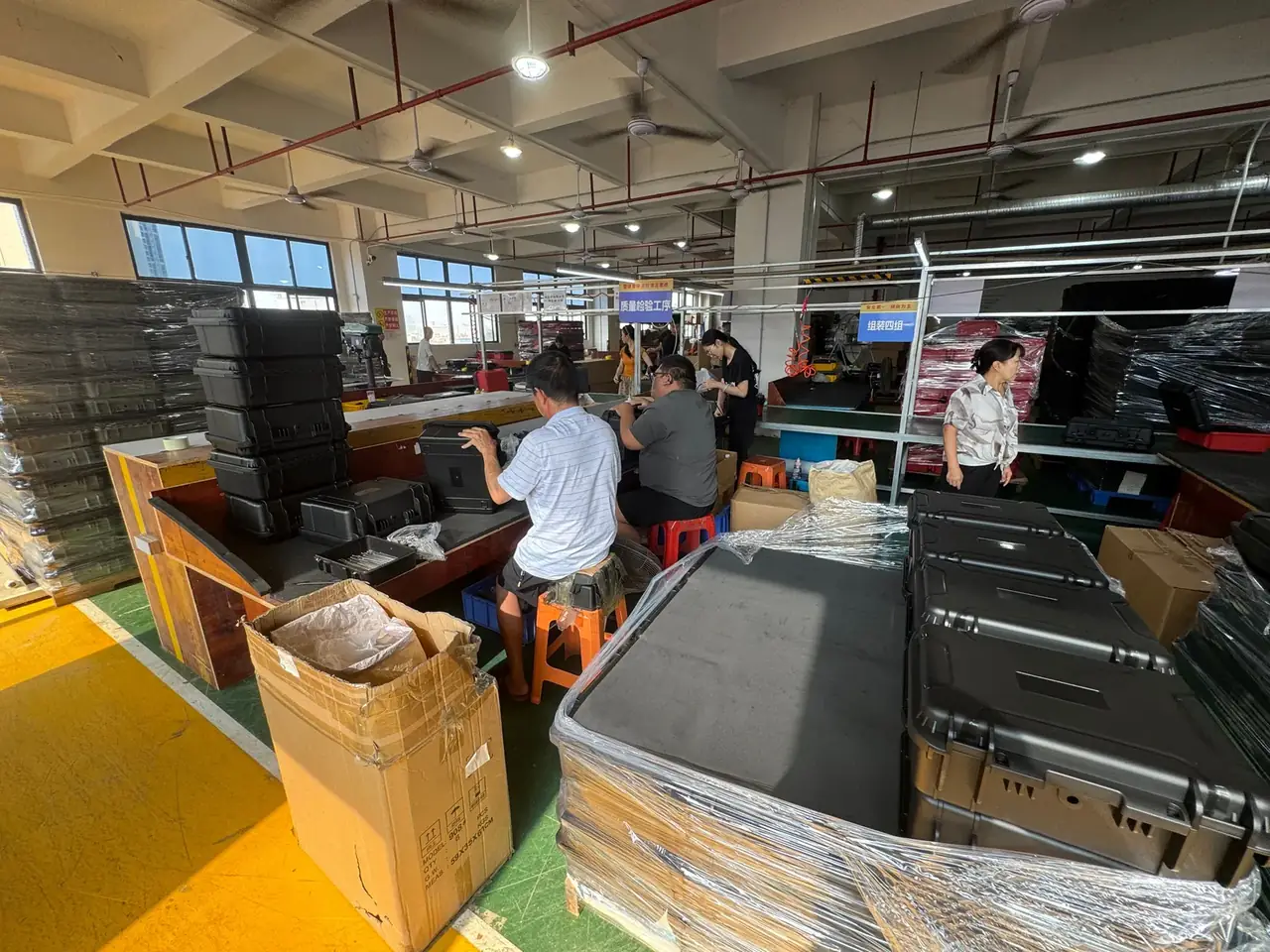
On a line, that order complicates logistics. In a 30-unit lot, part of the batch enters the tank already shocked, so the tank needs its own control: chloride below 50 mg/L, water at 23 °C ± 2 °C, 6 units per pass, 100 mm between cases.
Bind the traveller to the lot number: which unit took 18 hits, which took 6, which tank. Leave it out and the record cannot be reconstructed.
5. Fixtures, Channels and What the Report Must Keep
Push the first fixture resonance above 600 Hz. A 40 g, 11 ms pulse looks like 45 Hz, but its rising edge carries content to 500 Hz. With resonance below 200 Hz, ringing rides on the response and a 40 g peak reads as 55 g. Sweep 10 Hz to 500 Hz, keep Q under 10, and stiffen the fixture.
Torque is checked twice: before shock and after all 18 hits. An M6 fastener set to 6 N·m that reads below 4.5 N·m counts as backed out.
Keep five items: pulse traces, a peak table for the table plus three case channels, the hit-by-hit order, torque before and after, and the immersion log. Drop one and a reviewer cannot tell whether the numbers came off one case.
Conclusion
Method 512 and Method 516 divide the work cleanly: 512.6 uses 1 m of water for 30 minutes to find a leak path, 516.8 uses 40 g, 11 ms and 18 hits to find a weak section. Chained as 516 then 512, one campaign yields two corroborating results.
This article covers case-side specifications only and does not address any handling, loading or use of the contents.
Related Reading
- MIL-STD-810H compliance points for cases
- How the 26 drops of MIL-STD-810H are spread
- Setting vibration level and sweep rate
- The GJB military case standard system
Related Products
- 8 Series — Gun Cases; Military Equipment Cases; Camera Equipment Cases; Drone Cases; Watch Cases; Knife Cases; First Aid Cases; Electronics Equipment Cases
- WL8-2812 PP Gun Case — model WL8-2812
- All protective cases and toolboxes: 7 series, 158 models