

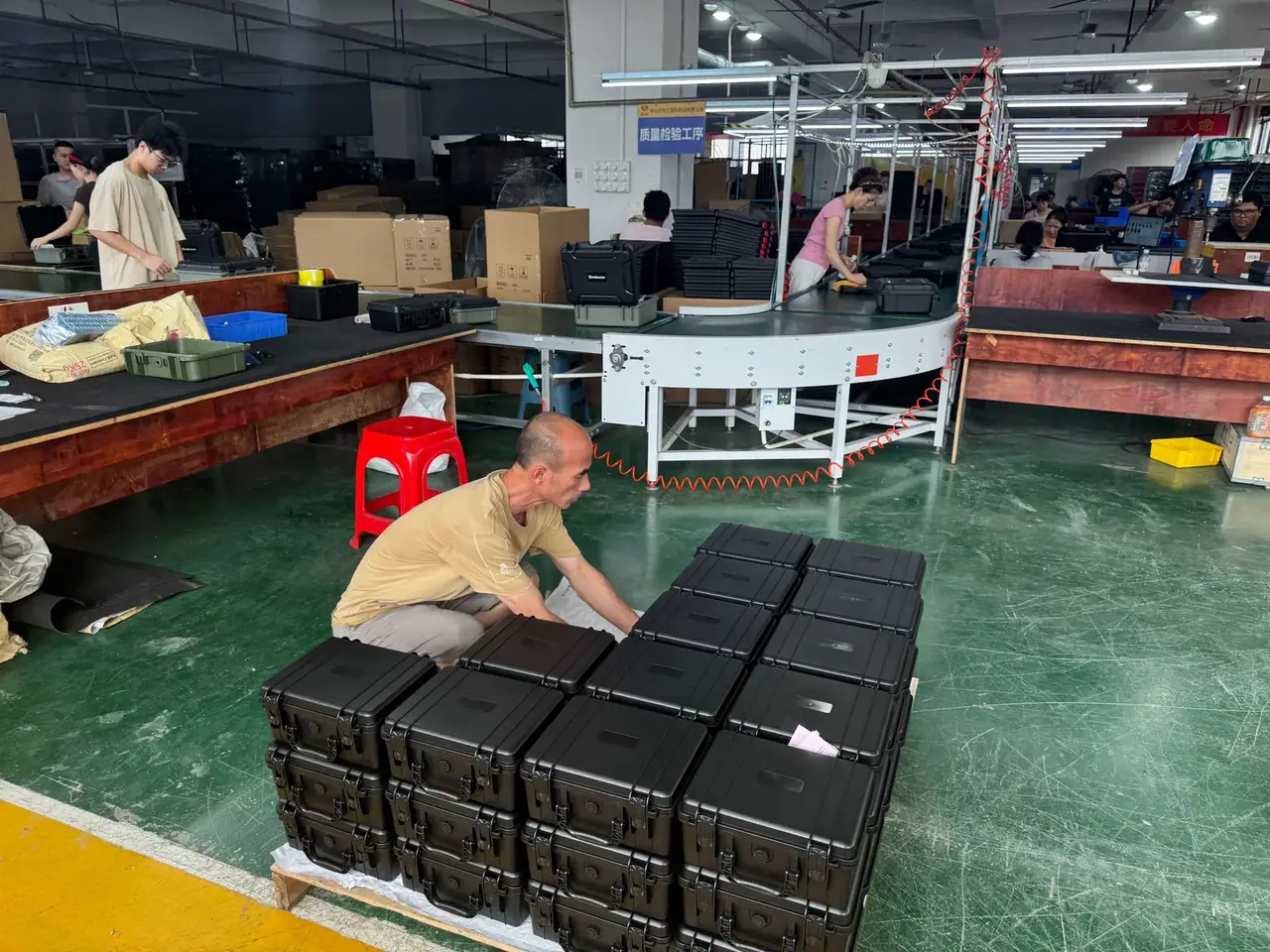
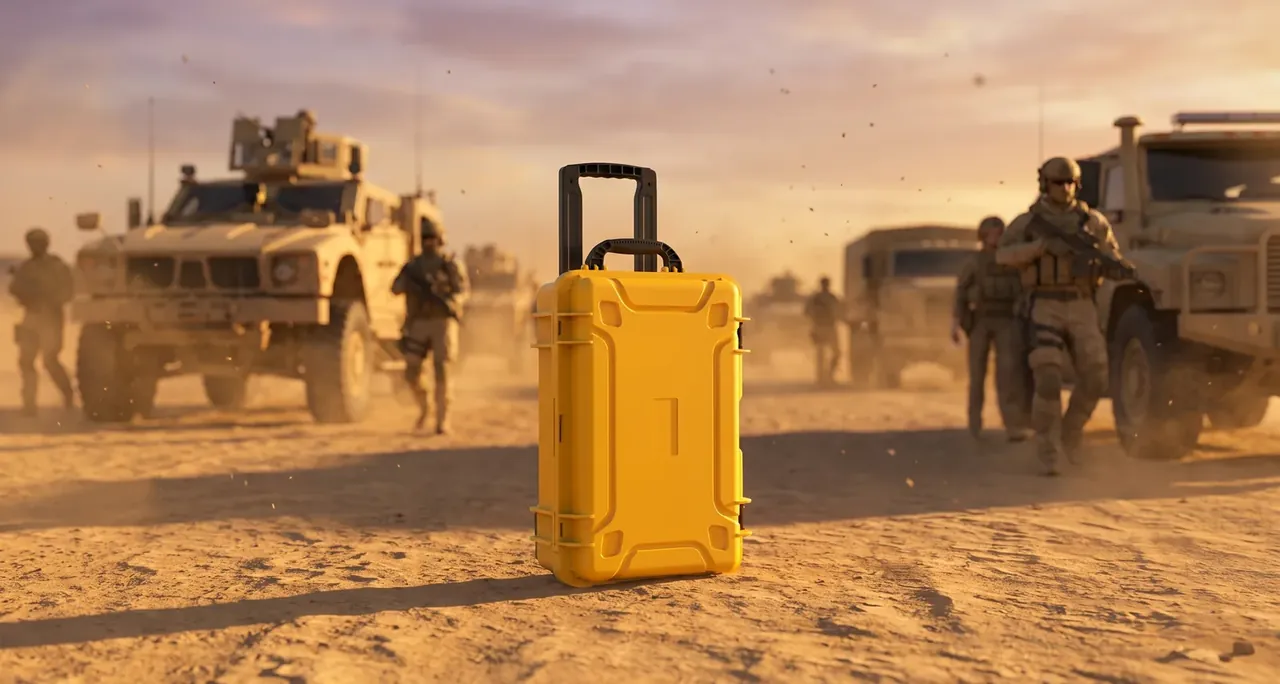
Quick answer: A Military 3-proof plastic trolley case supplier holds handle wobble to 1.0 mm with batch gauges, samples 8 units per lot, and clears 20000 cycles.
Table of contents
- Where a Military 3-proof plastic trolley case supplier Sets the Wobble Limit
- Which Mating Faces Batch Gauges Read on 8 Units
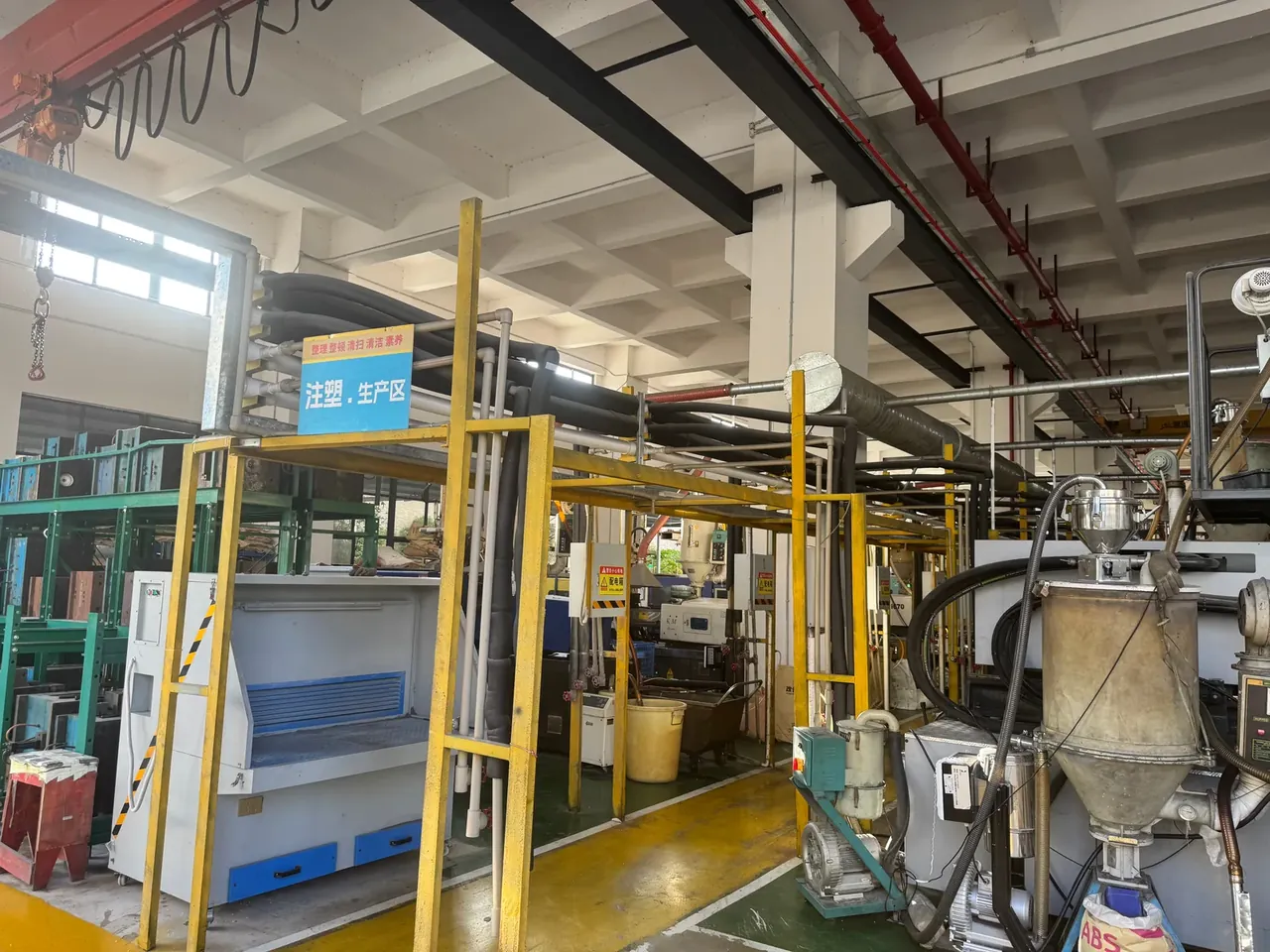
- How the Wheel-Seat Insert and Two-Stage Handle Share a Tolerance Chain
- Which Clearance Window Survives 20000 Extension Cycles
- Shell Load Recheck for Handle Retention After a 1.0 m Drop
- FAQ
1. Where a Military 3-proof plastic trolley case supplier Sets the Wobble Limit
A Military 3-proof plastic trolley case supplier builds to 690×470×300 mm outside and 625×405×245 mm inside, with a 4.2 mm wall, 7.2 kg empty and 18 kg payload. The two-stage handle runs 420 mm, and the ≤1.0 mm wobble ceiling is not read by chance on a finished unit: it accumulates from riveting the handle tube to the shell guide sleeve, with tube straightness, sleeve bore and post-rivet concentricity each taking a share. Two wheel-seat groups at 300 N each, 60 mm castors and four 440 N latches mount on the same shell, so a shifted locator passes its error through and amplifies wobble at the final read.
2. Which Mating Faces Batch Gauges Read on 8 Units
On the sampling bench a Military 3-proof plastic trolley case supplier judges three mating faces, not handle appearance: radial clearance between tube and guide sleeve, fit of wheel-seat insert to shell insert, and alignment of the four latches with the rim catch seats. Gauges take 8 units per lot, read the 1.0 mm margin on the wobble gauge, run 20000 extensions on the cycle rig, then confirm the 300 N groups and 440 N latches are seated with a pull gauge. Only when all three sit inside the window is the lot released.
| Assembly step | Controlled item | Logged value |
|---|---|---|
| Tube riveting | Two-stage concentricity | Wobble ≤1.0 mm |
| Wheel-seat insert press | Two groups | 300 N each |
| Castor fitting | 60 mm | Radial clearance |
| Latch press | Four latches | 440 N each |
3. How the Wheel-Seat Insert and Two-Stage Handle Share a Tolerance Chain
For a Military 3-proof plastic trolley case supplier the chain starts at the shell datum: the guide-sleeve bore sets the direction of the two-stage handle, the wheel-seat insert sets how the shell sits, and both share one locating-hole group in the shell floor. At full 420 mm extension the tip swing is held by the 1.0 mm limit, split across tube straightness, sleeve clearance and rivet concentricity; let one segment eat 0.2 mm more and the unit fails. Working range is −25 °C to 60 °C, and shell and nylon insert shrink differently, so the chain is checked at both ends: cold contraction raises resistance across 20000 extensions, heat softens the insert and lifts wobble. Both conditions are folded into the window on the same 8 sampled units.
4. Which Clearance Window Survives 20000 Extension Cycles
Cycle life for a Military 3-proof plastic trolley case supplier is set at 20000 extensions, with no binding, no pull-out, and wobble still ≤1.0 mm afterwards. Binding usually comes not from the tube but from a squeezed clearance window between sleeve and insert: too little and cold contraction seizes it, too much and wobble hits the ceiling. The plant sets the window in segments along the 420 mm travel, giving each of the two stages its own fit band, and the cycle rig logs resistance curves across 20000 runs.
| Gauge | Range | Sampling | Verdict |
|---|---|---|---|
| Wobble gauge | 0–2 mm | 8 units per lot | ≤1.0 mm |
| Cycle rig | 20000 runs | 8 units per lot | No binding |
| Pull gauge | 0–500 N | 8 units per lot | 300 N / 440 N |
| Drop rig | 1.0 m | 8 units per lot | No pull-out |
Set beside the assembly table, a Military 3-proof plastic trolley case supplier logs one number set for the assembly datum and another for residual clearance; IP67 rests on the rim seal and four 440 N latches.
5. Shell Load Recheck for Handle Retention After a 1.0 m Drop
The 1.0 m drop comes last for a Military 3-proof plastic trolley case supplier. After the 18 kg loaded shell lands on corner, edge and face, the inspector checks for cracks, confirms the two wheel-seat groups and 60 mm castors still seat, re-reads wobble and 420 mm travel, and confirms the handle does not pull out at stow. The four latches at 440 N each must not pop open, or the rim loosens first and every wobble reading loses its premise. JUNZHIJIA puts the drop, the −25 °C to 60 °C swing and the 20000 extensions on one sampling card at 8 units per lot, so 1.0 mm maps to the sleeve, 300 N to the insert, 440 N to the latches and 1.0 m to shell load.
| Tolerance | Location | Method | Ceiling |
|---|---|---|---|
| Wobble ≤1.0 mm | Two-stage tube | Wobble gauge | 1.0 mm |
| Travel 420 mm | Guide sleeve | Calliper | 420 mm |
| 300 N each | Wheel-seat insert | Pull gauge | 300 N |
| Wall 4.2 mm | Shell | Thickness gauge | 4.2 mm |
Conclusion
A Military 3-proof plastic trolley case supplier manages handle wobble as the closing value of a tolerance chain, not luck on a finished unit: 690×470×300 mm outside and a 4.2 mm wall fix the shell datum, two-stage 420 mm travel and ≤1.0 mm wobble are shared across sleeve, insert and rivet concentricity, and 8-unit batch gauges tie 20000 extensions, 300 N wheel seats and 440 N latches into one record. Reading the spec along datum-to-face-to-cycle-to-recheck catches more than watching IP67 alone. JUNZHIJIA keeps the 1.0 m drop, the −25 °C to 60 °C span and the batch readings on a single card for traceability.
Related Reading
- Case wheels and trolley handle assembly
- Commercial plastic luggage trolley case selection guide
- Case supplier assembly inspection process
- Case lock customization options and clamp force
Related Products
- 8 Series — Gun Cases; Military Equipment Cases; Camera Equipment Cases; Drone Cases; Watch Cases; Knife Cases; First Aid Cases; Electronics Equipment Cases
- WL8-2812 PP Gun Case — model WL8-2812
- All protective cases and toolboxes: 7 series, 158 models