

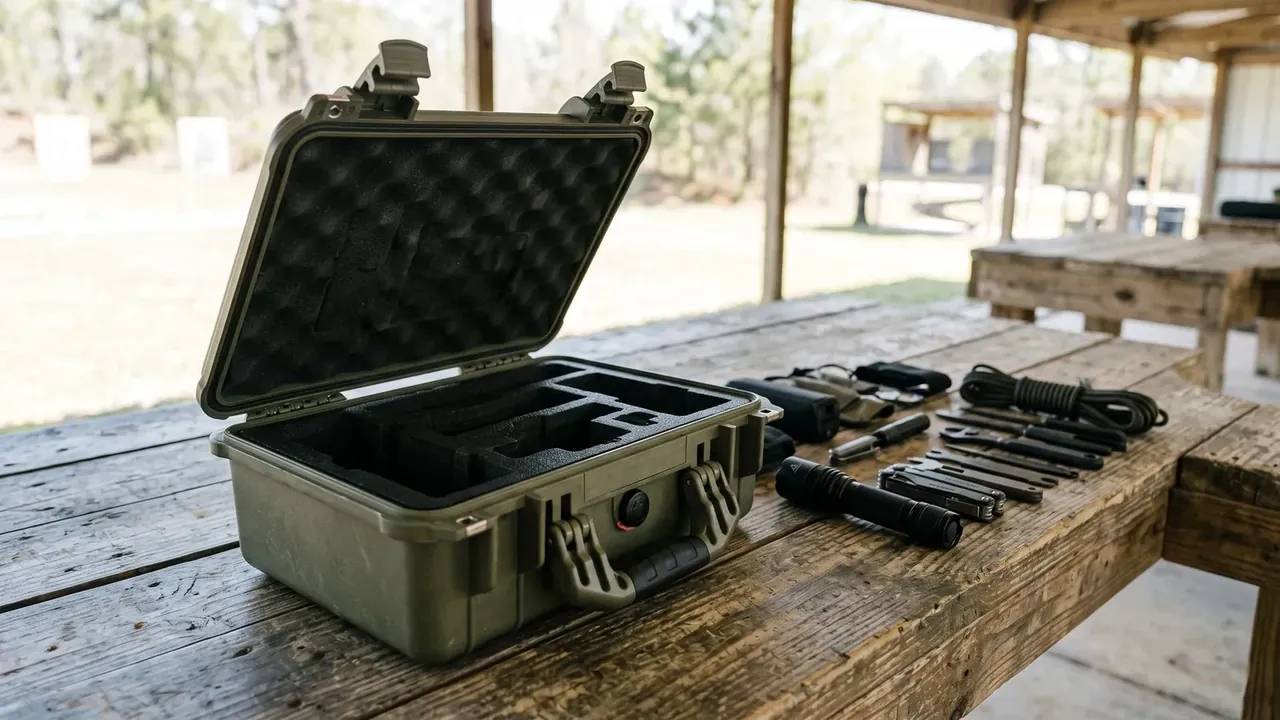
Quick answer: Price is about a third of what a Military Chemical Agent Container costs to own. Over 5 years the rotomolded unit at 480 runs 1,560 in total against 2,670 for welded stainless at 1,350, yet four job types still justify metal.
Table of contents
- Where the money actually goes
- Four jobs where it is the wrong case
- What the alternatives win
- Mixing a fleet at 8 to 2
- FAQ
1. Where the money actually goes
On the quotation, 480 and 1,350 sit 870 apart, and finance reads that line. Operations reads the other: the case is washed, re-gasketed and lifted for 8 years.
| Option | Unit price | Wash per year | Service life | 5-year total |
|---|---|---|---|---|
| Rotomolded HDPE | 480 | 216 | 8 years | 1,560 |
| Welded stainless | 1,350 | 264 | 12 years | 2,670 |
| Riveted aluminium | 920 | 240 | 6 years | 2,120 |
At 18 per wash and 12 washes a year, plastic costs 216. Stainless needs passivation at 22 per wash, 264 a year, and is heavy enough to need a hoist the table ignores.
Disposal is the third line: a rotomolded shell returns 40 as scrap, stainless 210 as steel, which pulls the 5-year gap from 1,110 to 940.
Split the 8-year life of a Military Chemical Agent Container and the curve shows: past year 5 plastic costs 60 a year to own, while aluminium is replaced wholesale at year 6.
2. Four jobs where it is the wrong case
The first is strong solvent. Soak HDPE in acetone for 48 hours and the coupon loses 1.8% of its weight, swells, softens, and the seal groove follows. Such work belongs on 316L stainless from 1,600 upward, which does not swell.
The second is a very large cavity. Rotational moulding tops out near 1,200 mm a side, and past that the shell is welded, putting a seam where crevice corrosion starts. Above 1,500 mm of clear space, welding is the only route.
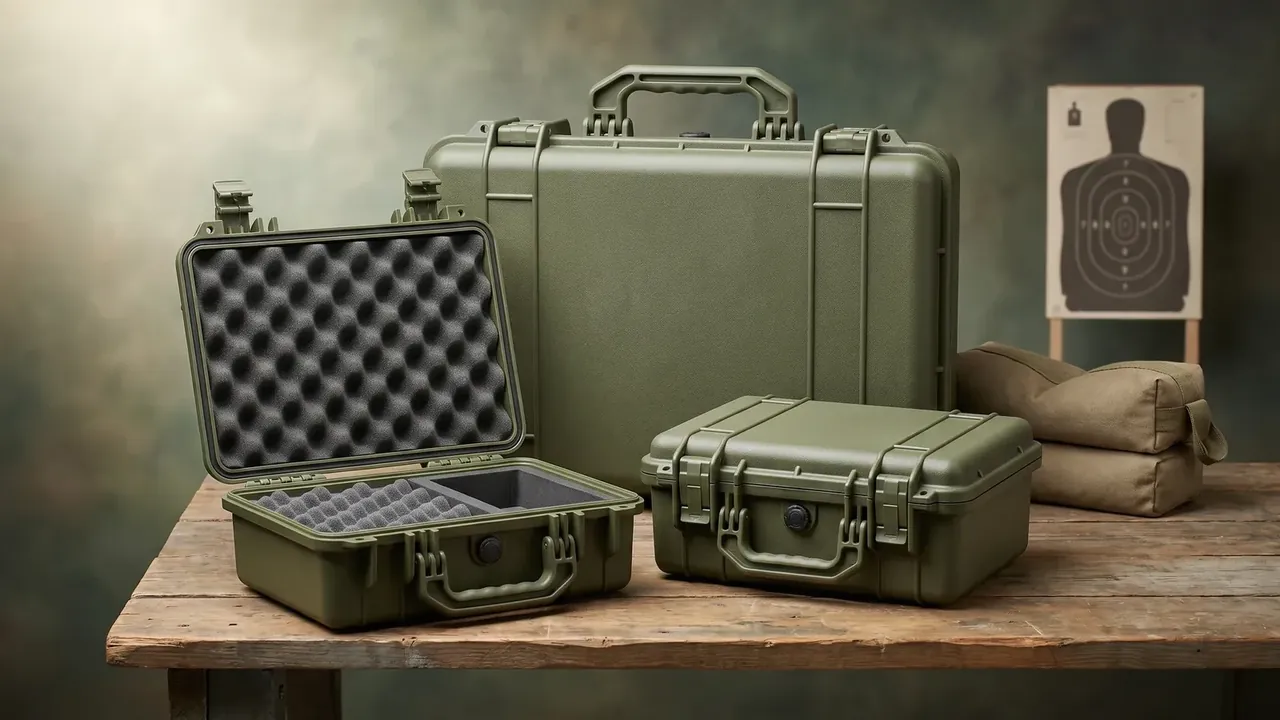
The third is sustained heat. Above 60 °C a Military Chemical Agent Container creeps, the lid crowns, and seal compression slides from 25% to below 15%. Drying rooms and cases left on a sunlit slab fall here.
The fourth is one-way work. For a single trip with no return or washing, a 95 carton with foam is cheaper, and a 2.5% damage rate is acceptable.
One condition is enough to flatten the advantage of a Military Chemical Agent Container, since no coating rescues a shell that has already swollen.
A fifth edge is pressure: 30 kPa held 60 seconds is the usual line; past 0.2 MPa, plastic creeps until the curve goes flat.
3. What the alternatives win
Four dimensions matter when options share a table: resistance, price, weight, life. A Military Chemical Agent Container leads on price and weight, and loses on the other two.
| Alternative | Wins on | Loses on | Fits |
|---|---|---|---|
| 316L stainless | Solvents, 200 °C, welded cavities | 1,600 a unit, 46 kg | Solvent and heat |
| Riveted aluminium | 14 kg, one-person carry | Seams leak, 6-year life | Manual handling |
| Carton with insert | 95, 15-day lead | One trip, 2.5% damage | One-way shipment |
Stainless ships in 15 days at a minimum of 1 order, which suits a fixed store bought once for a decade. Its weakness is mass: a 46 kg unit needs a hand change every 30 m, and handling runs 30% above plastic.
Aluminium wins on weight: at 14 kg empty one person shoulders it, which matters on slopes. The price sits in 480 rivets, each a water path, and salt spray shows white after 96 hours.
The carton is simplest: 95 a trip, replace when crushed. It holds while nothing returns, is washed, or is stored past 30 days.
4. Mixing a fleet at 8 to 2
In a 200-unit list, a Military Chemical Agent Container takes 160 slots and stainless 40. Tooling at 80,000 spreads over 2,000 units to 40 each; at an order of 200 the same tooling becomes 400 a unit.
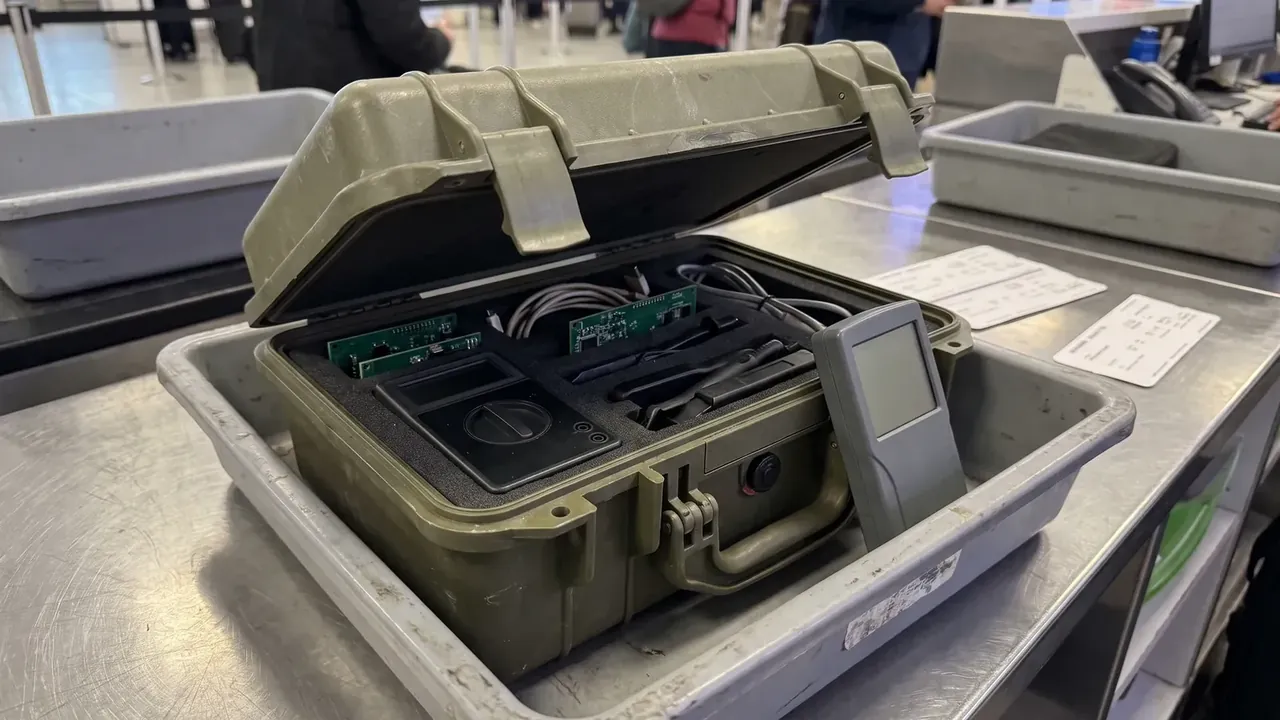
Screening shifts the count. Running a whole case through the X-ray and reopening it costs about 40 seconds, against 8 seconds to cut and reapply a seal; across 300 inspections a year that 32-second gap becomes 2.7 hours.
Return freight is the hidden line: an empty 21 kg shell at 0.42 m³ needs 4 tiers to fill one 1.2 m crate, so volume-priced routes do not favour plastic.
Cold needs its own figure. At -25 °C the impact strength of HDPE falls about 30%, and the drop test must come down from 1.2 m to 0.8 m to survive, so a Military Chemical Agent Container gives up margin where 1.2 m is mandatory.
Conclusion
At the quotation the gap is 870; over 5 years of washing and scrap it narrows to 940, and per use it shrinks again. Choice turns on three boundaries, not price: solvent, cavity size, temperature. Cross one and a Military Chemical Agent Container gives way to metal.
This article discusses only the container (case body) side of specifications and design intent, and does not cover any handling, loading or use of the contents.
Related Reading
- How acceptance differs between plastic and metal
- Inside the shell, seal and hinges
- Cost comparison across packing materials
- Trading off materials in ammunition boxes
Related Products
- 8 Series — Gun Cases; Military Equipment Cases; Camera Equipment Cases; Drone Cases; Watch Cases; Knife Cases; First Aid Cases; Electronics Equipment Cases
- WL8-2812 PP Gun Case — model WL8-2812
- All protective cases and toolboxes: 7 series, 158 models