

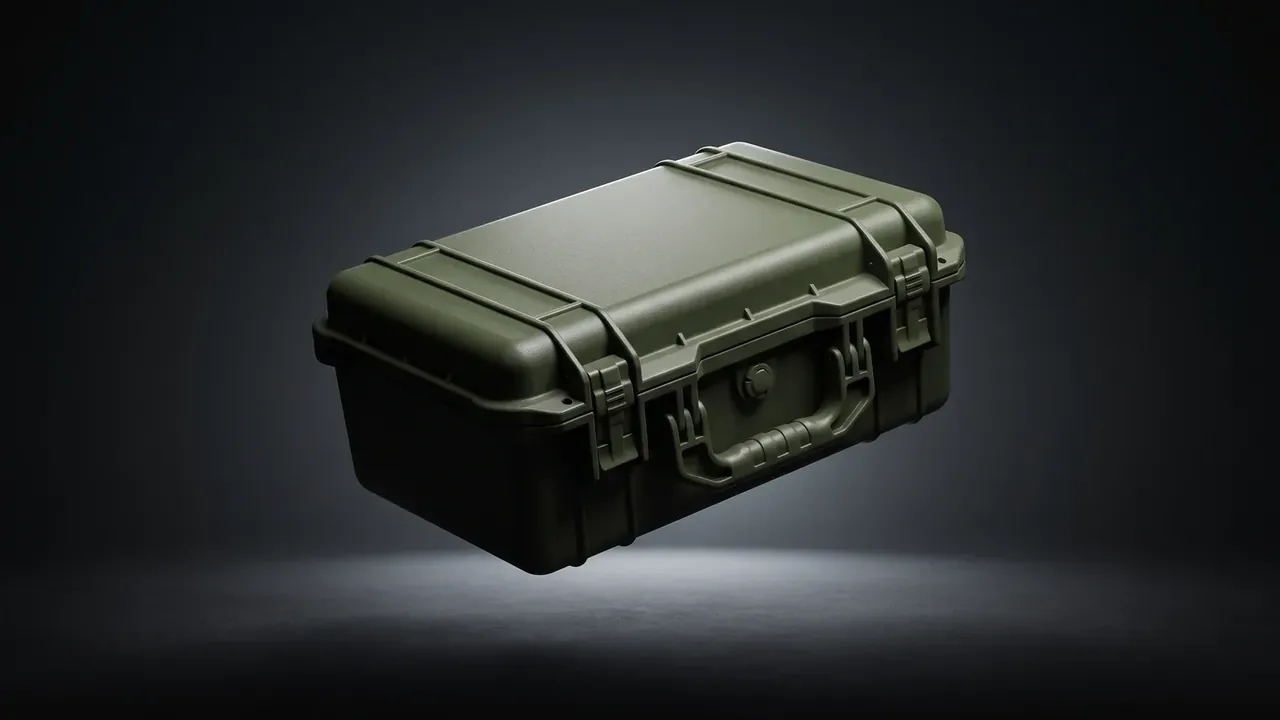
Quick answer: Configuration in a military firearm case is back-calculated from the scenario, not picked off a spec sheet: ranges reward draw speed, field duty moving gear, issue duty traceability, storage stacking strength.
Table of contents
- How Military Firearm Case Applications Split by Scenario
- Range and Training Use: Draw Rhythm Drives the Insert
- Field Deployment: Choosing the Moving Gear
- Law Enforcement Issue: Open Cycles and Wear
- Storage and Transit: Stacking, Wheels and Markings
- FAQ
1. How Military Firearm Case Applications Split by Scenario
Two numbers separate military firearm case applications: how often the case opens daily, and how far it travels between sessions. The first drives insert and latch choice, the second moving gear and stacking.
Five scenarios cover most: range training, field deployment, issue duty, sealed storage, road or air transit. Their demands do not overlap.
| Scenario | Conditions | Configuration focus |
|---|---|---|
| Range training | Flat ground, frequent opening | Segmented insert, light handle |
| Field deployment | Dirt roads, vehicle and carry | Wheels or sling, anti-release latch |
| Issue duty | Fixed user, handover log | Numbered marking, own lock |
| Sealed storage | Warehouse, long idle | Stack strength, desiccant bay |
| Road and air transit | Repeated handling, pressure change | Corner guards, pressure valve |
Start with weekly open cycles, not size.
2. Range and Training Use: Draw Rhythm Drives the Insert
A four-hour session puts a single case through about 30 open cycles, near ten thousand a year at 300 sessions. At that rhythm the insert solves handling, not impact: cavities cut too tight tear at the edges within six months.
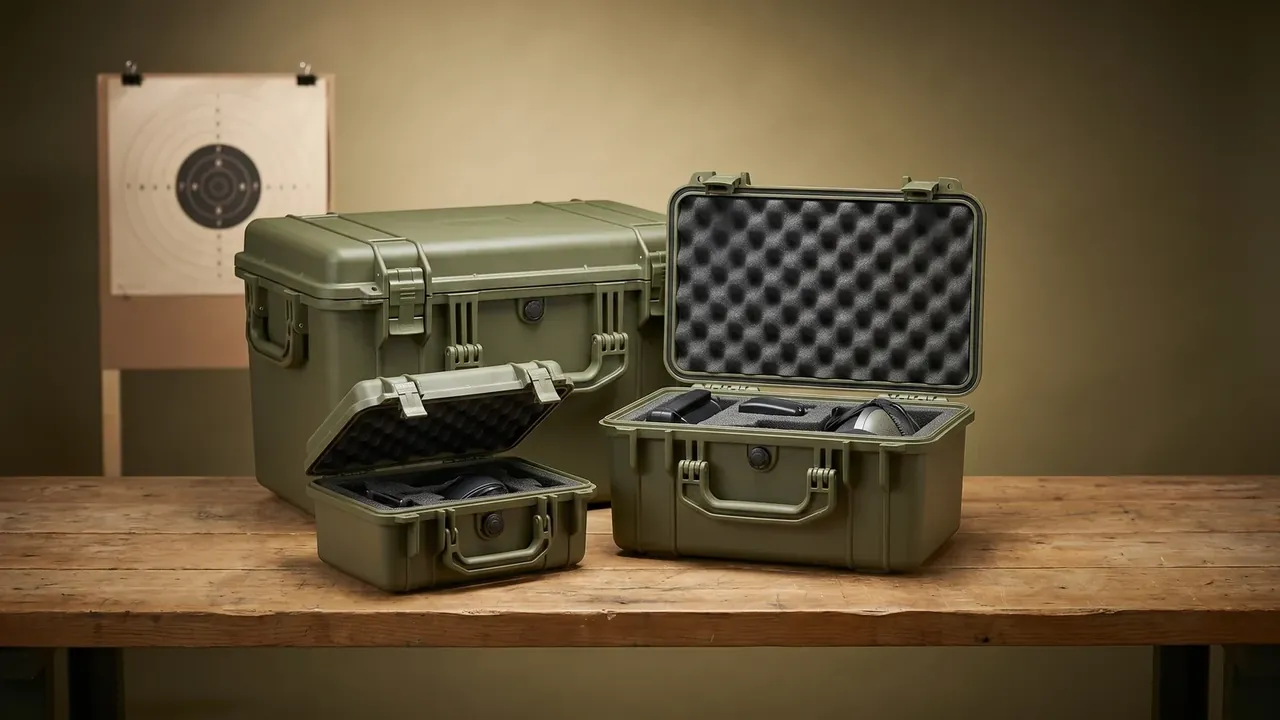
One counter-intuitive rule applies: prefer several small cases over one oversized one. Keep one equipment class per case, with four to six cavities sized so the case clears in one motion.
Opening frequency also sets the latch style. Single-action catches open with one press and suit high-cycle work; double-action safety catches resist accidental release but add a step every time, which the hand notices by mid-session.
3. Field Deployment: Choosing the Moving Gear
Field deployment is the longest-distance scenario, and the load is sustained vibration, not a single impact. Two hours of gravel at 60 km/h delivers more energy than one drop, so the focus shifts from shell to restraint.
Moving gear follows distance: a folding handle under 500 m, a wide sling to 3 km, wheels beyond that. Match wheel size to load — 75 mm below 18 kg, 100 mm above, at least 40 kg per wheel.
4. Law Enforcement Issue: Open Cycles and Wear
Issue duty binds one case to one person: two shift handovers a day, roughly 12 open cycles daily. Low frequency over a long period moves wear from the shell to the latch faces and handle pivot, where coating rubs through.
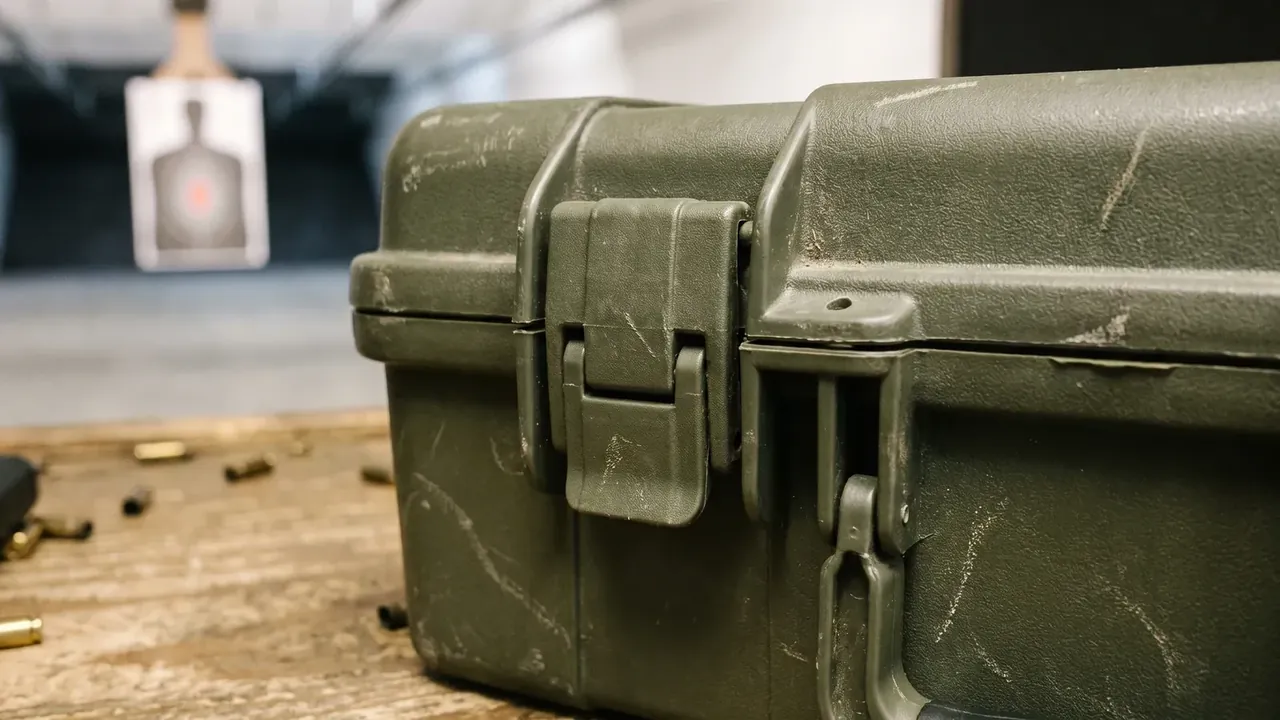
Here the priority is identification: five marking positions across four sides and the lid, a 40 mm main number, a 60 by 30 mm scan label, and a lock point so seals are verified unopened. Name stickers do not survive a wet season.
Long service needs a maintenance window: over about 18 months latch preload falls roughly 15 percent, felt as a loose catch; treating latches as consumables costs less than finding the seal failed.
5. Storage and Transit: Stacking, Wheels and Markings
In storage a military firearm case barely moves, so the load comes from above. Stack height follows the compressive capacity of the bottom case: four layers at 200 kg. Beyond that, add a pallet or racking, or the lid creeps into a dish within six months.
Warehouse conditions decide how well sealing holds: 15 to 25 C, humidity at or below 60 percent, cases on 100 mm dunnage, 100 g of desiccant per 50 litres of cavity, changed every six months.
| Item | Sealed storage | Road and air transit |
|---|---|---|
| Stacking | Four layers, 200 kg on the bottom case | Single layer, strapped |
| Base | 100 mm off the floor | Fork pockets 100 mm high, 60 mm deep |
| Marking | Five faces, 40 mm characters | Orientation labels |
| Sealing | Static, moisture is the risk | Pressure equalisation valve |
Transit inverts the picture: a case may be handled four times a day. The focus is load points — fork pockets below the centre of gravity, corner guards routing impact into a replaceable part, straps pulling against ribs.
Conclusion
The logic is short: the scenario sets the frequency, the frequency sets the structure, the structure sets the numbers. Range work needs fast draws, field work mobility, issue work traceability, storage compressive strength, transit load points. Arrange those values by scenario and a military firearm case lands in the right application.
This article discusses only the container (case body) side of specifications and design intent, and does not cover any handling, loading or use of the contents.
Related Reading
- Maintenance intervals for a military firearm case
- Procurement and acceptance for a military firearm case
- What a military supply case is: structure and fit-out
- Weapon storage cabinet applications and types
Related Products
- 8 Series — Gun Cases; Military Equipment Cases; Camera Equipment Cases; Drone Cases; Watch Cases; Knife Cases; First Aid Cases; Electronics Equipment Cases
- WL8-2812 PP Gun Case — model WL8-2812
- All protective cases and toolboxes: 7 series, 158 models