

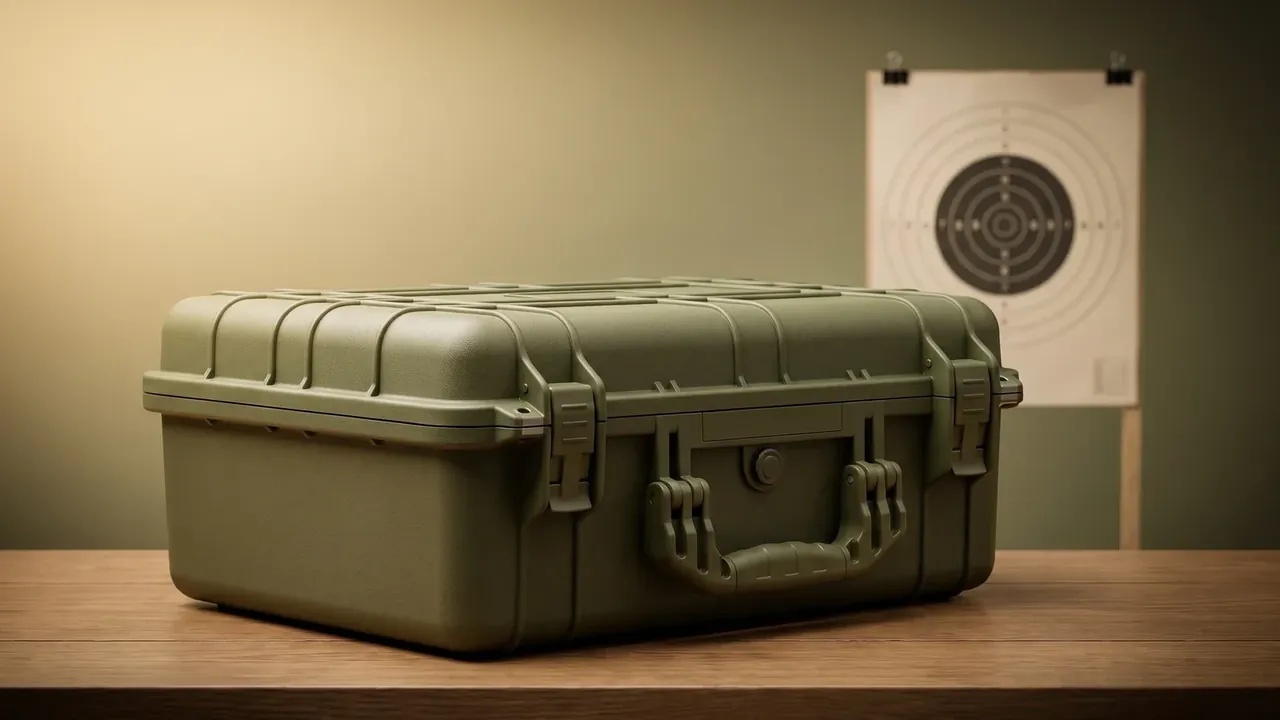
Quick answer: A military firearm case is checked on three clocks: a three-minute visual check before issue, a 90-day functional check with feeler gauge and torque wrench, and a 365-day teardown that pulls the gasket and weighs the desiccant.
Table of contents
- Inspection Layers for a Military Firearm Case
- Gasket Condition and the Replacement Line
- Latches, Hinges and Torque Re-tightening
- Foam Liner Ageing and Collapse
- Retirement Limits and Disposal
- FAQ
1. Inspection Layers for a Military Firearm Case
A military firearm case is checked on three clocks, not maintained once a year. The pre-issue check takes three minutes: latches home, no grit in the gasket groove, no new crack on an edge. One grain of sand under the gasket is where airtightness starts leaking.
The 90-day check needs tools: ten open-close cycles to listen, a feeler gauge around the mouth, a torque wrench on the latch screws. At 365 days the gasket comes out, the groove floor is read for water marks, and the desiccant is weighed.
| Layer | Interval | Items | Pass mark |
|---|---|---|---|
| Pre-issue | Every dispatch | Latch seating, groove debris, edge cracks | All clear |
| Functional | 90 days | Hinge feel, mouth gap, screw torque | Gap ≤ 0.6 mm |
| Teardown | 365 days | Gasket out, water marks, desiccant mass | Gain ≤ 8% |
2. Gasket Condition and the Replacement Line
The gasket is the first part on a military firearm case to age and the cheapest to replace, so the decision belongs on paper. Silicone runs at 50±5 Shore A and works at 25–30% compression; below 20% the mouth never closes, above 35% the cord flattens.
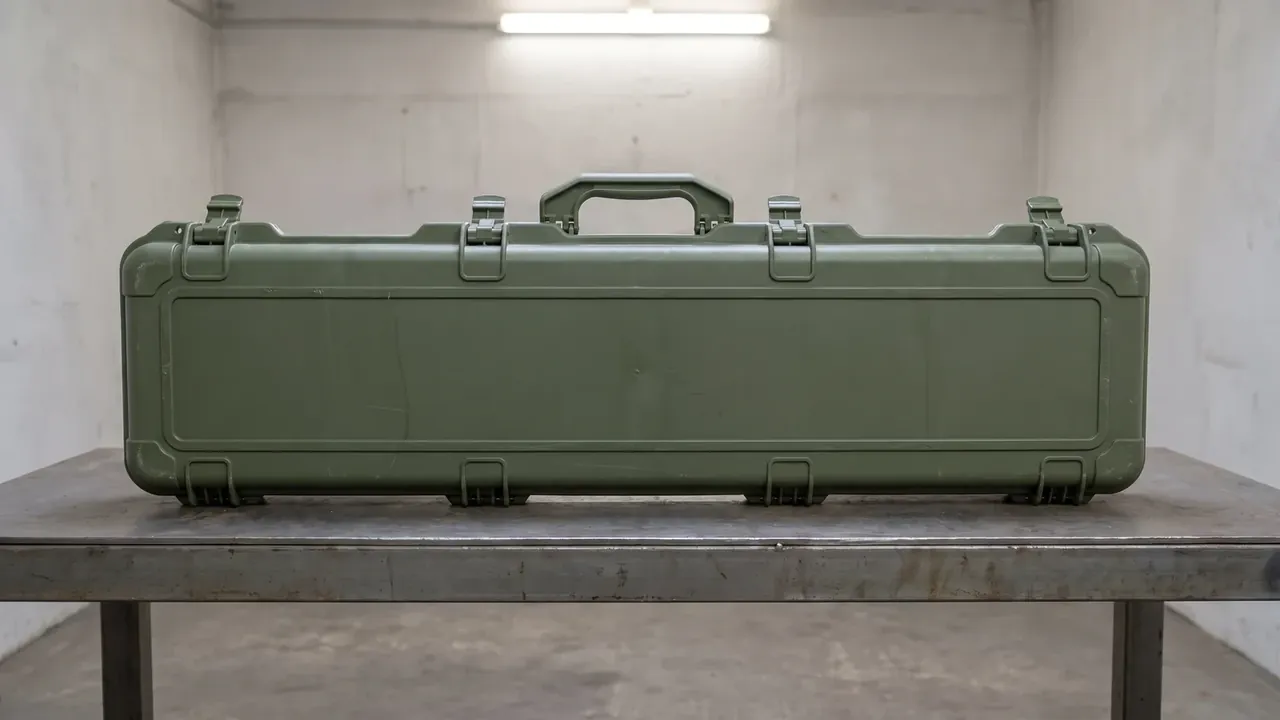
Judge it in three steps. Look for crazing, a set line or black mould in the groove. Lay it flat for 24 hours: recovery under 85% of section height is past 15% residual set. Bake a sample at 70 °C for 96 hours; a batch shifting more than 8 Shore A goes out.
The line is three years or 200 closures, whichever comes first. Every close is one compression cycle, so a humid store retires gaskets before year three and a dry one still stops at 200.
| State | Sign | Action |
|---|---|---|
| Normal | Even rebound | Clean and refit |
| Marginal | Local flat spot | Log, recheck next round |
| At the line | Residual set above 15% | Replace full length |
| Failed | Crazed, split, mould | Replace now, inspect groove |
3. Latches, Hinges and Torque Re-tightening
A loose latch makes gasket compression uneven around the perimeter, and one section seeps before the rest. Latch seats usually take M5 screws at 1.6–2.0 N·m, re-tightened every 180 days; past 2.4 N·m the plastic seat cracks from the screw hole outward and cannot be repaired.
Hinges are judged on two numbers. Pin clearance beyond 0.5 mm lets the lid shift as it closes, so the gasket shears instead of compressing. Use only a thin film of silicone grease; mineral oil swells a nylon pin.
| Point | Measure | Acceptable |
|---|---|---|
| Latch screw | Torque | 1.6–2.0 N·m |
| Latch cam | Wear | ≤ 0.8 mm |
| Hinge pin | Radial clearance | ≤ 0.5 mm |
4. Foam Liner Ageing and Collapse
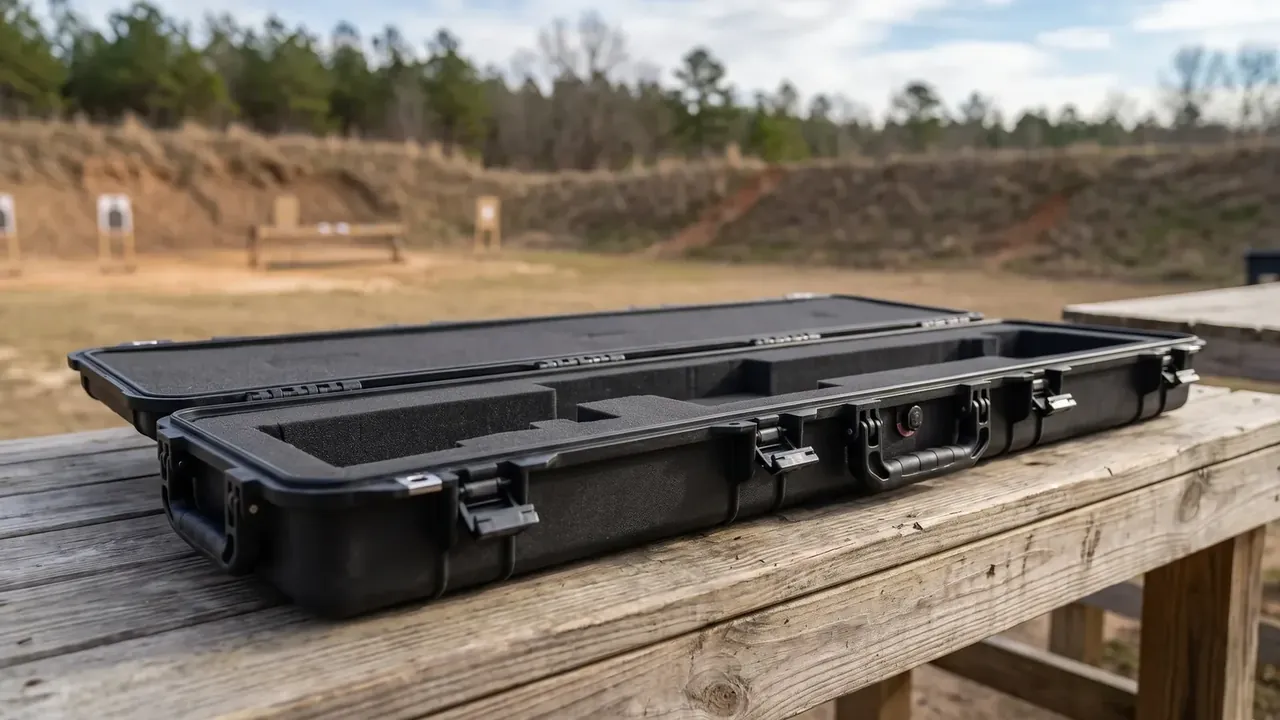
Foam seals nothing, but it decides whether the mounts still hold. A closed-cell liner at 30 kg/m³ takes a permanent set after about four years. Compress a sample 50% at 23 °C for 24 hours; recovery below 90%, or over 10% set, means the military firearm case has lost its grip on the load.
The bond fails next. Any debonded run over 50 mm needs re-gluing, or the foam shifts in transit and the cut-outs stop lining up.
5. Retirement Limits and Disposal
Some damage is repairable, some is not. A crack longer than 80 mm, or one through the wall, leaves too little strength for stacking. Mouth flatness beyond 1.5 mm will not seal even with a new gasket. A radial crack at a hinge boss means local stress has passed the material limit.
A repaired body must prove itself: stack four high for 24 hours, and anything over 3 mm of residual set goes to storage duty. Retired cases split by material — polyethylene granulated, hardware scrapped, foam and cord treated as mixed waste.
Conclusion
Good maintenance is not frequency but limits you can measure: a 0.6 mm gap, 1.6–2.0 N·m of torque, 15% residual set, an 80 mm crack, 1.5 mm of flatness. Posted on the store wall, those numbers keep the three-minute check quick and a military firearm case in service for a decade.
This article discusses only the container (case body) side of specifications and design intent, and does not cover any handling, loading or use of the contents.
Related Reading
- How a military firearm storage box is built
- Maintenance points for rotomolded cases
- War reserve case care and preservation
- Inspection workflow for military supply cases
Related Products
- 8 Series — Gun Cases; Military Equipment Cases; Camera Equipment Cases; Drone Cases; Watch Cases; Knife Cases; First Aid Cases; Electronics Equipment Cases
- WL8-2812 PP Gun Case — model WL8-2812
- All protective cases and toolboxes: 7 series, 158 models