

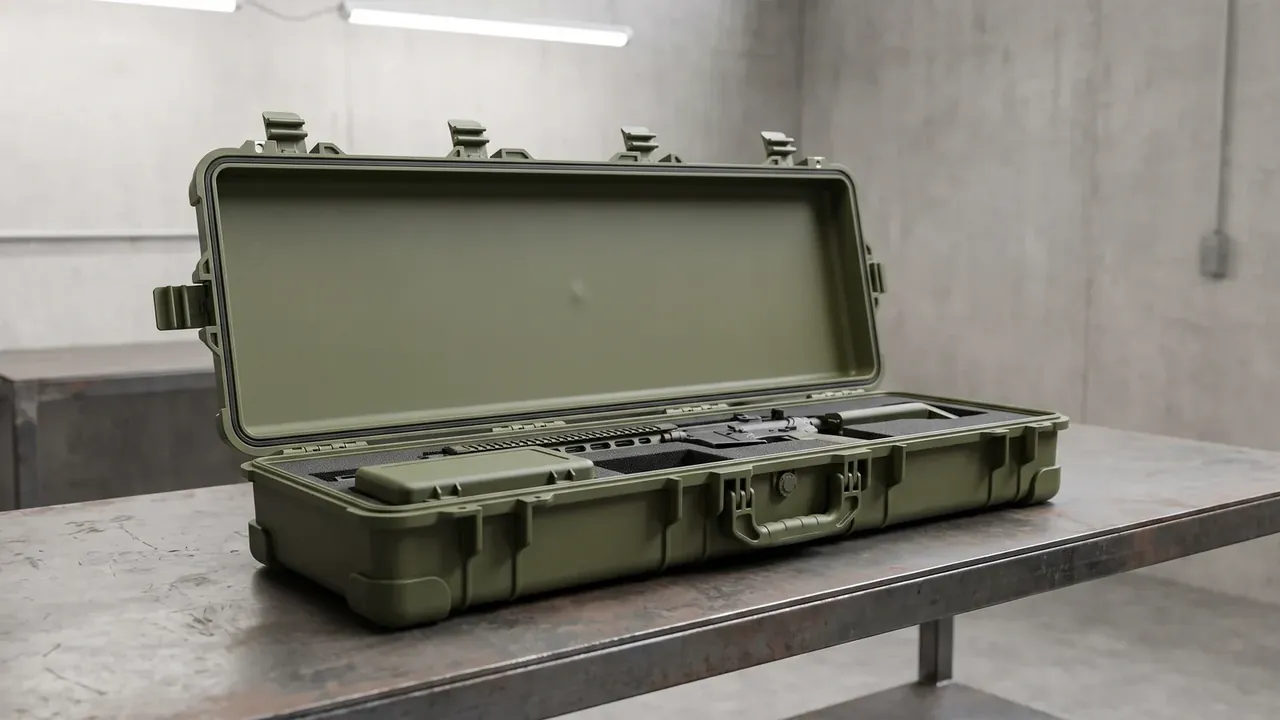
Quick answer: Quotes for a Military Firearm Case rarely compare, because each rests on three quiet assumptions: how precisely the specification is written, how much tooling the order absorbs, and whether sample approval sits inside the quoted lead time.
Table of contents
- What a Military Firearm Case RFQ Must State
- MOQ: the Real Tooling Amortisation Math
- Splitting Tooling Cost from Sampling Cost
- Lead Time Broken into Five Stages
- Tying Payment to Acceptance Evidence
- FAQ
1. What a Military Firearm Case RFQ Must State
The commonest buying mistake is treating capacity as the whole requirement: one internal length, width and height plus a quantity. The supplier then quotes the leanest build that fits, and the sample arrives with thin walls and foam that gives way under a thumb.
Write tolerances instead. Cavity as a nominal at plus or minus 2 mm, outer envelope as a maximum rather than a nominal, wall thickness as a 3.5 to 5.0 mm band with its measuring point named, and the polymer by grade rather than as engineering plastic.
| Item | Precision to specify | What omission costs |
|---|---|---|
| Internal cavity | nominal plus tolerance, ±2 mm | will not fit, batch rework |
| Outer envelope | maximum, not nominal | exceeds rack and shelf |
| Wall thickness | band plus measuring point | 0.5 mm less reads as soft |
| Gasket | compound and Shore hardness | no rebound, ingress |
2. MOQ: the Real Tooling Amortisation Math
The Military Firearm Case MOQ looks like a supplier's gate but is arithmetic about tooling. A mould for a 900 mm body costs about RMB 120,000, so RMB 60 of amortisation per unit means 2,000 pieces; at 500 pieces each carries RMB 240 and the price rises a third.
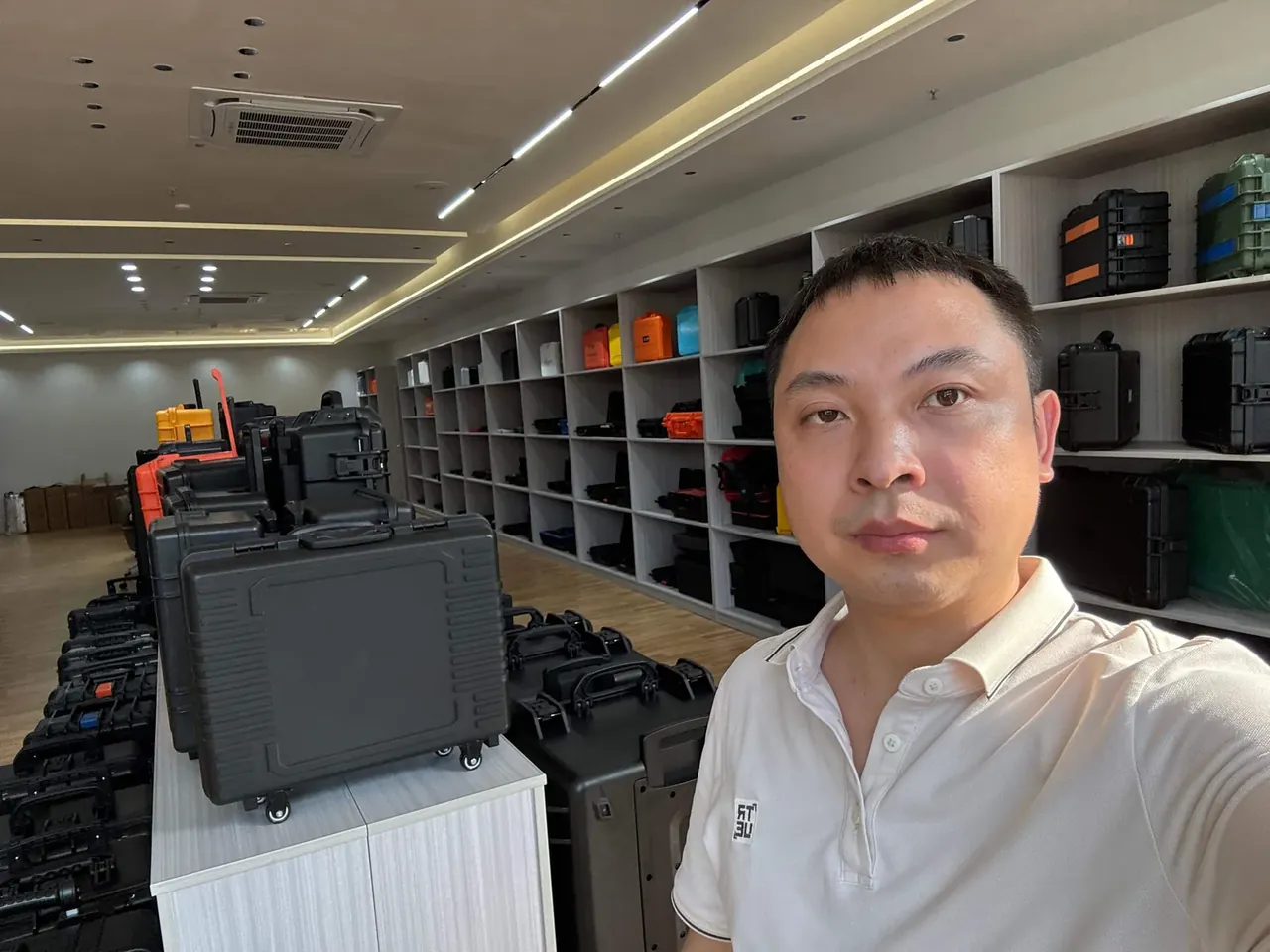
Changeover adds a second layer: clearing one colour takes 40 to 60 minutes and first-shot tuning scraps 3 to 5 kg. Colour can wait for a second run, which drops the opening order to roughly 800 pieces.
3. Splitting Tooling Cost from Sampling Cost
A lump-sum tooling price is the worst format for a Military Firearm Case. Ask for six lines: mould base, cavity and core machining, cooling circuit, slides, texture etching and trial shots. Two side slides for the handle recess add RMB 8,000 to 12,000 each.
Then pay 50 percent on frozen drawings, 30 on T1 approval and 20 before production, with two free revision rounds written into the contract. That clause disciplines quality long after the headline price is settled.
4. Lead Time Broken into Five Stages
Forty-five days hides the fact that the stages run in series: drawings 3 to 5 days, tooling 18 to 25, T1 trial and rework 5 to 8, sample approval 5 to 7, production 25 to 35.
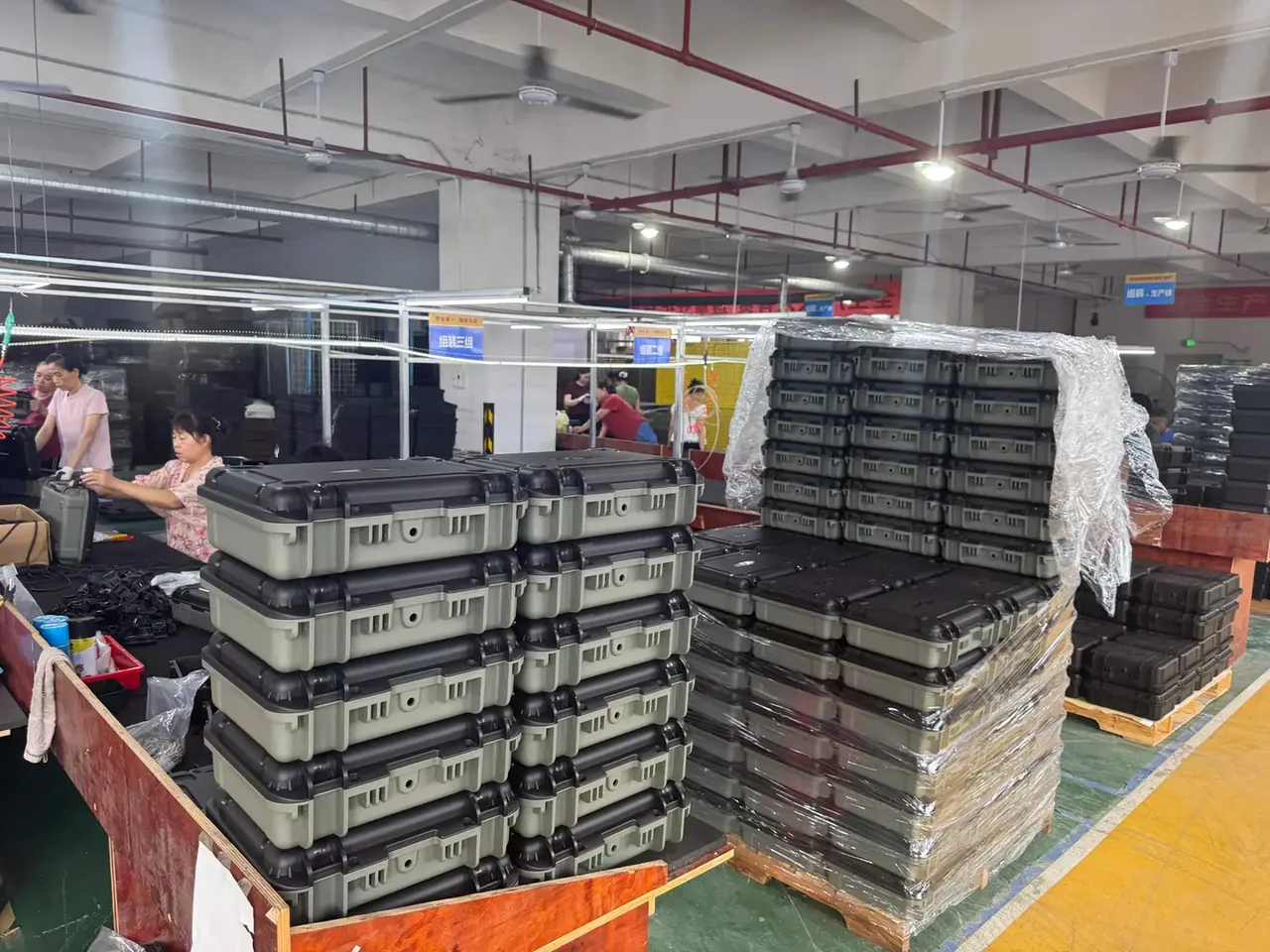
Pull forward whatever runs in parallel. Foam can be routed once the T1 sample confirms the outer form, and screen artwork prepared at the same stage, which removes 7 to 10 days. Sea freight adds 30 to 40 days of sailing plus 7 for port and customs.
5. Tying Payment to Acceptance Evidence
Final payment should never rest on the phrase goods are finished. Inspect to AQL 2.5 at general level II, hold minus 20 kPa for 60 seconds with no more than 1 kPa of decay, and cycle each latch 500 times for single-handed closure.
| Payment stage | Share | Evidence due | If it fails |
|---|---|---|---|
| Drawing freeze | 30% | tooling drawings, material confirmation | tooling on hold |
| T1 approval | 30% | trial report, sample dimensions | free rework, retest |
| Pre-shipment | 30% | inspection and seal test records | full sort or rework |
| Warranty end | 10% | six months without structural failure | credit or replacement |
Holding 10 percent for six months is normal: long enough to expose an ageing gasket, short enough to keep the supplier's cost of capital out of the price.
Conclusion
Procurement is not a contest over the lowest number but over whose assumptions are visible. Specify to tolerance, break tooling down to the slides, break lead time down to stages, and tie money to evidence. Skip that work and the discount comes out of the wall thickness and the gasket of the Military Firearm Case.
This article discusses only the container (case body) side of specifications and design intent, and does not cover any handling, loading or use of the contents.
Related Reading
- Choosing a Military Firearm Case
- Military Firearm Case versus alternatives
- Audit points in gun case production
- Answering a protective case enquiry
Related Products
- 8 Series — Gun Cases; Military Equipment Cases; Camera Equipment Cases; Drone Cases; Watch Cases; Knife Cases; First Aid Cases; Electronics Equipment Cases
- WL8-2812 PP Gun Case — model WL8-2812
- All protective cases and toolboxes: 7 series, 158 models