

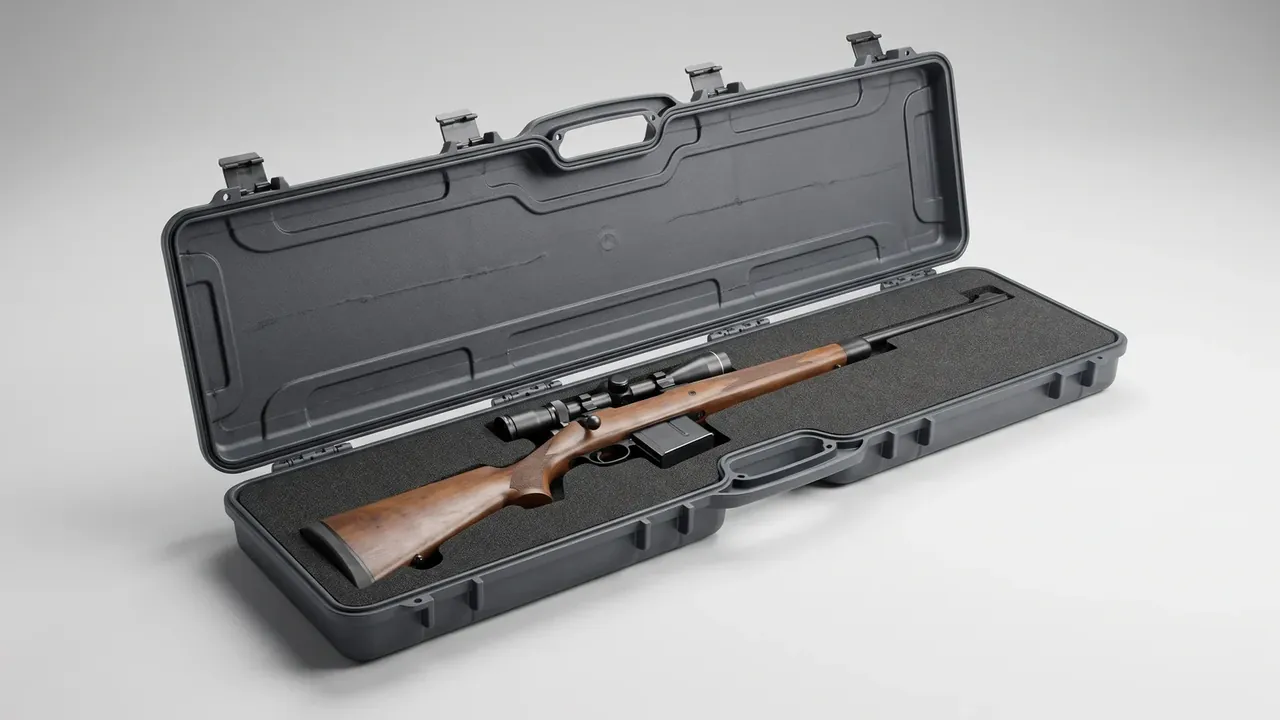
Quick answer: Most military firearm case programmes land on rotomolded polyethylene, 4–6 mm wall, because the hollow wall absorbs impact and the moulded mouth groove seals in the same cycle. Injection cases are lighter and cheaper but take impact structurally; metal is stiff and heavy; soft shells only stop scuffs.
Table of contents
- Four Production Routes Behind One Quotation
- Protection Compared, Item by Item
- What the Extra Weight Buys
- Five-Year Cost and Repair Economics
- Repair, Retirement and Resale
- FAQ
1. Four Production Routes Behind One Quotation
One purchase line rarely shows which process you buy. Rotomolding heats polyethylene powder on two axes and builds a hollow shell with even walls, no weld line, and a mouth step formed in the same cycle. Injection moulding drops a lid in under a minute, but clamp force caps wall thickness. Metal takes stiffness from its folded section, not its gauge.
Tooling decides who answers your volume. A 1200 mm rotomold tool runs CNY 80,000–150,000 and pays back near 200 units; injection tooling of that size needs 2,000. Rotomolding holds 1400 mm; 800-tonne injection stops at 1000 mm.
| Route | Forming | Wall | Weight at 1200 mm | Batch |
|---|---|---|---|---|
| Rotomolded PE | Two-axis hollow moulding | 4–6 mm | 9.5 kg | 200 |
| Injection PP | Lid and base moulded apart | 2.5–3.5 mm | 6.0 kg | 2,000 |
| Metal | Folded aluminium or welded steel | 1.2–2.0 mm | 13.0 kg | 50 |
| Soft shell | Heat-pressed EVA plus fabric | 8–15 mm | 3.2 kg | 50 |
2. Protection Compared, Item by Item
A 1.8 m corner drop is the usual acceptance height. The rotomolded military firearm case passes because the hollow wall flexes a few millimetres and springs back with only a scuffed edge. An injection case passes warm but turns brittle at minus 20 °C and fails as a split corner at a weld line. Metal dents and hands the impulse to the foam.
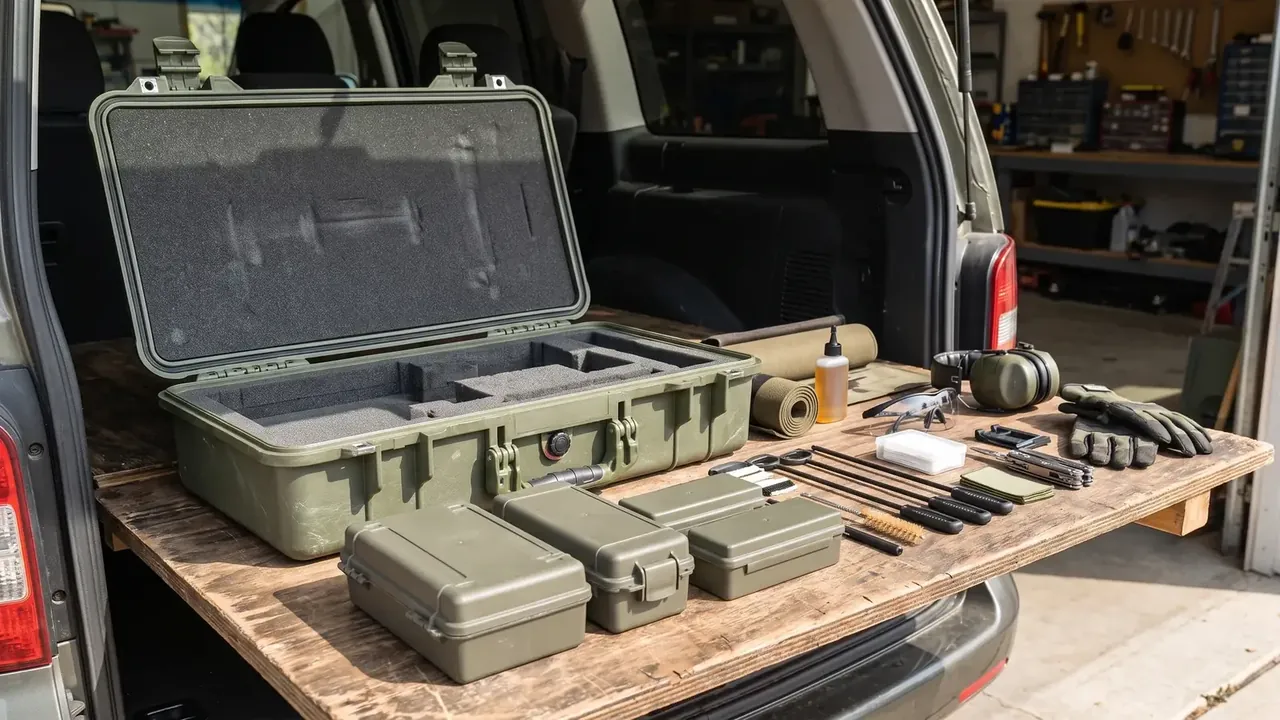
Sealing is a pressure question. Charge the case to 20 kPa and a ten-minute hold losing no more than 2 kPa is what storage needs. Rotomolded mouths keep gasket compression even; injection grooves come from two tools and leak at the four radii; every rivet in a metal case is a leak path. At 480 hours of salt spray the failures are latches and hinge pins.
3. What the Extra Weight Buys
Weight shows at the tailgate. Loaded for a 1200 mm weapon the military firearm case weighs 9.5 kg against 6.0 kg injection and 13.0 kg metal; six at a time, that is 21 kg and 42 kg of difference, or one extra trip for two people.
Handles settle the rest. A rotomolded handle is moulded with the body and only whitens at 45 kg. Injection handles sit on four screw bosses that crack under repeated full loads, the most common repair item on that type. Metal handles are strongest, but a thin rim concentrates load on your fingers.
4. Five-Year Cost and Repair Economics
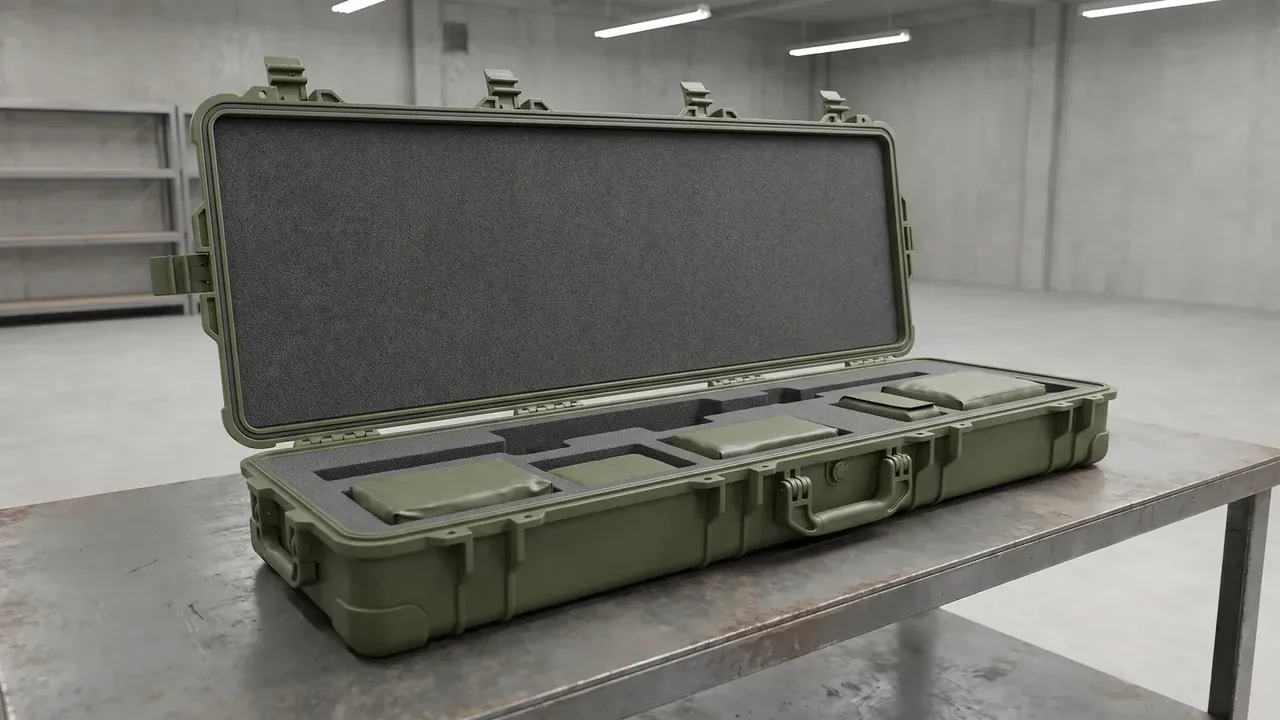
Unit price describes purchase day; five-year cost describes the truth. Per 100 cases at 200 trips a year, a CNY 780 military firearm case replaces 5 units, a CNY 420 injection case replaces 50, and a CNY 1,100 metal case replaces 15. Add repair labour and failed-case delays and the ranking moves. At 20 trips a year injection replaces 5 and lands well below rotomolding.
| Item | Rotomolded | Injection | Metal | Soft shell |
|---|---|---|---|---|
| Unit price | CNY 780 | CNY 420 | CNY 1,100 | CNY 260 |
| Replacements in 5 years | 5 | 50 | 15 | 90 |
| Total, 5 years | CNY 83,100 | CNY 71,000 | CNY 85,000 | CNY 70,000 |
5. Repair, Retirement and Resale
The fork appears after damage. A rotomolded body is homogeneous polyethylene, so a crack is hot-air welded at 220–260 °C and returned to about seventy percent of parent strength, while pins, latches and gaskets unbolt. An injection case cannot be welded, so the remedy is a new case.
Metal straightens, but bare coating must be repainted or rust starts in the scratch. Retirement counts too: polyethylene regrinds, metal has scrap value, a bonded soft shell costs more to separate than it is worth.
Conclusion
The four routes differ in logic, not grade: rotomolding trades a hollow wall for impact tolerance and repairability, injection trades wall thickness for weight and price, metal trades material for stiffness, soft shells trade thickness for portability. Once repair is counted, a rotomolded military firearm case wins in frequent transit.
This article discusses only the container (case body) side of specifications and design intent, and does not cover any handling, loading or use of the contents.
Related Reading
- Military firearm case versus alternatives
- Material comparison for firearm protective cases
- Rotomolded case versus alternatives
- Military firearm case selection guide
Related Products
- 8 Series — Gun Cases; Military Equipment Cases; Camera Equipment Cases; Drone Cases; Watch Cases; Knife Cases; First Aid Cases; Electronics Equipment Cases
- WL8-2812 PP Gun Case — model WL8-2812
- All protective cases and toolboxes: 7 series, 158 models