

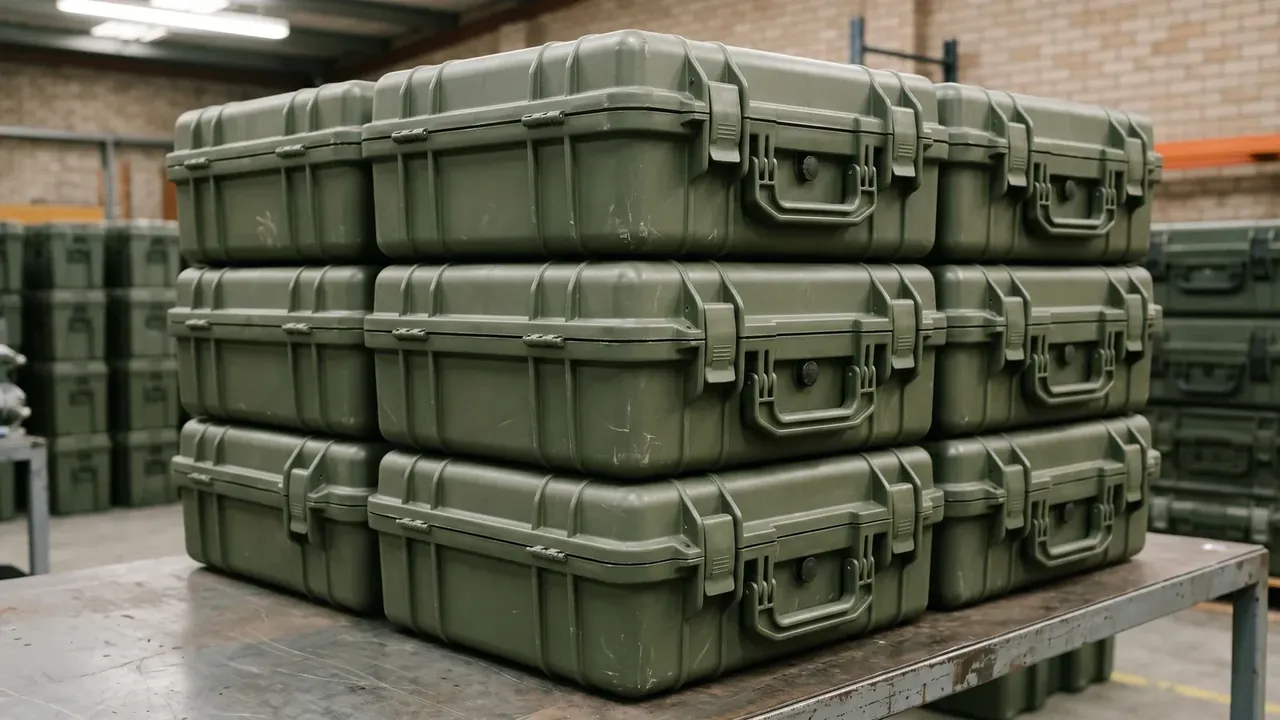
Quick answer: Accepting a Military Firearm Case is not a glance for damage. Sort items into critical, major and minor, draw samples by lot size, decide with acceptance and rejection numbers, then file measured values, sample IDs and verdicts. A standard exists so two inspectors reach the same verdict.
Table of contents
- The Three-Tier Frame of Military Firearm Case Standards
- Incoming and Visual Inspection Items
- Dimensions and Fit Checks
- Assembly and Latch Checks
- Sampling, Decision Rules and Records
- FAQ
1. The Three-Tier Frame of Military Firearm Case Standards
A specification says how large and how thick; a standard says whether the result passes. Military Firearm Case items split by consequence: critical items break sealing or load capacity and reject the lot, major items affect assembly and go to sampling, minor items leave function intact.
| Tier | Typical items | Rule | Disposition |
|---|---|---|---|
| Critical | Shell crack, short shot in the gasket groove, broken latch | One sample fails the lot | Return the lot |
| Major | Cavity out of tolerance, uneven lid gap, wrong opening force | Sampling plan | Sort or rework |
| Minor | Flow marks, colour shift, logo offset | Limit sample | Concede |
Treat everything as critical and rework lifts the price; wave everything through and sealing faults reach the field.
2. Incoming and Visual Inspection Items
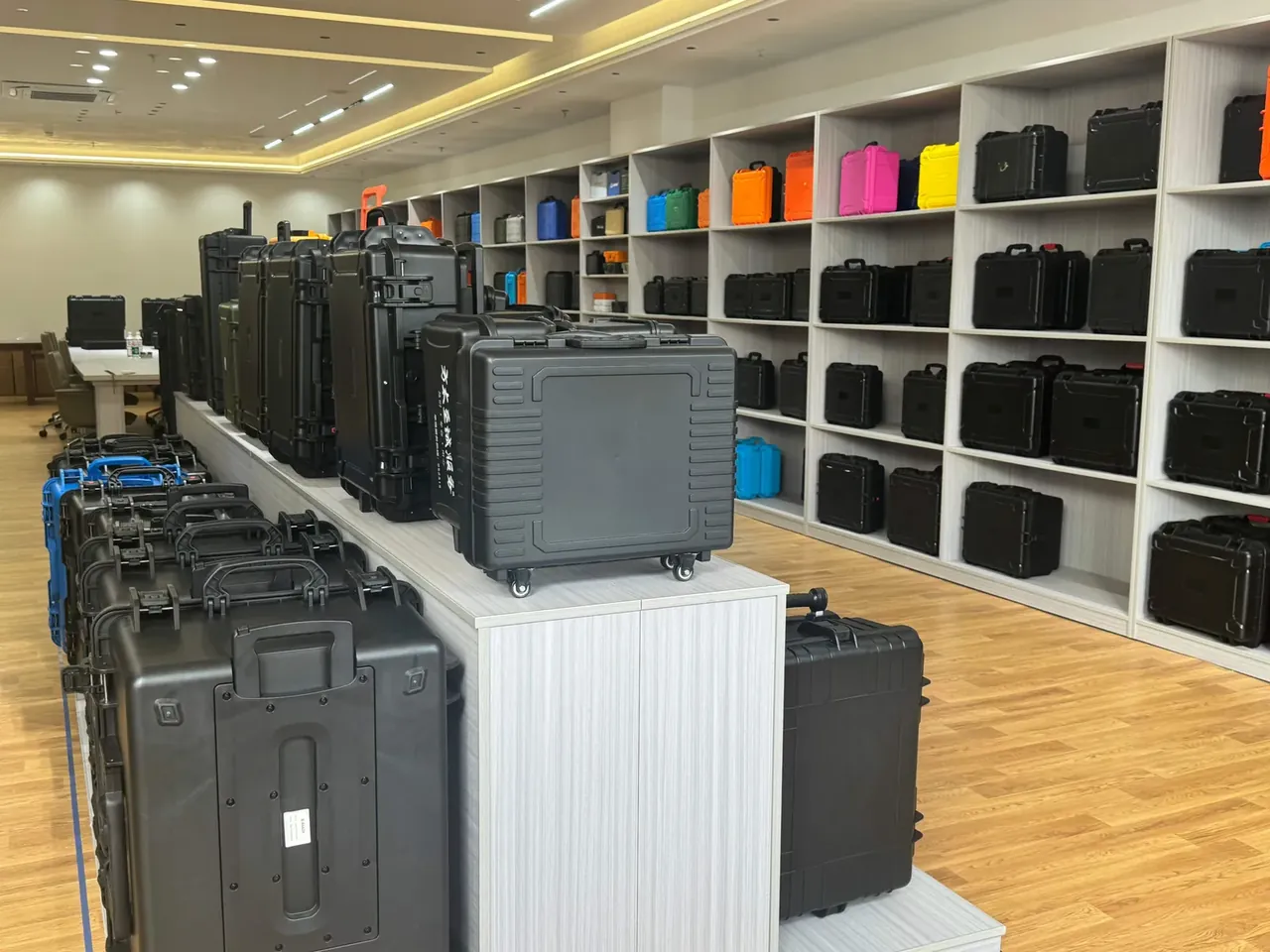
Inspect at 1000 to 1500 lux from 500 mm: a scratch up to 10 mm that leaves substrate intact is minor, while a crack of any length is critical, because the tip propagates under drop. Compare colour under D65 and accept ΔE up to 1.5.
| Defect | Method | Limit |
|---|---|---|
| Crack | Visual plus 5x lens | Critical at any length |
| Scratch | Visual and fingernail | Up to 10 mm, substrate intact, minor |
| Sink mark | Visual under raking light | Deeper than 0.3 mm is major |
| Colour shift | D65 light source | ΔE up to 1.5 passes |
Hardware needs the same trail: latches, hinges and valves must match the signed sample in material and lot number, and three signed samples stay in the Military Firearm Case record.
3. Dimensions and Fit Checks
Check key items, not everything. Lay out length and width on a surface plate, measure the cavity with calipers and a depth gauge at 0.02 mm, and average wall thickness from six ultrasonic readings.
After closing, a 0.2 mm feeler must not enter the gasket groove, lid gap spread stays within 0.5 mm, and diagonals within 2 mm. An empty case dropped 300 mm onto concrete must not pop a latch. Report measured values: an oversized cavity can only be downgraded.
4. Assembly and Latch Checks
Measure opening force with a push-pull gauge: 25 to 45 N on first open is workable, under 20 N it releases in transit, over 60 N it fights gloves.
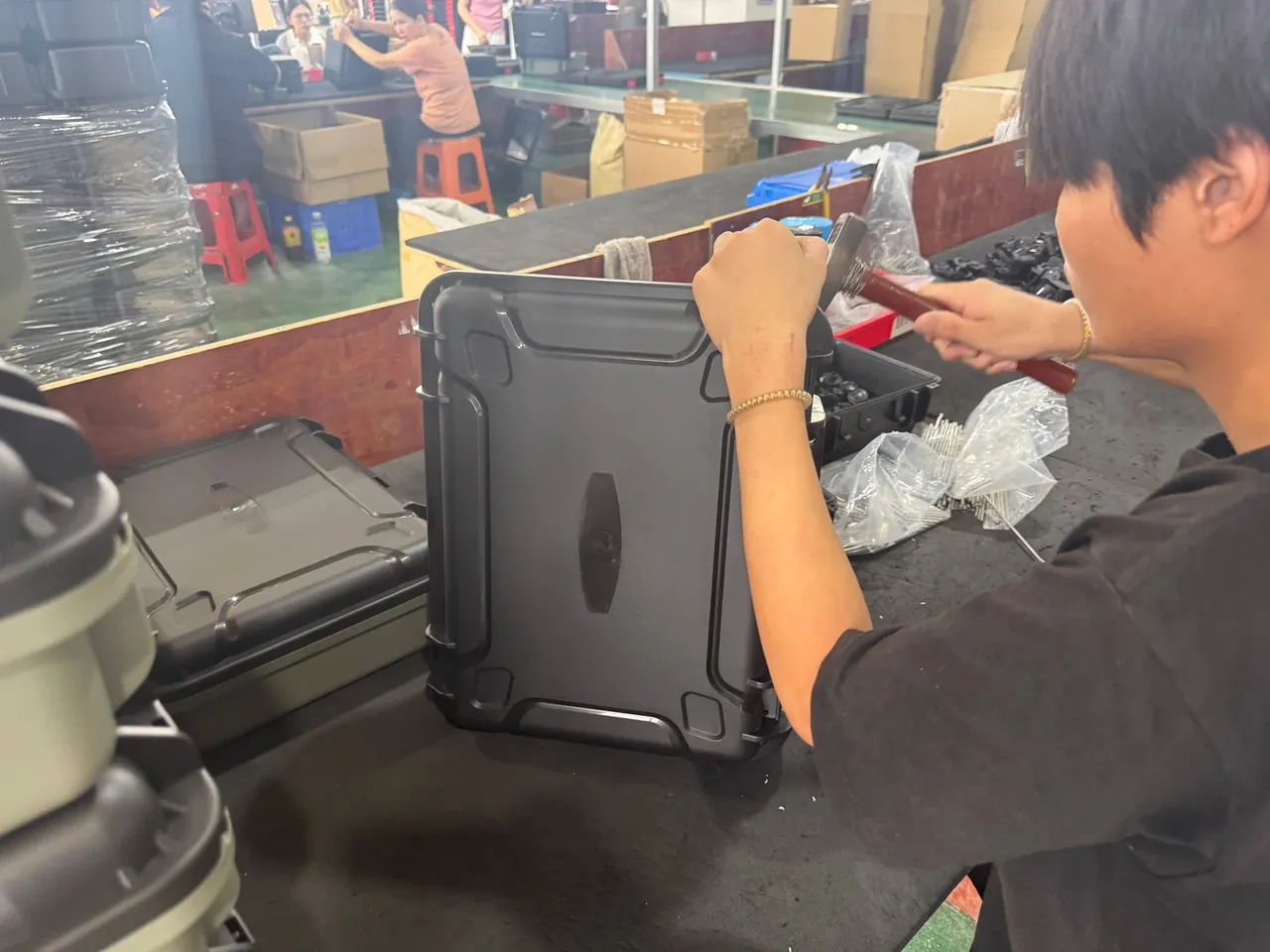
Run latches to 5000 cycles and require closing pressure with no body crack. Immerse the valve for 30 seconds with no continuous bubbles. An M4 self-tapping screw takes 0.8 to 1.2 N·m, more strips the boss, less loosens. Every case is then pressurised to 0.02 bar and held 30 seconds, accepting a 5 percent drop.
5. Sampling, Decision Rules and Records
Sample by lot size, not by percentage, and spread samples across cavities and shifts. For 501 to 1200 units take 32, with AQL 1.5 for major and 4.0 for minor items.
| Lot size | Sample | Major Ac/Re | Minor Ac/Re |
|---|---|---|---|
| 151 to 280 | 13 | 0/1 | 1/2 |
| 281 to 500 | 20 | 1/2 | 2/3 |
| 501 to 1200 | 32 | 2/3 | 3/4 |
A critical defect vetoes the lot. A failed major item doubles the sample, a second failure means 100 percent sorting, and a lot still short is rejected. Concessions need written confirmation, with scope and quantity recorded.
Keep date, lot and sample IDs, measured data, verdict, signatures and photos for five years. A Military Firearm Case record must trace the lot back to cavity and raw material batch, or one fault condemns the delivery.
Conclusion
A standard earns its keep by being repeatable: same lot, different inspector, same verdict. Tiers set the nature, sampling the scope, decision rules the action, records the traceability. Fix that decision table and Military Firearm Case acceptance finally has an enforceable edge.
This article discusses only the container (case body) side of specifications and design intent, and does not cover any handling, loading or use of the contents.
Related Reading
- How to set Military Firearm Case specifications: size, wall and load
- Factory audit for gun case production
- Quality control points on a case assembly line
- Inspection flow for military supply cases
Related Products
- 8 Series — Gun Cases; Military Equipment Cases; Camera Equipment Cases; Drone Cases; Watch Cases; Knife Cases; First Aid Cases; Electronics Equipment Cases
- WL8-2812 PP Gun Case — model WL8-2812
- All protective cases and toolboxes: 7 series, 158 models