

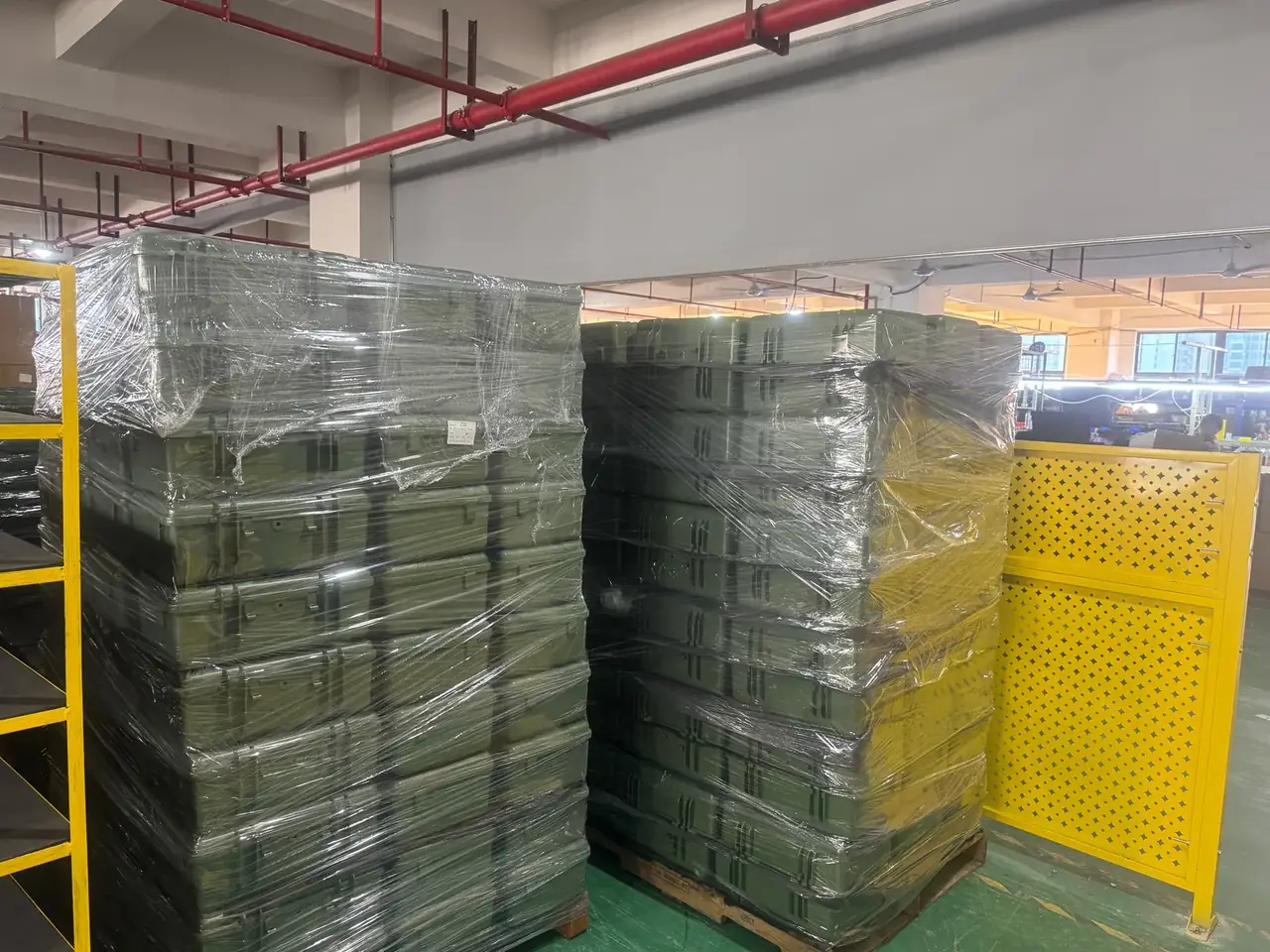
Quick answer: Military Supply Cases loaded to 60 kg give each of two carriers 30 kg, and the real cost lands at the third handover, 200 m out. A 12 kg shell, a 90 kg handle rating and 480 mm between handles decide whether it holds.
Table of contents
- Why 60 kg Splits Into Two 30 kg Loads
- A 90 kg Handle Rating at 480 mm
- Handover Points on a 200 m Carry
- Corners and Latches After a 1.2 m Drop
- Forklift, Crane or Hands: Where Each Stops
- FAQ
1. Why 60 kg Splits Into Two 30 kg Loads
Sixty kilos is not arbitrary. A person lifting repeatedly stays near 25 kg, and 30 kg is the ceiling for a short distance, so Military Supply Cases at 60 kg need two carriers.
The shell measures 780 by 480 by 400 mm, weighs 12 kg empty and reaches 60 kg loaded, so each carrier takes 30 kg. That is not a simple half: a swinging case peaks about 20 percent above average at the hand, which is why the handle carries a 90 kg rating rather than 60.
Three carriers do not help. The 780 mm length splits into spans of 260 mm, and the middle person can only grip the base, which loads the thinnest panel on the case.
| Loaded weight | Carriers | Load each | Working distance | Handle layout |
|---|---|---|---|---|
| 30 kg | 1 | 30 kg | Under 50 m | Two handles, one side |
| 60 kg | 2 | 30 kg | Under 200 m | Four handles, 480 mm apart |
| 90 kg | 3 | 30 kg | Under 100 m | Six handles plus base feet |
| Above 120 kg | None | N/A | Forklift or crane | 100 mm fork pocket |
The 90 kg tier covers less ground: three carriers bend the shell at three points.
2. A 90 kg Handle Rating at 480 mm
The 90 kg figure is 60 kg times a 1.5 dynamic factor. In test the handle lifts a 90 kg weight for 10 minutes, then the root is checked for permanent set; past 2 mm it fails.
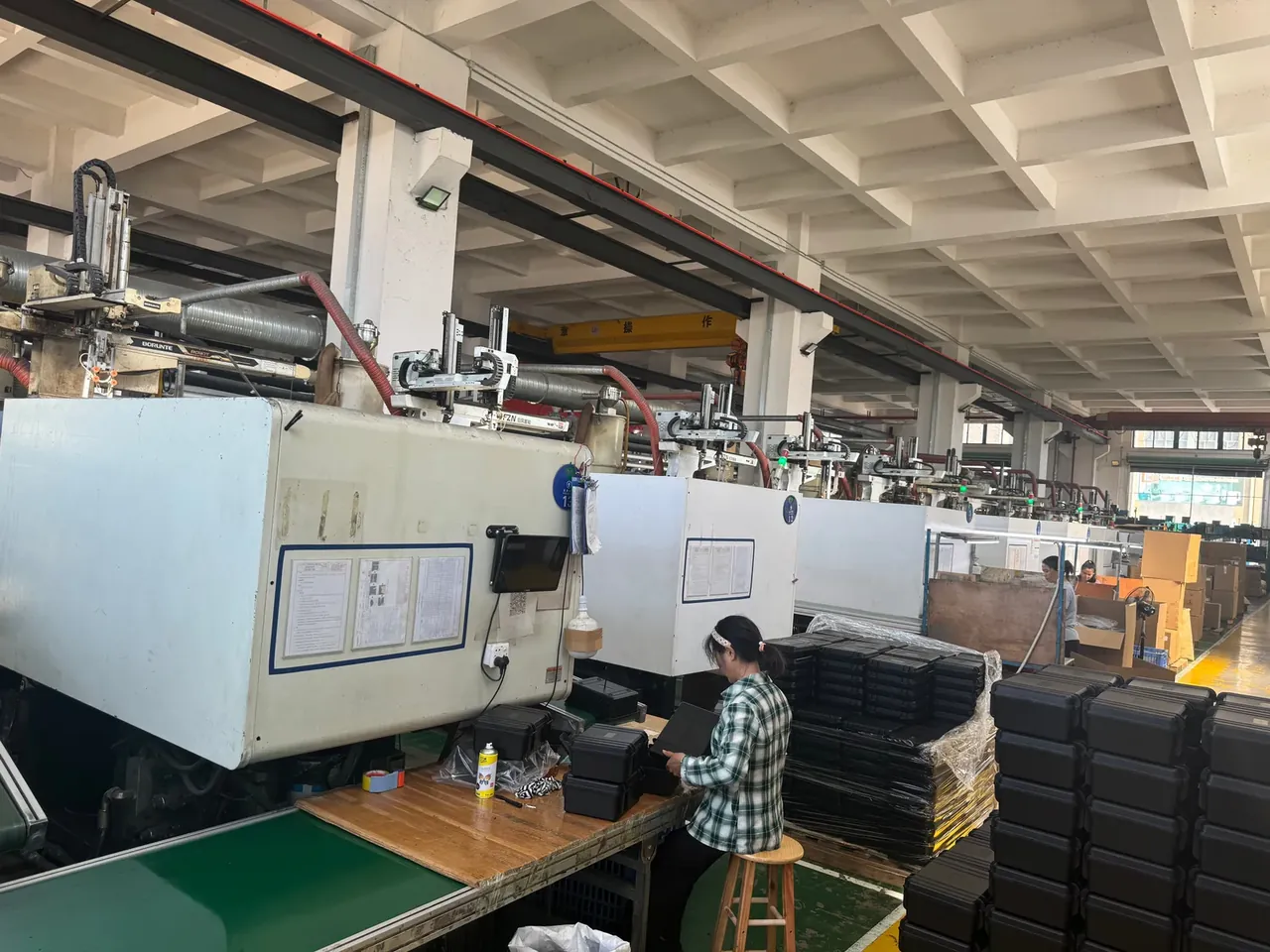
Diameter is 28 mm with 35 mm of clear grip, enough for an 8 mm work glove. Root wall is 6 mm with a 5 mm fillet, because a square transition is where breaks begin.
The 480 mm is the centre distance between handles on opposite sides. Each palm sits 240 mm from the centre of gravity, so arms hang and shoulders stay down. Under 400 mm both carriers tuck their arms and stride drops to 0.5 m; past 560 mm the middle of Military Supply Cases begins to sag.
| Handle rating | Loaded weight | Root wall | Handle diameter | Clear grip |
|---|---|---|---|---|
| 60 kg | Under 40 kg | 5 mm | 24 mm | 30 mm |
| 90 kg | 60 kg | 6 mm | 28 mm | 35 mm |
| 120 kg | 80 kg | 8 mm | 32 mm | 40 mm |
| 150 kg | 100 kg, mechanical | 10 mm | 36 mm | 45 mm |
Handle count on Military Supply Cases follows the rating: four for the 60 kg tier. With only two, the case rotates about the handle axis and needs straightening every ten metres.
3. Handover Points on a 200 m Carry
110 steps per minute is a normal loaded cadence; at a 0.65 m stride that is 71.5 m per minute, so 200 m takes about 2.8 minutes. Two carriers can hold that long; walking it steady is another matter.
Handovers sit every 50 m, three in all. One takes 6 s: set down, both release, swap front and rear, lift together. Four 20 mm base feet touch first, so the base never scrapes.
Carry height on Military Supply Cases is fixed too. With a 400 mm shell the handle rides about 750 mm off the ground, at mid-thigh for both carriers. Lower and they stoop, higher and they shrug, and neither posture lasts 100 m.
Up to 3 degrees of slope the pair walks level; beyond that the front carrier shortens stride and the rear one lifts. Steps go one person at a time.
4. Corners and Latches After a 1.2 m Drop
1.2 m is the usual drop from a truck bed to the ground. The sequence is corner, edge, face, once each, onto 5 mm steel plate, judged on the shell alone.
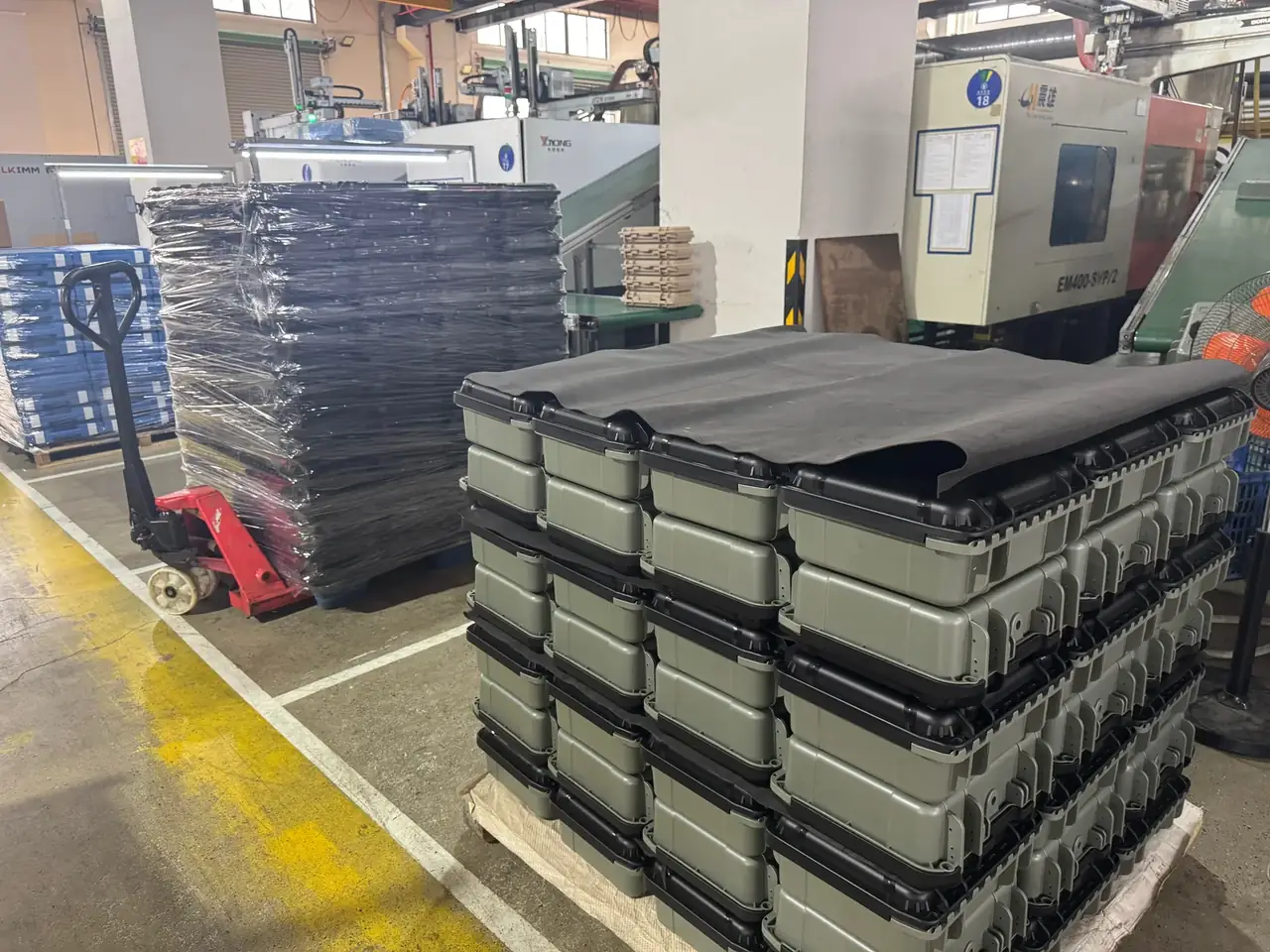
All eight corners carry a reinforcement block, 8 mm at the thinnest point, with a 12 mm outside radius. The radius spreads impact along an arc; a square corner on Military Supply Cases chips on the first drop.
Three readings follow: lid-to-base gap under 2 mm, latch opening force between 60 and 80 N, and handles neither pulled out nor loose. A gap that grows means the gasket cannot seat; a stiff latch defeats a gloved hand.
On Military Supply Cases two latches and two hinges sit on the short sides, a 480 mm span 300 mm shorter than the long side, halving lid deflection.
5. Forklift, Crane or Hands: Where Each Stops
Not every move of Military Supply Cases is a carry. 60 kg over 200 m is the ceiling for hands; past it the tool changes.
| Method | Unit limit | Distance | Floor condition | Where it stops |
|---|---|---|---|---|
| Two-person carry | 60 kg | 200 m | Level, under 3 degrees | Past 200 m, use a truck |
| Pallet truck | 200 kg | 500 m | Level and hard | Pallet 1200 by 1000 mm |
| Forklift | 500 kg | Unlimited | Aisle 2.4 m clear | Pocket 100 mm clear |
| Crane | 800 kg | Workshop or truck bed | 3 m headroom | Four points at 60 degrees |
Check the pocket first: 100 mm clear against a 45 mm blade, so lift 30 mm and check for tilt. Crane points land on the reinforcement blocks at 60 degrees; past 70 the wall distorts slightly.
The hand-carry limit breaks first on site. A third person does not fit: 780 mm will not take three pairs of hands.
Sixty kilos on Military Supply Cases comes down to three numbers: 30 kg per carrier, which sets handle rating and spacing; a 1.2 m drop, which sets corner and latch; and 200 m, which sets handover and transport mode.
Related Reading
- Stacking and storage of military boxes
- Load ratings and handling fit
- Wall thickness and lift points
- Feet and stacking load
JUNZHIJIA
Related Products
- 8 Series — Gun Cases; Military Equipment Cases; Camera Equipment Cases; Drone Cases; Watch Cases; Knife Cases; First Aid Cases; Electronics Equipment Cases
- WL8-2812 PP Gun Case — model WL8-2812
- All protective cases and toolboxes: 7 series, 158 models