

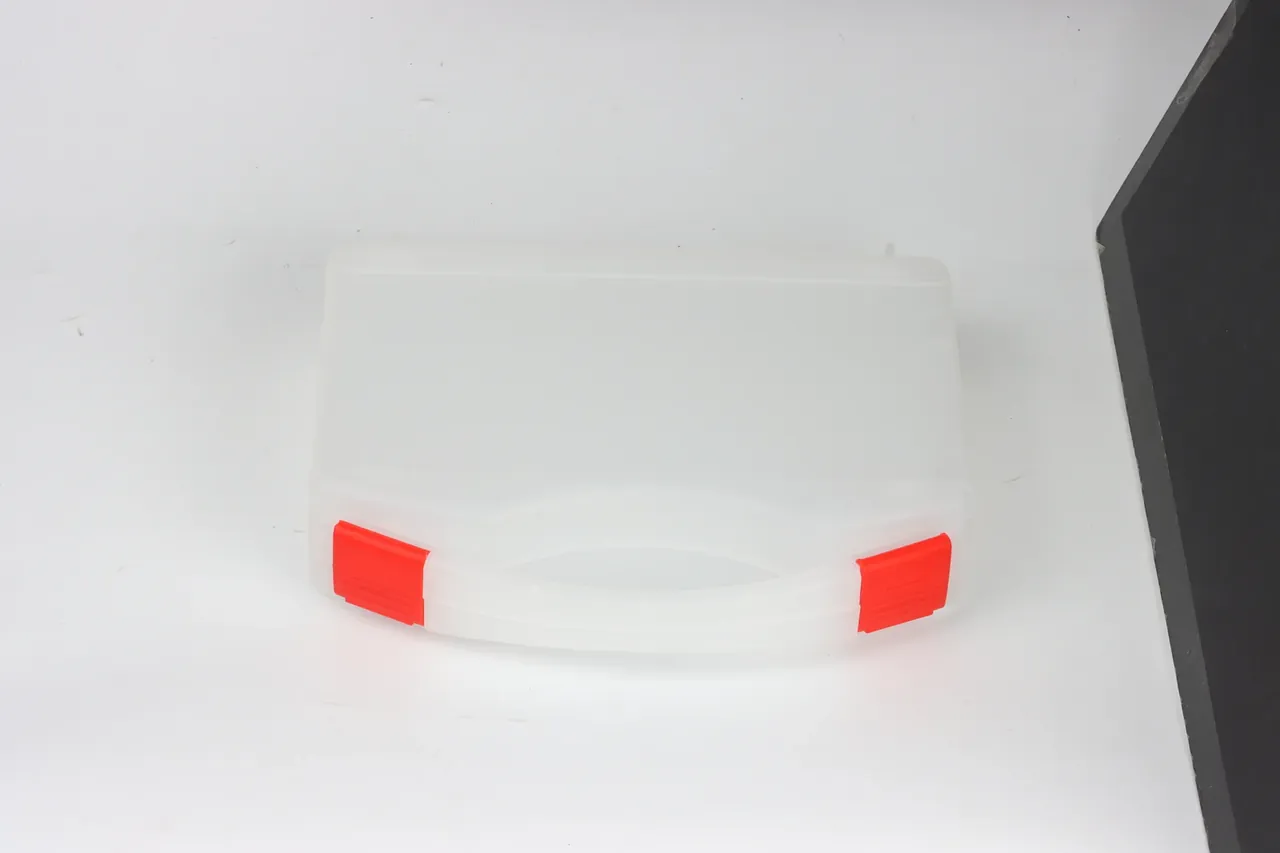
Quick answer: At minus 30 °C, stacked three high and 1,400 km from base, a Military Supply Case pays for its 4.5 mm rotomolded wall and double-lip seal. On a 200 km shuttle or a one-way delivery, an injection tote or a wooden crate costs less.
Table of contents
- Where the Military Supply Case Fits in a Sub-Zero Haul
- When the Military Supply Case Is Overkill
- Three Jobs Where an Aluminum Flight Case Wins
- Where Injection Cases and Wooden Crates Take Over
- Four Options Priced per Trip
- FAQ
1. Where the Military Supply Case Fits in a Sub-Zero Haul
Two in the morning, minus 30 °C, six cases due on the truck in 40 minutes. Each weighs 380 kg loaded, stacks three high, and the bottom lid carries 760 kg. The route runs 1,400 km with 60 km of gravel, five handling stops and sampling due within 24 hours.
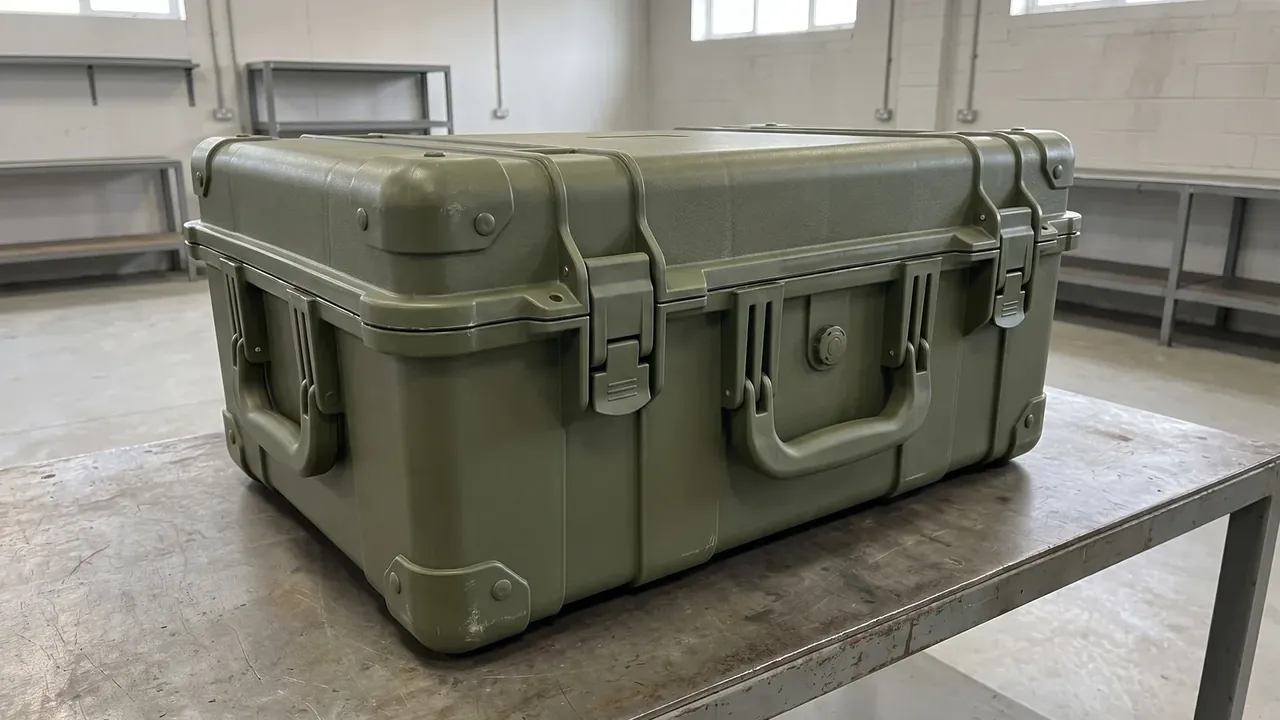
Those conditions collapse the shortlist: cold embrittles plastic, stacking bends the lid, handling drives corners into dock edges, distance keeps the seal compressed for days. A Military Supply Case answers with rotomolded shell, double-lip gasket, recessed latches, 6 mm corner caps.
| Condition | Value | Constraint on the case |
|---|---|---|
| Temperature | minus 30 °C, 36 hours | no crack at 1.2 m drop, wall 4.0 mm |
| Stack | 3 high, 760 kg on the lid | flatness within 2 mm, rib pitch 180 mm |
| Handling | 5 stops, forklift plus manual | 6 mm caps, 90 kg handle load |
| Distance | 1,400 km, 60 km gravel | 120 N latch preload, 5 mm hinge pin |
Rotomolding holds 4.5 mm without weld lines, which injection molding cannot match at this size.
2. When the Military Supply Case Is Overkill
Many depots treat it as a default line item, paying for performance the job never calls on.
- Single-layer, palletized loads: the lid carries nothing, so 4.5 mm buys no bending resistance
- Shuttles under 200 km: fewer than two corner impacts per trip
- One-way delivery: amortized over a year, so cost per trip equals purchase price
In all four, purchase price exceeds 70 percent of total cost, so an injection tote at 390 CNY and 4.1 kg tare is the better buy. The test: one real drop, or a stack above three tiers? If not, the premium is wasted.
3. Three Jobs Where an Aluminum Flight Case Wins
An aluminum flight case weighs 7.2 kg against 11.8 kg for a rotomolded Military Supply Case of equal volume. 600 on an airlift add 2.76 tonnes, changing aircraft and freight bracket.
Three jobs justify it: air freight dominates, so tare weight lands on the invoice; cases open over ten times a day, where hinges last a two-year cycle; paperwork must be read shut, which a riveted window solves.
The weakness: aluminum dents and never springs back, repair runs 80 CNY, while a rotomolded shell is warmed out.
4. Where Injection Cases and Wooden Crates Take Over
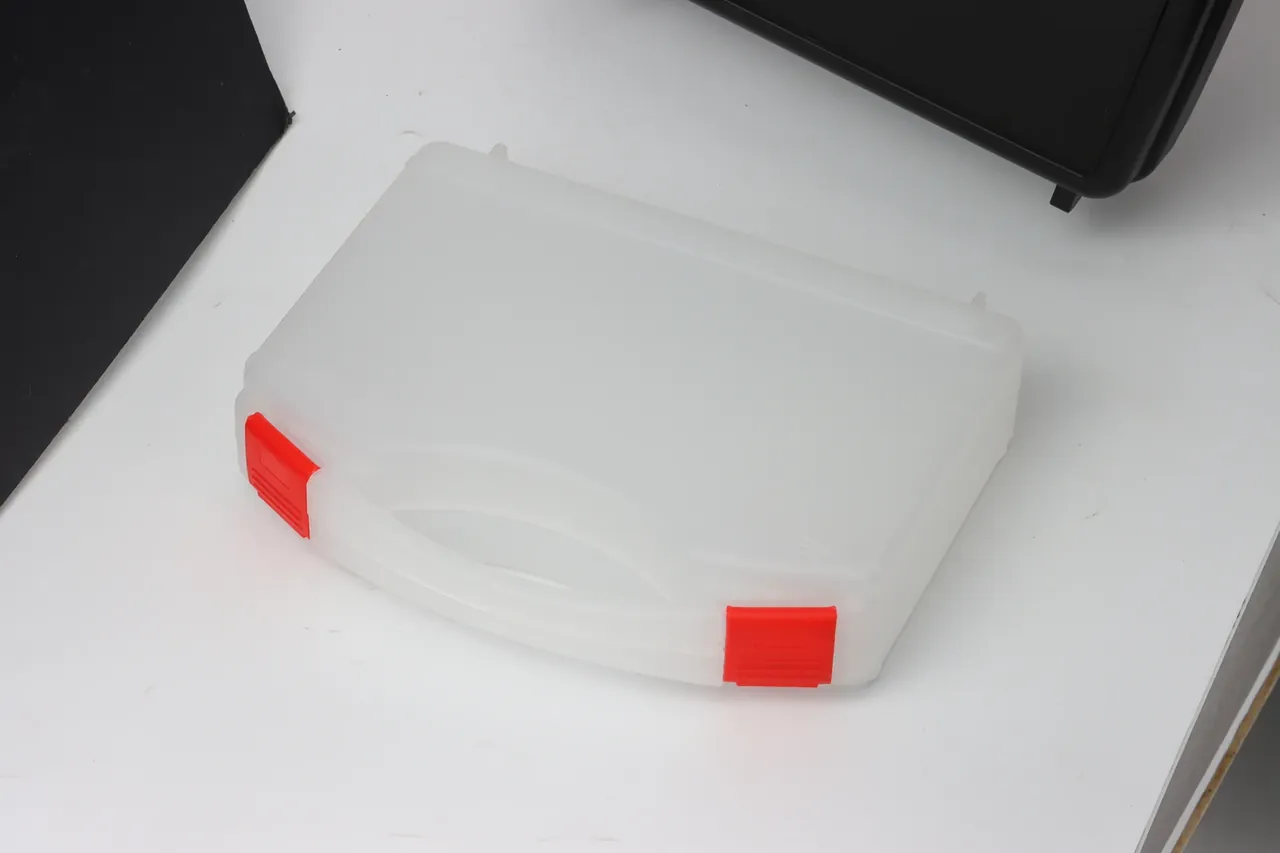
The limits of an injection-molded PP tote are precise: never below minus 10 °C, never more than two tiers, never above 25 kg. Dropped 0.8 m at minus 20 °C, roughly 30 percent of units crack at the bottom corners.
Wooden crates follow another logic. Export requires ISPM 15 heat treatment and moisture below 20 percent, at 210 CNY per crate or 270 CNY with marking. They carry load well but serve one trip, and damp air degrades the seal.
5. Four Options Priced per Trip
Purchase price alone puts the Military Supply Case outside the top two.
| Option | Price | Trips a year | Life | Cost per trip |
|---|---|---|---|---|
| Rotomolded Military Supply Case | 1,180 CNY | 60 | 5 years | 3.9 CNY |
| Aluminum flight case | 2,860 CNY | 60 | 8 years | 6.0 CNY |
| Injection tote | 390 CNY | 40 | 3 years | 3.3 CNY |
| Wooden crate | 270 CNY | 1 | one trip | 270 CNY |
On amortization alone the tote wins, the rotomolded case places second, but only while damage rates are equal. Fold in rework on the 30 percent that crack at 110 CNY a unit and the tote reaches 6.6 CNY per trip. One replacement run after a failure costs more than twelve new cases.
Conclusion
The value of a Military Supply Case sits in the extremes of the duty cycle: the colder the load, the higher the stack, the more handling, the faster it pays back. Shuttle runs and one-way deliveries never touch that reserve. Draw the line honestly and a Military Supply Case stops being a universal answer.
This article discusses only the container (case body) side of specifications and design intent, and does not cover any handling, loading or use of the contents.
Related Reading
- Material comparison for military packing boxes: wood, corrugated, plastic and metal
- Specification layers of a Military Supply Case: resin, colour and marking
- Inspection items and acceptance criteria for Military Supply Cases
- Selection guide for military supply transport cases
Related Products
- 8 Series — Gun Cases; Military Equipment Cases; Camera Equipment Cases; Drone Cases; Watch Cases; Knife Cases; First Aid Cases; Electronics Equipment Cases
- WL8-2812 PP Gun Case — model WL8-2812
- All protective cases and toolboxes: 7 series, 158 models